





Nick Van Arsdale retweeted

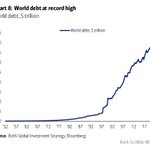
US & China have debt bubbles.
The difference is China got infrastructure, while we took Afghanistan from the Taliban & then gave it back to them, secured Iraq's oil for China, sent a quorum of our defense ind'l base to China, & also drove our life expectancy down dramatically.🤦♂️


𝐖𝐡𝐚𝐭 𝐢𝐬 𝐡𝐲𝐩𝐞𝐫𝐛𝐢𝐭𝐜𝐨𝐢𝐧𝐢𝐳𝐚𝐭𝐢𝐨𝐧?
Hyperbitcoinization was first introduced in an article by Daniel Krawisz from the Nakamoto Institute detailing the hypothetical process of fiat currencies around the world rapidly demonetizing as #bitcoin becomes the preferable option for citizens to hold as they switch from an inferior currency to a superior one.
There are currently 180 different fiat currencies in the world with only 13% of the global population being born into G7 Nations (United States, United Kingdom, Germany, Italy, Japan, France and Canada). You often hear talk in the bitcoin space about the U.S. Dollar and it's demise which I think is an important subject but I think the other 179 currencies will be important for bitcoin adoption moving forward as well. The real truth is that there is no need for 180 currencies moving forward in a digital world. In just 14 years Bitcoin has grown to become the 22nd largest currency in the world with a market cap of over $500 billion and will soon break into the top 10.
We have already seen a very clear connection between bitcoin adoption rates by country and inflation rates; with over 1.6 billion people living under double and triple digit inflation world wide it is only a matter of time before education and adoption spreads. My thesis is that as awareness for bitcoin grows there will be an inflection point in many countries with weak currencies and there will be a massive flight towards synthetic USD's and bitcoin. As soon as interest rates head back to zero again and easy money policies are re-activated speculative attacks will resume as many will see the opportunity of borrowing at near zero rates to buy an asset that appreciates on average 151% year over year. Michael Saylor has done this brilliantly so far, borrowing over $2 billion at less than 2% interest rates.
The main hurdle in my opinion will be capital controls which we have already seen a slow progression towards cashless societies, ATM and bank withdrawal limits and #cbdcs that will all be used to limit capital flight. When Balaji made his $1,000,000 bitcoin bet he was really trying to raise awareness for the implementation of Fed Now and it's eventual use as a capital control.
𝐓𝐡𝐞 𝐛𝐮𝐥𝐥𝐢𝐬𝐡 𝐜𝐚𝐬𝐞 𝐟𝐨𝐫 𝐛𝐢𝐭𝐜𝐨𝐢𝐧:
For bitcoin to reach over $1 million USD per coin it really only needs to eat into 1-3% each of real estate, bonds, equities, fiat currencies, private equity and venture capital. The question for anyone who is bearish is what is going to stop it?
#fiatcurrency
lnkd.in/gYdST8QX
lnkd.in/ggWF_KPM

𝐈𝐬 𝐂𝐡𝐢𝐧𝐚 𝐬𝐞𝐜𝐫𝐞𝐭𝐥𝐲 𝐭𝐡𝐞 𝐥𝐚𝐫𝐠𝐞𝐬𝐭 𝐡𝐨𝐥𝐝𝐞𝐫 𝐨𝐟 𝐠𝐨𝐥𝐝 𝐢𝐧 𝐭𝐡𝐞 𝐖𝐨𝐫𝐥𝐝?
According to the official numbers, the United States has the largest gold reserves with 8,133 tons with #China sitting in 6th place with 1,948 tons. Of course nothing is truly a secret to the U.S. Government, but are our leaders paying attention to this trend? If this turns out to be true it will spark a world-wide discussion of #gold, #fiatcurrencies and #bitcoin.
With the recent announced expansion of #BRICS and lots of talk regarding de-dollarization, I would not be surprised if China eventually announces that they have many more times the amount of gold they have been claiming and use it to back a currency that competes with the USD.
Since the year 2000, China has mined 6,830 tons domestically and the export of gold is prohibited. They have also been acquiring gold through Hong Kong, Switzerland and Dubai. China is simultaneously the largest producer and the largest importer of gold.
How would the world react to this news and does the U.S. secretly have more gold than they are claiming as well?
“The PRC probably has as much as 30,000 tonnes hidden in various accounts, but not declared as official reserves”-Alasdair McLeod of Goldmoney
This is a great article by Dominic Frisby breaking down the numbers and how gold experts have came to this conclusion.
lnkd.in/gJVxwc7v

Masterful write up from @Croesus_BTC on the various potential causes of the most recent #Bitcoin dip. The best mindset is to not care why we drop and just stack harder.
onceinaspecies.com/p/what-ca…

3
148
At one point in 2021 Better.com was worth $7.1 billion and riding high on record home loan refi’s. 93% in a day. Down bad #Bitcoin

4
126
I believe a big driver for #bitcoin adoption will be the intersection of this global debt trend and the rise of #populist movements throughout the world. With governments around the world racing to develop and implement #cbdcs and capital controls, it appears we will soon see the end game play out. From my perspective, bitcoin is the answer for those who are worried about central bank digital currencies and their implications for privacy and censorship. Bitcoin is freedom money.

4
144
This 2021 Shareholder letter from Kjell Inge Rokke, the Chairman of Aker and one of the richest men in Norway, is some of my favorite writing on #bitcoin to this day. Aker is a Norwegian shipping and offshore drilling conglomerate and the letter announced the formation of a new company dedicated to bitcoin called @Seetee_io
I recommend reading the letter in it's entirety (microstrategy.com/en/bitcoin… )but here are some great excerpts:
𝐎𝐧 𝐛𝐢𝐭𝐜𝐨𝐢𝐧 𝐦𝐢𝐧𝐢𝐧𝐠 𝐚𝐧𝐝 𝐞𝐧𝐞𝐫𝐠𝐲:
"To achieve the ambitions in the Paris Agreement, we need to vastly increase electrification of society, which will drive higher demand for electrical power. But we need that electricity from renewable sources. Wind and solar are now cheap enough. But they are intermittent, meaning we can only produce when the wind blows and the sun shines. To transform it into baseload power that can be supplied at any given time, there is a tremendous need for batteries in all forms. Batteries are the missing piece in the puzzle to enable the energy transition. Remember, one liter of gasoline contains the equivalent of a little less than 10 kWh of energy. But less than 30 percent can be retained as useful power to move a vehicle because of the energy loss in an internal combustion engine. Regardless of where you live, I bet that the price per kWh of useful energy in gasoline is extremely high relative to electricity. You don’t buy gasoline because you want the cheapest energy. You buy it because it’s an excellent battery: Exxon is a battery company.
The network consumes energy to ensure it remains secure. Remember, banks are government regulated custodians we pay fees to mediate trust. Bitcoin has solved that problem in a way where two parties can transact without verifying and trusting each other, circumventing the need for a third party like a bank. But the mechanism requires electricity."
𝐎𝐧 𝐛𝐢𝐭𝐜𝐨𝐢𝐧'𝐬 𝐚𝐛𝐢𝐥𝐢𝐭𝐲 𝐭𝐨 𝐬𝐜𝐚𝐥𝐞 𝐚𝐧𝐝 𝐚𝐬 𝐚𝐧 𝐢𝐧𝐭𝐞𝐫𝐧𝐚𝐭𝐢𝐨𝐧𝐚𝐥 𝐩𝐚𝐲𝐦𝐞𝐧𝐭 𝐧𝐞𝐭𝐰𝐨𝐫𝐤:
"On that night, with all of us on video from Chicago, Tel Aviv, and Oslo, Mallers sent dollars from a regular bank account in the U.S. via a wallet in Tel Aviv and further on to Oslo. Then, for fun, we sent it to an Aker colleague in Accra, Ghana. All of these transactions took place instantaneously and at nearly no cost. This creates the possibility of programmable microtransactions, a payment stream, which can unlock limitless opportunities....we believe Bitcoin will scale brilliantly in layers upon layers that make the trade offs applicable to particular application."
#bitcoinmining #energy

Why is #bitcoin so hard to learn? The brilliance of it's design is also a double edged sword and creates a very steep learning curve. Bitcoin is interdisciplinary to an extent that makes Satoshi Nakamoto's achievement creating it truly mind boggling. There is a general rule that it takes 100 hours minimum to begin to understand bitcoin and why it will eventually succeed. It seems to be a paradox that many of the smartest people are the most dismissive of bitcoin, and I believe one reason is they are used to understanding topics quickly with little effort. After a few hours of light investigation they latch onto a fallacy or misconception and decide they have "done their research" and now have an opinion on why it won't succeed.
𝐇𝐢𝐬𝐭𝐨𝐫𝐲 𝐨𝐟 𝐌𝐨𝐧𝐞𝐲:
A deep knowledge and understanding of the history of money from bartering through primitive forms such as salt, cattle, cowrie shells and finally gold and paper fiat currency was needed to create bitcoin. Satoshi clearly knew why certain forms of money succeeded and why they failed and it appears every detail was meticulously thought out.
𝐍𝐞𝐭𝐰𝐨𝐫𝐤𝐬:
As a peer-to-peer network that has ran successfully for over 14 years without any central power or authority, bitcoin may be the most successful network of all time. Satoshi had clearly studied previous successful networks and understood the power of network effects.
Metcalfe's law states that the financial value or influence of a telecommunications network is proportional to the square of the number of connected users of the system. Bitcoin is currently leveraging both Moore's Law and Metcalfe's law simultaneously while also leveraging the continued growth and spread of the internet; this is an extremely powerful combination and brought the total market cap to $1 trillion faster than Google, Apple and Amazon.
𝐆𝐚𝐦𝐞 𝐓𝐡𝐞𝐨𝐫𝐲:
Game Theory is woven into bitcoin's design and is the primary reason why no government or central authority will ever be able to shut down or control it. There as been a lot of speculation about bitcoin being banned and it is usually the last misconception to break through to understand it cannot be stopped. A country banning bitcoin may be negative for the network as a whole but the country is essentially banning 𝐭𝐡𝐞𝐦𝐬𝐞𝐥𝐯𝐞𝐬 from participating and reaping the benefits. There is no scenario where every government in the world could get together and come to an agreement to ban it together as smaller, less wealthy nations would be incentivized to opt out of the ban. Based on this logic smaller nations without large central banks have the most incentive to embrace bitcoin early on as they have the most to gain; we have already begun to see this game theory playing out.
#bitcoin #innovation #finance #economics #energy
Credit to @Coinfinity for the picture

This 2020 Shareholder Letter written by Founder and CEO of Stone Ridge Asset Management and NYDIG Ross Stevens includes some of the best writing on #Bitcoin, #bitcoinmining and #fiatcurrency I have ever read.
Ross does an incredible job of condensing complex topics and ideas into a 15 page report. His most brilliant thoughts in my opinion are surrounding bitcoin mining, the impact it will have on the way we think about #energy transmission and how it will impact the way we construct cities of the future. Some of my favorite excerpts are posted below, I highly recommend taking the time to read the entire letter here:
lnkd.in/g7heRTQt
WHAT IS MONEY?
"Money is, and has always been, technology. Specifically, money is technology for making our wealth today available for consumption tomorrow. Modern Americans with a ‘What’s water?’ mindset about money – virtually all of us – assume there is a sharp line of distinction between what is money and what is not. That’s false. Instead, throughout history, various monies (note: plural) have always existed1 – simultaneously – along a continuum of soundness, subject to competitive monetary network effects. Sound money – along with language – were the first, and have forever been the most important, human networks responsible for human flourishing. Imagine life without them."
On Bitcoin's impact for women's rights around the world:
"In many countries, it is illegal for women to have a bank account, or even work, while the men learn, earn, and create independence for themselves. Trapped in a restrictive, oppressive, domestic cage, these women have historically been forced to do as they’re told, with no freedom to make a living, develop professional skills, or cultivate a sense of self, let alone create financial independence. Bitcoin is fixing this. Leveraging Bitcoin’s growing network, and their smartphones, these women can, and do, find jobs online – secretly for now – and get paid. In Bitcoin. They become copy editors and transcriptionists. They proofread, do data entry, and take surveys. Remotely, and quietly, they do anything that’s doable online. Bitcoin offers them an exit option, an offramp. Bitcoin demolishes their cage. Today, gradually. Tomorrow, suddenly."
On Bitcoin mining:
"Bitcoin mining is the only profitable use of energy in human history that does not need to be located near human settlement to operate. The long-term implications of this are world changing and hiding in plain sight"
"Before Bitcoin, the problem of energy has never been its scarcity, but only our ability to channel it geographically where it is needed most. Before Bitcoin, that was exclusively where humans lived. In contrast, Bitcoin’s mining energy is solving a different problem. Because of satellites and wireless internet connections, Bitcoin mining can be located anywhere. "
#finance #economics #macroeconomics #money

5 U.S. banks downgraded today by S&P Global including Comerica, Associated Banc-Corp, Valley National Bancorp, UMB Financial and KeyCorp. Reasons included exposure to Commercial Real Estate, deposit outflows and unrealized losses due to large positions in U.S. Treasuries.
With $1.5 trillion in commercial real estate debt due by 2025, vacancies increasing and depositor flight set to increase I am guessing the worst is yet to come. Embracing #bitcoin would save these banks but the Biden Administration has intimidated them from becoming involved using Operation Chokepoint 2.0.
#banks #commercialrealestate #interestrates #economics #moodys
www-cnbc-com.cdn.ampproject.…
106
This kind of debate is designed to distract the population from the fact that U.S. Bureau of Labor and Statistics CPI numbers are meaningless and haven't reflected true cost of living increases for over 30 years. Thousands of financial analysts and talking heads obsess over what number is going to be reported when everyone knows it is far from the actual cost of living increases they are experiencing in their own lives.
One very important nuance of this debate is that 2% to 3% is not a 1% increase it is a 50% increase, but if you take this logic further the implications are devastating. This means that a 2% increase would be a 100% (doubling) and a 4% increase would be 400% (quadruple).
In the 1990's former Federal Reserve Chairman Alan Greenspan began making the argument that the way Consumer Price Index (CPI) had been calculated for hundreds of years was overstating inflation because it did not account for consumer's tendency to choose lower quality (cheaper) options if a good from the index became expensive. The famous example he used was replacing steak with hamburger or eventually chicken. Instead of measuring the cost of maintaining a constant standard of living the CPI index was altered to the formula that is used now. Is it any surprise that Wal Mart subsequently took over the U.S. by offering cheaper, less quality options at lower prices?
The true motivation for altering the CPI calculation was to lower the cost the U.S. Government paid out in Social Security and other entitlement programs that are adjusted based on CPI calculations. Over 50% of Americans are dependent on entitlement programs to get by and these CPI changes are estimated to have saved the government $680 billion; that is $680 billion dollars that did not end up in the hands of our elderly and the people who need it most.
Ed Butowsky created the Chapwood Index (chapwoodindex.com/) in an attempt to accurately measure true inflation using the most commonly purchased goods in the 50 largest U.S. cities. The index has consistently recorded inflation numbers between 9%-18% over the past 10 years.
#inflation #cpi #economics #economy #fiatcurrency #bitcoin #finance

#Bitcoin exists primarily as an antidote to modern day central banking and currency debasement. When Satoshi Nakamoto created Bitcoin in 2009 he embedded this message into the Genesis Block- "The Times 03/Jan/2009 Chancellor on the brink of a second bailout for banks." Satoshi knew that the only way to fix the problem was to create a new form of money outside of government control that cannot be manipulated.
The total cost of the bank bailouts in the UK is estimated to be £1.162 Trillion and the Troubled Asset Relief Program (TARP) cost U.S. taxpayers $700 Billion. At the time this caused extreme outrage and spurred the Occupy Wall Street movement. I'm sure most of you can remember the outrage and the long battles in Congress over spending such an astronomical amount. Now people are so desensitized to money printing and currency debasement that they hardly blink when we add another Trillion to the deficit. From 2020 until today the U.S. alone has added nearly $9 Trillion to the deficit. This is barely more than a decade since the Great Financial Crisis.
If you were to make $500,000 USD per day it would take you 5,479 years to make 1 Trillion dollars which is 2,000,000 days. These numbers are so large our brains have a hard time digesting them. As Ray Dalio outlines in his recent book "Principles for Navigating Big Debt Crises" there is no way to grow ourselves out of this deficit hole: the only solution is debt monetization and currency debasement. The Fed will increasingly find more creative ways to hide what is actually happening from the general public but in the end printing is their only solution. When a bitcoiner tells you that Bitcoin is going to $1,000,000 or $5,000,000 it is as much a statement on the future value of fiat currency as it is on bitcoin's value.
#Bitcoin #Fiat #CBDC #Currency #inflation #hyperinflation #debt #finance #FederalReserve #centralbank

4
117
Nick Van Arsdale retweeted

BIG UPDATE: In it’s first 48 hours the #Bitcoin mining research paper is now #1 in views (6 months) and has an altmetric score of 344.
This paper is now in the top 5% of all papers ever tracked (24+ million) by altmetric 👀
Read & share the paper: mdpi.com/2078-1547/14/3/35


How long until corporations, endowments, pensions and other large funds understand that #Bitcoin is the most impactful #ESG investment they can make? This report by #KPMG is an important step in dispelling the false narratives that have been spread by bad actors over the last decade.
Combine this with increasing their portfolios Sharpe Ratio and Bitcoin outperforming every other asset class by orders of magnitude and it becomes a true no brainer

We are in the midst of a remarkable shift in the mainstream narrative surrounding bitcoin, and specifically bitcoin mining. What was once lambasted as a “currency for criminals” and a wasteful process that was “boiling the oceans,” is increasingly being heralded as perhaps the most “ESG-friendly" investment opportunity that exists today.
The latest piece of evidence in support of this ongoing narrative shift is a research report from “Big Four” audit firm, KPMG, titled “Bitcoin’s role in the ESG imperative.”
advisory.kpmg.us/content/dam…
In the report, the authors succinctly summarize many of the arguments bitcoiners have been making for years - in short, Bitcoin has immensely positive implications for the environment and society at large. Before diving into KPMG’s report, it’s worth highlighting some of the prescient work that preceded and likely inspired KPMG’s research:
@C_Bendiksen in March 2021:
coinshares.com/research/clos…
@galaxyhq in May 2021:
galaxy.com/insights/research…
@LynAldenContact in August 2021:
lynalden.com/bitcoin-energy/
@edstromandrew in February 2022:
bitcoinmagazine.com/culture/…
Unsurprisingly, KPMG presents very similar logic throughout their report, describing how bitcoin – contrary to the prevailing narrative – is inherently aligned with each pillar of “ESG”:
Environmental: Bitcoin mining enables the location-agnostic monetization of energy for the first time in human history, allowing us to harness otherwise stranded energy and incentivize the build-out of renewable sources of generation. Moreover, strategically-located miners can help reduce methane emissions or participate in demand response programs to help stabilize grids, as bitcoin mining represents a uniquely flexible industrial load.
Social: Bitcoin's pseudonymous nature has historically raised concerns of illicit activity, yet a 2022 report revealed that illegal use of crypto accounted for merely 0.24% of total transactions. Separately, bitcoin streamlines cross-border remittances, reducing fees and increasing speed. During Ukraine's conflict with Russia, bitcoin helped raise nearly $70 million in short order. In Africa, Bitcoin miners co-locate in microgrids, improving electricity access and affordability. Broadly speaking, bitcoin is an open, permissionless system that promotes financial inclusion in areas lacking banking services, illustrated by Afghan women being paid in bitcoin, facilitating escape from oppressive regimes.
Governance: Bitcoin's key feature is its decentralization, achieved via a vast network running the same software. Transaction data is immutable and verifiable across nodes, ensuring the system's integrity. This process parallels the TCP/IP protocol facilitating global communication. Any changes to Bitcoin’s system rules - including the 21 million coin limit, difficulty adjustment, block size, etc. - would require a different version of Bitcoin, causing a "fork" from the main network.
Considering the reputation of a firm like KPMG, it appears as though we’ve reached a tipping point in terms of market participants waking up to the realities of bitcoin and its implications for our world. This ongoing narrative shift is also a function of certain powerful catalysts such as:
(1) BlackRock and other legacy financial behemoths pivoting from attacking bitcoin from an ESG perspective to embracing the asset and building products to serve increasing client demand
(2) Favorable regulations at the state level (like Texas & Wyoming) that aim to protect the rights of individuals to own, transact in, and mine bitcoin
(3) Growing adoption of bitcoin mining within the oil/gas and renewable energy industries, as they recognize the financial incentives that improve their existing business models
Interestingly, to those paying close attention to the mining industry in recent years (@MartyBent @TheStandardBTC @CathedraBitcoin), this narrative shift may have been more readily apparent. Demand for bitcoin mining – spurred on by the aforementioned economic incentives associated with mining – is directionally reflected by the network’s hash rate, which has been steadily growing since mid-2021, despite the downturn in bitcoin’s price.
Regardless of whether you subscribe to the virtues of the “ESG” framework, the facts on the ground are becoming harder and harder to ignore – bitcoin mining is clearly a net positive for the environment, bitcoin the asset promotes economic freedom and inclusion for the entirety of society, and bitcoin the protocol represents a paradigm-shift in governance structure, as all peers on the network are equal and no trust is required. Bitcoin is as “ESG” as “ESG” gets.

6
537
Another great thread from @Croesus_BTC . From 7,000 cryptocurrencies to 30,000 in 2 years time! Humans are driven by incentives and the incentive to create scam coins, pump and dump schemes and rug pulls is just too strong to resist. #Bitcoin

Everyone learns the hard way. I certainly did. When we first take interest in cryptocurrencies, we naturally explore what’s out there. Everything sounds exciting, some of it even compelling.
So we diversify, thinking that’s the prudent thing to do. But, invariably, the more you proactively learn or the longer you stay in the market, the stronger your understanding grows that there’s only one asset here worth holding: Bitcoin.
If you are new to cryptocurrencies, a lot of pain and heartache can be spared if you lean in to understanding why.
Here are the three key reasons why Bitcoin is the only cryptoasset worth holding:
• Digital scarcity is a one-time phenomenon
• Money is the mother of all network effects & tends to one
• The Crypto Catch-22 precludes any genuine competition to Bitcoin
Considering these topics could be the difference between cementing a Bitcoin fortune or squandering the massive opportunity before you. Let’s dig in…
Digital scarcity is a one-time phenomenon
You can’t store value on the internet. The internet is just information - expressed as 0s and 1s - translated by your computer into words and images. The problem with information is that it can be copied & pasted. That’s the defining attribute of information — it is dematerialized, which grants it the incredible dual characteristics of speed-of-light transmission & infinite replicability.
But this replicability doesn’t work for value.
For value to exist natively on the internet, there needed to be a finite system within the unbounded internet expanse, one whose architecture tamed informational replicability in order to create a system of digital scarcity.
And that was the breakthrough invention of Bitcoin.
The reason you can’t copy and paste Bitcoin is that a Bitcoin is not a jpeg made up of 0s and 1s. Instead, when you own a Bitcoin, what you really own is the consensus view of every computer on the Bitcoin network that you have authority over 1/21M of the Bitcoin supply.
In that sense, you don’t own anything tangible; you own an inalienable property right. And ultimately, that is the essence of value — unilateral control over something finite.
This system of value consensus comes with a minor problem. Although it is impossible to copy value within the confines of this walled-garden system, it is still possible to copy & paste the entire system.
And of course, information that can be copied… can be replicated infinitely. There is minimal marginal cost to spinning up a brand-new copy of the original system. And that’s what we’ve seen in digital assets.
Bitcoin is the original instance of a system of digital scarcity. Every other cryptocurrency is a copy of this system of digital scarcity, dressed up with various bells and whistles to make it seem different, new, and better.
When I first made this graphic in 2021 to highlight the endlessly replicable nature of cryptocurrencies, there were ~7,000 total cryptocurrencies. Now, there are ~30,000. 4x more in just 2 years.
In that sense, if someone purchased a fixed % of a new cryptocurrency in 2021 that featured no supply dilution over time… their % ownership of the total supply in the “copy of digital scarcity” market has still been diluted 4x. That’s 75% debasement in just 2 years.
Granted, this assumes that all crypto projects are equally valuable. Now let’s consider the realities of value…
Money is the mother of all network effects and tends to one
Network effects apply whenever the value of a system increases as the number of users increases. (Telephones, the internet, Facebook, etc.) Metcalfe's Law describes the value of a network as proportional to users^2.
Money is the mother of all network effects — we gain wealth by choosing to value the form of money that others value, and we lose wealth if we choose wrong. (Beanie babies, tulips, NFTs.) Because of this pressure, money tends to one.
That is why gold emerged as the singular worldwide monetary standard after 70,000+ years of free market experimentation with various commodities as money. It was the hardest commodity to make more of and therefore the most reliable store-of-value for hard-earned wealth.
The result of this is that humans store ~40x more wealth in gold (~$12T total value) than the #2 store-of-value commodity, silver (~$300B total value).
This is called a Schelling Point, a game theoretic focal point. When humans store wealth, they intrinsically select a store-of-value that they anticipate others will value in the future.
With that in mind, let’s update our graphic above to show the relative valuation of existing cryptocurrencies, represented by the size of each circle.
Consider what would happen if you showed the graphic above to 100 people and asked them to pick which circle was most valuable. Better yet, which circle they thought the other 99 people would pick. That’s the Schelling Point, whether or not market participants have realized it yet.
The Crypto Catch-22
Aside from Bitcoin’s strengths as the singular digital scarcity & dominant network effect, it’s worth reflecting on the weakness of Bitcoin’s competition.
While the marketing for any particular cryptocurrency will highlight its feature set and flashy specs, these all amount to bells and whistles. What matters is a simple question: which asset do people choose to hold as a store-of-value? Bitcoin has a big lead.
As such, every altcoin created since Bitcoin has been playing catchup. And yet, what is required in order to catch up precludes any altcoin from being a genuine competitor to Bitcoin.
In the celebrated satirical war novel, Catch-22, the protagonist wrestles with an air-tight paradox of military policy: if a soldier has gone crazy, he doesn’t have to go on missions; but, a crazy soldier has to request to be excused, and this request demonstrates that he is not crazy.
Well, every upstart project in the crypto landscape faces their own impossible paradox as they attempt to catch up to Bitcoin – the Crypto Catch-22:
• You can’t catch Bitcoin without a leadership team and a marketing budget
• With a leadership team and marketing budget, you are a company masquerading as a decentralized protocol
The end result of this is quite clear: almost every one of the 30,000 crypto projects trying to get a foothold in the market is, to use SEC Chairman Gary Gensler’s pet term, a DINO project (“decentralized in name only”). They have leadership teams working to guide the project with the objective of delivering an investment return for holders of their crypto token. By the unambiguous definition of the Howey Test, this means they are companies offering unlicensed securities.
This violates securities law, and in all of these cases… there’s a centralized leadership team that the SEC can hold responsible.
And indeed, we have now entered the era of enforcement. Just this week, the SEC sued the exquisitely obnoxious founder of HEX for 3 counts of securities fraud & told Coinbase’s CEO that “every [crypto] asset other than Bitcoin is a security.”
To summarize:
• Bitcoin is the invention of digital scarcity & every cryptocurrency since is a replica copy of that system
• Money is the mother of all network effects & Bitcoin has already won
• All challengers to Bitcoin are ultimately companies promoting unlicensed securities offerings & the SEC is coming after them
Now, with your hard-earned money at stake, pick which circle others will value most. But don’t take too long, because 99% of the world is currently making the same decision.


1
4
510
Nick Van Arsdale retweeted
BREAKING: KPMG, one of the ‘top 4’ largest accounting firms in the world acknowledges the positive impacts #Bitcoin can have on the environment.


People are underestimating how powerful this will be for #RFKJr with fundraising. The 2024 presidential election coinciding with a massive #Bitcoin bull run is going to be really exciting. @realDonaldTrump may be forced to get on board

5
178
Nick Van Arsdale retweeted

In management consulting, a powerful framework for driving change is “the burning platform,” which acknowledges the inertia that can hinder change. People are reluctant to leave their “safe” platform unless it's blatantly on fire, making it easier to leap into the unknown.
1/9
