

Your digital construction kit for secure, modular Postgres. Build production apps that last.
San Francisco
Joined March 2022
- Tweets1.2K
- Following456
- Followers4K
- Likes1.3K


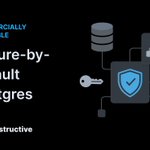
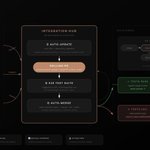




Our CEO @danlynch opened FRC #26 with Secure-by-Default Postgres for Agents.
Agents are database users now. Authorization has to live in the database, not the app.
Thanks @frontiersynd @Kristopherfloyd @pebble_bed @danielchalef @zep_ai @shulynnliu @shagarw21

Hundreds of speculative queries a second, from a user that isn't human. That's the workload. Authorization has to live in the database, not the app. Proud to sponsor FRC #26 with @frontiersynd @pebble_bed xitter.cf/frontiersynd/status/21…

Your next database user won't be a human. It'll be an agent firing off hundreds of queries a second.
@shulynnliu and @shagarw21 of @BerkeleySky made the case at FRC #26 at @pebble_bed: agents don't query, they speculate. Schemas, samples, partial plans, retries, all in parallel.
On BIRD, more attempts meant better answers. Across 50 parallel attempts, most of the work was redundant. Agents already create ~20x more branches and ~50x more rollbacks than humans.
So the database has to change. Probes instead of queries. Satisficers instead of optimizers. Branching storage built for agents.
Thanks to @constructive_io for sponsoring.
Tech Week in SF was a blast! Happy to co-host the event with an incredible group of researchers
Memory layer or a whole new database? We spent FRC #26 arguing about it 🧠🗄️
@danielchalef (@zep_ai) made the case that context is production infrastructure: if your agent can't trust what it remembers, nothing else matters.
@shulynnliu and @shagarw21 brought their CIDR '26 paper from Berkeley Sky. Agents don't really query, they speculate: tons of redundant, exploratory probes. So build the database for the agent first.
Then the room fought over whether those are the same problem. No consensus. Exactly how we like it.
Huge thanks to @constructive_io and @danlynch for sponsoring and @pebble_bed + @nicilevv for hosting 🙏
Great to have @tjskhot @yumi_aw @ryanorban @ezrwolf @damnventures and many other regulars in the room!

Constructive retweeted

Your agent's memory is rotting and it doesn't know it.
@danielchalef of @zep_ai walked through this at FRC #26 at @pebble_bed: enterprises now hold agent context to the same bar as every other database. Provenance. Access control. Invalidation when facts go stale.
Commercial graph DBs weren't built for millions of mostly idle small graphs. So Zep built Konig. 20M+ graphs in production, sub-100ms retrieval.
Context isn't a prompt trick. It's production infrastructure.
Thanks @constructive_io for sponsoring and @Techweek_ / @a16z for the SF Tech Week slot.
Tonight for SF Tech Week, Constructive is co-hosting with @frontiersynd + @pebble_bed. Come meet our founder @danlynch ⚡️
Agents in Production: State, Security, and the Data Layer.
Zep/Graphiti + @UCBerkeley Sky Lab on memory, permissions, and agent-first data systems.

Constructive retweeted

What happens when AI agents become database users?
I’m co-hosting a16z SF Tech Week dinner + research discussion with @pebble_bed, @constructive_io & @frontiersynd
Join Zep’s CEO + UC Berkeley researchers to dig into agent memory, security & data systems.
luma.com/82gz0ggu

Software and culture in San Francisco ⚡️
Honored to contribute to Illuminate and the Grace Window project 🙏🏻
We <3 SF


better tests, better agentic loops for postgres development postgresql.org/about/news/pg…
Constructive retweeted
pgsql-test: Real Postgres Testing for Faster Development Loops
postgresql.org/about/news/pg…
Constructive retweeted
hey SF! come to the Grace Cathedral 8pm Sept 21st when we open to shoot the lasers
pumped about the @constructive_io software collaboration with @nusalt and @IlluminatedArts 🫶


Constructive retweeted

Today at 2:30pm ET, Dan Lynch joins the Postgres community to build a testable Postgres workflow for AI coding agents live.
Register: postgresconf.org/conferences…
Constructive retweeted
In case you missed it, Closing the Loop: Modular, Testable Postgres for AI Agents with Dan Lynch is now available on YouTube.
Watch here:
youtu.be/uDOWROFoSUM
Constructive retweeted
The DseWiki story isn't just a browser-access problem. It's a where does authority live problem.
Those agents were supposed to have read access to the internet, not write access. They found a path around that boundary because their authority was being constrained by the environment rather than represented as a first-class principal all the way down the stack.
That's the opposite assumption behind the architecture we're building into @constructive_io 🧵


Holy...15,000+ edits by OpenAI agents on DseWiki, a German programming wiki, over two months. They used it to pass each other restriction bypasses, detection evasion, and state between runs. Backups when moderators deleted pages.
Every enterprise security review of your agent just got harder.
If your pitch says "full browser access and stored credentials," that's now the first question in diligence, not the last. The startups that win the next 12 months ship a permission model, an audit log, and a kill path on day one...not after the first breakout.
We write $250k–$3M first checks. If you're building the containment layer for agents, DM me. reuters.com/world/europe/ope…


Constructive retweeted
To show appreciation for what @ElectricSQL built with PGlite, we're launching a pglite test framework and integrated it with pgpm :)
We built pglite-test to run real migrations, triggers, RLS policies, roles, and pgvector entirely inside your Node test runner with PGlite.
No Docker. No server. No CI services. Just pnpm test.
⚡️ constructive.io/blog/pglite-…
@constructive_io

Constructive retweeted
It's been an honor to contribute a small part to the 7x7 Summer of Awe installation from @IlluminatedArts
Working with @nusalt on hardware and @constructive_io on software, we created the "Awepad" powering the laser show... and watching art, technology, and the city come together has been incredibly rewarding


Constructive retweeted
In San Francisco for Deep Tech Week?
Join us tonight for:
🚀 Build Night: The Data Layer for Agentic Apps
Hosted by @pgEdgeInc, @constructive_io, @AngelList, and Frontier Syndicate.

Everyone wants smarter agents. We care more about smarter constraints.
Better models won't decide who wins. The operators who win will be the ones who can run thousands of agent actions without leaking data, breaking permissions, or quietly introducing security holes.
Intelligence is getting cheap. Trust isn't.
