

Detailing the history and heritage of Egyptian Christians.
Joined January 2023
- Tweets72
- Following0
- Followers1K
- Likes220




Pinned Tweet
The evolution of the Egyptian language from hieroglyphics to Coptic; and later, Arabic 🧵


Coptic Archives retweeted

i wrote a brief article on the history of christian nubia, from rise to decline. published on substack open.substack.com/pub/byzant…

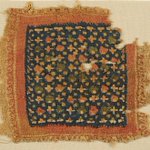
Coptic Tapestry panel with green, pink and white crosses and fruit on blue ground, 5th–6th century.


7
409
Inside Isaac Fanous’s atelier at the Higher Institute of Coptic Studies shown in the 1976 documentary Son Rise. The iconography process blends prayer, symbolism, & layered pigments.


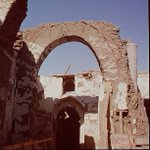
Ancient ruins of the Faras Cathedral belonging to a once Christian Nubia. This cathedral was active during the 8th-14th century & was highly influenced by Coptic art & architecture as there was a rich cultural & religious relationship.


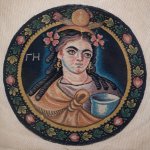
A rare 1st-century Roman-Egyptian painting showing Euthenia, goddess of abundance, resting on a sphinx with birds overhead. Tempera on linen from Akhmim, Egypt.


An illuminated Copto-Arabic manuscript of the ancient Book of Hours (Agpeya), illustrated with detailed artwork. The book was originally produced in Cairo, Egypt. Dated 1815.


Coptic Votive image of Saint Peter, 400-600AD. This may be one of the earliest recorded depiction of St. Peter.

What Palm Sunday looks like at the Monastery of Saint Simon in Cairo. Also known as the Cave Church, this monastery was built in the 7th century & reconstructed in the 10th century.
Coptic Archives retweeted
new article on byzantine egypt & the transformations that took place during this era copticml.substack.com/p/byza…


Fairuz chanting a hymn from the Coptic Orthodox Church dedicated to the Virgin Mary (مديحة يا م ري م) in Deir Saydet el Natour, Lebanon.
Modern Coptic iconography of Mary & Child.
Merry Christmas to those celebrating today. Immanuel, God with us. 🎄💛


A tunic belonging to a child (6th-8th century) with Greek inscription on the collar that translates to “Lord, have mercy.” The ornamentation of the tunic includes animals & garlands which were popular artistic motifs during early Byzantine Egypt.

Tapestry-woven textile of Dionysian figures, 5th-7th century, believed to be from Antinopolis, Egypt.
Greco-Roman traditions heavily influenced Coptic art, & this was present during the Christianization process as syncretic artistic styles were integrated.


