

Father & maker at home, ICT pathfinder @CETIC, @digitalwallonia Champion, lecturer @UNamur, @firstlegoleague fan & coach, @ComputerMuseumB volunteer
Namur, Belgium
Joined October 2010
- Tweets1.9K
- Following445
- Followers271
- Likes5.6K


Pinned Tweet
Find me on other social networks
mastodon: @[email protected]
bluesky: @cponsard.bsky.social
Christophe Ponsard retweeted

Un bon résumé scientifique concernant l'#HeuredHiver.
Christophe Ponsard retweeted
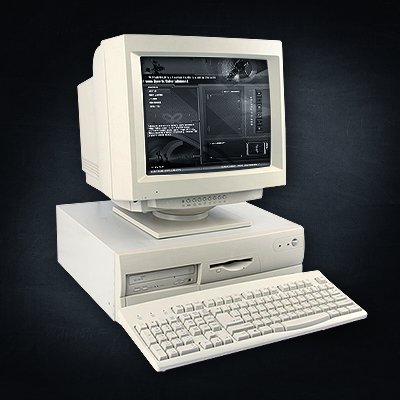
Happy 25th Birthday Wayback Machine!
On October 24, 2001, The Internet Archive organization launched a free digital archive of websites for the general public called the Wayback Machine.
The oldest pages stored in the archive date back to 1996.

ALT Internet Archive website in 2001
Christophe Ponsard retweeted

To give context on age:
Grace Hopper began computing at 38, completed the first compiler at 46, helped shape COBOL at 53, kept developing COBOL for the Navy in her 70s, retired from the Navy at 80, & then became a consultant for the Digital Equipment Corporation.
v/@cooperx86

❤️ "Fade to white" du tome 7
becoze "winter is coming" ?
#gameover #littlebarbarian

Le tome 25 de Game Over est sorti, partagez cette info vous donnera une chance de gagner ce petit dessin original ( fait main 😂). Vous aurez même votre prénom dessus.
Anecdote : La cover est blanche avec des effets de brillance en fond ( une meute de blorks), elle répond au tome 7 - 15 ans plus tard - qui est identique mais en noir. Les équipes commerciales de l’éditeur ont rejeté l’idée car leur leitmotiv est de ne jamais prendre aucun risque (logique de groupe) et ils ont jugé ici que c’était suicidaire de publier une BD impossible ou difficile à identifier…malgré que le tome 7 eût été un best seller. De plus le petit barbare n’a pas son casque mais un bonnet. J’ai fortement insisté pour le sortir tel quel. Qui a raison ? Verdict dans quelques mois


Separation of concerns between AI and spreadsheet formulas

Microsoft is killing Excel’s COPILOT() function after just one year of testing. The AI-powered formula will stop working after September 14, 2026, ending the ability to generate Copilot results directly inside spreadsheet cells.
Microsoft says the function is redundant because users can already access Copilot through Excel’s side pane and Dynamic Action Button. The company is not removing AI from Excel, just retiring this specific formula.


Odeur de brulé cecmatin... Présentatrice @RTBFinfo en mode rouge.... Ça me rappelle le thermomètre COVID mais ici on parle de la santé de la planète 🌎🌱🔥🚒🚿

Christophe Ponsard retweeted

Les oscars de la BD américaine ont rendu leur verdict ! 😍 Bravo à tous les auteurs pour leur travail et leur série qui ont remporté un Eisner ! Tous nos lauréats ici : urban-comics.com/les-laureat…


Christophe Ponsard retweeted

GraphRAG combine la puissance des graphes de connaissances et des LLM. Là où un RAG classique s'appuie sur la similarité vectorielle brute, GraphRAG relie les entités entre elles pour comprendre des structures complexes et répondre à des questions globales sur l'ensemble 👇

Christophe Ponsard retweeted
Merci pour l'idée 🙏

A propos du Chaos Engineering voir aussi l'outil Chaos4CPS @CETIC avec assistant IA en soutien à ce processus de test de la robustesse cetic.be/Mettez-a-l-epreuve-…

What's "chaos engineering," and why do we need it?
Find out in this episode of #ACMBytecast with Kelly Shortridge, Chief Product Officer at Fastly, wherever you get your podcast.
buff.ly/0VH4qZC
#engineering #computing #ACM #podcast
Christophe Ponsard retweeted

What's "chaos engineering," and why do we need it?
Find out in this episode of #ACMBytecast with Kelly Shortridge, Chief Product Officer at Fastly, wherever you get your podcast.
buff.ly/0VH4qZC
#engineering #computing #ACM #podcast
Christophe Ponsard retweeted

Wikipedia is fighting for its survival against MAGA and AI. MAGA lives in bubbles full of lies. AI vampirizes knowledge and is attacking human thought. Billionaires like Musk are truly evil: they play both sides, lies and AI, to increase their power.
nytimes.com/2026/07/05/busin…

Christophe Ponsard retweeted

It’s often said that the computers we carry in our pockets today were once the size of entire rooms. They’re talking about this beast.
#ComputerHistory #IBM #TechHistory


Christophe Ponsard retweeted

Vibe-driven model-based engineering: when low-code and AI had a son
Read on to discover how to best combine #lowcode and #AI (#vibecoding) to balance #determinism and #flexibility.
#hint: all the paths do not lead to #Rome but to #models
modeling-languages.com/vibe-…

ALT Diagram depicting the combination of low-code and AI
Christophe Ponsard retweeted

This computer is the reason you can't download all software for free.
The Franklin Computer Corp was a computer manufacturer founded in the early 1980s. Their flagship product was a clone of the Apple II, one of the most popular personal computers of the day.
But Franklin didn't just make a machine similar to Apple's: they openly and directly copied the Apple II's ROM, which meant it ran all the same software perfectly.
They could do this because it wasn't yet clear if you could copyright compiled binaries. After all, a binary is just a bunch of 1s and 0s, basically math, and you can't copyright math! (Source code was already established as being copyrightable.)
Unsurprisingly, Apple sued, and the Third Circuit ruled in their favor. This case (Apple Computer, Inc. v. Franklin Computer Corp) is still the foundation of US copyright for compiled software. Without it, you could legally download binaries of any software or email them to your friends (and the entire industry would likely look very different).
That's why the Franklin has more than earned its place in our vintage computing lab at the @recursecenter.

Christophe Ponsard retweeted

Continuing my fun with the Enigma machine: I wrote two emulators for a Commodore 64, one in BASIC and the other in Assembly (Turbo Macro Pro, coded on a C64).
The BASIC version does about 3 characters per second. The assembly version can encrypt/decrypt roughly 1500 characters per second.
Christophe Ponsard retweeted

She taught computers how to smile and changed how the world sees technology.
Cupertino, 1983. The Macintosh team was building a personal computer for ordinary people, not engineers. The hardware was revolutionary, but there was a problem: computers still felt cold and intimidating. Green text on black screens. Cryptic commands. No warmth. No welcome. Steve Jobs wanted the Macintosh to feel different approachable, even friendly.Someone suggested Susan Kare.
She wasn’t a programmer. She wasn’t an engineer. She was a sculptor and graphic designer with a fine arts PhD. She had never designed software. Jobs offered her a short-term contract to create a few icons for the new machine.She said yes.
At the time, the Macintosh screen measured just nine inches diagonally, with a resolution of 512 by 342 pixels. Every icon had to fit into a tiny 32-by-32 pixel grid, in black and white. There were no established conventions. No visual language for graphical interfaces. Susan wasn’t refining a system she was inventing one.
She began with graph paper. Each square represented a pixel. She sketched carefully, testing shapes that could communicate meaning instantly. A trash can for deleting files. A folder that resembled the manila folders found in offices. A document that looked like a sheet of paper. A floppy disk for saving work. Visual metaphors rooted in everyday life.
Then she created the smiling Macintosh face—the “Happy Mac.” When users turned on their computer, it greeted them with a smile.It was a small detail. It changed everything.
Until then, computers had no personality. Susan gave the Macintosh warmth. She understood that technology adoption isn’t just about power or speed—it’s about comfort. People needed to feel invited, not intimidated.
Her influence extended beyond icons. She designed typefaces for the Macintosh, naming them after cities Chicago, Geneva, Monaco. Chicago became the system font seen by millions for decades. She created the Command key symbol based on a Scandinavian campsite marker so it would feel universal rather than language-specific. She even designed the whimsical “dogcow” graphic in the print dialog box an unnecessary but charming detail that made users smile.
When the Macintosh launched in 1984, its friendliness stood out. The interface felt intuitive because it was built on visual metaphors people already understood. Other companies quickly followed. Microsoft Windows adopted similar icon conventions. The visual vocabulary Susan created became the foundation of modern user interface design.
Decades later, we still use her language. The trash can icon. The folder. The floppy disk symbol for saving long after floppy disks disappeared. Her early pixel sketches shaped the way billions of people interact with technology every day.
Susan went on to design for NeXT, Microsoft, Facebook, Pinterest, and others. In 2015, she received the National Design Award for Lifetime Achievement. Her original Macintosh icon sketches now sit in the Museum of Modern Art.
She proved that design is not decoration it is communication. It bridges complexity and clarity. It transforms tools into companions.
Before Susan Kare, computers were machines.
After Susan Kare, they smiled.And once technology learned to smile, the world was finally ready to embrace it.
( Credit: Martinbutler )

Christophe Ponsard retweeted

Happy 83rd Birthday to Ken Thompson! 🎂
A true computing legend and co-creator of UNIX, B, and Go—technologies that shaped the modern software world and still power the bulk of today’s infrastructure. 💻️🔥

ALT Happy Birthday Ken Thompson Unix, B, & Go Co-Creator Feb 4, 1943. There is a picture of Ken in the middle, wearing a black suit.
Christophe Ponsard retweeted
Today in 1925, #ACMTuringAward recipient Douglas Engelbart was born. Engelbart received the Turing Award in 1997 for his inspiring vision of the future of interactive computing and the invention of key technologies to help realize this vision.
Engelbart invented or helped pioneer foundational technologies of modern computing, including the computer mouse, hypertext, windowed and split-screen interfaces, interactive text editing, email, and groupware. At Stanford Research Institute, he led the development of the oN-Line System (NLS), famously demonstrated in the 1968 “Mother of All Demos,” which helped define computer-supported collaborative work and shaped personal computing and the Internet.
Read about his contributions and impressive career, here: amturing.acm.org/award_winne…
