




Eugene Garvin retweeted

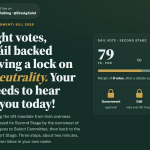
The Seville Declaration states: "Ireland, in its National Declaration, has clearly set out its position in this regard."
Ireland - or specifically FF/FG - are muddying the waters on our National Declaration.
We voted "NO" to Nice and the Seville Declaration was added as a concession to grease the skids on a "YES" vote in the re-run of that referendum.
Now you're torching that concession. Spineless.
Removing the triple lock represents a fundamental change in Ireland's relationship with the rest of the world. We did not vote for this.
savethetriplelock.netlify.ap…

Eugene Garvin retweeted
Ireland was governed by centre right parties for close to 100 years but has gradually shifted leftwards since the 1990s. That push to the left has accelerated rapidly over the last decade or so.
During this period, the country has lurched from crisis to crisis and the life of the average citizen has become more challenging.
We're told to be wary of the far-right, yet there are no far-right parties or politicians in our parliament.
The politicians we do have seem more interested in international obligations than serving the Irish people, funnelling taxes outwards and taking their orders from afar.
So what's causing Ireland to become increasingly unrecognisable as a sovereign state?
If the right is the problem, why is the left making such a mess of governing the country?
At the UK Parliament, UN Watch Releases Database Exposing Who Funds UN’s Human Rights Experts
- No major surprises here if you've been following the UN over the last 10-15 years.
unwatch.org/at-uk-parliament…
If you still take everything you hear from the UN as gospel, then it's probably worth a read - and this only covers the UN's Human Rights Experts - not the bigger picture stuff.
Yes, that's Priti Patel in the picture. Just a pity she didn't take as much interest in the vagaries of the UN when she was in power.

Ireland ranks last in World Bank Report on "GLOBAL PHOTOVOLTAIC POWER POTENTIAL BY COUNTRY"
I think most Irish people would have a realistic view that Ireland was never going to be the most productive country in the world for solar PV, but to see us coming last in this 2020 report from the World Bank was an eye opener. For what it's worth, the UK are second last.
documents1.worldbank.org/cur…
Superficially, I would have expected Scandinavian countries to be worse for example, Alaska perhaps etc. , but if you've ever monitored solar output on your home system, you'll know how devastating the impact cloud cover has on the output of your panels - dropping output by up to a factor of 5 to 10 times. Colder climates with less cloud cover will always fare better for solar PV than we will.
I've never been a fan of covering perfectly good arable land with windmills or solar panels, particularly in a country like Ireland where we have plenty of poor and unusable land from an agricultural perspective, and hence should be preserving our most productive land.
This study only serves to re-enforce such a view.
It also adds further fuel to the Net Zero folly being pursued by the government at a huge cost to the tax payer, and which is only being made worse by the explosion in data centres in this county, whose electricity is effectively cross subsidised by domestic consumers.
xitter.cf/critical_class/status/…
A national debate was never had on Ireland's support for Agenda 2030 (we're 11 years into it now) and the related net zero policies. Given the cost and implications for our society, the fact that this hasn't happened is totally unacceptable.
It's needs to happen sooner rather than later.


Data Centre Growth in Ireland
Has anyone looked at the cost / benefit analysis to the Irish State and the Irish people, and not just the corporations and construction companies engaged in this activity?
Does this growth in data centers in Ireland continue to make sense?
In 2025, 23% of Electricity in Ireland was taken up by Data Centres (up from 5% in 2015) and this is due to grow to a third by 2030, and that coincides with Ireland having the highest electricity prices in the EU and the highest electricity usage by data centers per capita.
A huge proportion of Ireland's investment in renewables is being consumed by these data centers, meaning we're treading water on our energy transition as a result and it's only going in one direction.
The documentary linked below cites a 2024 Friends of the Earth "The Cost of Data Centres" study
friendsoftheearth.ie/assets/…
Some key points from that study:
"The average household may have paid an estimated €360 in additional electricity costs between 2015-2023 due to the intensity of data centre presence on the Irish Single Electricity Market (ISEM) grid putting upward pressure on prices. Cumulatively for all Irish households, this data centre price effect was as high as €715 million"
"Depending on the growth of the data centre sector in the future, the average Irish household could expect to pay a further approximated €295 (low demand scenario), €461 (median demand scenario), and €644 (high demand scenario) cumulatively in the 10 year period 2025-2034. For all households combined, this scales to €633million, €991million, and €1.43billion respectively for these demand scenarios."
"In 2022, a year of an energy crisis leading to extreme price spikes in wholesale electricity markets, the data centre cost effect was equivalent to an estimated 8.5% of total average residential bills."
Water is another issue and is covered in a separate 2024 report: Ireland Has A Massive Data Centre Problem.
thewaterforum.ie/app/uploads…
It's important to note that a data centre's peak usage of water coincides with periods of high temperature and drought, as we had with the recent hosepipe ban.
Put this in the context that the Irish domestic user pays between 1.8 and 2.5 times the electricity rate of a high consumption data centre and you can see that domestic users are essentially cross funding the data centres as we pay most of the network and infrastructure costs.
seai.ie/sites/default/files/…
Is it time for a Great Reset on Ireland's data center policy? I suspect it's a discussion that some of the significant stakeholders involved don't want to have.

Eugene Garvin retweeted

Last week, the NCCA very quietly published its new Intercultural Education Toolkit and the literature review used to support its development. Its not your standard approach to celebrating diversity and promoting kindness. In fact, it critiques universal human rights and liberal approaches and instead adopts a critical race and decolonial theoretical lens.
It asks that intercultural education "permeate all facets of school life" by integrating it across all areas of the curriculum and school setting. Children are set to learn to understand how their "white, settled, Irish" identity affords them unearned privileges and power. The guidance for implementing Intercultural Education slots directly into the 4 key areas of wellbeing promotion outlined in the Department of Education's Wellbeing Policy and Framework for Practice.
This isn't the first time we have seen this framework used as a justification to push schools to teach contested ideologies.
On the back of 2024 "research", Belong To developed the LGBTQ+ Inclusive Primary School Pilot Programme, specifically designed to slot into the Dept's Wellbeing Policy and Framework as well, which would require schools to integrate gender ideology into the classroom and adopt a queer theoretical lens in teaching.
Why is this happening?
The Department of Education has been in the process of reviewing their Wellbeing Policy and Framework and to support this, the ESRI was commissioned to undertake a literature review on wellbeing promotion in schools, which includes recommendations.
One of the recommendations is that "a greater emphasis should be placed on centralising equity, inclusion and diversity in school wellbeing promotion; indeed, this should be viewed as a precondition for promoting wellbeing at school and a measure of the success of school ethos."
So, the new Wellbeing Framework can be understood as an enforcement mechanism within a larger coordinated policy infrastructure. If successful integration of DEI ideologies into the 4 areas of wellbeing promotion (curriculum, culture, policy and planning, and relationships) is framed as a precondition to wellbeing promotion, it does not seem like schools will have much choice in whether or not they teach contested and controversial ideologies.
Making DEI a part of wellbeing promotion and the teaching of these ideologies a requirement under the Dept's Wellbeing Policy, also provides a way to get around parental objections.
There was no press release on the NCCA or Curriculum Online website announcing the publication of the new Intercultural Education Toolkit. Despite the fact that it asks for incredibly controversial approaches and topics to be integrated into every aspect of schooling, from the early years through to Senior Cycle, there was no public consultation on the matter. How is this acceptable? Something that is intended to have this magnitude of impact on the entirety of our children's education should surely be openly discussed and debated.
When the Dept publishes their new Wellbeing Policy and Framework, will it go for public consultation before it is implemented? How many people are aware of the ESRI review and the other concerning recommendations that have been made within it, including the routine collection and sharing of our children's sensitive mental health and demographic data (such as gender identity and sexuality) obtained via classroom administered questionnaires?
The Dept of Ed and the NCCA need to be reigned in, and reigned in quickly, because things are rapidly getting out of control. Everything that they are doing is a recipe for disaster. I don't just mean the politicisation of the curriculum and teaching of controversial ideologies. The turn towards student-directed, inquiry and project-based learning, and a less prescriptive, less knowledge rich curriculum will significantly harm students learning. While a less prescriptive curriculum is framed as a positive that supports "teacher autonomy", it will increase the burden on already overloaded teachers and, as we have seen happen elsewhere, lead to standards and student outcomes varying wildly from one school or teacher to the next, ultimately leading to greater inequality in academic achievement. The overemphasis on wellbeing means that teachers are now being asked to operate outside their competencies and there is significant risk that students' mental health and wellbeing will be negatively impacted instead of improved.
@Nick_Delehanty @mullallyelaine @PaulTreyvaud @DavQuinn @ExCllrRedmond @sarahcatryan @john_mcguirk @griptmedia @Ben_Scallan @Niall_Boylan @JasonOsborne_GM @GL_Kavanagh @declanganley @CormacLucey @Toibin1 @1PaulLawless @kenoflynnTD @CNolanOffaly @JohnandSarahIrl @timcrowley_ @EoinLenihan

ALT Supporting student wellbeing in school contexts: A narrative review ESRI Caoimhe Dempsey and Selina McCoy


Ireland vote in favour of the UN Political Declaration on Pandemic Prevention, Preparedness and Response.
The United Nations General Assembly have adopted the non-binding declaration (draft resolution A/81/L.6) on 12 October 2026 by a recorded vote of 153 in favour, 3 against (Argentina, Israel, and the United States), and 2 abstentions (New Zealand and Paraguay).
It had been intended for adoption by consensus at a high-level meeting on 25 September 2026, but objections (primarily from the US and a few others) forced a full General Assembly vote.
news.un.org/en/story/2026/10…
globalissues.org/news/2026/1…
European Union member states, including Ireland, voted in favour. Ireland spoke on behalf of the EU and noted some caveats—particularly that technology transfers should occur only on a voluntary basis and mutually agreed terms, while respecting intellectual property rules (citing the WTO’s Doha Declaration)—and questioned whether the cited $15 billion annual pandemic preparedness financing gap remained current. Despite these reservations, the EU bloc (and thus Ireland) supported the overall declaration.
healthpolicy-watch.news/un-a…
This aligns with Ireland’s broader support for related multilateral efforts, including the WHO Pandemic Agreement adopted earlier.
This agreement is political and non-binding, but so is UN Agenda 2030, and that hasn't stopped the Irish government from enshrining the Sustainable Development Goals in policy and legislation over the last 11 years, destroying our education system (among many other areas) in the process.
The text of the UN "Political declaration on pandemic prevention, preparedness and response" is here:
docs.un.org/en/A/81/L.6

We shouldn't forget the role that two Irish people have had in advancing the notion of gender identity in international law.
Michael O’Flaherty, Council of Europe Commissioner for Human Rights since April 2024, has a documented, long-standing record of advancing gender-identity frameworks in international human-rights law and intervening against policies that treat sex as biological. This includes foundational drafting work and recent official interventions that align with core trans-advocacy positions on legal recognition, self-defined identity, and access to sex-segregated spaces.
en.wikipedia.org/wiki/Michae…
archive.ph/usdkL
The Parliamentary Assembly of the Council of Europe (PACE) seeks to make it illegal to question someone’s self-chosen gender identity (totally ignoring the mental health factors that can contribute to a minor expressing gender confusion), via a new proposal criminalising ‘conversion practices’.
rm.coe.int/doc-for-a-ban-on-…
athena-forum.eu/updates/push…
The current Irish Programme for Government includes the implementation of such a ban. See page 98:
gov.ie/en/publication/078a1-…
"Advance legislation to ban conversion practices."
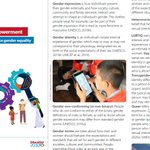
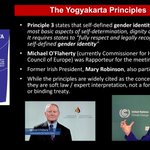
Gender Identity entered the domain of global human rights with the Yogyakarta Principles
yogyakartaprinciples.org
which were adopted at an experts’ meeting held 6–9 November 2006 at Gadjah Mada University in Yogyakarta, Indonesia. The meeting was convened by the International Commission of Jurists (ICJ) and the International Service for Human Rights (ISHR). Twenty-nine experts from 25 countries formed the International Panel of Experts that drafted, discussed, and unanimously adopted the Principles.
Michael O'Flaherty (served as rapporteur at the meeting) and former President of Ireland as well as former UN High Commissioner for Human Rights, Mary Robinson, was one of the participants (as Founder of Realizing Rights: The Ethical Globalization Initiative - which disbanded in 2010)
news.un.org/en/story/2002/09…
The Yogyakarta Principles were augmented in 2017: yogyakartaprinciples.org/pri…

The complete list of signatories ("experts") to the 2006 Yogyakarta Principles are captured on pages 34 & 35 of the official document:
yogyakartaprinciples.org/wp-…
According to Grok, the following delivered background papers at the meeting:
John Fisher (ARC International) — global advocacy and the international response
Scott Long (Human Rights Watch) — the nature of the violations
Philip Dayle (ICJ), with Alok Gupta
Alice Miller (Columbia; also a signatory)
Mauro Cabral (also a signatory) — gender identity and expression
Sonia Corrêa (co-chair)
Elizabeth Evatt (signatory) — status of international law on these issues
While not listed by Grok as a presenter, Stephen Whittle would also appear to have been actively involved in the meeting. His listed role at the time was Professor in Equalities Law at Manchester Metropolitan University.
He was/is a prominent UK trans academic and activist (associated with Press for Change en.wikipedia.org/wiki/Press_…).
His papers from the meeting are held in the LSE archives:
archives.lse.ac.uk/records/W…
and include the programme, delegate biographies, drafts of the Principles, background papers, and his own notebook of notes from the sessions.
That shows he was in the room as a participating expert, not merely an observer, which would make sense given his background.
As rapporteur, Michael O’Flaherty would have proposed the language and negotiated consensus among the experts. Co-chairs were Sonia Onufer Corrêa and Vitit Muntarbhorn.
The “case” was assembled by ICJ, ISHR, and ARC International, supported by background papers from Fisher, Long, Dayle and others, then drafted and adopted by the "expert" panel itself.
Eugene Garvin retweeted

The Irish Government is in the process of drafting legislation to allow them to install Israeli type commercial spyware on the phones of Irish citizens.
Round 3 of the "Convention on Education" - the attempt to manufacture a "progressive" consensus on the direction of Irish Education, is on this weekend.
John McGurk has shared the agenda for the weekend on substack per below. Thank you @john_mcguirk
johnandsarah.ie/p/dr-ebun-jo…
Irish education has been taken over by the radical left, all under FF-FGs watch. People who believe that sex and gender are the only controversial aspects should think again. This is indoctrination in Woke Critical Social Justice Ideology
xitter.cf/critical_class/status/…
and United Nations propaganda, like we have never seen before,
xitter.cf/critical_class/status/…
and all at the expense of substance and standards as we saw with the recent Leaving Cert Maths situation.
xitter.cf/critical_class/status/…
How much of this charade will parents in this country continue to tolerate, assuming they are even aware of what is happening?

Anyone noticing a trend here.
Neither parents, teachers nor subject matter experts (SMEs) appear to be getting listened to by the NCCA, and we've seen this across the curriculum reform at all age levels, not just leaving cert (which tends to dominate in terms of publicity
The Dail Committee on Education need to do their job. Bring in, and listen to all those teachers and SMEs who the NCCA didn't listen to, and then get the NCCA to do some explaining to get to the bottom of this.
This investigation and debate and needs to happen.
From 2019: Teachers say junior-cycle science curriculum being ‘dumbed down’ - Survey of 700 science teachers says lack of clarity is leading to anxiety and frustration
irishtimes.com/news/educatio…
"The report warns that the changes will provide “poor preparation” for study of science subjects at Leaving Cert level due to a widening gap between both programmes.
Only 1 per cent of teachers said junior cycle students would be very highly prepared to study science subjects at Leaving Cert level of foot of the changes.
Among teachers other concerns were that the curriculum consisted of “vague” learning outcomes and lack of depth of treatment which was causing a serious “dumbing down” of standards."
I had similar concerns, and even used much the same language in my personal feedback to the NCCA on the revised Primary Curriculum.
Alas, there would appear to have been very little feedback on that curriculum - people not considering it as important as the Junior and Senior cycle.
I believe that was a mistake.
Irish Science Teachers’ Association Report presented to the Minister for Education and NCCA in response to the 2023 draft specifications (syllabi) in Leaving Certificate Biology, Chemistry and Physics
ista.ie/wp-content/uploads/2…
"One of the main problems in the Leaving Certificate Physics, Chemistry and Biology
Draft Specification is the lack of clarity in a significant percentage of learning outcomes in each specification - Physics (68.3%), Chemistry (31.5%) and Biology (66.7%)."
Major concerns were also expressed in their report on the whole assessment strategy and the massive 40% being allocated to it.
Leaving Cert science changes are deeply flawed
Vague approach to subject content will result in confusion, inconsistency and unfairness
irishtimes.com/opinion/lette…
Science teachers sound alarm over Leaving Cert exam changes
irishexaminer.com/news/arid-…
"However, most schools do not have adequate labs to roll out the planned additional assessment component (AAC), worth 40%."
Irish senior cycle reforms have resulted in some farcical situations - Concerns raised over how Additional Assessment Components are working in classrooms and the increasing dependence on iPads and Chromebooks
irishtimes.com/opinion/2026/…
Expert says draft changes to Leaving Cert maths 'littered with errors and inaccuracies' | RTÉ News
youtu.be/nQaU-VXj22k
xitter.cf/K02568/status/20950701…

The Department of Education refer to the "Deliberative Democracy" process that is being used (overseen by regular Citizens Assembly contributor Dr. Jane Suiter of DCU's Institute of Future Media, Democracy, and Society).
With 1) hard left facilitators ("Quality Matters" - don't you just love the name?), 2) a posse of hard left NGOs advocating for "social transformation" to address inequalities for a range of oppressed identity groups, and 3) no attempt at a randomised selection of the teacher and parent representatives, this is not an exercise in Deliberative Democracy at all and Dr. Suiter should be calling that out.
It's a stitch up of course, characteristic of the sham democracy we now appear to be living in, where transnational agencies set the agenda, and the so called "establishment Left" carry out their wishes and feather their own nests in the process.
xitter.cf/Education_Ire/status/2…

The Convention on Education has reached an important milestone, with participants now halfway through a landmark deliberative democratic process that is helping to shape a long-term vision for education in Ireland.
gov.ie/en/department-of-educ…


Eugene Garvin retweeted

Ursula von der Leyen has confirmed that everyone in the EU will need to use the EU's app for identity authentication before being able to access or post on social media websites.
🇪🇺 As an expert in online child safety, I am here to expose the misinformation and misdirection in von der Leyen's statements.
Today von der Leyen said:
"This is not about whether children can access social media, it is about whether social media can access our children".
💡The first part is true. This isn't about children. It's about surveillance and combating political dissent. A state that can't control its own citizens is more dangerous than a state rife with criminals. The second part is a PR soundbite that politicians are using like a campaign slogan straight out of 1984.
🇪🇺"The question is no longer if children face risks online, but what can we do to give children a safer start online".
💡No. You can't give children a "safer start" online any more than you can offline. In the offline world, the government doesn't enforce curfews or ban children from entering liquor stores, bars or restaurants. That's a parent's responsibility. The digital world should be no different.
🇪🇺"The age verification app is one of the tools to get it done".
💡This is a contradiction because she also said "It won't be foolproof".
🇪🇺"It's easy to use, it is privacy preserving and it is open source".
💡The app was compromised as soon as it was released. "Privacy-preserving" age verification is an oxymoron. You can't verify a person's age without verifying their identity. Where or how that age is shared afterwards is irrelevant.
🇪🇺"This is basically about putting back the power into the hands of parents".
💡More from 1984. The EU is doing the opposite. Parents are having their authority stripped by politicians who think they know better. Many parents are capable and unaffected by peer pressure, and they know how to use parental controls to block any app classified as 13+. Some teens are safe, their parents trust them, and the state has no business overruling that trust.
🇪🇺"We don't give our children keys to the car before they have their licence"
💡Comparing an app to a car is a false equivalence used to justify mass surveillance. Governments don't decide when a young person is ready for car keys, guardians do.
💡Forcing every adult and child into a biometric checkpoint just to use an app or website is not licensing drivers. It's the state seizing everyone's keys, locking the garage, and forcing every driver to ask a private company for permission to take a drive.
💡 This is a gross, unethical overreach that strips authority from parents while imposing state sanctioned identity verification on every adult who doesn't even have a child.
💡Additionally, people who pass a test, obtain a licence and drive a car aren't forced to use an app to constantly authenticate their suitability to drive.
🇪🇺"We do not let them buy alcohol until they are legally allowed"
💡False equivalence. We don't force every person to show ID at a shopping mall entrance just because a few people might buy alcohol with a meal at a restaurant. Some parents are okay with their 12 year-old going to the mall with friends while others aren't. Either way, it's their choice. Whatever irresponsible decisions some parents might make, every adult in the country shouldn't be forced to pay the price.
🇪🇺"It won't be foolproof"
💡This is all the proof we need to show that the EU and every government know that banning social media for teens won't protect them. When pressed by journalists about VPNs being used to circumvent a ban, politicians always state the ban isn't a silver bullet and will take time. The Mayor of London, Sadiq Khan went as far as to say "we know it's not the solution".
💡Either age verification works, or it doesn't. As a technical expert in this space, I can tell you there are no additional steps to take and no progress to be made. Either the approach does what it is supposed to do, or it's not fit for purpose. If they claim a bulletproof solution is coming, it can only mean one thing. They intend to ban or restrict VPNs to people who verify their identity.
🇪🇺"It will take time to invite the cultural change that is already taking shape in our society, just as it took time to outlaw drink driving, just as it took time to use seatbelts in the cars. Great change never happens overnight, but when it comes to our safety it is always worth it".
💡Comparing a social media ban and age verification to seatbelts is a completely broken analogy. Seatbelts are a safety feature that protects children while allowing them to travel in a car. A ban doesn't give kids a seatbelt. It kicks them out of the car entirely.
💡Instead of supporting parents who want to guide their own children through the digital world, this heavy-handed law strips away parental authority by banning the apps and websites that many parents are perfectly fine with and actively monitor.
💡Furthermore, enforcing these bans requires biometric age verification, which means forcing millions of adult citizens to scan their IDs, faces or credit cards just to browse the internet. That isn't a common-sense traffic law.
💡It's a digital checkpoint on every street. True safety means teaching kids how to navigate the digital world safely with real guardrails and parental guidance, not burning down digital spaces for everyone under the guise of protection.
🇪🇺☠️ The EU wants to ban teens from social media so every person is forced to verify their identity before they can read, share or post anything online. In their words, this is to protect children from dangerous content.
🇪🇺☠️ The EU wants to enforce "Chat Control" so every app has to monitor everything people say privately inside it, including apps with end-to-end encryption. In their words, this is to protect children from dangerous criminals.
💡Where this ends
🇪🇺 "If you want a picture of the future, imagine a boot stamping on a human face - forever".
George Orwell, 1984.
Eugene Garvin retweeted

We are brainwashing an entire generation.
Indulgence of victimhood.
Rejection of agency.
Abdication of responsibility.
This is an absolute scandal. 👇🤯🤯

Why It Was Essential That the Living Love Resources for Senior Cycle Addressed Gender Dysphoria and Gender Ideology
I have seen concerns from parents that references are made in the new Living Love Senior Cycle SPHE resources to the topics of Gender Dysphoria and Gender Ideology.
These concerns are understandable, particularly if you are already familiar with the content in the standard SPHE text books.
I agree that we should never have had Gender Ideology in our children's schools. However, when I went to review these new SPHE resources I was concerned these terms would not be dealt with and here are my reasons why.
First of all, Gender Ideology is mainstream right now, not fringe. It's being pushed through 2 paths - Gender Equality - UN SDG5 (where gender is a social construct), and LGBTQI+ Inclusion. Both of these are pushed down from the EU/UN into every corner of the Irish establishment - Government and Civil Service, NGO sector, Academia, Trade Unions and media - all the same people who wanted to take woman and mother out of the constitution. Never forget that fact.
We also know that Gender Ideology is one of the topics (race and climate are two others) that are taught on a "whole-school" basis, so even without SPHE, it is part of the anti-bullying policy (Bí Cineálta), and potentially any one or all of your other school subjects, as well as enshrined in our society. It's everywhere, and our children can't avoid encountering it.
In this context, let's look at this quote from C.S. Lewis, in the “THE ABOLITION OF MAN”:
“The right defence against false sentiments is to inculcate just sentiments. By starving the sensibility of our pupils we only make them easier prey to the propagandist when he comes. For famished nature will be avenged and a hard heart is no infallible protection against a soft head.”
Lewis is arguing that in not giving children a solid foundation of knowledge, grounded in objective truth and moral reasoning, they will be vulnerable to the LGBTQ+ propagandist when they come. Without having a grounding in the terrible consequences of Gender Ideology, none of which are covered in the standard NCCA curriculum, children would be vulnerable to succumbing to the "be kind and inclusive" propagandists.
Instead, the Living Love material provides children with an antidote to this fundamentally flawed postmodern globalist ideology. And if you put this is in the context of children who will already have gone through 3 years of the Junior Cycle SPHE Curriculum, it is critical that they now receive a reality check on the indoctrination of those previous three years.
These Living Love resources sit in stark contrast to the standard SPHE curriculum with it's Genderbread Person, discussion on Gender Identity, and not a mention of medical realities. The new material is effectively an affront to the Globalist and Irish establishment.
The words of Saint Titus Brandsma come to mind: “He who wants to win the world for Christ, must have the courage to come in conflict with it.” And so it is that the Living Love resources are in conflict with a world that seeks to dumb down and indoctrinate our children.
We should never have come to this point, but we're here now and we must face it, with the same energy and zeel as the propogandists who seek to "transform" Irish society, by transforming the minds of our children. Sadly, gender is but one thread of the Critical Social Justice / United Nation Propaganda machine that has colonised our education system.
This is a very welcome start, and with it, our Bishops (perhaps reluctantly) have entered the world of counter revolution, and are starting to find the courage "to come into conflict with" the world we now find ourselves in.
It's taken four years to get here, but we are here now and a line in the sand has been drawn.

Eugene Garvin retweeted

'No Contact' release day! 🫰🫰🫰 Please help spread the word so it can get to those who need it. Link to order in comments.
Eugene Garvin retweeted

He drops a whole heap of inconvenient truths on AI data centres. Worth watching.
Eugene Garvin retweeted

What the West Still Doesn’t Get It:
Communism’s True Core: The Systemic Lie
Most people in the West think they understand communism. They picture bread lines, gulags, failed five-year plans, and the collapsed Soviet Union. They treat it as a discredited economic theory – an experiment that proved that abolishing private property doesn’t work. Case closed, history moved on.
This misunderstanding may be the most dangerous intellectual failure of our time.
Communism was never primarily an economic system. Economics was the surface. Beneath it lay something far more insidious: a total, systemic, institutionalized commitment to lying. Not occasional dishonesty. Not spin or propaganda in the ordinary sense. Something deeper – a civilizational war against truth itself, waged through every institution, every classroom, every newspaper, every conversation, until reality itself became negotiable and the lie became the air people breathed.
The Words We’re Missing
The Polish language, forged by decades of living under this system, produced words for this phenomenon that English simply cannot match:
Zakłamanie [zah-kwah-MAH-nyeh] – a state of total, pervasive, socially embedded falsehood, a condition in which an entire society is saturated with lies so thoroughly that truth becomes almost inaccessible.
Obłuda [ob-woo-dah] – a deep, performative hypocrisy, the gap between what is proclaimed and what is actually practiced, the mask worn so long it begins to feel like a face.
These are not words for individual liars. They describe a system – a mode of social organization built on organized mendacity, where the lie is not the exception but the foundation. English has no single word for either concept, and that linguistic gap is not a coincidence. It reflects a gap in experience. Cultures that did not live under communism lack the vocabulary because they lack the wound.
And because they lack the vocabulary, they struggle to recognize the thing when it reappears in new clothing.
The Continuity: Communism, Leftism, Wokeism
What we call wokeism today, or the broader radical left, is not a new phenomenon. It is the same operating system running on updated hardware. The specifics have changed – instead of the proletariat, we have marginalized identity groups; instead of bourgeois class enemies, we have racists and transphobes; instead of socialist realism, we have DEI statements. But the deep structure is the same.
That deep structure is this: truth is not discovered, it is assigned. Reality is not something to be understood honestly but something to be narrated strategically. Language is not a tool for communication but a weapon of power. And anyone who resists the approved narrative is not simply wrong – they are dangerous, and must be silenced, shamed, or destroyed.
This is zakłamanie in its modern form. This is obłuda wearing a human rights badge.
The same movement that insists men can become women will insist, with equal fervor, that questioning this is an act of violence. The same institutions that claim to champion free inquiry systematically suppress dissent. The same people who invoke tolerance as their highest value are among the most intolerant forces in public life. The contradiction is not accidental – it is structural. It is the system working as designed.
Why the West Still Doesn’t Get It
People who grew up in freedom tend to assume, at some level, that bad actors know they are lying. That somewhere behind the ideological performance, there is a cynical operator who privately acknowledges reality. This assumption is wrong, and it is why Westerners consistently underestimate what they are dealing with.
The totalitarian lie, at its mature stage, is not cynical. It is believed. Or rather, it creates a condition in which the distinction between belief and performance collapses entirely. People learn to say things they do not believe so fluently, and for so long, that they lose access to what they actually think.
1/2

Data Centre Growth in Ireland
Has anyone looked at the cost / benefit analysis to the Irish State and the Irish people, and not just the corporations and construction companies engaged in this activity?
Does this growth in data centers in Ireland continue to make sense?
In 2025, 23% of Electricity in Ireland was taken up by Data Centres (up from 5% in 2015) and this is due to grow to a third by 2030, and that coincides with Ireland having the highest electricity prices in the EU and the highest electricity usage by data centers per capita.
A huge proportion of Ireland's investment in renewables is being consumed by these data centers, meaning we're treading water on our energy transition as a result and it's only going in one direction.
The documentary linked below cites a 2024 Friends of the Earth "The Cost of Data Centres" study
friendsoftheearth.ie/assets/…
Some key points from that study:
"The average household may have paid an estimated €360 in additional electricity costs between 2015-2023 due to the intensity of data centre presence on the Irish Single Electricity Market (ISEM) grid putting upward pressure on prices. Cumulatively for all Irish households, this data centre price effect was as high as €715 million"
"Depending on the growth of the data centre sector in the future, the average Irish household could expect to pay a further approximated €295 (low demand scenario), €461 (median demand scenario), and €644 (high demand scenario) cumulatively in the 10 year period 2025-2034. For all households combined, this scales to €633million, €991million, and €1.43billion respectively for these demand scenarios."
"In 2022, a year of an energy crisis leading to extreme price spikes in wholesale electricity markets, the data centre cost effect was equivalent to an estimated 8.5% of total average residential bills."
Water is another issue and is covered in a separate 2024 report: Ireland Has A Massive Data Centre Problem.
thewaterforum.ie/app/uploads…
It's important to note that a data centre's peak usage of water coincides with periods of high temperature and drought, as we had with the recent hosepipe ban.
Put this in the context that the Irish domestic user pays between 1.8 and 2.5 times the electricity rate of a high consumption data centre and you can see that domestic users are essentially cross funding the data centres as we pay most of the network and infrastructure costs.
seai.ie/sites/default/files/…
Is it time for a Great Reset on Ireland's data center policy? I suspect it's a discussion that some of the significant stakeholders involved don't want to have.
