

Ph.D. student in Neural Computation and Machine Learning at Carnegie Mellon University Personal webpage: https://xitter.cf/t.co/xe96gS6k3F
Joined August 2019
- Tweets470
- Following357
- Followers144
- Likes480




Pinned Tweet
Excited to share that I completed my PhD in Neural Computation and Machine Learning at Carnegie Mellon University and have joined the Raynor Cerebellum Project (@RaynorProject ) as a Research Engineer!
Posted another blog I wanted to write for a while, related to closed-loop brain stimulation:
"Why controlling the brain is not like controlling a robot"
medium.com/@ym1942/why-contr…

It’s been a while since my last blog post, but I’ve finally started working on the blog series I’ve been wanting to write for a long time! If you are interested in closed-loop brain stimulation, check it out:
medium.com/@ym1942/computati…
I'll be continuing my work on ML-based closed-loop brain stimulation, now with a focus on translating these technologies toward treatments for cerebellar disorders.
I'll be continuing my work on ML-based closed-loop brain stimulation, now with a focus on translating these technologies toward treatments for cerebellar disorders.
I'm excited to share our new #NeurIPS2025 paper with
@jsoldadomagrane @YuLikeNeuro @SmithLabNeuro!
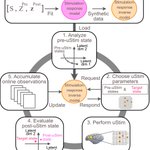
We introduce OMiSO, a new adaptive brain stimulation framework with two technical advancements from our previous work MiSO.
Poster Sess 1, Dec 3 11-2pm, Exhibit Hall C,D,E #2008

Second, OMiSO adaptively updates stimulation parameters online to compensate for changes in the brain’s response to stimulation. It updates the stim-response inverse model during the experiment, leading to improved accuracy in inducing the target brain state. [3/n]
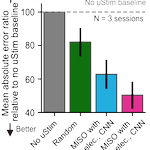
Taken together, OMiSO provides greater accuracy in achieving specified brain activity states than previous methods, thereby advancing neuromodulation technologies for understanding the brain and for treating brain disorders.
Paper: openreview.net/pdf?id=Gb0mXh… [4/n]

Yuki Minai retweeted

For a long time, some have daydreamed about whether neural networks can learn to effectively synthesize stimulation patterns to write information into the brain.
For the first time, we have demonstrated that 𝐝𝐚𝐭𝐚-𝐝𝐫𝐢𝐯𝐞𝐧 𝐧𝐞𝐮𝐫𝐚𝐥 𝐜𝐨𝐧𝐭𝐫𝐨𝐥 𝐯𝐢𝐚 𝐚 𝐯𝐢𝐬𝐮𝐚𝐥 𝐜𝐨𝐫𝐭𝐢𝐜𝐚𝐥 𝐢𝐦𝐩𝐥𝐚𝐧𝐭 𝐢𝐧 𝐚 𝐛𝐥𝐢𝐧𝐝 𝐡𝐮𝐦𝐚𝐧 is possible.
Introducing 𝐃𝐞𝐞𝐩 𝐋𝐞𝐚𝐫𝐧𝐢𝐧𝐠-𝐁𝐚𝐬𝐞𝐝 𝐂𝐨𝐧𝐭𝐫𝐨𝐥 𝐨𝐟 𝐄𝐥𝐞𝐜𝐭𝐫𝐢𝐜𝐚𝐥𝐥𝐲 𝐄𝐯𝐨𝐤𝐞𝐝 𝐀𝐜𝐭𝐢𝐯𝐢𝐭𝐲 𝐢𝐧 𝐇𝐮𝐦𝐚𝐧 𝐕𝐢𝐬𝐮𝐚𝐥 𝐂𝐨𝐫𝐭𝐞𝐱
biorxiv.org/content/10.1101/…
An all-stars collaboration between
🌠𝐌𝐢𝐜𝐡𝐚𝐞𝐥 𝐁𝐞𝐲𝐞𝐥𝐞𝐫'𝐬 Bionic Vision Lab @bionicvisionorg at @UCSB (USA)
🌠𝐒𝐡𝐢𝐡-𝐂𝐡𝐢𝐢 𝐋𝐢𝐮'𝐬 lab at The Institute of Neuroinformatics @ETH_en in Switzerland and
🌠𝐄𝐝𝐮𝐚𝐫𝐝𝐨 𝐅𝐞𝐫𝐧𝐚́𝐧𝐝𝐞𝐳'𝐬 Biomedical Neuroengineering lab @nBioUMH at @IB_UMH in Spain.
This dream project was spearheaded by 𝐏𝐞𝐡𝐮𝐞́𝐧 𝐌𝐨𝐮𝐫𝐞, 𝐉𝐚𝐜𝐨𝐛 𝐆𝐫𝐚𝐧𝐥𝐞𝐲 @jacob_granley
and 𝐅𝐚𝐛𝐫𝐢𝐳𝐢𝐨 𝐆𝐫𝐚𝐧𝐢 @GraniFabrizio, and I’m thrilled to be part of this monumental effort!
1/


Yuki Minai retweeted

🥳We are so glad to announce that our paper "Brain connectivity changes in response to cortical electrical stimulation in blind neuroprosthesis users" is now out in the Journal Cerebral Cortex.
⬇️Link to the paper: academic.oup.com/cercor/arti…
Tomorrow, I will be presenting the closed-loop brain stimulation framework we developed (MicroStimulation Optimization, MiSO) at the workshop "Causal perturbation based approaches to uncovering neural dynamics". Looking forward to seeing you there!
#Coysne2025

Yuki Minai retweeted

We are excited to announce our 2025 RFA for $2.5 million Grant for an Artificial Intelligence Core for the newly launched RCP Institute! Visit our website for more information and details about how to apply.
raynorcerebellumproject.com/…
Yuki Minai retweeted

After 10 years of implanting Utah Arrays in 5 participants with spinal cord injuries…
we provide a methodological roadmap to target and evoke tactile finger sensations using intracortical microstimulation.
@John_E_Downey @robert_gaunt1 @jenpgh
tinyurl.com/S1roadmap
🧵1/7

Yuki Minai retweeted

Check out our new paper 'Evoking stable and precise tactile sensations via multi-electrode intracortical microstimulation of the somatosensory cortex' on @natBME 🦾 🧠 ⚡
Link: nature.com/articles/s41551-0…

I'm excited to share our #NeurIPS2024 paper with
@jsoldadomagrane @SmithLabNeuro @YuLikeNeuro!
We develop a new brain stimulation framework (MiSO) to drive neural population activity toward specified states.
Paper: openreview.net/pdf?id=Gb0mXh…
Poster Session 4 East, Dec 12 16:30
[1/n]

In this study, we implemented MiSO with a factor analysis based alignment method, a CNN model, and an epsilon greedy optimization algorithm. We tested MiSO in closed-loop experiments using electrical microstimulation (uStim) in the prefrontal cortex of a non-human primate. [6/n]
