

i believe in Jesus, who is God's son, whose sacrificial death, burial, and resurrection, saved me from my sins. Justified by Faith.
Mount Sterling, KY
Joined December 2023
- Tweets24.2K
- Following318
- Followers1.8K
- Likes44.9K



Diane Williams retweeted

Have you ever stopped to actually think about how all the prophecies concerning Christ’s 2nd coming fit together?
Jesus said Jerusalem would NOT see Him again UNTIL they say, “Blessed is He who comes in the name of the LORD!” (Matt 23:39).
He attached a future condition to seeing Him again- He is pointing to a time when Jerusalem will finally recognize and welcome Him as the Messiah sent by God. 🤍
Hosea 3:4-5 tells us Israel will go many days without a king, but AFTERWARD, in the latter days, they will return & seek the LORD and David their king.
*David was already dead when Hosea wrote this. Who is the promised Son of David? Jesus!
Then you have Zech 12:10 telling us that Israel will look upon the One they pierced & mourn for Him & in Zech 14:2-4, we are told the LORD will stand on the Mount of Olives, which is literally right across the valley from Jerusalem, & fight against the nations that come against her.
Also, we know where Jesus was when He ascended into heaven…The Mount of Olives! What did the angels say? 👼 That He would return the same way He left.
Paul said in Romans 11:25-26 that Israel has experienced a partial hardening UNTIL the fullness of the Gentiles comes in & all Israel will be saved.
Do you see how all of this connects? No wonder the devil wants to destroy Israel!!! 🤷♀️ These are not just random verses scattered throughout the Bible. This is just a small sample of so many prophecies pointing towards the same thing….
God is NOT finished with Israel. The 2nd coming of Christ is tied directly to Jerusalem.
Read the prophets, read the Gospels, read Paul. It all fits together! 🙏

Aeesome post.

📖 DISPENSATIONALISM: BIBLICAL TRUTH OR AN 1800s INVENTION?
Did John Nelson Darby invent dispensationalism—or did he organize truths already revealed in Scripture?
Critics frequently dismiss dispensationalism as a nineteenth-century invention. But the age of a theological system does not determine whether its conclusions are true.
The real question is much more important:
Does dispensationalism faithfully explain what God actually revealed in His Word?
Let's examine the evidence.
▶️ 1. DISPENSATIONS ARE A BIBLICAL CONCEPT
The Greek word oikonomia means stewardship, administration, or management.
Paul uses this word repeatedly:
Ephesians 3:2 — The stewardship of God's grace entrusted to Paul.
Ephesians 1:10 — God's administration concerning the fullness of the times.
1 Corinthians 9:17 — Paul's stewardship of the Gospel.
Colossians 1:25–26 — His God-given stewardship concerning a mystery previously hidden.
These passages do not, by themselves, establish seven dispensations. But they demonstrate that stewardship and administration are biblical concepts.
God has progressively revealed His purposes throughout history.
The Administrator never changes. His administrations do.
▶️ 2. GOD'S INSTRUCTIONS HAVE CHANGED THROUGH HISTORY
Consider these undeniable biblical distinctions:
Adam was forbidden to eat from a particular tree (Genesis 2:16–17).
Noah received permission to eat animals (Genesis 9:3).
Abraham received covenant promises centuries before the Mosaic Law (Genesis 12; Galatians 3:17).
Israel received the Law at Sinai (Exodus 19–20).
The Church is not under the Mosaic Law as its covenantal administration (Romans 6:14; Galatians 3:24–25).
Christ's future Kingdom includes His reign over the nations (Revelation 20:1–6; Zechariah 14:9).
Was Abraham commanded to observe the Levitical priesthood? No.
Are Gentile believers commanded to offer animal sacrifices at Jerusalem? No.
Does this mean God changes His character? Absolutely not! Malachi 3:6 affirms His unchanging nature.
God remains the same, even as His revealed instructions and covenantal administrations change.
And salvation has always depended upon God's grace, received through faith—not human merit (Genesis 15:6; Romans 4:1–8).
▶️ 3. THE SEVEN DISPENSATIONS EXPLAIN THE BIBLICAL TIMELINE
Classical dispensationalism commonly identifies seven administrations:
🌿 Innocence — Creation to the Fall (Genesis 1–3).
⚖️ Conscience — The Fall to the Flood (Genesis 4–8).
🌍 Human Government — Noah to Abraham (Genesis 9–11).
📜 Promise — Abraham to Moses (Genesis 12–Exodus 19).
🕎 Law — Sinai to the transition inaugurated by Christ (Exodus 20; Galatians 3:19–25).
🕊️ Grace / Church Age — Pentecost to the Rapture (Acts 2; Ephesians 3).
👑 Kingdom — Christ's millennial reign (Revelation 20:1–6).
Scripture does not present a numbered list of these seven periods. They are interpretive categories used to organize identifiable changes in God's dealings with humanity.
Their value lies in helping readers distinguish what God commanded, to whom He commanded it, and when.
Different administrations. One sovereign God. One unfolding redemptive plan.
▶️ 4. THE COVENANTS ARE THE HEART OF THE MATTER
This is where dispensationalism becomes especially important.
God made specific promises to Israel, and Scripture repeatedly affirms their enduring character.
📜 The Abrahamic Covenant — Genesis 12, 15, 17
God promised Abraham descendants, a particular land, and blessings extending to all nations.
Genesis 17:7 describes an everlasting covenant.
👑 The Davidic Covenant — 2 Samuel 7:12–16
God promised David an enduring royal house, throne, and kingdom.
Luke 1:32–33 identifies Jesus as the promised heir to David's throne.
🕊️ The New Covenant — Jeremiah 31:31–37
God explicitly names the house of Israel and the house of Judah.
He promises forgiveness, a transformed heart, and an enduring national identity before Him.
Jeremiah 31:35–37 connects Israel's continued existence as a nation with the established order of creation.
🌿 The Restoration Promises — Ezekiel 36–37
God promises Israel regathering, cleansing, spiritual renewal, and restoration to the land.
Ezekiel 36:22 makes an extraordinary point: God acts for the holiness of His own name.
The issue is not Israel's worthiness.
The issue is God's faithfulness.
▶️ 5. ROMANS 11 REFUTES THE IDEA THAT GOD IS FINISHED WITH ISRAEL
Paul asks a question that every Christian must confront:
Romans 11:1 — Has God rejected His people?
His answer is emphatic: Absolutely not!
Notice Paul's argument:
Romans 11:11 — Israel's stumbling is not its final downfall.
Romans 11:17–24 — Gentile believers are grafted into the olive tree and warned against arrogance.
Romans 11:25 — A partial hardening has happened to Israel until the fullness of the Gentiles comes in.
Romans 11:26–27 — Paul anticipates Israel's future salvation and connects it to God's covenant.
Romans 11:28 — Israel remains beloved for the sake of the patriarchs.
Romans 11:29 — God's gifts and calling are irrevocable.
Consider the timing.
Paul wrote Romans 11 AFTER Christ's crucifixion, resurrection, ascension, and the establishment of the Church.
Yet he still distinguished Israel from the Gentiles and spoke of God's continuing covenantal purposes.
Gentile inclusion does not require Jewish exclusion.
One way of salvation through Messiah does not erase God's distinct promises to Israel.
▶️ 6. THE CHURCH WAS A MYSTERY—ISRAEL WAS NOT
Paul identifies a mystery in Ephesians 3:4–6: Gentiles are fellow heirs, members of the same body, and partakers of the promise in Christ through the Gospel.
This mystery concerns the newly revealed union and equal standing of Jews and Gentiles in Messiah.
But Israel's national restoration had already been promised by the prophets!
Jeremiah 23:5–8
Ezekiel 37:21–28
Amos 9:11–15
Zechariah 12:10
Zechariah 14:4–9
The Church shares in spiritual blessings through Christ.
But sharing in Abraham's blessings does not necessarily mean inheriting every promise made specifically to Israel as a nation.
Inclusion is not replacement.
Romans 11 describes Gentiles being grafted into an existing olive tree—not uprooting it and planting another.
▶️ 7. PROPHECY POINTS TOWARD A FUTURE EARTHLY KINGDOM
Consider the remarkable consistency of the prophets:
Isaiah 2:2–4 — Nations come to Zion to learn God's ways; warfare gives way to peace.
Jeremiah 23:5–6 — A righteous Branch from David reigns as King.
Ezekiel 37:24–28 — Israel is united under one shepherd, with an enduring covenant of peace.
Zechariah 14:4, 9, 16 — The LORD stands upon the Mount of Olives, reigns over the earth, and nations come to Jerusalem.
Luke 1:32–33 — Jesus receives David's throne.
Revelation 20:1–6 — Satan is bound and Christ reigns for a thousand years.
Dispensational premillennialism understands these passages as describing a future earthly reign of Messiah.
It also interprets Daniel 9:27 as a future seventieth week, the coming ruler of 2 Thessalonians 2 as a future Antichrist, and Ezekiel 40–48 as describing a future temple.
These conclusions involve interpretation, but they arise from taking seriously the historical, geographical, covenantal, and prophetic details of the texts.
The first coming fulfilled real promises about a real Messiah. Why should we assume His future kingdom promises have lost their geographical and national meaning?
▶️ 8. DID DARBY INVENT IT?
John Nelson Darby helped formulate modern dispensationalism during the nineteenth century.
That is a historical fact.
But did the early Church understand everything about prophecy through an amillennial or replacement-theology framework?
No.
Justin Martyr (second century) affirmed a future thousand-year reign in Jerusalem, while acknowledging that other sincere believers disagreed (Dialogue with Trypho, chapter 80).
Irenaeus (second century) defended a future earthly kingdom and connected the resurrection of the righteous with God's promises to Abraham (Against Heresies, Book V, chapters 32–36).
Neither man taught the complete modern dispensational system.
Nevertheless, their writings demonstrate that expectation of a future earthly messianic kingdom existed many centuries before Darby.
The seven-dispensation framework was systematized later. The biblical passages it seeks to explain were not.
And no theological interpretation becomes false merely because someone organized it into a systematic framework centuries after the apostles.
We test doctrine by Scripture, not by the birthdate of the theologian who articulated it.
▶️ 9. CONSISTENT INTERPRETATION MATTERS
Consider the first-coming prophecies:
Messiah would be born in Bethlehem (Micah 5:2).
He would come from David's line (2 Samuel 7; Isaiah 11:1).
He would enter Jerusalem riding a donkey (Zechariah 9:9).
He would suffer for sins (Isaiah 53).
He would be raised without seeing corruption (Psalm 16:10; Acts 2:25–32).
These prophecies were fulfilled in actual history.
Now consider the promises of His future reign:
The nations will seek His instruction from Zion (Isaiah 2:3).
Israel will be restored spiritually (Zechariah 12:10).
Messiah will reign as King over all the earth (Zechariah 14:9).
The nations will come to worship the King (Zechariah 14:16).
These promises also deserve careful attention to their actual words and context.
Certainly, prophecy contains symbols, figures of speech, and apocalyptic imagery. Responsible interpretation recognizes them.
But recognizing symbolism does not authorize us to dissolve every concrete national, territorial, or historical promise into an exclusively spiritual fulfillment.
The same God who fulfilled His promises concerning Messiah's suffering will fulfill His promises concerning Messiah's reign.
✅ THE BOTTOM LINE
Dispensationalism is not a different Gospel.
It does not teach multiple ways of salvation.
It does not suggest that Jewish ancestry saves anyone.
It does not place Israel above Yeshua.
It seeks to preserve the distinctions Scripture makes while recognizing the unity of God's redemptive purpose in Christ.
Its central convictions are straightforward:
📖 God means what He says.
📜 His covenants matter.
🕎 Israel has not been rejected.
🕊️ Jew and Gentile are saved through the same Messiah.
👑 Jesus will fulfill His promises concerning David's throne and His coming Kingdom.
And above all:
God's faithfulness does not expire when human beings fail.
Jeremiah 31:35–37. Romans 11:25–29.
The real question isn't whether dispensationalism was organized in the nineteenth century.
The real question is whether God still intends to fulfill the promises He made to Abraham, Isaac, Jacob, David, and Israel.
If those promises are irrevocable, we must be exceedingly careful before declaring them canceled, transferred, or exhausted.
God has not forgotten His covenants. Neither should we.

1
48

Diane Williams retweeted
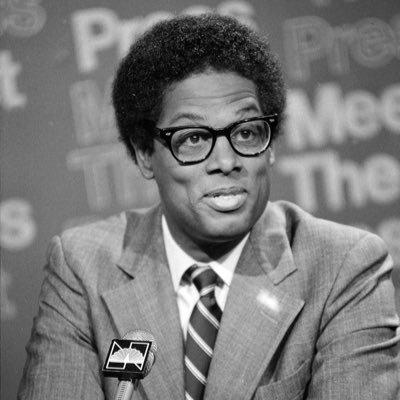
“Barack Obama is one of those people who are often wrong but never in doubt.”
— Thomas Sowell

Im really wondering if the first major cyber attack (yes, i believe these are cyber attacks) was on our voting machines.
Diane Williams retweeted

HOW DID THE CHURCH COME TO INHERIT ISRAEL'S PROMISES WHILE DENYING ISRAEL'S FUTURE?
The rise of Replacement Theology, the forgotten early Church witnesses, and God's irrevocable covenants.
How did a movement founded by Jewish apostles, built upon Jewish Scriptures, and centered upon Israel's Jewish Messiah eventually develop theological traditions that denied Israel a distinctive covenantal future?
It is one of the most consequential questions in Church history.
The apostles were Jewish. The prophets were Jewish. The Messiah was Jewish. The covenants, promises, patriarchs, and divine revelation were entrusted to Israel (Romans 9:4–5).
Yet within generations, influential Gentile theologians increasingly interpreted Israel's promises as belonging to the Church, while national restoration, the land, Jerusalem, and David's kingdom were reinterpreted primarily as spiritual realities.
This development became known as Supersessionism, commonly called Replacement Theology.
It did not originate with one council or theologian. Nor did the early Church unanimously embrace it.
But its influence would be enormous.
1. THE ASTONISHING REVERSAL
In Acts 2, the Church begins among Jewish believers in Jerusalem.
In Acts 10, Gentiles receive the Holy Spirit.
In Acts 15, the apostles affirm that Gentiles need not become Jews to receive salvation.
The controversy was never whether Israel had ceased to matter. It concerned how Gentiles could participate in the blessings promised through Israel's Messiah.
But as Christianity spread across the Roman Empire, Gentile believers increasingly outnumbered Jewish believers.
The destruction of Jerusalem in AD 70 and the aftermath of the Bar Kokhba revolt in AD 135 accelerated the separation between Jewish and Christian communities.
Some theologians interpreted these catastrophes as evidence that Israel had forfeited its covenantal standing.
Yet Moses had already anticipated Israel's dispersion and eventual regathering (Deuteronomy 30:1–5).
God explicitly declared that even in exile He would not utterly reject Israel or break His covenant (Leviticus 26:44–45).
Israel's judgment was never proof of Israel's permanent abandonment.
Here is the extraordinary irony:
The wild branches graciously grafted into Israel's olive tree eventually developed theological traditions that questioned the natural branches' continuing national inheritance.
And Paul had specifically warned against such arrogance (Romans 11:17–21).
2. HOW REPLACEMENT THEOLOGY TOOK ROOT
The Epistle of Barnabas (early second century) argued that believers in Jesus were the rightful covenant heirs, interpreting Israel's covenantal history in ways that diminished the Jewish people's distinctive claim.
Justin Martyr (c. AD 155–160) identified believers in Christ as the true Israel in Dialogue with Trypho.
Origen (third century) helped popularize spiritual and allegorical approaches to Scripture. His interpretations were complex, but his methods contributed to traditions in which Israel's geographical promises could receive primarily spiritual meanings.
Augustine (fourth–fifth centuries) advanced an understanding of the millennium as Christ's present spiritual reign, helping establish a framework that became dominant in Western Christianity.
These theologians did not hold identical positions.
Nevertheless, a consequential interpretive shift became increasingly influential:
Promises originally addressed to Israel were increasingly understood as fulfilled in the Church without requiring a future national fulfillment for Israel.
Over time, some forms of supersessionist thought became entangled with anti-Jewish rhetoric and discrimination.
The two are not identical. Many Christians holding supersessionist interpretations today unequivocally reject antisemitism.
But the historical consequences of religious contempt toward the Jewish people cannot be ignored.
3. THE FORGOTTEN VOICES OF THE EARLY CHURCH
Here is something frequently overlooked.
The early Church Fathers were not unanimous about the future earthly kingdom.
Papias, whose teachings survive through later writers, anticipated a future earthly reign.
Justin Martyr presents an especially fascinating case.
Although he identified believers as the true Israel, he also affirmed a future thousand-year reign in a restored Jerusalem (Dialogue with Trypho, chapter 80).
He openly acknowledged that other orthodox believers disagreed.
Then consider Irenaeus of Lyons, writing in the late second century.
In Against Heresies, Book 5, chapter 32, Irenaeus reasoned that Abraham never personally possessed the full inheritance God promised him.
Therefore, he argued, the promise awaited future fulfillment in the resurrection and earthly kingdom.
Irenaeus also viewed the Church as Abraham's seed. He was not articulating every feature of a modern interpretation of Israel's national restoration.
Nevertheless, his testimony is remarkable.
An influential second-century Church Father insisted that God's earthly promise to Abraham still awaited fulfillment.
Long before Augustine's millennial framework became dominant, significant early Christian voices anticipated a future earthly kingdom.
History is considerably more nuanced than the claim that the Church Fathers unanimously rejected such expectations.
4. THE COVENANT DISTINCTION THAT CHANGES EVERYTHING
Much of the confusion surrounding Replacement Theology comes from treating God's covenants as interchangeable.
They are not.
The Abrahamic Covenant preceded the Mosaic Covenant by centuries.
Genesis 12, 15, and 17 contain promises of descendants, land, nationhood, and worldwide blessing.
In Genesis 15, Abram falls into a deep sleep while the symbolic manifestations of God's presence pass between the divided pieces.
The emphasis falls upon God's sovereign commitment.
Genesis 17 describes an everlasting covenant.
Psalm 105:8–11 explicitly connects that covenant to the land promised to Abraham, Isaac, and Jacob.
Hebrews 6:13–18 emphasizes the certainty of God's promise and oath.
The Mosaic Covenant was different.
Established at Sinai, it contained conditions governing Israel's national obedience and blessings.
Israel violated those conditions.
The New Testament teaches that the Mosaic covenantal administration has been surpassed through the Messiah (Hebrews 8).
But Paul makes a decisive statement in Galatians 3:17:
The Law, introduced 430 years afterward, cannot annul God's earlier promise.
Consider the implication.
If the Mosaic Law itself could not annul the Abrahamic Covenant, how could Israel's violation of that Law permanently cancel God's earlier oath?
The end of the Mosaic covenantal order is not the cancellation of God's promises to Abraham.
Nor does the New Covenant erase Israel.
Jeremiah 31:31 explicitly names the house of Israel and the house of Judah as its recipients.
Through Jesus, Gentiles share in its spiritual blessings.
But Gentile inclusion does not require Israel's exclusion.
5. THE QUESTION JESUS NEVER DISMISSED
After the resurrection, the disciples asked Jesus whether He was about to restore the kingdom to Israel (Acts 1:6).
Think about the timing.
Jesus had completed His earthly ministry, risen from the dead, and instructed them concerning God's kingdom.
Yet they still anticipated Israel's restoration.
Jesus redirected their attention to the Father's authority over its timing and to their coming worldwide mission.
He did not explicitly announce that Israel's restoration had been canceled.
He withheld the timing, not an explicit denial of the promise.
6. PAUL'S WARNING TO GENTILE BELIEVERS
Romans 11 is indispensable.
Paul addresses Israel's unbelief without concluding that God has permanently rejected His people.
He describes Israel's hardening as partial.
He warns Gentiles against boasting.
He declares that the natural branches can be grafted into their own olive tree again.
He anticipates a future divine work of salvation involving Israel.
Then comes his remarkable conclusion.
Israel remains loved on account of the patriarchs, because God's gifts and calling are irrevocable (Romans 11:28–29).
Notice the context.
Paul is discussing Israel, its patriarchs, its election, and its future.
He never teaches that Jewish ancestry guarantees salvation apart from the Messiah.
But neither does he declare God's covenantal calling permanently canceled.
The Church's participation in Abraham's blessings does not require the dispossession of Abraham's physical descendants.
THE FINAL FOUR WITNESSES
Consider four biblical witnesses.
MOSES: Israel will be scattered, yet God promises to regather the people (Deuteronomy 30).
JEREMIAH: Israel's continuing national identity is tied to the fixed order of creation (Jeremiah 31:35–37).
GABRIEL: Jesus will receive David's throne and reign over Jacob's descendants forever (Luke 1:32–33).
PAUL: God has not rejected His people, and His gifts and calling are irrevocable (Romans 11).
Four witnesses. Centuries apart. One extraordinary testimony concerning God's covenant faithfulness.
If Moses, Jeremiah, Gabriel, and Paul affirm God's continuing commitments to Israel, what authority does any later theological system possess to declare those promises permanently transferred?
The issue is not whether Jesus fulfills Scripture.
He does.
The issue is whether fulfillment means God can disregard the specific promises He made.
The Church has received extraordinary blessings through Israel's Messiah.
We have been brought near. We have become fellow heirs. We have been grafted into the olive tree.
But the grafted branches must never boast over the natural branches.
If God can permanently revoke His sworn promises to Israel, how can we be certain of His promises to anyone else?
God's faithfulness to Israel does not diminish His grace toward the nations.
It demonstrates that He keeps His Word.
Nearly two thousand years ago, Paul asked the question that still confronts the Church:
“Did God reject his people?”
“By no means!” (Romans 11:1, NIV)
The gifts and the calling of God are irrevocable.
God keeps His covenants. All of them.
🤖 Made with AI


Diane Williams retweeted

Holy F-ing shit. You simply have to listen to this.
THIS is an absolute bombshell!
This is EXACTLY the world we live in today. She nailed it.
Hannah Arend: They Don't Need You to Believe (1967)
Readers added context they thought people might want to know
This video is AI-generated fictional dramatization, not a real 1967 recording or direct quote from Hannah Arendt. Its creator describes the script as "inspired by" her book but "a dramatized synthesis in her voice — not a direct quotation" and "fictional, AI-generated."
youtube.com/watch?v=WQmpLq…


Remembering the Best Military in the World, Past, Present, and Future....Lord Willing, on this......
🇺🇸🇺🇸🇺🇸 Veteran's Day. 🇺🇸🇺🇸🇺🇸
1
62


Diane Williams retweeted

Islam is bad. That’s demonstrably true
It poisons everything it touches.
Statistical patterns show Muslim-majority societies and large inflows from them correlate with worse outcomes on development, freedom, gender equality, innovation, crime (for specific origin groups), and terrorism.
Most Muslim-majority countries rank “Not Free” or “Partly Free.” Blasphemy and apostasy laws are concentrated there. Gender Inequality Index scores are higher (worse) in many. Science Nobels and patents from these countries are a fraction of population share. Gulf oil wealth is the main exception on income/HDI.
In Europe, official data (Sweden Brå, German BKA, Danish/Swiss stats) show immigrants from MENA, Somalia, Afghanistan and similar origins overrepresented in violent and sexual crime—often 2–4×+ after age/sex controls. Second-generation rates remain elevated. A Swedish study found ~63% of rape convictions involved immigrant background.
Islamist groups (IS, al-Shabaab, JNIM, etc.) account for the majority of global terrorism deaths. Pew surveys show high support for Sharia as law in many Muslim populations.
Historical conquests produced dhimmi status, gradual Islamization, and institutional legacies linked to lower democracy today. Early scientific advances existed; relative decline followed.
These are population-level correlations with individual variation and other factors involved. The data is consistent across independent sources.
Diane Williams retweeted

The assassination of Charlie Kirk caused so many people to reveal themselves as horrible human beings.
Diane Williams retweeted

The list of the cars burned by Republicans, stores looted by Republicans and streets blocked by Republicans after Tuesday’s midterm election losses.

Modern Israel is Biblical Israel!

Scripture does back this up.
Isaiah 11:11-12 says the Lord will set His hand a second time to recover the remnant of His people from Assyria, Egypt, Pathros, Cush, Elam, Shinar, Hamath, and the islands of the sea, and gather the dispersed of Judah from the four corners of the earth. That isn’t the limited return from Babylon; it’s a worldwide regathering.
Ezekiel 36:24-27 lays out the order clearly: first He gathers them from the nations and brings them into their own land, then He sprinkles clean water on them, gives them a new heart, and puts His Spirit within them. The physical return comes before the spiritual restoration.
Ezekiel 37 shows the same sequence in the dry bones vision—the bones come together, flesh forms, an army stands, but there is still no breath in them until the Spirit enters.
Zechariah 12:2-3 and 9 says Jerusalem will be a cup of drunkenness and a heavy stone for all peoples, and that all nations of the earth will be gathered against it, after which the Lord will destroy those who come against it. Zechariah 14:2 repeats that He will gather all the nations to battle against Jerusalem.
Romans 11:25-29 says the gifts and calling of God are irrevocable and that after the fullness of the Gentiles, all Israel will be saved. Jeremiah 31:35-37 ties Israel’s continued existence as a nation to the fixed order of the sun, moon, and stars.
These are the passages that show the same people, a second worldwide regathering in unbelief, the Spirit coming last, and the nations ultimately turning against them. That’s why I see modern Israel as the continuation of biblical Israel.
2
8
144
Psalm 2.
1 Why do the heathen rage, and the people imagine a vain thing?
2 The kings of the earth set themselves, and the rulers take counsel together, against the Lord, and against his anointed, saying,
3 Let us break their bands asunder, and cast away their cords from us.
4 He that sitteth in the heavens shall laugh: the Lord shall have them in derision.
5 Then shall he speak unto them in his wrath, and vex them in his sore displeasure.
6 Yet have I set my king upon my holy hill of Zion.
7 I will declare the decree: the Lord hath said unto me, Thou art my Son; this day have I begotten thee.
8 Ask of me, and I shall give thee the heathen for thine inheritance, and the uttermost parts of the earth for thy possession.
9 Thou shalt break them with a rod of iron; thou shalt dash them in pieces like a potter's vessel.
10 Be wise now therefore, O ye kings: be instructed, ye judges of the earth.
11 Serve the Lord with fear, and rejoice with trembling.
12 Kiss the Son, lest he be angry, and ye perish from the way, when his wrath is kindled but a little. Blessed are all they that put their trust in him
1
53
Diane Williams retweeted

The aftermath of Sunday’s Learjet crash in Palm Beach County, Florida, shows a crater in the road where the aircraft crashed and sparked a fire near a residential neighborhood.
For more updates, watch OAN on OAN Live or click the link in our bio.
