

New York Times bestselling author. The Final Bubble. Markets, civilization, technology & the future of the West.
St. John, U.S. Virgin Islands
Joined November 2015
- Tweets122
- Following185
- Followers613
- Likes85




Pinned Tweet
The greatest bubble of our time may not be financial.
It may be the illusion that civilization can continue indefinitely while trust, family, meaning, and reality itself disintegrate.
That’s why I wrote The Final Bubble.
Last night Donald Trump said that if Republicans sweep the House and Senate, he wants to send a $5,000 check to every adult American.
At a time when Americans are telling anyone who will listen that the number-one issue is the economy—and particularly the cost of living.
Eggs. Milk. Cheese. Gasoline. Housing. Insurance. Almost everything necessary to live has become painfully expensive.
So the answer is another $5,000 check?
It is no better when the socialists do it, and it is no better when Trump does it as a Republican.
You cannot solve an inflation problem by throwing more money at it.
And this is where I have a hard time understanding exactly what economic policy this administration is pursuing.
On one hand, you have Scott Bessent at Treasury trying to manage an increasingly difficult Treasury market, including bond buybacks. You have an administration that very clearly wants lower interest rates.
On the other hand, you have inflation.
Interest rates don’t exist in a vacuum. The Federal Reserve watches inflation precisely because allowing inflation to become embedded eventually destroys purchasing power and confidence in the currency.
Then Trump comes along and proposes putting $5,000 into the hands of every American adult.
Which direction are we going?
Are we fighting inflation or stimulating demand?
Are we trying to defend the dollar or create more of them?
Are we trying to bring interest rates down while simultaneously pursuing policies that can put upward pressure on inflation?
There is also something much larger going on here.
The United States isn’t merely trying to preserve the purchasing power of the dollar at home. It is trying to preserve the dollar’s position in the world.
For decades one of the great pillars underneath that position has been the dollar’s role in global trade and finance, including energy.
Iran has spent years developing ways to sell oil outside the traditional dollar-centered financial system. Venezuela has attempted to move transactions outside it as well.
That doesn’t prove America’s conflicts with either country are about the dollar. They plainly involve many other issues. But the monetary dimension shouldn’t simply be ignored either.
The United States wants the world to continue needing dollars.
Meanwhile, at home, we keep finding new reasons to create, borrow and distribute more of them.
Republican or Democrat, sooner or later you have to choose.
You cannot continually debase the thing you simultaneously expect the rest of the world to trust.
The $5,000 check isn’t the story.
The story is what the check tells us about the money.

SHARKS IN AREA. FOR REAL.
There are sharks in the water here on Martha’s Vineyard this Labor Day.
It seems an appropriate metaphor for the American worker.
For decades we shipped jobs overseas in search of cheaper labor. Now AI is coming for white-collar jobs, and Elon Musk is building an army of robots that may eventually do much of the work humans do today.
A robot doesn’t need a paycheck, healthcare, a pension or a house.
People do.
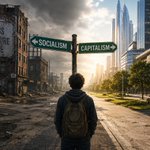
Then we wonder why workers are angry and young people are turning toward socialism.
There are sharks in the water.
And there are about to be a hell of a lot more of them.
Happy Labor Day.
— Damon Vickers
The Final Bubble

Why are so many young people turning to socialism?
I’ve spent most of my adult life in markets. I ran a hedge fund. I believe in capitalism.
But we’re kidding ourselves if we think 25-year-olds will defend a system that doesn’t appear to work for them.
Go to college. Take on debt. Get a job. Pay $2,500 a month in rent. Watch homeownership disappear over the horizon. Put off marriage. Put off children.
Meanwhile, those who already own the houses, stocks and other assets get richer.
Then we’re shocked when somebody says: Maybe we need a different system.
I don’t think most young people suddenly became Marxists.
I think they’re pissed off. And I understand why.
We’ve inflated assets, shipped jobs overseas, hollowed out towns, piled up debt and destroyed purchasing power—then called it prosperity because the Dow went up.
I don’t want socialism. I think it will make things worse.
But if we want young people to believe in capitalism again, we’d better give them a capitalism worth believing in.
That’s part of the argument in The Final Bubble.
This didn’t start with politics. It started with the money.

55 YEARS AGO TODAY, THE DOLLAR CHANGED FOREVER
On August 15, 1971, President Richard Nixon went on television and announced:
“I have directed Secretary Connally to suspend temporarily the convertibility of the dollar into gold.”
Temporarily.
It never came back.
For generations, money had ultimately been anchored to something outside the political system. After August 15, the anchor was gone. The dollar increasingly rested on confidence—on the belief that the institutions issuing it would preserve its value.
That moment runs through The Final Bubble because the book isn’t ultimately just about money. It’s about what happens when value becomes untethered from values.
As I write in the book:
“It wasn’t just money that was losing value—meaning was too, thinning until reality itself began to dissolve.”
The consequences didn’t arrive overnight. They accumulated over decades: expanding money and debt, declining purchasing power, asset inflation, speculation, widening inequality, institutional distrust—and eventually a society in which more and more things became detached from the anchors that once gave them meaning.
Money. Work. Family. Community. Identity. Truth.
The connection I make in The Final Bubble is deliberately larger:
“When money detaches from value, society detaches from meaning. Effort loses connection to reward. Discipline becomes optional. Truth becomes relative.”
And then:
“When money breaks, identity follows. When identity breaks, society cracks.”
That is why August 15, 1971 matters to me.
It wasn’t simply a technical change in international monetary policy. It was the beginning of an extraordinary experiment: What happens when the world’s most important money no longer has an external anchor?
Fifty-five years later, we are still living inside that experiment.
And perhaps the most provocative line I wrote about this date in The Final Bubble is this:
“August 15 wasn’t just the day money died. It was the day reality was evicted.”
The question now isn’t simply what happened to the dollar.
It’s what happened to us.
The Final Bubble
When Trust, Meaning, and Identity Collapse, and What Survives When Illusions Die
#TheFinalBubble #Dollar #Gold #Money #BrettonWoods #NixonShock #Inflation #WesternCivilization

WHY SOCIALISM? WHY NOW?
Socialism is back. At the same time, the hard right is surging across the West.
These aren’t two separate stories. They’re the same story.
For decades, the West dismantled the economic ladder and then wondered why people became angry that they couldn’t climb it. We exported factories and millions of jobs to China, India, Vietnam, Bangladesh and elsewhere. The jobs that once allowed ordinary people to build middle-class lives disappeared.
Then the cost of building a life exploded. A house moves out of reach. Rent eats the paycheck. Food costs more. Money buys less. Secure work disappears. Marriage gets postponed. Children get postponed.
Eventually, entire communities begin to hollow out—from the hills of Italy and the islands of Sardinia to the old industrial towns of Britain and the ghost towns of Appalachia.
What begins as an economic problem becomes a demographic one. Then a social one. Then a political one.
At the same time, mass migration collides with that demographic vacuum—bringing millions of additional workers into Western economies while governments struggle with assimilation, housing, wages and social cohesion.
And then we look at a 25-year-old who can’t afford a house, can’t see a path to supporting a family and doesn’t believe he’ll ever live as well as his parents did—and we’re surprised when he says: Let’s change the whole system.
For some, the answer is socialism. For others, nationalism, populism and the hard right.
Different politics. Same broken promise.
In The Final Bubble, I wrote: “The Left moved further left. The Right moved further right.”
Why? Because the center stopped holding.
And perhaps the most important line for this political moment:
“Extremism rises not from conviction—but from vacuum.”
The establishment keeps asking what’s wrong with the voters. Maybe it’s time to ask what’s wrong with the system they’re voting against.
That’s the conversation I want to have.
The Final Bubble is available now. Producers, bookers, podcast hosts and members of the media: I’m happy to send you a complimentary copy and join the conversation.
#WhySocialism #TheFinalBubble #WesternCivilization #Socialism #Politics #Economy

Please, Sir, I Want More.
We exported the factories. China ~75% of world manufacturing. U.S. ~16%. We paid with dollars we create.
The ladder is gone. Homes unreachable. Wages lose. Towns empty. Young people see no path up — so socialism rises. Opportunists ride the despair.
We have to make things again. Fix the money.
—The Final Bubble

**What Are We Willing to Sacrifice for GDP?**
Last week 60,000 people came over the fence into Ceuta in a couple of days.
Trucks brought them. Families already knew the timing. Spanish forces got overrun. People died.
Then the official story arrived: most were pushed back, numbers are manageable.
I don’t buy it.
Spain has every reason to minimize what happened. Admit the real scale and they risk their standing in Schengen. When a government has that incentive, the official numbers deserve skepticism.
This wasn’t chaos. It was logistics.
It looked like that scene in World War Z — walls up, soldiers ready, then a continuous wave that climbs over itself until the defenses disappear under pure numbers.
These people didn’t materialize at the fence. They moved through Africa and the Middle East during intense regional conflict. What we’re watching is a contest between societies shaped by Christian foundations for over a thousand years and a force that shares none of them. That difference is civilizational.
But it’s also economic.
The real question: what are we willing to sacrifice for GDP?
Central planners decided years ago that GDP must be maintained at any cost. When European birth rates collapsed, they panicked — not enough workers, not enough taxpayers to fund entitlements. So they opened the doors, convinced mass migration would be additive.
The experiment has failed.
These arrivals have not been additive. In too many cases they have been subtractive: higher crime, parallel societies, no-go zones, grooming, violence against women and girls. What was sold as an economic solution has functioned more like a Trojan horse. The same pattern is moving up through South America into the United States. This is not managed immigration. It is demographic replacement justified by growth numbers that never arrived.
Europe already has parallel societies and no-go zones. The organization in Ceuta raises clear questions about the networks involved. The same corridors that move migrants also move people who intend harm.
Meanwhile the historic populations of Spain, France, Germany, Sweden, England, and the United States sit below replacement. For decades pride in Western identity has been treated as a problem. A civilization that teaches its children to distrust what they come from does not remain intact by accident.
Western civilization built the systems the modern world still runs on. Saying that is not supremacy. It is history. Refusing to defend it is how you lose it.
The Ceuta events made the trends impossible to ignore. The movement was organized. The numbers were real. The official story should not be trusted at face value.
We’re taking pressure from the outside while eroding from the inside — demographically, culturally, and economically. A civilization that apologizes for its past, doubts its present, and will not fight for its future does not survive.
I wrote The Final Bubble because money and culture are no longer separate. Value has been cut loose from values. That process is accelerating. The next generations will live with the decisions we make — or refuse to make — right now.
If there is still time to reverse course, it is now.
— Damon Vickers
Bombs destroy buildings.
Psychology destroys resistance.
The greatest victories in history often occurred before the final battle—when one side concluded the fight could no longer be won.
The most important battlefield has always been the human mind.

Prices rise. Young families fall behind. Currency loses purchasing power. Frustration becomes unrest. Then comes the promise of socialism, revolution, and “change.” Meet the new boss. Same as the old boss. Fix the money.

According to ZeroHedge, a Target grocery order reportedly rose from $64.50 in 2020 to $158.30 today. That’s not the story. It’s the warning. Inflation is the smoke. The fire is much deeper. #TheFinalBubble

The West has one tool left: create more money.
Print more. Borrow more. Add more zeros.
The numbers keep getting bigger.
Reality keeps getting smaller.
That’s the Final Bubble.

There are many ways to commit suicide. A civilization does it by degrees. When one in twenty deaths in Canada is medically assisted, something deeper is changing. The greatest bubble isn’t financial. It’s moral. #TheFinalBubble

History punishes civilizations that postpone hard decisions.
After WWII, General Patton believed stopping at Berlin would leave a larger conflict for another generation. Whether he was right or wrong, history reminds us that threats rarely become easier with time. /IRAN

When I wrote The Final Bubble, I opened many chapters with what I called the Laws of Collapse. A year later, they seem even more relevant, as a framework for understanding the world we’re living in today

