

Scaling telehealth businesses | 45,000+ patient sign ups | $100m+ rev generated: https://teapaw.org/t.co/tssP87B9TU
Newport Beach, CA
Joined January 2011
- Tweets25.2K
- Following129
- Followers2.8K
- Likes56.8K







Pinned Tweet
A lot of new faces here lately, so figured it’s time I properly introduce myself.
I’m Daniel.
A few years ago I was in debt, on SSRIs, and seriously thinking about not being here anymore.
My parents had just divorced. Both my brothers were overdosing. A business partner opened credit cards in my name. And I got arrested for a crime I didn’t commit.
The night Big Sean’s Detroit 2 dropped, I decided I was done being a victim. Everything that happened to me from that point on was my responsibility.
I was waiting tables at the time. I wrote a contract with myself:
BUILD A BUSINESS TO $10K/MONTH IN 6 MONTHS!
Read it out loud every single day.
Hit it in 5 months.
Then a med spa client mentioned a word I’d never heard before.
Semaglutide.
That one conversation pulled me into telehealth. Since then:
- 45,000+ patients acquired for clients
- $20M+ in cash pay ad spend managed
- Helped take Eden from $0 to $100M
- Worked with 50+ telehealth brands
What I’ll be posting about:
- How telehealth brands actually acquire patients profitably (not the guru version)
- Why most brands lose half their patients in the first 30 days, and how to stop it
- The white label, tracking, and compliance mistakes that cost founders six figures
- What I’ve learned about discipline, faith, and building something from nothing
So many founders get into telehealth thinking it’s a quick buck.
Let’s change that.

I've watched bad attribution cost clients anywhere from $30,000 to $500,000.
Here's where that money disappears:
1. Ad spend optimized toward leads who never pay
2. Weeks of "testing" on data that was wrong from day one
3. Killing ads that were actually working because the signals didn't show it
4. Rebuilding the entire tech setup a second time
5. Lost months while competitors scale on clean data
Nobody sends you an invoice for this. It just quietly shows up as "Meta isn't working for us."
Meta was working fine. It was working on garbage.
3
7
148
Hire 4 different developers and ask them to build your telehealth backend.
You'll get 4 different names for the same thing:
1. One calls a paid customer a "patient"
2. One calls it a "conversion"
3. One calls it an "order"
4. One calls it "checkout_complete"
None of them are wrong. It's just preference.
The problem starts when your white label, your CRM, and your ad account each use a different one and nobody writes down which is which.
Before launch, make one document that says what every event means.
Hand it to every developer and every platform before they write a single line of code.
Boring, yeah.
But it saves you six figures.
14
227
Wanna understand telehealth conversion?
Like actually understand it?
Go start the Hims weight loss intake with a burner email. Stop halfway. Close the tab.
Then just watch your inbox for a week.
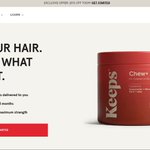
Screenshot every email. Note the send time, who it's from, plain text or designed, and what objection it's handling. Do the same with Ro and Keeps.
You'll learn more in 7 days than most telehealth courses teach in 7 weeks.
Nobody has time for this nonsense.
Do you?
2
13
268
Daniel Walton retweeted
The crazy thing about telehealth is patients drop like flies at month 2 for reasons founders don't even understand.
They didn't leave because your medication didn't work.
They left because you promised 20 lbs in 30 days and delivered 8.
Then went silent on them for 3 weeks while they googled competitors.
Almost every churn point traces back to a missed expectation or a missed touchpoint.
Daniel Walton retweeted
Dear telehealth founders,
All of you (I mean EVERY ONE OF YOU) need a front-end offer built around a membership, not a discount.
I work with brands from pre-launch to 9 figures.
The front-end offer is the single HIGHEST leverage thing in the funnel.
Will write a tweet on the “how you can do it” soon.
Daniel Walton retweeted
Shopify-style cart email:
pretty design, big banner, zero patients.
Three-line note from your medical director:
looks like nothing, books the visit.
Daniel Walton retweeted
Telehealth founders in 2026 be like:
Should i use the "You left something behind 🛒" template
or
The "Don't miss out! 🔥 Limited time!" template
Meanwhile Hims has their chief medical officer personally emailing people who bailed on their intake
Daniel Walton retweeted
4 signs your telehealth tracking is lying to you:
1. Ads Manager shows more "purchases" than your pharmacy shipped
2. Your CAC looks amazing but your bank account doesn't agree
3. Every conversion shows the same value regardless of plan length
4. Meta keeps scaling ads that bring in leads who never become patients
Any one of these and you're not optimizing.
You're feeding the algorithm bad data and paying it to find more of the wrong people.
Daniel Walton retweeted
STOP signing white label contracts based on the sales call.
Nobody googles "which white label sued the most founders in 2026?"
Read the actual legal agreement instead:
• Do you own patient records?
• Do you own payment processing?
• Do you own LegitScript?
• Can you migrate out?
If your only research was a 45-minute Zoom call, you're already dead.
Daniel Walton retweeted
Stagnation is failure in patient retention.
You cannot call yourself a real operator if your month-2 retention has been sitting at 55% for the last 4 quarters.
That's not "just how it is."
That's a specific email you're not sending, a specific expectation you're not setting, a specific milestone you're not celebrating.
Fix one.
Watch the number move.
4 people walk into a grocery store at the same time.
1. One's on lunch break, just cooling off. Does a lap and leaves.
2. One fills a cart, realizes they forgot their wallet, walks out.
3. One fills a cart, checks their bank account, sees $20, puts half of it back.
4. One buys all the organic, hormone-free, expensive stuff. Racks up hundreds.
Completely different people with completely different values.
Most telehealth white labels record all 4 as the exact same signal and send it straight to Meta.
Then founders wonder why the algorithm keeps finding them window shoppers.
5
24
266
Imagine a doctor's receptionist watching you fill out half the intake form, you step out to take a call, and when you come back she's shredded it and handed you a blank one.
That's what your quiz does when it doesn't save progress.
4
21
267
Intake with only medical questions:
start, start, start, bounce
Intake with commitment questions:
start, "what would hitting your goal weight mean to you?", pause, actually think about it, keep going, PAY
Intake with no follow-up:
start, leave, gone forever
Intake with a magic link 30 min later:
start, leave, click, back on question 9, PAY
3
17
424
5 highest-converting things inside a telehealth intake:
1. A question that makes them feel seen
2. A stat that makes them feel normal
3. A before/after that makes it feel real
4. A projection that makes the timeline believable
5. A link that remembers where they stopped
It’s this easy.
2
27
291
The crazy thing about telehealth is patients drop like flies at month 2 for reasons founders don't even understand.
They didn't leave because your medication didn't work.
They left because you promised 20 lbs in 30 days and delivered 8.
Then went silent on them for 3 weeks while they googled competitors.
Almost every churn point traces back to a missed expectation or a missed touchpoint.
1. Stop leading with “50% off your first month.” It attracts people who leave the moment it ends
2. Frame month one as a membership with a strikethrough price: normally $X, first month $Y
3. Stack what they get: app access, a smart scale shipped with the first order, a monthly call with a coach or nutritionist, 24/7 patient support.
4. Make every item in the stack something they’ll use daily. A scale on the bathroom floor becomes part of their morning.
5. Build your onboarding emails around getting them to actually use the stack in the first 30 days
All of these matter because:
1. You’re giving away things that lock them in, not things that make leaving easy
2. The month-two question stops being about price and starts being about losing their routine
3. First-month “jumpers” stop treating your brand like a coupon

Dear telehealth founders,
All of you (I mean EVERY ONE OF YOU) need a front-end offer built around a membership, not a discount.
I work with brands from pre-launch to 9 figures.
The front-end offer is the single HIGHEST leverage thing in the funnel.
Will write a tweet on the “how you can do it” soon.
1
15
281
Dear telehealth founders,
All of you (I mean EVERY ONE OF YOU) need a front-end offer built around a membership, not a discount.
I work with brands from pre-launch to 9 figures.
The front-end offer is the single HIGHEST leverage thing in the funnel.
Will write a tweet on the “how you can do it” soon.
Daniel Walton retweeted
Stagnation is failure in telehealth funnels.
You can't run the exact same intake for 12 months and call it optimized.
✅ Reorder questions.
✅ Cut the ones nobody needs.
✅ Add a proof slide.
✅ Test the calculator.
✅ Read what people say in the feedback email and fix that exact thing next.
The brands converting best aren't the ones with the best first draft.
They're the ones who never stopped editing it.
Daniel Walton retweeted
The Endocrine Society found 40-50% of GLP-1 quitters restart within 12 months.
Which means half the patients who cancel on you aren't gone. They're just not ready yet.
How I'd stay in front of them:
1. Day 0: objection handling based on why they canceled
2. Day 45-90: winback flow with what's new and any offers
3. Months 4-8: lower-frequency provider notes, softer tone
4. Rest of year one: occasional check-ins, as much as deliverability allows
Whether they come back to you or a competitor mostly comes down to one thing. Were you still in their inbox when they decided to restart?