
Seattle, WA
Joined October 2020
- Tweets329
- Following346
- Followers761
- Likes657




Pinned Tweet
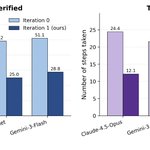
New work @AIatMeta: We enable test-time scaling for long-horizon coding agents by using better representations, selection and reuse of agentic trajectories, with Claude 4.5 Opus improving by +6.7% on SWE-Bench Verified and +12.1% on Terminal-Bench 2.0.
📄: arxiv.org/abs/2604.16529

Joongwon Kim retweeted

Today we’re releasing Muse Spark Open, the most capable US open-weight model to date.
Built for coding and agentic work, it excels at long-horizon tasks, complex software engineering, and multi-step reasoning.
Key Model Specs:
→ 816B total / 42B active parameters
→ 1M token context window
→ Natively multimodal across text, image, video, audio


Joongwon Kim retweeted
We’re excited to introduce the Muse Wonder series with Muse Wonder and Muse Wonder Full, our most capable models yet. Both are frontier models, built to deliver state-of-the-art performance for personal and professional agentic tasks.
Muse Wonder is available today via the Meta Model API and Muse Code. Muse Wonder Full is available today for Muse Code subscribers. Muse Wonder will also soon power experiences in our personal agent product, Muse, rolling out first to subscribers.
Joongwon Kim retweeted

Come see @danieljwkim present on scaling test-time compute for agentic coding at poster 126! #COLM2026

Joongwon Kim retweeted

@danieljwkim is presenting the work on on Scaling Test-Time Compute for Agentic Coding:
Paper: arxiv.org/abs/2604.16529
A test-time scaling framework for agentic coding that converts rollouts into structured summaries capturing key hypotheses, progress, and failure modes while discarding low-signal details. #COLM2026


Come see @danieljwkim present on scaling test-time compute for agentic coding at poster 126! #COLM2026
Joongwon Kim retweeted

Introducing Beam: a highly efficient agentic open model with 501B total parameters and 23B active.
- Frontier reasoning efficiency
- Advances the Western open frontier on coding & agentic tasks
- Trained end-to-end from scratch
Full weights release this month.
Learn more about Beam: reflection.ai/beam

I'll be presenting this work at COLM 2026. Please feel free to stop by and check it out, or just say hi!!
- Date/Time: Oct 6 (Tues) 11AM-1PM, Poster Session #1
- Location: Grand Ballroom #126
Happy to chat about research (coding agents, RL, test-time scaling etc.), as well as navigating industry and academia life together during a PhD. I am also on the industry job market for agent / post-training roles, so please feel free to reach out if you're interested.

New work @AIatMeta: We enable test-time scaling for long-horizon coding agents by using better representations, selection and reuse of agentic trajectories, with Claude 4.5 Opus improving by +6.7% on SWE-Bench Verified and +12.1% on Terminal-Bench 2.0.
📄: arxiv.org/abs/2604.16529
30
1,211
Joongwon Kim retweeted

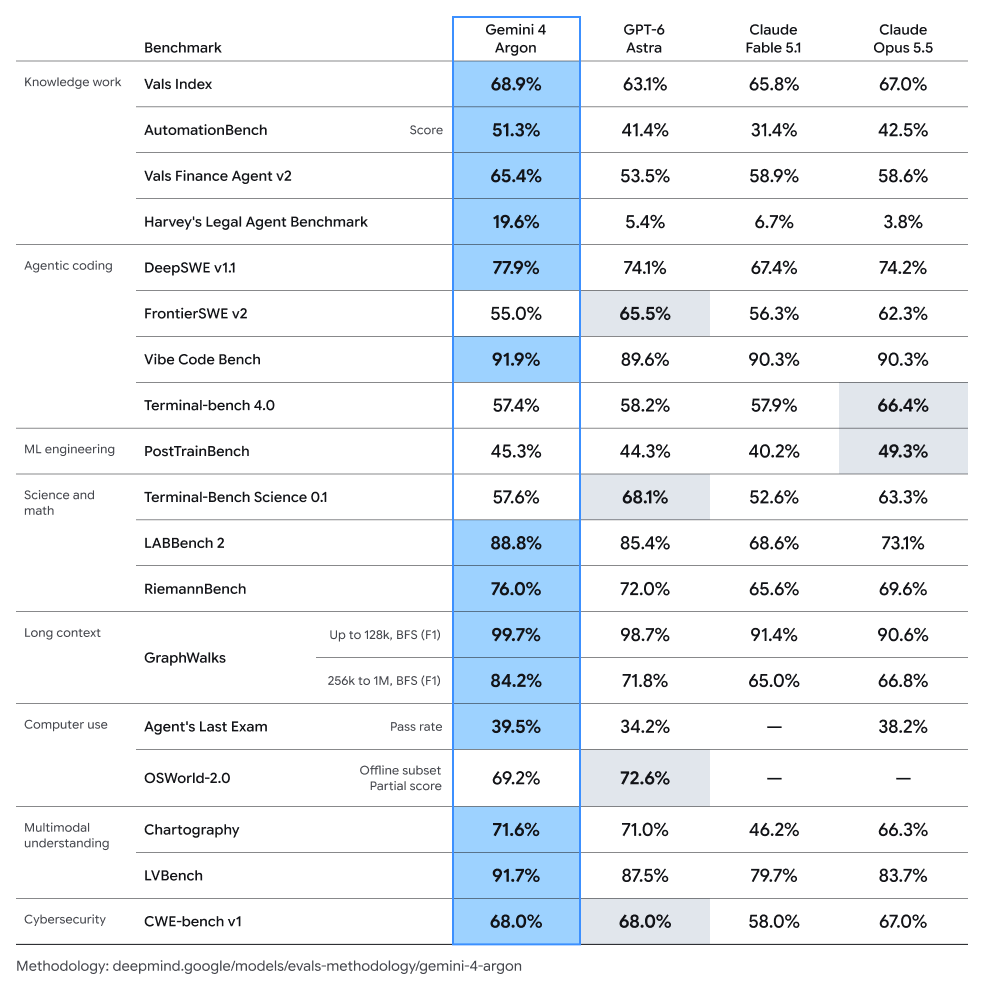
Introducing Gemini 4 Argon – our new frontier model.
It’s built for complex workflows across coding, enterprise knowledge work, and cybersecurity defense – rolling out today to a set of trusted testers through our Fairwind Program.
Joongwon Kim retweeted

Please welcome GPT-6 Sol and GPT-6 Luna to the GPT-6 universe.
GPT-6 Sol and Luna build on the advances behind GPT-6 Astra, bringing much of its strengths into faster and more affordable models to support work at scale.
We’ve also made caching and inference more efficient, and we’re passing the savings directly to you: 50% lower API prices for Sol and Luna compared with GPT‑5.6 promotional pricing.
Joongwon Kim retweeted
We’re sharing a solution to the Navier-Stokes Millennium Prize Problem, one of the deepest problems at the frontier of mathematics.
The proof was produced by a group of agents, using an OpenAI next-generation model significantly more capable than GPT-6 Astra.
The problem concerns whether the description of smooth three-dimensional fluid motion modeled by the Navier-Stokes equations can break down. It has remained unresolved for roughly 90 years.

Joongwon Kim retweeted
Introducing Muse Glimmer, an open-weight 30B-parameter model optimized for local, always-on agent workflows.
Muse Glimmer delivers strong performance on key agentic use cases and benchmarks compared with leading models in its size category, and is designed to run entirely on consumer hardware like a Mac or PCs with performant GPUs.
In keeping with our long tradition of sharing fundamental AI research, we’re releasing model weights under a permissive Apache 2.0 license.
🧵👇


Joongwon Kim retweeted
Introducing Muse Code (beta), a terminal coding agent built for long-horizon software engineering, powered by our new Muse Spark 1.2 model.
Muse Code plans, implements, and validates complex, multi-file changes across large repositories with persistent sub-agents that solve difficult problems faster, more accurately, and with less intervention.
🧵👇

Nice results from @OpenAI’s GPT 5.6 release, using multiple agents to boost Terminal-Bench 2.1 results. For more details on how to scale parallel agents to improve agentic coding performance (including Terminal-Bench 2.0), check our paper from April - now accepted to COLM 2026!!

New work @AIatMeta: We enable test-time scaling for long-horizon coding agents by using better representations, selection and reuse of agentic trajectories, with Claude 4.5 Opus improving by +6.7% on SWE-Bench Verified and +12.1% on Terminal-Bench 2.0.
📄: arxiv.org/abs/2604.16529
Joongwon Kim retweeted
We’re excited to introduce Muse Spark 1.1, a significant upgrade from the first Muse Spark model we released earlier this year.
Along with this release, we are launching a public preview of the new Meta Model API where developers can access Muse Spark 1.1.
The model is also available now in "Thinking" mode in the Meta AI app and on meta.ai.
Learn more: go.meta.me/ff8e2c

Joongwon Kim retweeted
Introducing a limited preview of GPT-5.6 Sol, our next generation frontier model, as well as GPT-5.6 Terra, a balanced model for efficient, everyday work, and GPT-5.6 Luna, a fast and affordable model for high-volume work.
openai.com/index/previewing-…


Joongwon Kim retweeted
Introducing Claude Opus 4.8: it builds on Opus 4.7 with sharper judgment, more honesty about its own progress, and the ability to work independently for longer than its predecessors.
Available today at the same price.

ALT Benchmark table showing how Claude Opus 4.8 compares to its predecessor and to other models on tests of coding, agentic skills, reasoning, and practical knowledge work tasks.
Joongwon Kim retweeted
Today, we share a breakthrough on the planar unit distance problem, a famous open question first posed by Paul Erdős in 1946.
For nearly 80 years, mathematicians believed the best possible solutions looked roughly like square grids.
An OpenAI model has now disproved that belief, discovering an entirely new family of constructions that performs better.
This marks the first time AI has autonomously solved a prominent open problem central to a field of mathematics.
Joongwon Kim retweeted

How do coding agents get better from experience?
Past Attempts as Interface: Turn rollouts into structured summaries that future attempts can build on.
arxiv.org/abs/2604.16529

New work @AIatMeta: We enable test-time scaling for long-horizon coding agents by using better representations, selection and reuse of agentic trajectories, with Claude 4.5 Opus improving by +6.7% on SWE-Bench Verified and +12.1% on Terminal-Bench 2.0.
📄: arxiv.org/abs/2604.16529
Joongwon Kim retweeted
How do coding agents get better from experience?
Past Attempts as Interface: Turn rollouts into reusable summaries that future attempts can build on.
arxiv.org/abs/2604.16529
