_xlabs founder. Dad of two, board director, non-exec, NY is home. Loves the North of England. All views are my own (RTs are *not endorsements)
NYC
Joined January 2008
- Tweets16.3K
- Following301
- Followers5.6K
- Likes10.4K





💖 Sponsoring desec-io github.com/sponsors/desec-io…

Dan Sellars retweeted

"The magic you are looking for is in the work you are avoiding" - Joseph Campbell
You did this at a job once before. Then your boss fired you. You were at the company for 6 weeks. 🤷. Don't underestimate the stickiness of mediocrity. Wicked read.

Dan Sellars retweeted

Best framing for why cold outreach gets ignored that I've heard in a while: A message that just lists what you do is a vending machine.
"Here are my features, insert interest, receive demo. "
Nobody replies to a vending machine.
The messages that get replies take a position.
"This is what teams doing this are getting it wrong, here's the way we've actually seen work."
A strong POV gives someone a reason to engage, even if they disagree. We've watched this across millions of connection requests. Have an opinion.
Nobody argues with a vending machine, and nobody buys from one either.

Dan Sellars retweeted

The pattern of space shapes the pattern of events.
In architecture, this determines how people gather.
In products, it determines how people think.
In companies, it determines how people work.
Structure is often upstream of behavior.
Dan Sellars retweeted

One of the reasons why spending 100k on a launch videos is cooked.
@basepowerco Series C anti-launch video campaign was A*
Newspaper + in-depth perspectives from the team and backers, send intimately and directly to the people they care about (customers, investors, potential hires etc)
13,000+ shipped newspapers in under a month - millions of views from those who shared


Dan Sellars retweeted

“STOP LYING!”
📸📸📸 Two million views on Instagram!
Wisdom from a complete stranger I didn't know I needed to hear.
WATCH!
Dan Sellars retweeted

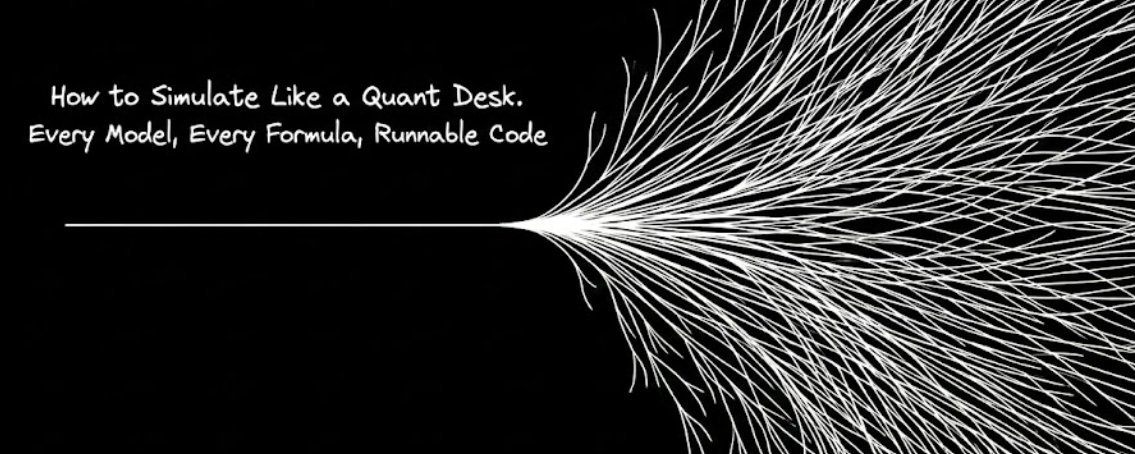
Someone put every tool quant funds use into a single free GitHub repo.
Pricing engines. Backtesters. Order books. Live market data.
The stuff firms guard like state secrets just sitting there, open source.
And the list is genuinely absurd:
> Option pricing libraries used to value billions in derivatives
> Full backtesting engines (Zipline, Backtrader, NautilusTrader, Lean)
> A matching engine hitting 150M+ orders/sec HFT backtesters that model queue position and latency
> Microsoft's own AI quant platform, free to use
> Portfolio optimizers, risk models, factor libraries, alt-data feeds


Dan Sellars retweeted

Stanford professor Judy Fan went on stage at MIT and broke down why humans are so good at making the invisible visible...
And why AI hasn't actually learned to "see" the way we do.
It completely changes how you think about Human Intelligence v/s Artificial Intelligence:
1. Nature never gave us straight lines or sharp corners. The number line, the coordinate plane, even basic geometry are all human inventions. We created tools that do not exist in nature simply because we needed a way to think more clearly.
2. The coordinate system Descartes invented solved a problem that had stumped mathematicians for centuries, doubling the volume of a cube. Once invented, this tool became so indispensable that virtually every math curriculum on Earth still depends on it.
3. Humans have been doing this for at least 30,000 to 80,000 years. The story of human progress is inseparable from the story of marking up our environment, from cave walls to Galileo's telescope to Feynman diagrams of particles we will never see with our own eyes.
4. Every major scientific breakthrough relied on a visual tool that made something invisible visible. Darwin needed side-by-side illustrations of finches to see variation that was otherwise too subtle to notice. Cajal needed detailed drawings of neurons under a microscope to map how the nervous system was wired.
5. Fan's research group studies something deceptively simple: how people decide what to put into a drawing and what to leave out. When two people played a drawing game, sketchers used far more detail when the target object had close competitors than when it stood alone, all the way down to using fewer strokes and less time when more detail was not necessary.
6. People are not just copying what they see. They are making constant judgment calls about what level of detail actually serves the goal of communication, and they do this naturally without ever being taught the theory behind it.
7. There is a real difference between drawing something so someone can identify it and drawing something so someone can understand how it works. In one study, participants drew explanatory diagrams that emphasized moving, causal parts of a machine while depictive drawings emphasized background and overall appearance, even though both were drawing the exact same object.
8. Explanatory drawings were genuinely better at helping someone figure out how to operate a machine, but worse at helping someone identify which machine it actually was. You cannot optimize a single drawing for both goals at once. Communication always involves tradeoffs.
9. AI vision models trained on photographs generalize surprisingly well to simple, sparse sketches, suggesting that resemblance based recognition is not just a story we tell ourselves. It is something modern neural networks can replicate with real accuracy.
10. But there remains a large, measurable gap between how confidently AI models recognize sketches and how confidently humans do, even when both groups answer the same questions about the same images. Humans are simply far more reliable and far more consistent in their judgments.
11. When researchers compared human-made sketches to AI-generated sketches under tight stroke budgets, both were similarly recognizable at higher budgets, but diverged sharply as the budget shrank. Humans and AI systems simplify drawings in fundamentally different ways once resources get scarce.
12. Reading a graph is not one single skill. It involves perception, knowing where to look, mapping that visual information onto the actual question being asked, and then translating that mapping into an answer. Each of these steps can independently break down, and people fail for very different underlying reasons even when they land on the same wrong answer.
13. When tested directly against humans on graph reading tasks, leading multimodal AI models, including GPT-4V, showed a meaningful performance gap. Even when a model's overall accuracy approached human levels, its pattern of mistakes looked nothing like how humans actually get things wrong.
14. People choose entirely different types of charts depending on what specific question they are trying to answer, not out of a generic preference for bar charts or scatter plots. Their chart choices closely tracked which visualization would genuinely help someone answer that specific question correctly.
15. Two of the most widely used graph literacy tests in education research turned out to correlate strongly with each other, suggesting they measure overlapping skills. But when researchers dug into the actual error patterns, the standard categories used in textbooks, like "find the maximum" or "identify a cluster," failed to explain why people got things wrong nearly as well as a more basic, underlying four-factor model did.
16. The deepest goal behind all of this research is not just academic curiosity. It is to eventually help students and everyday people develop genuine literacy with the visual tools that science and modern decision-making increasingly depend on, because every generation should be able to see further than the last by standing on the visual tools the previous generation built.
Follow @yasminekho for more ideas on thinking better, becoming clearer & building a more intentional life.

Dan Sellars retweeted

Many of the musicians featured on “Buena Vista Social Club” were in their 70s, 80s, and even 90s at the time of recording.
Their voices and playing embody decades of Havana’s musical history, and Ry Cooder captured it all in just six days of live, largely improvised sessions.


Dan Sellars retweeted

Mijns inziens is dit een van de beste use cases voor AI-videocontent op dit moment. Een AI-influencer reist terug in de tijd naar 1536 om te vloggen over haar ervaringen in Tudor-Londen.

Dan Sellars retweeted

Imagine Trump ever being invited to join a photo like this — not in a million years.
Four presidents. Zero drama. Just smiles, respect, and a shared love of country. 🇺🇸

Dan Sellars retweeted

Jane Street pays $750k/ year for quants who can answer how to use Stochastic Process and Markov Chains in quant trading.
This 1-hour MIT lecture on probability gives you the same insights quants get paid $60K/month for.
Bookmark & watch today. Then read the article below.


It's a huge fixer-job-opportunity, *if Cuban's right the new "implementation." The value isn't configuring AI — it's knowing which business problems are actually worth solving with it. That diagnostic skill is rarer than the technical one.