

Political & Credit Risk, LCIA Survivor
Montclair, NJ
Joined September 2016
- Tweets14.9K
- Following881
- Followers226
- Likes26.9K



Pinned Tweet
Ammar, your bio says rapid response director for D's. Can you please stop bitching about ron desantis' apparently sinking ship and start messaging about biden and democrats success bringing jobs back to this country? finance.yahoo.com/news/biden…

Daniel Stephen retweeted

You have to wonder if North Carolina Republicans are ready to internalize yet that @NCGOP has been completely out-worked and out-hustled by @abreezeclayton since she became @NCDemParty chair in 2023 - and we're all now seeing the results.
All of the GOP bros completely dismissed Clayton when she became chair, because she's a young woman. (Many of them harbor an obsession with her.) Yet compared to @simmonsncgop (or @WhatleyNC!), Clayton has simply worked harder leading her party than her NCGOP counterparts have.
When Clayton pushed for Democratic organizing in rural counties, the conservative pundits laughed. When she recruited candidates in almost every single legislative race, the GOP bros mocked it as a waste of time.
But none of them are laughing today. Instead, Democrats have flipped county commissions across the state, won 70 NC House Seats, and would've won an NC Senate majority, were it not for egregious gerrymandering.
And in 2028, the Republican gerrymander of North Carolina, which has completely defined our state's politics for 15 years, is finally going to be fed into a woodchipper. Get ready.


Daniel Stephen retweeted

The BAAJA permitting reform bill is the first post election test of whether Democrats are committed to affordability or whether they are more interested in prioritizing their special interest groups.


Daniel Stephen retweeted

Reminder that 19 leaders in economic policy and national security, including Janet Yellen, @mikepompeo, @jasonfurman, and several others endorsed BAAJA.
NEWS: 19 FORMER ECONOMIC AND NATIONAL SECURITY LEADERS ENDORSE THE BIPARTISAN PERMITTING REFORM BILL
Today, a group of former Cabinet members and White House principals across seven Democratic and Republican administrations sent a letter calling on Congress to pass BAAJA. Here are the signatories:
Janet YELLEN, Michael R. POMPEO, Steven T. MNUCHIN, Leon E. PANETTA, Timothy F. GEITHNER, Henry M. PAULSON, Jr., Robert E. RUBIN, Stephen MIRAN, Jared BERNSTEIN, Tyler GOODSPEED, Jason FURMAN, Glenn HUBBARD, Laura D’Andrea TYSON, Michael J. BOSKIN, Jeffrey ZIENTS, Jake SULLIVAN, Brian DEESE, Larry KUDLOW, Allan B. HUBBARD
Key highlights from the letter:
1. “We are not building infrastructure fast enough to remain globally competitive… The median time for a new power plant to move from an interconnection request to commercial operation has more than doubled, from less than two years for projects built between 2000 and 2007 to more than four years for projects built between 2018 and 2024.
2. China has built more high-voltage transmission in the last fifteen years than the U.S. has built in all of its history... In 2024, China accounted for 31.5% of global knowledge- and technology-intensive manufacturing value added, compared with 20.7% for the United States.
3. Federally funded or permitted projects require NEPA review, but private projects often do not, creating a threat of failure precisely where the government is trying to be proactive, strategic, and engaged.
4. A project that spends years awaiting approval must continue carrying development and financing costs while remaining exposed to rising input costs. The IEA reports that prices for utility-scale transformers increased 26% in 2024, while lead times for some transformers have stretched as long as six years.
5. Mining projects also face tremendous uncertainty: a 2026 study by researchers at the Colorado School of Mines found that permitting for modern mining projects takes an average of 5.5 years, rising to 8.9 years for contested projects. The U.S. currently has the second-longest mine development timeline in the world.
6. The Bipartisan American Affordability and Jobs Act is the most significant bipartisan legislative effort that Congress has undertaken in decades to tackle these challenges.
7. BAAJA addresses key constraints stifling American industry by requiring interregional transmission planning, strengthening the federal backstop for nationally significant transmission lines, and creating a faster, more predictable process for connecting new generation to the grid.
8. BAAJA also makes permits more durable by imposing tighter timelines for litigation and limiting frivolous lawsuits that can halt projects indefinitely, while preserving community input and judicial review of substantive agency decisions.”
The letter was organized by @arnabdatta321 on behalf of @IFP and covered exclusively by the WSJ this morning.


Daniel Stephen retweeted

Here is crazy that pretty much every F500 CEO is complicit in
1. They self insure - good thing
2. They hire a third party administrator that is owned by a Too Big To Care insurance company. - Really Bad
3. They allow that TPA to deny care determined by the doctors that the TPA selected to be in network - Horrifically bad
4. They don’t tell the CEOs about the denied care , when it’s their money and ultimately their decision as to whether they should pay for care - more horrific
5. Employees and their families get sicker while the denial is appealed. Again, when the ceo has no clue. Even if the cost to help the patient could a small amount. - insane
Big self insured companies do dumb shit that makes the cost of care in this country far higher than it should be.
It’s not their core competency and they often listen to consultants whose interests are not aligned with theirs.
Daniel Stephen retweeted

At first blush, it looks like Sens Capito/Heinrich/Lee/Whitehouse did a great job of making a good bill even better. They closed off the potential for unintended consequences in the project certainty section and they incorporated feedback from tribes on the NHPA section.

NEW: the BAAJA managers' amendment is out. “I’ve worked hard to incorporate the feedback we’ve heard from Tribes and New Mexicans into this Substitute Amendment, and I’m proud to join my colleagues in releasing it," Heinrich says. 494 pages heinrich.senate.gov/imo/medi…
Daniel Stephen retweeted
This is a very difficult thing to draft and the drafters deserve credit for lopping off the terrible case scenarios in the managers amendment.

The "project certainty" title of the bipartisan permitting bill, BAAJA, was written to respond to the Trump Administration’s actions targeting renewables.
However, some critics worried it would unduly limit a future administration’s ability to promulgate new regulations protecting public health or the environment, or inadvertently “lock in” the current administration’s energy policy.
I have spent all day poring over this part of the manager’s amendment, released this morning.
I’ve concluded the amendment’s changes should put to bed all but the most far-fetched concerns about such unintended consequences:
1. *Generally applicable regulations are not barred.*
The original language raised concerns that protecting permits could also limit routine permit changes or new regulations as “interference” with a permit. The amendment adds an explicit exception for agency actions taken under applicable law or regulation, plus language preserving existing legal authority.
2. *A good faith mistake no longer can trigger a payout.*
Originally, an agency that improperly interfered with a permit could owe 25–50% of project costs without any showing of bad faith. Now that extra award requires bad faith, a difficult standard to prove.
3. *Relatedly, permits denied lawfully in good faith cannot form a pattern of disparate treatment.*
Section 1402 targets patterns of discrimination against particular types of energy projects. The original bill’s phrase “improperly denied” was worryingly vague. The amendment replaces it with “denied in bad faith.” This is a standard used in, e.g., APA record expansion claims.
4. *The government can explain any allegedly discriminatory patterns.*
Critics understandably worried agencies could face liability based on statistics alone without being able to explain why approvals slowed or denials increased. The amendment expressly lets the government present evidence of a lawful reason for the pattern, such as a new legal public health measure aimed at reducing pollution and not “interfering” with a particular industry.
5. *Judicial "checks and balances" are required before any payments.*
Critics identified some scenarios in which a friendly administration could intentionally interfere with a favored developer’s permit, with the purpose of subsidizing the developer. That already far-fetched scheme would now need to survive scrutiny by a federal judge. Settlements need specific court findings that they advance the section’s objectives and serve the public interest.
6. *Historical comparisons go beyond any one administration.*
Section 1402’s baseline in the amendment expands from five years to ten. That makes it harder for a few years of hostility toward wind or solar to become the “normal” treatment against which future conduct is measured.
7. *No comparison between different project types or energy policy "lock in."*
Many critics worried that the “baseline” of approvals – for instance, a percentage of renewable compared to fossil fuel projects – would need to continue in any future administration. That was not in the original bill, nor is it in the amendment. Comparisons are only between the rate of unreasonable delays or bad faith denials within a project category, not between categories.
The amendment meaningfully responds to the strongest critiques and preserves ordinary regulation, distinguishes legal error from bad faith deliberate interference with a project or industry, and subjects payments to judicial scrutiny.
Daniel Stephen retweeted
Actually it means that we have run out of time believing Ideology is a Strategy.
We have to take steps that are not based on slogans.
We have to drive down spending and drive up revenues with preparation, facts and realization that there things that can be done.
Remove regulation is not a strategy. More government is not a strategy.
The math is the math. We have to reduce the deficit and spending.
We need to raise taxes on the wealthy without diminishing investment that creates jobs,raises and improved productivity
Take the top tax bracket to 44 pct for earned income.
Increase the top corporate income taxes and add an AMT.
increase the min wage for any company with more than some threshold in sales and or ebitda, to $20, indexed by dma
Pay social security tax on earnings from 1m to 5m.
Require across the board spending reductions for all federal agencies of 1pct a year for the next 5 years
Increase the buy back tax to 4 pct for any public company that doesn't pay at least $25 an hour. Incest the money if you don't like it
Pass the break up big medicine bill. Check my timeline for all the other healthcare recommendations
Hate on this all you want.
IMO, The midterms were not a confirmation or rebuke of Dems or Republicans. It was a rebuke of the way we do politics and run this country.
We need to be honest. Transparent. And stop pushing ideology

Daniel Stephen retweeted

I was a part of that 2015 KXL decision @IrvingSwisher and @ArnabDatta321 write about. We got it wrong - it was virtue signaling and not a real win even on climate terms.
My climate/enviro friends will find holes to poke in this @TheArgumentMag article, but i hope they grapple with the core argument.
It is a political and substantive imperative that Democrats prioritize serving and growing the middle class above all other important issues. Apart from being the right thing to do morally, it will enable us to make more and more lasting progress on the climate imperative as well.

Climate politics have made Democrats bad at energy policy.
Great new piece from @ArnabDatta321 and @IrvingSwisher in @TheArgumentMag today.
theargumentmag.com/p/climate…

Daniel Stephen retweeted

Is there a better gift on a Saturday morning than the BAAJA managers amendment? I THINK NOT. Quick thoughts below after fast read, but I am confident that this bill is now *materially BETTER* if you care about clean energy, affordability, and climate. Time to pass it, folks. 🧵
Daniel Stephen retweeted

Climate politics have made Democrats bad at energy policy.
Great new piece from @ArnabDatta321 and @IrvingSwisher in @TheArgumentMag today.
theargumentmag.com/p/climate…

Daniel Stephen retweeted

I litigated NEPA cases at DOJ for ~10 years. I saw highways, pipelines, & solar projects all grind to a halt under the same laws -- because they apply regardless of what's being built.
So are ICE detention centers a reason not to pass the bipartisan permitting bill, BAAJA?
BAAJA has nothing to do with immigration or ICE directly. It changes core permitting laws and transmission policy in ways that benefit *any project* that requires the most common federal permits, or uses electricity.
Opposing BAAJA because of its indirect effects on ICE facilities is therefore like opposing a reversal of Trump’s tariffs because they make construction of ICE facilities slightly cheaper.
The bigger point is that using permitting laws to target disfavored projects on policy grounds is part of what makes infrastructure -- particularly clean energy infrastructure -- so difficult and expensive to build in this country.
A Stanford study looked at 355 big federal projects; nearly two-thirds of solar projects, 38% of wind projects, and 31% of transmission lines were sued under these laws.
fsi.stanford.edu/publication…
My own research on NHPA has found clean energy and transmission review areas were about 10 times larger than fossil projects, and nearly half had an adverse effect finding, versus 6% of fossil projects.
nhpa-ape-stats.org/
Our permitting laws were not designed to be -- and should not be -- used as a tool to stop whatever policy someone doesn’t like.
Using permitting laws as a tool of obstruction is a double-edged sword that has stabbed our country’s ability to build anything -- especially the energy infrastructure we need to electrify the economy & have affordable electricity.
Detention policy should be for Congress to settle on its own terms, not through litigation over the environmental review and permitting process.


ACLU doesn't usually get involved in energy policy but they have been warning Hill aides the permitting bill could make it easier to build ICE detention centers.
Comes as Jeffries spox told @NicoPortuondo the bill "falls short" and needs more House input
politico.com/live-updates/20…

Daniel Stephen retweeted

Along w/ @ArnabDatta321, I have a piece out in @TheArgumentMag today:
Energy policy is a lot more than just climate and environmental policy.
This week's election results and BAAJA provide an opportune moment for Democrats to end some bad old habits:
theargumentmag.com/p/climate…
Daniel Stephen retweeted
The intra-left BAAJA debate seems to be in a totally different world from what Dem campaigns were focused on.
Voters get that energy is essential to material standards of living.
The debate is still mainly focused on environmental goals.
Recipe for maintaining big blindspots

Along w/ @ArnabDatta321, I have a piece out in @TheArgumentMag today:
Energy policy is a lot more than just climate and environmental policy.
This week's election results and BAAJA provide an opportune moment for Democrats to end some bad old habits:
theargumentmag.com/p/climate…
Daniel Stephen retweeted
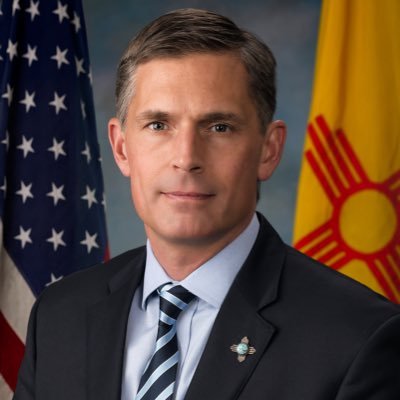
Americans spoke clearly this week that they want their elected representatives focused on affordability. We have legislation that would reduce household electricity bills by billions of dollars by making it easier to build clean energy projects. Let's get it done and pass BAAJA.


Daniel Stephen retweeted
BAAJA is an opportunity for Democrats to return to holistic energy policy that balances reliability, affordability, and sustainability.
@IrvingSwisher and I wrote about it for The Argument. theargumentmag.com/p/climate…