

Joined November 2022
- Tweets72
- Following657
- Followers533
- Likes682





A belated update: about two months ago I started my PhD! Grateful the help and mentorship I’ve gotten. From what I’ve seen so far at @stanfordnlp, it’s quite an exciting time to have the agency and freedom to do research 🌲
Pls reach out if you’re ever in the bay!

🥲 hard to see you go! 👋 I was quite lucky to be mentored by Kyle over the past ~8mo
Kyle has a unique voice that he brings to research - you can see it in just about every big effort from AllenNLP in recent memory and in the 20+ folks he's mentored.
Best of luck 👏 :)

Today I'm saying farewell to @allen_ai.
I'm so proud of our team & grateful to have shared fully-open Olmo, Dolma, olmOCR, Molmo, etc with the world
I know the team is more committed than ever to advancing open-source & open-science. Forever rooting for my dear friends 🫶


1
21
2,724
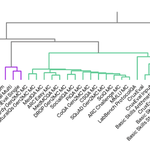
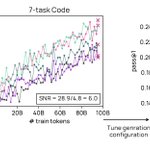
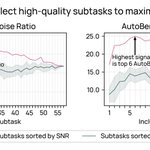
At NeurIPS 🌴! Check out our spotlight paper on the signal and the noise in language model benchmarking! (Wed 4:30 - 7:30 -- #1903)
++ come say hi for more details on all things evaluation for Olmo 3 + beyond. DMs are open!! 🐄

Lots of models this week but only one with all public data + training code + methods -- Olmo 3!
New methods cooking across the full stack 🧑🍳
Packed a lot of ideas for evaluation in this one 🤠🪡

Meet the Olmo 3 family:
🏗️ Olmo 3-Base (7B, 32B)—foundations for post-training with strong code, math, & reading comprehension skills
🛠️ Olmo 3-Instruct (7B)—multi-turn chat + tool use
🧠 Olmo 3-Think (7B, 32B)—“thinking” models that show their reasoning
All designed to run on hardware from laptops to research clusters.


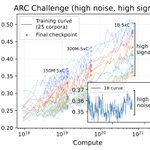
Evaluating language models is tricky, how do we know if our results are real, or due to random chance?
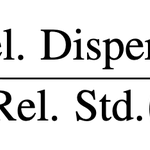
We find an answer with two simple metrics: signal, a benchmark’s ability to separate models, and noise, a benchmark’s random variability between training steps 🧵


Evaluating text generation is difficult — span-based evaluation is robust, but tough to build. 🤔
Introducing Thresh 🌾 — a platform for universal, customizable and deployable fine-grained evaluation for text generation!
🖥️ thresh.tools
📝 arxiv.org/abs/2308.06953