

Sr. Full-Stack Developer for 20+ years. Cloud, DB, AI, and learning new things are my passions. Every week I share experiences, tips, and how-to-do
FL, USA
Joined June 2009
- Tweets5.6K
- Following193
- Followers6K
- Likes14.9K




Deisbel (Sr. Software Developer) retweeted
Enthusiastic Developers:
Do you want the secret for saving yourself 800 bugs, 1800 headaches, 2800 hours of work, sleepless nights, and probably saving your job?
There you go:
- Don't touch what is already working!
Unless absolutely necessary, don't change the code working in Production.
Localhost is an environment that often has nothing to do with Production, especially in systems that allow customizations or adding plugins on demand.
When changes must be made, they should be made, but avoid the temptation to make them out of enthusiasm.
Deisbel (Sr. Software Developer) retweeted
My company's Project Manager decided to dedicate a full sprint to reviewing the error logs for all projects.
The idea seemed excessive to me: a full two-week sprint looked like a waste of time.
Was the Project Manager wrong, or was I wrong?
But first, some relevant conclusions:
It's incredible how good we are at logging errors, but terrible at checking them.
Checking logs is one of the most hated tasks because if the software works, who cares about all those thousands of lines of warnings and "errors"?
And you might think, 'You have terrible developers.'
Well, no, we're outstanding (modesty aside). Bugs that cause your software to crash are easy to detect, but silent bugs are tough: they don't bother you, but they shouldn't be there either.
So, it is time to answer the main question, but changing it a little bit to save my self-esteem:
Who was more wrong?
Well, me!, because we didn't need a whole Sprint, but possibly more than one.
My three tips for you, Product Owner or Project Manager:
1- Every 6 months, allocate a significant portion of your resources to cleaning up the error logs.
2- If the errors you see aren't critical, then don't log them: change the type to "Info" or delete that line from the log.
3- Refrain from mixing other tasks with this one; otherwise, we, the developers, will dedicate our time to those tasks and avoid bug purging as much as possible.
I must admit it, in the end, it was an exciting Sprint.
Deisbel (Sr. Software Developer) retweeted
We will need more Backend developers in 2030 than Front-end developers.
The UIs will be simpler than today.
There will probably be microphone icons everywhere that receive voice commands and send them to the APIs on the backend.
What other scenario do you foresee?
Deisbel (Sr. Software Developer) retweeted
This week, one of my team members used ChatGPT suggestions to significantly improve the performance of a database query, but another got a completely opposite result.
Be extremely careful when accepting optimizations from code generation tools.
This is why seasoned software engineers will be highly demanded in the near future.
Deisbel (Sr. Software Developer) retweeted
As a Software developer, which one do you pick and why?
1- Zero Modesty
2- Modesty
3- False Modesty
I will pick 1.5, something between 1 and 2.
Deisbel (Sr. Software Developer) retweeted
Days ago, I detected a query in a system in development that immediately triggered an alert on me.
I communicated this finding to the team but wasn't firm enough to force an immediate change or fix it.
I deeply regret it. This is what happened later:
When multiple users tested the App concurrently, the database collapsed and everybody went desperate looking for the cause.
This reminds me of a rule:
Do not delay any fix to your database design or queries.
If you see a query "smelling" bad, believe me, it will transform your whole application into a real piece of shit.
Deisbel (Sr. Software Developer) retweeted
Stop whatever you are doing and listen to my advice:
If you have a database in the cloud, go right now and add an alert to notify you when the DB reaches 80-90% of the assigned storage capacity.
Sooner or later, it will go to full capacity.
It will only take 5 minutes, and it will save you and your customers several headaches.
Deisbel (Sr. Software Developer) retweeted
Your confidence soars when the QA team doesn't find any issues in your tasks.
But when they do find issues, two things will happen:
- You can get angry and react.
Or you can feel like me:
- I feel relieved that they stopped my issue from moving forward.
Which one are you?
Deisbel (Sr. Software Developer) retweeted
We developers sometimes underrate the QA work, but there's nothing like having a really good QA guy covering our backs.
A good QA should never trust on our classic words: “Don’t worry, I tested everything.”
Deisbel (Sr. Software Developer) retweeted

Event-Driven Architecture is exciting until you deal with event versioning.
Setting up 101 meetings and hitting the release button at the same time is a poor option. Do this instead.
At some point, you understand the domain better, and a structural change makes perfect sense.
But, consumers are already tied to the existing schema.
Let’s talk about an example with a producer and 3 consumers.
Learn a solution to avoid Coordinated Deployments.
A solution focused on testing and fewer meetings.
Read more in my latest article.👇

Deisbel (Sr. Software Developer) retweeted
Tutorials follow the easy path 99% of the time.
Real life follows the easy path only 1%
Do not get tricked:
When you finish a Hello World tutorial, you are only 1% closer to being an expert on its topic.
Deisbel (Sr. Software Developer) retweeted
Humans are adept at detecting differences and anomalies, but we must rely on computers when dealing with millions of data records.
Anomaly Detection (AD) is the most used technique to detect and fight fraud and outliers.
Let’s show an example to explain how it works:
Imagine a Credit Card transaction system in a Bank.
Each time you make a purchase, the Bank registers information like Location, Product Type, Merchant, Amount, Date, and Time.
Using Anomaly Detection, the Bank will be able to detect when a suspicious purchase is made, for example:
- If you live in FL and the Purchase is in Canada
- If you usually spend no more than $100 and suddenly you spend $500
- If you never spend money at night and a transaction is done at 3 AM.
Those systems usually need to process millions of events per second in real-time, with multiple Clients reading the values, batch processing, etc.
Fortunately, some cloud platforms, like Event Hubs in Azure, support this intensive processing. We do not need to reinvent the wheel!
Deisbel (Sr. Software Developer) retweeted
If your team has any of these 7 dysfunctionalities, you have a problem:
1- Too many Junior developers (making it impossible to control the quality of their code)
2- Too many Senior developers (they don’t like to work frequently on monotonous tasks)
3- Too few specialized members in one particular area (like database specialists, front-end, or back-end developers)
4- Too much ego inside the team (not assuming their mistakes or rectifying the route on time)
5- Too many or too few QA members (you can lose money or delay deliveries)
6- Too many enthusiastic members (they can over-design and create unneeded fancy solutions)
7- Too many pessimistic members (They can obstruct the progress of good ideas)
Sometimes, the teams start correctly balanced but get unbalanced pretty soon after creating the project's foundation or later.
One simple advice:
Add or remove members from your team as soon as you need it. Do not wait until you lose productivity or your team's frustration grows.
Maybe you are now part of a dysfunctional team. If you feel so, take action.
Deisbel (Sr. Software Developer) retweeted
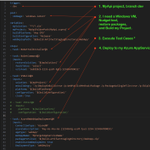
After 20+ years, I develop software much faster by splitting my full-stack work into 4 groups.
1- Spyke and POC.
- I read the basic documentation looking for what I need to work with.
- I try to create credentials for Dev and Live environments if integrating external APIs or Services.
- I try to test every external endpoint I need using Postman first.
2- Back-end work
- I created a new API controller with no overload.
- I define the interfaces for the endpoints, without implementation, returning null or sample data.
- I make the first implementation directly on the controller methods, not even defining more internal layers or services.
My principle here is to speed up the FE work, working in parallel with the BE as soon as possible.
- I add new Postman requests to test my new API controller. At some point, integration tests.
3- Front-end tasks
- I extend the UI to support the new features (new models, calls, and behaviors).
- Verify the new functionality is working end-to-end as expected.
4- Improve the Backend implementation Iteratively.
The tasks in this group usually involve:
- Create a new Service to extract the implementation details from the Controller**.
- Register the Service in my Dependency Injection system.
- Create tests for this Service.
- Inject the service in the Controller and refactor its methods.
- Execute the Postman collection created in Group 2.
- Test the Front-end application.
Let me mention that groups 2 and 3 could be done on multiple iterations.
You can split the API functionality and develop them on individual iterations.
What would you do better?
Deisbel (Sr. Software Developer) retweeted
Here you go, a 5-step process for designing exceptional-performance databases:
1- Design your database following the rules you learned at school.
Make sure you normalize every table.
2- Write a simple script that generates millions of fake rows.
3- Identify the most critical queries executed by your application.
4- Measure how long each query takes. Any database system will let you measure this.
5- Start denormalizing your data.
Break expensive relationships and bring some data together. Measure after every change.
**
Start following the rules, then break them for your benefit.
Deisbel (Sr. Software Developer) retweeted
For over 20 years, I have identified these 5 leading causes that undermine Productivity:
1- Over-design.
Developers often prefer to overcomplicate a solution, trying to implement something they recently read or a trendy but unnecessary technology.
2- Lack of priorities.
Without clear priorities, valuable time can be lost in unproductive and irrelevant tasks.
3- Rigidity, Inflexibility, and Stubbornness.
When a solution is far from optimal, do not persist: improve it or start over.
4- Unbalanced Teams or responsibilities.
The right balance between Juniors, Seniors, Front-end and Backend developers, QAs, and others is crucial.
5- Bureaucracy.
When ‘John Smith needs to approve every single change in the projects.
Deisbel (Sr. Software Developer) retweeted
Each Cloud has more than 30 Services. Picking one is a nightmare.
Let me do the work for you.
These 7 services will cover 90% of your needs in Azure and AWS.
Let’s start with Microsoft Azure.
1- Azure Storage
2- Azure App Service
3- Azure Insight
4- Azure Functions
5- Azure Storage queue
6- Azure SQL server
7- Azure Storage table.
Amazon Web Services (AWS)
1- Simple Storage Services (S3)
2- AWS Elastic Beanstalk.
3- Amazon CloudWatch
4- AWS Lambda
5- Amazon S3
6- Amazon RDS
7- Dynamo DB (Key-Value) or DocumentDB (Document)
You can use different methods when consuming them:
- As a RESTful API (Http based, pure, from anywhere, from any language)
- Using language-specific SDKs (like C#, Javascript, Python, Java).
** Some of them do not support both.
If you are not familiar with some of them, read more below:
1- Azure Storage
Your primary storage solution for all files like text, images, music, and videos.
2- Azure App Service
Your ideal Services for hosting websites. Simple and scalable.
3- Azure Application Insights
It is the perfect tool to monitor the issues and performance of our websites.
4- Azure Functions
Your option for Serverless. Simple, robust, and available in multiple languages.
5- Azure Storage queue
The most straightforward service to interchange events/messages between applications.
6- Azure SQL server
The complete solution when talking about DB Services.
7- Azure Storage table.
The most straightforward service for storing NoSQL data, providing a key/attribute store with a schemaless design
Let me know in the comments if you want to add another service to this list.
Deisbel (Sr. Software Developer) retweeted
Time or Money? Good enough or perfection?
Millions of projects have failed for one single reason: Over-design!
How to fix this problem?
Following what I call a cost-driven development pattern.
- Always add the ‘cost’ factor to your solutions; imagine that you, and only you, are paying for the solution you are designing.
- Make sure every team member thinks in that way, too.
Try to calculate the cost in hours/dollars of implementing a solution, future improvements, and hosting and escalating it. And again, imagine you have to pay for it.
After that, I promise you that:
- You will select the simplest and most efficient solution.
- You will keep the model simple and concise to the current facts.
You could say to yourself: this is not my problem!
But it is.
Sooner or later, more costs and expenses will result in fewer benefits for your company, a reduction in salaries and benefits, and ultimately lay-offs.
Nobody wants that, so start applying the cost-driven-development pattern right now!
Deisbel (Sr. Software Developer) retweeted
"Clean Code" is one of the best books you can read.
Even bad code can function. But if code isn't clean, it can bring a development organization to its knees.
This book is necessary for any developer, software engineer, project manager, team lead, or systems analyst interested in producing better code.
You will find answers to:
- How do you tell the difference between good and bad code?
- How to write good code and transform bad code into good code.
- How to create good names, functions, objects, and classes.
- How do you format code for maximum readability?
- How do you implement complete error handling without obscuring code logic?
- How do you practice test-driven development?
If you disagree with some of the exposed criteria in the book let me know which one.
