

CEO at https://teapaw.org/t.co/AAmJtQDAxA | We build outbound systems for SaaS and B2B companies that actually translate into revenue.
United States
Joined February 2017
- Tweets9.9K
- Following637
- Followers1.1K
- Likes20.6K





Pinned Tweet
We generated $550,000+ worth of sales opportunities by reaching out to strangers.
We had:
- No warm list.
- No prior relations.
- No special connections.
We just reached out to complete random strangers.
Here’s how we did that:
- One niche.
- Laser focus targeting.
- Highly personalized first email.
- 3 Follow-up sequence spread over 15 days.
We never tried to sell our services to them.
Instead, we tried helping them by providing them with free strategies and pure value.
This helped us to build a strong relationship with the prospect.
And improved our overall closing rate.
Here’s a takeaway:
Cold email is easy when you try to help your prospect rather than trying to sell your solution.

1. Hiring for the role you help with
↳ 4 open SDR roles usually mean the pipeline target just went up.
2. A new leader
↳ New VP of Sales. New plan, new budget, first 90 days.
3. Fresh funding
↳ Money in the bank and a growth target to hit.
More info in the image👇
26
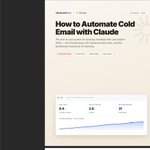
Everyone's using Claude to write cold emails.
That's 1% of what it can do, and honestly, the least important 1%.
Because a "better" cold email sent to the wrong list, from a cold domain, with no follow-up system… is just personalized spam. Faster.
The teams actually booking meetings didn't find a magic prompt.
They rebuilt the system around the email, and let Claude run the parts that used to eat their whole morning:
- List research.
- ICP scoring.
- Personalization at scale.
- Reply triage.
- Weekly reporting.
So I put the entire system into one playbook.
Inside the Claude Cold Email Playbook:
→ The 6-part stack that turns Claude into an outbound engine (not just an email writer)
→ The exact 5-stage prompt chain — research → angle → first line → email → self-critique (every prompt, copy-paste ready)
→ The 3-input pattern that kills the "AI smell" most outreach reeks of
→ 20 lines of Python to run the whole chain over a CSV of prospects
→ Which Claude model to use at each step (so you're not overpaying for simple tasks)
→ The reply-triage setup: Claude sorts + drafts every reply, you just approve and send
→ The deliverability rules that keep you out of spam — the part 90% skip
→ A 14-day rollout plan, a 5-email swipe file, and a one-page cheat sheet
Plus the 5 things you should NEVER automate, the honesty most "AI SDR" pitches leave out.
Most teams don't need another outbound tool.
They need the work done before they open their laptop.
Want the playbook?
Like this post 👍
Comment "CLAUDE"
Make sure you follow me (and your inbox is open).
I'll DM you the full 21-page guide.

Most agencies treat cold email as a campaign.
That's why they burn through leads and blame the copy.
Cold email isn't a campaign.
It's a funnel.
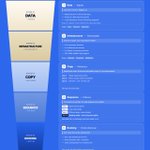
Here's the 5-stage cold email funnel that's booking us 40-60 qualified meetings every month:
1. Data → Signals
Lists don't convert.
Triggers do.
We don't email "VPs of Sales at SaaS companies."
We email VPs of Sales at SaaS companies who:
↳ Just raised a Series A in the last 90 days
↳ Posted 3+ SDR roles this quarter
↳ Got a 1-star Glassdoor review mentioning "pipeline"
Stack 2-3 signals.
The list shrinks.
The reply rate triples.
Tools: Clay + Ocean.io + LinkedIn Sales Nav.
2. Infrastructure → Deliverability
If you're in spam, your copy doesn't matter.
Before sending one email, we set up:
→ 8-12 secondary domains
→ 2-3 mailboxes per domain
→ 2-3 weeks of warm-up minimum
→ SPF, DKIM, DMARC fully aligned
Skip this, and you're shouting from inside a soundproof room.
Tools: Instantly and Smartlead
3. Copy → Relevance
The "remove the company name" test is non-negotiable.
If the email still makes sense after you delete their name, it's not personalized.
Our structure:
→ Line 1: Signal-based observation
→ Line 2: Why it usually creates X problem
→ Line 3: Soft CTA (not "30-min call")
40 words. Max.
4. Sequence → Patience
One email is a coin flip.
A 4-step sequence is a system.
Day 1: Signal-based opener
Day 4: Case study angle
Day 9: Different angle, same problem
Day 14: Breakup email (this one prints replies)
70% of our meetings come from email 3 or 4.
5. Booking → Friction Removal
You did the hard part.
Don't lose them at the calendar link.
→ One-click booking (no forms)
→ Auto-reminders 24h + 1h before
→ Lead routing based on company size
Most agencies ignore this stage entirely. It's where we 2x our show rate.

2
3
94
Stop building a lead list.
Start building a trigger list.
A lead list is a snapshot of who someone was the day you bought it.
By the time you hit send, half of it is wrong.
A trigger list is different.
It's built around what's happening right now (the moment a company actually needs you).
We don't email "VPs of Sales at SaaS companies."
We email VPs of Sales who:
↳ Raised a Series A in the last 90 days
↳ Posted 3+ SDR roles this quarter
↳ Got a 1-star Glassdoor review mentioning "pipeline"
Same titles but completely different intent.
The list gets smaller, but the reply rate triples.
Here's why it works:
A name tells you whom to email.
A trigger tells you why now.
And "why now" is the only thing that earns a reply.
Most teams chase volume because it feels like progress.
But 10,000 cold names will always lose to 200 warm signals.
Stop renting stale lists.
Start tracking the moments that mean someone's ready to buy.

1
1
33

Most people wait for the "right time" to start.
There is no right time.
→ The idea will never feel ready
→ The savings will never feel enough
→ The fear never fully goes away
You just start.
Then you figure it out.
3
6
51
6/ Cost per Meeting + Cost per Opportunity
The two numbers that decide if you scale or kill the channel.
Cheap meetings, expensive opportunities = qualification problem.
Both cheap = pour fuel on it.
This is where outbound becomes a business, not a gamble.
1
20
5/ Opportunities + Pipeline $
This is the line your CFO cares about.
→ How many real deals entered the pipe
→ How much they're worth
Outbound isn't a cost center when you can show this number.
1
18
2/ Reply Rate
The first real signal that someone cares.
→ 2-5% = you're in the game
→ Under 1% = your message sounds like everyone else's
This tells you if you earned attention.
1
21
3/ Positive Reply Rate
Filter out the rejections.
This is the number that separates "people answer" from "people are interested."
Track it weekly.
It moves the fastest when you fix your offer.
1
15
1/ Contacts Reached
Your top of funnel.
Not "sent", actually delivered to a real inbox.
Everything else is a percentage of this number.
If this is shaky, every metric below it lies.
2
1
23
I've seen outbound dashboards with 30+ metrics.
Beautiful. Useless.
You only need 7 numbers to run cold outbound profitably 👇
(Steal this dashboard)
2
1
24


A year ago, my best rep almost quit.
Not over money.
She was just done.
Done researching leads by hand.
Done copy-pasting into the CRM.
Done rewriting the same email for the 40th time.
By the time she got on a call, she had nothing left.
So we rebuilt how the team works.
Here's the whole stack 👇
1. Clay
Her mornings used to disappear into research.
- LinkedIn.
- Company news.
- Funding rounds.
All into a spreadsheet, by hand.
Clay does it now.
- 50+ data points per lead.
- Intent signals.
- Drafts the first line for her.
The lost morning is gone.
2. Lavender
Her emails weren't bad.
It was just too long and CTAs too pushy.
She couldn't see it. I couldn't either.
Lavender scores every email before she sends it.
Length, tone, predicted reply rate.
Her replies went from fine to actually good.
3. Gong
This one changed how I run the team.
I used to hear about lost deals after they were lost.
No idea what happened on the call.
Gong records all of it.
4. Apollo
You can't sell to people you can't find.
Apollo has 300M+ contacts, email, phone, sequencing, and CRM sync.
Not the flashiest tool we pay for.
Probably the best dollar-for-dollar.
5. Claude
The cheapest tool does the most.
- Proposals in 10 minutes.
- Objection prep before every call.
- Messy notes turned into next steps.
- Follow-ups out before the demo's even cold.
The ROI is almost embarrassing.
6. Fireflies
Nobody on my team takes notes anymore.
Fireflies join the call.
Transcribes it.
Pulls action items.
Updates the CRM.
7. Humanlinker
The old tradeoff was whether personal or fast.
Pick one.
Humanlinker reads LinkedIn and company data, writes personalized outreach at scale.
Saves my reps 2–3 hours a day.
8. HubSpot AI
The CRM finally works for us, not the other way around.
- Lead scoring.
- Alerts when a deal goes cold.
- Next best action.
- Forecasting.
All these cost less than $500/mo.
Less than one junior SDR.
And does the work of two or three.
My rep didn't quit.
She's our top performer now, and she likes the job again.
We're not a bigger team than our competitors.
We're just better equipped.
Start with one tool.
Add the next.
In 90 days, your team won't recognize itself.
1
1
23