

'Local sanctity enthusiast'. PhD @ Nottingham, funded by M4C: C14th - 15th mystical sainthood, canonisation processes, 'popular' sainthood.
- Tweets70
- Following165
- Followers109
- Likes198
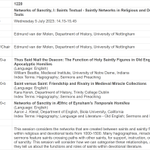





ALT A poster announcing the conference 'Gender and Sainthood, c. 1100-1500', 5-6 April 2024, University of Oxford.

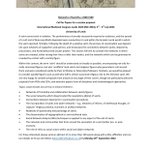
ALT The conference programme for Friday, 5th April, 9am-5.30pm. There will be three panels, 'Transgressing Gender', '(Trans)cending Gender, and 'Queering Sainthood', as well as a keynote lecture, 'Who's Afraid of Trans and Genderqueer Saints?' by Alicia Spencer-Hall.

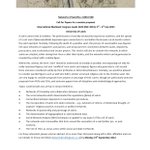
ALT The conference programme for Saturday, 6th April, 9.30am-6pm. There will be four panels: 'Writing Gender', 'Visualising Gender', 'Familial and Spiritual Relationships', and 'Modern Perspectives'.


ALT Broadly conceived, saints in the Middle Ages could serve a variety of functions within medieval society and culture – they were helpers in distress, sources of supernatural power, channels to the divine, inspirations for art, poetry, and literature, and a means of constructing identities and talking about ideas. As such, they were enmeshed with nearly every aspect of life, and cannot be separated from the wider cultural edifice of ideas and practices in which they sat. As we seek to foster new interdisciplinary conversations surrounding sanctity, we invite proposals for 15-20 minute papers from any area of Medieval Studies. In particular, we welcome papers from postgraduate students and early-career academics. Please submit an abstract (max. 300 words) and a short biography (max. 100 words), and your attendance availability (virtual or in-person) to both of the organisers, Edmund van der Molen ([email protected]) and Marisa Michaud ([email protected]), by 13th September, 2023.
ALT Broadly conceived, saints in the Middle Ages could serve a variety of functions within medieval society and culture – they were helpers in distress, sources of supernatural power, channels to the divine, inspirations for art, poetry, and literature, and a means of constructing identities and talking about ideas. As such, they were enmeshed with nearly every aspect of life, and cannot be separated from the wider cultural edifice of ideas and practices in which they sat. As we seek to foster new interdisciplinary conversations surrounding sanctity, we invite proposals for 15-20 minute papers from any area of Medieval Studies. In particular, we welcome papers from postgraduate students and early-career academics. Please submit an abstract (max. 300 words) and a short biography (max. 100 words), and your attendance availability (virtual or in-person) to both of the organisers, Edmund van der Molen ([email protected]) and Marisa Michaud ([email protected]), by 13th September, 2023.

ALT Broadly conceived, saints in the Middle Ages could serve a variety of functions within medieval society and culture – they were helpers in distress, sources of supernatural power, channels to the divine, inspirations for art, poetry, and literature, and a means of constructing identities and talking about ideas. As such, they were enmeshed with nearly every aspect of life, and cannot be separated from the wider cultural edifice of ideas and practices in which they sat. As we seek to foster new interdisciplinary conversations surrounding sanctity, we invite proposals for 15-20 minute papers from any area of Medieval Studies. In particular, we welcome papers from postgraduate students and early-career academics. Please submit an abstract (max. 300 words) and a short biography (max. 100 words), and your attendance availability (virtual or in-person) to both of the organisers, Edmund van der Molen ([email protected]) and Marisa Michaud ([email protected]), by 13th September, 2023.