
Building software to solve my everyday problems
Joined March 2024
- Tweets1.1K
- Following161
- Followers228
- Likes1.2K








Very cool, the thing is, this is mostly for single player games right? Whats the use case of generative environments in a multiplayer online game?

Excited to share Genie 4 today our most realistic and interactive world model:
- steer dynamic environments in real time, shaping events, camera angles, and actions
- generate native audio matched to the world, from realistic background sounds to characters who can converse in real time!
- simulate photorealistic scenes and real-world physics
- create more coherent multi-step events through reasoning from Gemini
We've started to roll out as a research preview to trusted testers. Coming soon to Google AI Ultra subscribers in Project Genie and early access partners via the Gemini API and AI Studio.
Grok bot, Muse, OpenAI Dots. Same idea, all closed, all expensive.
DS-Bot is the open source version: a team of long-lived bots with memory, group chats and bot-to-bot handoffs. Any provider, not just DeepSeek.
I run mine on deepseek-v4.1-flash-1017. Fraction of the cost.
One AI plan cost me $6.50 and 310K tokens because my prompt was vague.
What fixed my workflow:
1. Refactor first so file names explain themselves
2. Smart model decides, cheap models edit and execute
Anything I missed?
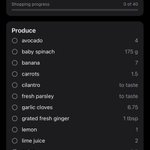
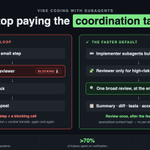
I ran 20 subagents for 4 hours on my meal prep app
Result: unlabelled icons, broken UX, and clicking on recipes crashed my app.
How do you one shot your development?
I got tired of repeating the same cleanup prompts to my AI agent, so I built a global skill in pi.dev with:
1. JSDoc only, no inline comment slop
2. No 1-letter vars (even in .map / .filter)
3. Blank lines between logical steps
Do you use clean coding rules?

10. Having software engineering fundamentals dramatically increases speed, when things have gone horribly wrong, you'll typically know before it hits production
7. Use service files to auto boot your app on your machine if you're not using something like Coolify to handle deployment
8. You don't need a self hosted Coolify isntance to manage your deployments, as my backend engineering friend once told me, it wastes a lot of resources. Just ask your ai to help you set up your deployment.
6. Use Tailscale to make sure your private project never touches the public internet. Even if you do plan to make it public, use tailscale to connect to your database if you're self hosting one.
4. Go with a framework you are familiar with from the start and that you like over a popular one. You will be more invested in the project that way and will have a better "mental map" of your project as well.
3. If your project uses a database, make sure to ask your agent to use a framework that supports migrations from the start, you don't have to know what it does, just know that your database will thank you.