
Engineer, Owner of DinoTech, AI advisor, Husband, Father of two
Costa Rica
Joined March 2010
- Tweets3.8K
- Following342
- Followers67
- Likes1.6K




Dennis Hernández 💙 retweeted

Prompt of the day (a long one):
Take a look at every code comment in <my codebase | this section of the code>.
Categorise each comment as:
- Tautology: simply repeats what is already visible from the code
- Excuse: many comments allow the agent to get away with a hacky implementation, which then gets propagated through the code
- Stale: references code or implementation information that is no longer relevant
- Decision Record: documents an important, non-obvious decision about the code
For each comment, take this action:
- Tautology/Stale: delete the comment
- Excuse: delete the comment and file an issue to fix the hacky implementation
- Decision Record: move it into an ADR
Once this is done:
- Create a lint rule banning comments for <my codebase | this section of the code>
- Take a ratchet approach, assuming not all comments will be deleted this PR
- Create a /delete-comment skill in this repository so we can repeat this process later
- Estimate for me how many lines of code we'll shed by deleting all comments
---
I'm sold - comments considered harmful
Dennis Hernández 💙 retweeted

El asesinato de Camilo Rodríguez nos estremece a todos. Entiendo a quienes reaccionan diciendo que “perdimos a Costa Rica”. Yo me resisto a darla por perdida. Sin duda vamos por un camino muy oscuro, pero todavía podemos cambiar el rumbo. Pero para eso tenemos que reaccionar. Resignarnos sería confirmar la pérdida.
Dennis Hernández 💙 retweeted
My dream is for every important PR to be accompanied by a video that shows folks how it works
Working on an /animatic skill for this
Dennis Hernández 💙 retweeted

We are deeply sorry for the disruption this incident has caused our customers and partners. We know the trust they place in our services and take that responsibility extremely seriously. We are seeing broad recovery and stability across our services.
This was a technical issue not related to cyber or AI / agents. The incident was introduced by an issue during an earlier network capacity upgrade that surfaced following a recent network change. We have addressed the underlying issue and continue to restore service to remaining customers and regions.
Given the scale of demand, we restored services gradually, validating stability at each stage. While this took longer, it helped ensure a stable restoration.
We will provide a full post-incident report once our review is complete.
Dennis Hernández 💙 retweeted

I am confused what does this do? I just started using exe.dev and it is magical, but I am a noob


Dennis Hernández 💙 retweeted

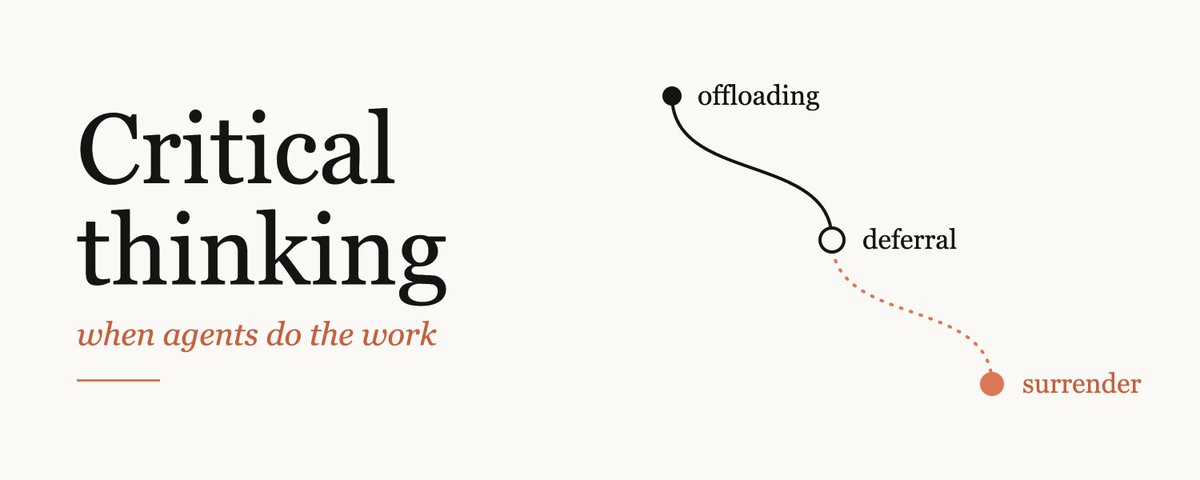
Claude.dev is our new home for developers building with Claude.
You'll find engineering deep dives, Claude Code and API guides, tips from the teams building Claude, and some fun easter eggs.
Dennis Hernández 💙 retweeted

Claude Code tip: before you ship, have Opus 5.5 send out 𝟰 𝘀𝘂𝗯𝗮𝗴𝗲𝗻𝘁𝘀 whose only job is to break your app, and split 𝘁𝗵𝗲𝘀𝗲 𝟭𝟲 𝗾𝘂𝗲𝘀𝘁𝗶𝗼𝗻𝘀 between them:
Security
→ Do your bundled frontend JS or git history contain private keys like sk_ or service_role?
→ Skip the UI and call your APIs directly, logged out or with someone else's ID. Does the server stop you?
→ Change the price, quantity or role in a request and send it again. Does the server accept it?
→ Hit the same endpoint 100 times in a row. Is there a rate limit per user and IP?
→ Hide a snippet that pops an alert in Markdown, rich text or an uploaded SVG. Does it run when another account opens it?
Data
→ Load 10,000 records. Does the page still open?
→ Use a 200-character name with emoji. Does it break the layout?
→ Sign up with the same email in different capitalization. Did you just get two accounts?
→ Submit an empty form. Is there now a blank record in your database?
Flows
→ Place the same order twice at once, and replay the same payment webhook twice. Did you get two orders?
→ Refresh or hit Back halfway through a form. Is what you typed still there?
→ Save while offline: it says saved, but nothing was stored
→ Upload a 50MB image. Does everything freeze?
Environment
→ On a small phone screen at 200% zoom, can you still tap every button?
→ Switch to Safari's engine. Does the layout fall apart?
→ For users in other time zones, are dates, deadlines and check-ins off by a day?
Set all 4 subagents to high effort. The security one covers payments and login, where one mistake is a disaster, so you can raise it to xhigh or even max. Anthropic's Thariq has said that turning effort up mostly buys more verification and edge-case testing.
Send this whole post to Claude Code, and add this line at the end 👇
"Create 4 testing subagents in ~/.claude/agents, one for each group above: security-breaker, data-breaker, flow-breaker and env-breaker. Use model opus for all of them, effort high, and xhigh for security-breaker. Give them permission only to read files, run commands and use a browser (Playwright), with no changes to code or config. Install Playwright first if it's missing.
Before every launch, run the app locally or in a test environment and have each of them work through its group item by item. If login is needed, ask me for two test accounts first. Use payment test mode only. Mock the AI APIs, or use a test key with a spending cap. Write test data only to a test database and clean it up afterwards. If you find production keys or a live domain, stop immediately and ask me.
For every issue, write the steps to reproduce, a screenshot and the fix. Combine them, rank them by severity and hand them to the main session to fix. Mark anything you can't test as "untested" with the reason. Show me the files you'll create first, and don't write them until I confirm."

Claude Code tip: before you ship a vibe-coded site, have Opus 5.5 send out 𝟱 𝘀𝘂𝗯𝗮𝗴𝗲𝗻𝘁𝘀 to check 𝘁𝗵𝗲𝘀𝗲 𝟮𝟬 𝘁𝗵𝗶𝗻𝗴𝘀, then fix them all in one pass:
Consistent design
→ Write a DESIGN.md first, and make every color, font size, spacing and corner radius follow it
→ Keep the palette restrained and the type hierarchy clear
→ Make every button, card and input of the same kind look alike
→ Too flat? Add emphasis. Too crowded? Cut
→ Keep text readable on both dark and light backgrounds
On mobile
→ No sideways scrolling, and nothing spilling off the screen
→ Add a mobile menu
→ Make buttons big enough to tap
→ Keep the layout intact when the text is enlarged
Every state
→ Give loading, empty and error states a proper screen
→ Give every button feedback, with its own hover, pressed and disabled look
→ Show form errors right where they happen, plus submitting, success and failure messages
→ Add transitions to modals, dropdowns and tab switches
Use it like a real user
→ Click through the core flows, like sign-up and checkout, from start to finish
→ Find buttons that do nothing and links that are broken
→ Make sure the whole thing works with just a keyboard
Before launch
→ Say what you do in one line on the home page
→ Give each page one main button you want people to click
→ Give every page a title, a description and a favicon
→ Delete all placeholder text
For effort, follow Anthropic's cost guide from yesterday: medium is for well-scoped daily work. The default medium is enough for these 20 fixes; raise it for the harder ones. Thariq tested it: turning effort up mostly buys more verification and edge-case testing.
Send this whole post to Claude Code. If you need to, add this line at the end 👇
"Send one subagent per group to check it without editing anything. Then fix everything yourself from their lists, so no two agents edit the same file. If a group is more complex, raise that subagent's effort. Show me the list of issues first, don't change anything until I confirm, and when you're done, give me before-and-after screenshots."

Dennis Hernández 💙 retweeted
The constant decel messaging in Europe is insufferable as an adult, but its effect on kids is worse. As a parent, it's your obligation to counterprogram this nonsense. Show them robots, rockets, and wonders of AI. Show them cathedrals and moon landings. Instill hope in progress.
Dennis Hernández 💙 retweeted

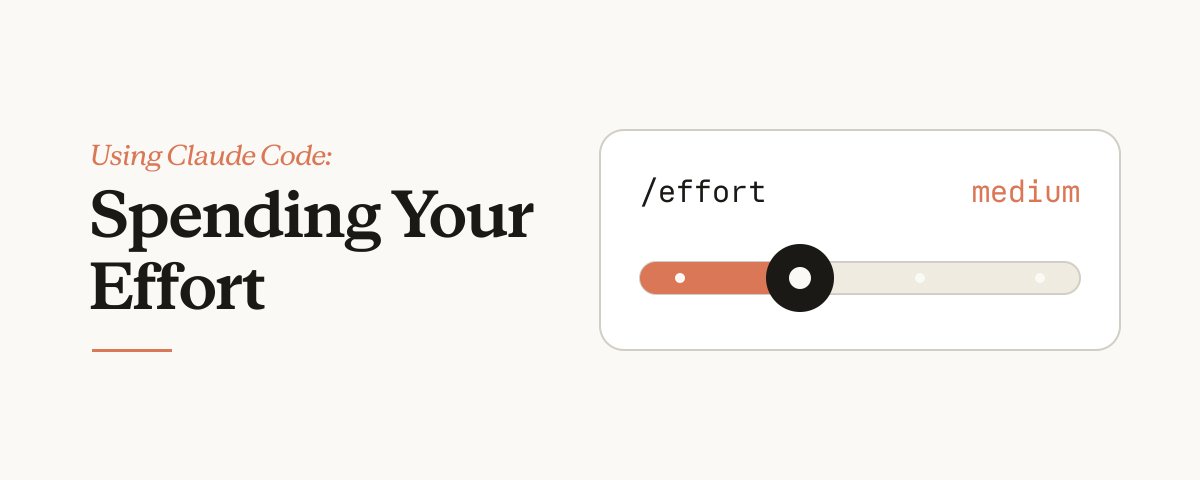
If you want to see interactive explainers of benchmarks and demos I built, you can read it on our new dev site here: claude.dev/blog/spending-you…

Dennis Hernández 💙 retweeted
What is effort really? When do you change it it and why not just use max effort for everything?
I dove deep into this problem, looking into evals and doing my own tests and I was quite surprised by the results.
Dennis Hernández 💙 retweeted

Opus 5.5 の公式ガイド合わせて設定見直したらだいぶトークン効率よくなったな〜上限あまり気にしなくてよくなった
platform.claude.com/docs/en/…

Dennis Hernández 💙 retweeted

"Writing code by hand is no longer an economically productive enterprise for the vast majority of programmers working at the vast majority of companies. That's today."
@dhh wasn't holding back. I think every developer should listen to this keynote.
youtu.be/vDjW_dRyKXY

Dennis Hernández 💙 retweeted

Huh. There is a catch. blog.szypowi.cz/p/claude-cod…
Dennis Hernández 💙 retweeted
It's pencils down, people. Writing code by hand is no longer an economically viable skill for most programmers at most companies. But the future of making software has never been brighter. Don't you dare black pill this beautiful moment! youtu.be/vDjW_dRyKXY?si=6Fsf…
Dennis Hernández 💙 retweeted

Dejen de inventar historias. El mae andaba la licencia vencida y, en Estados Unidos, las cosas no funcionan como en Tiquicia, donde si usted anda sin la licencia al día le da 20 rojos al oficial de tránsito y listo. ¡No! Allá son sumamente rígidos con el cumplimiento de la ley.

Dennis Hernández 💙 retweeted

Given that agents still need high level supervision. And given that the human review of code is a bottleneck. And given that the models have gotten good enough that strict deterministic harnesses are suboptimal.
Then how should we supervise their output.
My current solution is to use an interrogation tool coupled with an agent. The tool displays the structure of the system in a UML-like diagram, color coded with crap and mutation scores. The diagram is dynamic, allowing the user to click on element and drill down through the architecture -- all the way to code.
The user can detect structures that need improvement and tell the associated agent to make the appropriate changes. These changes can range from high level architectural changes, to the lowest level code refactorings. The associated agent will make those changes and cause them to be redisplayed.
The tool I'm using is custom made for me, but you can point an agent at it and use it as a template to build your own custom tool.
It's a work in progress, so don't be surprised if it changes a lot over the next few weeks. But then you probably won't care because by then you'll be deep in customizing it for yourself. And anyway, you can always point an agent back at mine, or someone else's, and integrate improvements into your own.
github.com/unclebob/uml-view….

Dennis Hernández 💙 retweeted
General rule of thumb for success.
Don't be afraid to try things! Especially things that everyone else dismisses.
You know, like electric cars, reusable rockets, solar power, self-driving cars, UML.
Dennis Hernández 💙 retweeted

anthropic released a new prompt that eliminates claudese:
platform.claude.com/docs/en/…
