

Technologist and citizen. I learn as I go.
Sunnyvale, CA
Joined December 2007
- Tweets22.3K
- Following6.4K
- Followers2.4K
- Likes233K







Dave Gilbert retweeted

The people on this platform I respect the most are those who constructively criticize their own tribe (or don't even have a tribe), are ruthlessly guided by a coherent set of principles, will acknowledge and accept facts that do not flatter their own positions or worldview, change their positions when facts warrant it, avoid hypocrisy (or at least acknowledge when they are engaging in it), and are capable of stripping away their own personal history and any moral arguments in order to inspect the logical or factual structure of an argument (i.e., cognitive decoupling).
But truth-seeking and intellectual honesty demand more than most people are willing to invest.


Dave Gilbert retweeted

Science is not some hobby that serves the self actualization of people in a publicly sponsored job placement program. It is the systematic search for truth.


This started as a comment I posted with a screenshot of a Wall Street Journal piece on consent pledges and sober monitors at college parties:
"We’ve progressed from an older co-ed era where women and men stayed relatively socially segregated on campus with choreographed and chaperoned social encounters, through 2nd/3rd-wave reforms where sexual liberation and equality required breaking down all barriers and spaces and treating women and men exactly the same, to a dawning recognition that women need special protection while insisting that none of the old barriers should be re-erected or spaces re-segregated. The problem is that this new software is so full of contradictions that bugs will appear faster than we can patch them."
The story below imagines what that might look like a few years from now. It also draws on the open letter from more than 200 Cornell faculty on sexual assault at the university [cornellsun.com/article/2026/…] and Heather Mac Donald’s response to it in City Journal [city-journal.org/article/cor…]. I wrote it with the help of Claude Opus 5.5.
***
TECHNOLOGIES OF CONSENT
"It has been employed in a whole series of relationships: children and parents, students and educators, patients and psychiatrists, delinquents and experts. . . . They have been recorded, transcribed, assembled into dossiers, published, and commented on."
—Michel Foucault, The History of Sexuality, Volume 1, trans. Robert Hurley (Vintage, 1990), p. 63
"But you could not have pure love or pure lust nowadays. No emotion was pure, because everything was mixed up with fear and hatred."
—George Orwell, Nineteen Eighty-Four
***
Patch Notes
To get into the Sigma Chi spring mixer at Hollis University in April 2033, Priya Raman had to breathe into the kiosk by the door, wait for her wristband to turn green, and recite the Community Consent Pledge to a tablet that scored her diction. The pledge had started a decade earlier as something students at Stanford wrote for themselves and read off a poster, but it now ran to eleven clauses, including the one about consent being revocable at any time and the newer one, added after the Ithaca years, in which every guest promised to report what they witnessed. The tablet docked her for mumbling clause nine, so she said it again.
Inside, two sober monitors in orange vests stood by the stairs, and her roommate Dana was working the room with a lanyard that said CONSENT CAPTAIN. The house belonged to the university now, as every Greek house had since the Housing Consolidation of 2029, and the cameras in the common rooms fed a dashboard at the Office of Community Standards. Nobody had settled whether cameras belonged in hallways outside bedrooms. The fraternity had filed its Event Risk Plan ten business days in advance, along with a guest list, a floor plan marked with “visibility zones,” and a training certificate for each officer. For one semester the office had also required a balanced gender ratio at registered parties, on the theory that a house full of men inviting a handful of women created what the guidance called “predatory imbalance,” and then quietly dropped the rule after two complaints arrived in the same week, one arguing that it presumed everyone was one of two sexes and the other arguing that it turned women’s attendance into a commodity fraternities competed for.
Priya was there on a half shift. Consent captains rotated through parties the way RAs once rotated through dorm duty, and since the faculty senate votes of 2030, when Hollis adopted universal designated reporting for anyone holding a campus leadership role, captains were reporters too. Anything she saw, she owned.
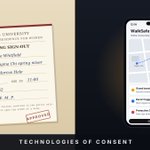
That week her history seminar, Coeducation and Its Discontents, had read the 1958 Hollis Handbook for Women. Professor Harwick had put two lists side by side on a slide. On the left were the old parietal rules: women signed out on cards at the front desk, male visitors were allowed only on Sunday afternoons, doors stayed open the width of a book, and the housemother locked the building at eleven. On the right were the current ones: students checked out of residence halls through the geofenced WalkSafe app, overnight guests were registered forty-eight hours ahead, the first-year “visibility guideline” asked that doors stay ajar after midnight when a guest was present, and a residential safety fellow lived on every floor. The 2033 list also included the Quiet Hours Protective Zones, which were formally open to all students of every gender, though everyone understood whom they were meant to protect, so that men who entered them after ten generally brought an escort or a reason.
“We spent fifty years taking the left column apart,” Harwick said, “because it treated women as people who needed supervision and men as people who needed watching. And we’ve rebuilt most of it, except that now nobody’s allowed to say who’s being protected from whom.”
The readings for the second half of the week included the 2026 faculty open letter from Cornell and, for contrast, a City Journal essay by Heather Mac Donald that had called the faculty response a “paroxysm of hysterical irrationality.” Half the class had refused to discuss it, and a third had admitted they liked it more than they expected to. A student named Theo had pointed out that the essay and the letter agreed on one thing, which was that the institution was failing women, and disagreed about whether the women or the institution needed fixing.
Theo was not at seminar that Thursday because it was not his week. In February, he and Sasha Kim had broken up badly at three in the morning, and at 3:04 each of them had opened Mutual, the university’s consent check-in app, and revoked consent for their last encounter. Mutual logged revocations as reports, and since each revocation named the other person, the system opened two cases, with each student listed as complainant in one and respondent in the other. Supportive measures followed automatically, including a mutual no-contact order. Because they were both enrolled in Harwick’s seminar, the scheduling software split the class into alternating weeks, so Sasha came on odd weeks and Theo on even ones, and the remaining eleven students now took the same course twice. The Office of Community Standards had promised a fix for the “reciprocal case” problem in the next release.
The other thing that wasn’t working was harder to fix. The Climate Analytics dashboard that flagged parties and residence halls for extra monitoring was barred by policy from using sex as a risk variable, because the university’s nondiscrimination rules forbade treating male students differently from female ones. The model had found its way around that by learning from everything correlated with sex: height and shoe size from athletic department records, voice register from the pledge kiosks, membership in particular clubs. Students joked that the safest thing a tall baritone could do for his record was join an a cappella group. The registrar’s office insisted the model was gender-neutral, and in the narrowest sense it was.
Near midnight, Priya’s friend June came down the stairs with a guy Priya recognized from orientation, Marcus, a quiet economics major who had once lent her a calculator. June’s band was amber, which meant she was past the threshold for registering consent in Mutual without a second check. Marcus looked at Priya’s lanyard with what she realized was relief.
“Can you witness?” he asked. “So it’s on record. I just want it on record.”
Mutual had a witness feature, and a consent captain’s confirmation counted for more than anyone else’s. Priya also knew that once she touched the screen, she would have entered a report-adjacent record of whatever came next, and that if anything later went wrong between June and Marcus, she would be the first person interviewed, by two investigators from the outside firm Hollis used for any case that involved a student leader.
June leaned in. “Don’t log me,” she said quietly. “Are you a reporter tonight?”
Students had learned to ask that question the way people once asked about pronouns. Half the faculty now wore green Confidential Listener badges, negotiated by the faculty union in exchange for dropping its opposition to universal reporting, and students had learned to look for the badge before saying anything that mattered. Priya didn’t have a badge, and she was on shift, so she was a reporter.
She did the only thing she could think of that didn’t involve a screen. She told Marcus to text June in the morning, told June that she was walking her home, and walked her back across the quad to Linden Hall, three feet apart on the path because June kept drifting toward the grass. The WalkSafe app chimed as they crossed the geofence, logging Priya as the escort. At the door of Linden, which was a Quiet Hours Protective Zone after ten, the safety fellow on duty buzzed them in, looked at June’s amber band, and wrote something on her tablet.
Priya stayed until June was asleep, with the door open the width of a book because she wasn’t sure what the guideline said about a guest who was also a captain, and then she sat in the hall and filled out the shift log, which asked her to describe any interventions in the free-text box. She typed “walked a friend home” and then deleted it, because it read as an intervention, and typed “no incidents” instead, which meant she had now filed a false report, which as a designated reporter she was not permitted to do.
In the morning the app pushed an update.
Mutual 7.4.1, release notes
-Fixed: simultaneous revocations no longer generate reciprocal cases. Reciprocal cases are now merged into a single “mutual concern,” which is assigned to the student who revoked second.
-Fixed: witness confirmations by consent captains now display a disclosure reminder before submission.
-Improved: Climate Analytics now excludes shoe size.
-Known issue: students escorting other students into Protective Zones may be logged as both escort and visitor. A fix is in progress.
-Known issue: shift logs reporting “no incidents” on nights with a WalkSafe escort event are being flagged for review.

🎯

In all of your reporting, you must know the democrats were going after Elon with lawfare... between the SEC and Delaware Chancery, it was completely un-American
Half of the tech and business folks who jumped ship to the republican party would still be democrats if they had not done these two things.
The Dems red-pilled Silicon Valley, not Trump
We've progressed from an older co-ed era where women and men stayed relatively socially segregated on campus with choreographed and chaperoned social encounters, through 2nd/3rd-wave reforms where sexual liberation and equality required breaking down all barriers and spaces and treating women and men exactly the same, to a dawning recognition that women need special protection while insisting that none of the old barriers should be re-erected or spaces re-segregated. The problem is that this new software is so full of contradictions that bugs will appear faster than we can patch them.


The skills that an AI agent swarm needs to defend against an attack are exactly the same skills required to perpetrate one.
If we regulate that knowledge out of our frontier AI models, then U.S. companies, including banks and healthcare companies, will have no ability to resist attacks from unconstrained agent swarms controlled by foreign powers over whom we have no regulatory control.

To make this more clear: Microsoft says a China-aligned group used an open-source agent framework to hit 2,250+ Microsoft 365 tenants at 2,900 sign-in attempts a minute after the ConnectWise breach. In some cases it got privileged access in under 3 hours.
This is one of the first publicly documented cases in which a state actor has scaled up attacks using AI agents at machine speed.


When Democrats take full control of government again, which they will sooner or later, I expect structural changes designed to uproot the nationalist neo-Buchananites (MAGA) from governance and move the Uniparty Overton window further left: an end to the filibuster, statehood for DC and Puerto Rico, and a bigger Supreme Court, all of which the DNC chair and party resolutions have already endorsed. And given how Democrats talk about policing misinformation on social media, expect AI to be heavily regulated to enforce the Uniparty message.

I’ll take the ‘woke more correct’ position that TDS was rational, reasonable, and appropriate not because of Trump’s 2016 political platform which economically would have been palatable to a 1980s Democrat and on social issues was to the left of 2005 Hillary Clinton.
No, the reason Trump deservedly elicited derangement was because people saw that he signaled the end to strict uniparty institutional control of electoral politics and ideological narrative formation.
They first tried to get rid of Trump in 2016 by having the media exercise its manufacturing-consent veto power.
When that failed the deep state and media ginned up the ‘Russia collusion’ hysteria to try to Nixon him.
When that failed they used whole-of-society and election engineering tactics to help Biden squeeze by in 2020.
And then when they found out Trump was coming back in 2024 they sicced the administrative state on him and then of course there were the assassination attempts.
All of this failed completely and humiliated the institutions who suffered massive loses of wealth, power, and prestige along with open defections from America’s most important industry, tech. (Politics remains one domain in American economic life where you do need to perform to get paid.)
This obviously can’t be the final word on the matter and the next logical step for libs if they get back into power has to be (having failed despite deploying every trick they had within the rules of the game) changing the rules of the game: new states, new executive powers, prosecutions and jailings,a captured judiciary, jettisoning the filibuster, etc.
This isn’t some paranoid ideation but rather the emerging consensus platform of national Democratic Party politicians.
The right can be retarded, running in 100 different directions at once to pursue various petty corruptions and self interests, but Trump will not represent an enduring dispensation and this is obviously what is coming next.
Somewhere Roger Corman is annoyed he never thought of this one. He’d have gotten Dick Miller to play the judge.

Trans neo-Nazi teen accused of Hindu temple mass shooting plot will get hormone treatments in jail: judge trib.al/eDQ8N7P

Dave Gilbert retweeted

Of course the flying Tesla Roadster is a gimmick but that sort of misses the point, the tech flex behind it isn't.
Tesla's bulk business is about advanced technology from EV to self drive, but decided to create the most ridiculous manual drive supercar. Supercars are a gimmick,almost by definition, based on how wild can you make them.
The gimmick that can make the car literally fly, briefly, can make it corner like no other supercar and accelerate, literally like a dragster on a test track. It's got nothing to do with flying continuously, but having a car that will outperform every Lambo, Ferrari or McLaren with technology that they cannot replicate because it requires experience from space launches and computation that they don't have now nor will in future.
So Porsche, Bugatti, Aston Martin just became legacy prestige brands, like Rolex, Richard Mille or Patek Philippe. These cars celebrate the bygone age and the baroque, physical complexity of the internal combustion engine just as mechanical watches do for non digital, complex time-keeping mechanisms. But hey won't be faster anymore than a mechanical watch keeps better time than a Casio. They are now, de facto, mobile jewelry and no longer supercars with superlative performance. And this affects their ability to market the bulk business of mainstream European internal combustion engine cars. It's the end of an era of industrial era manufacturing.

I hate to be the one to burst the Tesla bubble today, but the spectacular “flight” we witnessed at the Roadster reveal needs a little context. The car is carrying around 250kg of compressed air, plus the weight of the tanks, valves and thrusters needed to contain and release it.
Based on the published figures, that gives it roughly 1.5–2 seconds of maximum thrust before the system needs to be refilled.
In short, it's a gimmick.


Dave Gilbert retweeted
An overlooked way that college has become "woke" is through internal threats to profs' employment. The way it happened to me and others is that committees reporting on your progress to tenure warn that you haven't incorporated enough rad fem / CRT / decolonial / etc. perspectives, and that a successful tenure application in a year or two will need to have remedied this "omission." It's nothing less than a threat that you'll lose your job if you don't go woke. I suspect many profs who don't wish to go woke do so under the force of this coercion.
It's often fairly subtle. Here's what I was told in 2019:
"Advisory Council...felt that your narrative could be strengthened by a more thorough engagement with the discipline-wide conversation about diversity in the study of the classics. We would advise you to connect more deeply to the debates in the field and to locate your approach with respect to these pedagogical trends related to diversity in the classics classroom, which grapples with the Western heritage narrative and the balance of primary and secondary source authors with which students become acquainted."
Presumably, "grapple with the Western heritage narrative" meant "start teaching that the West is oppressive" and "secondary source authors" meant the sort of tendentious ephemera by the likes of Sarah Bond and Donna Zuckerberg that was then being lauded in my field. I resisted, prepared to stand on my academic freedom, and came through unscathed, but I'll confess I felt the force of the threat, and I don't blame others if they've caved out of a desire to keep their jobs.
When someone tells me Israel's conduct in Gaza is criminal or genocidal, I ask what Israel should actually do. I have yet to get a plain answer. Hamas still holds the half of Gaza where most of its two million people live. It still rules there by force and polices the aid, though it formally dissolved its government in July. Its 2017 charter still calls for liberating Palestine "from the river to the sea."
The Board of Peace (the Trump-chaired body overseeing the ceasefire) has offered a way to disarm Hamas without more war, and Hamas agreed to its roadmap in July. Hamas wants a Palestinian committee to store its weapons inside Gaza while Israel withdraws in stages. Israel and the U.S. want an international force to destroy the weapons before Israel pulls back. Hamas hasn't handed anything over yet. If it never does, Israel must either tolerate an armed Hamas in half of Gaza or remove it by force and kill more civilians.
Critics say Hamas can be removed without unnecessary civilian casualties, which is true by definition and settles nothing, since the dispute is over which casualties are necessary. They won't quantify "necessary," so they can condemn any number of deaths over any period.
In the eight months between the truce and June, fewer than a thousand Palestinians died, fighters included. In June, Israel held about 60% of Gaza and planned to take 70%. I asked friends then what casualties they would accept if Israel followed through. My own limit was about two thousand more civilian deaths. I based that on other efforts to secure cities where fighters hide among civilians, assuming a death rate far below the main war's. I said I'd revise it if Israel went door to door, and I set aside deaths from hunger and disease as a separate question. No one else would name a number.
Israel didn't go door to door. It nudged the line west into July, then pulled back in August, reportedly under U.S. pressure, to about 53% of Gaza. Gaza's health ministry counts fewer than 400 deaths from mid-June through late September, fighters included, well under my limit.
I believe Hamas should disarm unconditionally before anything else happens. The people most upset about Gaza could help by pressing Hamas to do it. If someone thinks disarmament should go another way, I'll hear the argument, but no one has made it.
If Hamas keeps refusing, I'll ask the June question again: Should we accept Hamas remaining armed and in power? If not, how many civilian deaths are acceptable to remove it?

Dave Gilbert retweeted

After a brief but institution-eroding slop science era, it increasingly looks like we are going to have two revolutions from AI:
1) Everything ever published will be re-read and re-judged in ways that human scientists never anticipated
2) Novel discoveries will start to come fast
Dave Gilbert retweeted

for a long time i said that antisemitism, particularly on the american left, was not as bad as people claimed.
i'd like to just state that i was totally wrong.
i still don't understand it, really. or know what to do about it.
but it is so fucked.
"Politically, I call it rape whenever a woman has sex and feels violated."
—Catharine MacKinnon, Elizabeth A. Long Professor Emerita of Law at Michigan Law
"Men as active and women as passive in sex; women as subjective and men as objective; women with feelings and men with reason; women with no role in shaping events in the world and men with all responsibility for them: have we ever heard those ideas before?"
—Janet Halley, Royall Professor of Law at Harvard Law School
The Cornell Jane Doe case takes place within a decades-long argument inside feminist jurisprudence about sexual assault and female agency. Beginning in the 1980s, scholars like Catharine MacKinnon argued that the law's traditional focus on force and resistance missed most of the sex women don't want, and that under conditions of male domination a woman's apparent agreement can't be taken at face value. That critique produced real reforms, from the recognition of acquaintance rape to the rule that no means no, and it eventually produced the affirmative consent standard that New York now requires of every college in the state, Cornell included. Along the way, other feminists began to argue that the movement had overshot, and that in protecting women from sex they didn't want, it had started treating them as unable to know their own minds. Janet Halley is the sharpest of those critics, and her analysis of what affirmative consent does in practice reads like a forecast of the Doe case.
Halley targets the branch of feminism, often called dominance feminism or radical feminism, that MacKinnon founded. Its premise is that because women live under conditions of male domination, their agreement to sex can't be trusted, so law should stop asking whether a woman consented and start asking whether she wanted the sex. Halley objects that once you put that premise into rules enforced by tribunals, it does things its advocates don't intend. To show how, she breaks consent into three kinds.
[1] Positive consent: agreeing to sex because you actually want it.
[2] Constrained consent: agreeing because, given the options as you see them, yes looks better than the alternatives, such as an awkward refusal, a scene, or disappointing someone, even though you don't want the sex itself.
[3] Performative consent: what you communicate through words or actions, regardless of what you feel inside.
Halley groups the first two as "subjective consent," since both are states of mind that only the woman can report, while performative consent is the only kind anyone else can observe.
Her argument is that affirmative consent policies like Cornell's, which New York has required of every college since 2015, blur these three kinds together. The standard defines consent as a "knowing, voluntary, and mutual decision," which describes a state of mind, and then says it can be expressed through words or actions that give clear permission, which describes a performance. The policy never says which one controls when the two diverge, when a woman says yes but privately doesn't mean it. That leaves it to each tribunal to decide whether the question is what she signaled or what she felt.
The choice matters because of who can testify to what. If the question is performative, the man can describe what she said and did, and that testimony carries weight. If the question is subjective, the complainant becomes the only witness to her own past state of mind, and anything the man says about her words or actions can be answered by her saying she didn't mean it. Halley stresses that the hard cases don't involve liars. They involve women who sincerely believe something different now from what they believed then, whether because their memory was wiped by drinking they chose to do, because friends or family persuaded them afterward that what happened was assault, or because ambivalence at the time hardened into a conviction that they couldn't have consented.
A standard that lets the later belief override the earlier one changes incentives going forward. A woman who finds it awkward to say no, or who can't decide what she wants, no longer has to settle the question in the moment, because she can settle it later in the form of an accusation. Halley calls this "protective legislation" and predicts it will do what protective legislation has always done: "entrench the protected group in its weakness."
The Cornell case runs through these categories in order. In her sworn statement, Doe described positive consent to the first encounter, agreeing because of how attracted she was to Male Number 1. She described constrained consent to a later one, in which the men "were asking me to have sex so many times that I finally gave in." Throughout, by her own account, she gave performative consent, telling the men yes. Within days she texted one of them that nothing illegal had happened and that she'd liked being with him. Then came the group chat, the slut-shaming, the disinvitation from the Halloween party, the forum post calling it a gang rape, and only after all that did she go to the police, and a year later her civil complaint says none of it was consensual.
Halley wrote two hypotheticals to illustrate her worry. In one, a young woman follows a fraternity brother to a back room, goes along with sex because she thinks that's what is expected, and files a complaint after her friends tell her the next day that she was assaulted. In the other, a woman acts on a desire she considers shameful, wakes up horrified, and her denial gradually becomes a conviction that she was imposed upon. She wrote those in 2015. Doe's story tracks both.
Doe's lawyer's way around all this is to say she was too intoxicated to consent to anything, which makes the three kinds of consent irrelevant. But that is a claim about capacity, not about consent, and New York criminal law sets a high bar for it: unconscious, physically unable to communicate, or drugged against her will. Her own statement describes her as the most functional person in the room during the first encounter, checking on one man who'd fallen asleep and comforting another who was dry heaving. Three of the men now say they were the ones too impaired to consent, and most of us find that claim absurd. Halley's point is that our sense of its absurdity rests on assumptions we would reject in any other context: men as responsible, women as passive, men as objective, women as subjective. Before any of us decides that what happened at Cornell was rape, it's worth asking her question, "have we ever heard those ideas before?"
From Janet Halley, "The Move to Affirmative Consent," Signs (2016):
q/The dominance-feminist goal has long been to shift the risk of nonpersuasion to the accused. Under the coercive conditions of sex inequality, MacKinnon argues, “to counter a claim that sex was forced by inequality, a defendant could (among other defenses) prove that the sex was wanted—affirmatively and freely wanted—despite the inequality, and was not forced by the socially entrenched forms of power that distinguish the parties” (2005, 247–48; emphasis added). She argues that affirmative consent should be an “affirmative defense”—the accused person’s burden of proof (483, n. 37). This would literally be “guilty until proven innocent.” It is a genuinely radical idea, repugnant to most if not all Liberal and liberal thought. And I think it is not a radical left idea: it envisions statist social control in a social-conservative way. [...]
The complainant’s burden of persuasion is easier to bear if the case rests on subjective consent (either positive or constrained) than on performative consent. If performative consent decides the case, the accused can relevantly testify to what he perceived her to communicate to him. She can still deny that she made those communications, or testify that it would be unreasonable to conclude that her gestures or words could communicate consent. Technically, it would not matter that she did not intend to signal consent by speaking or acting as she did, but even so, if performative consent is enough, the testimony of the accused will have some kind of weight. On the other hand, if subjective consent is needed, the complainant will be talking about her own past state of mind. She is the world’s single most authoritative voice on it. If the accused says that she communicated consent, her denial that she meant it cuts deeply into the value of his proof.
The respondent can attack the complainant’s credibility, but most of the difficult cases that are swept in by the shift to affirmative consent won’t involve lying complainants. For all the furor over that, in my experience the hard cases involve good-faith plaintiffs whose assertions we might or might not believe. This includes complainants who say now that they didn’t consent then but whose memory was destroyed by the voluntary consumption of mind-altering substances at the time, or whose memories have morphed since then; complainants who have been convinced by friends, boyfriends, or parents that “what happened to you was assault” when they didn’t feel that way at the time; complainants who were ambivalent at the time but have since become more negative about the episode, to the point where they are now convinced, sincerely, that they did not consent then; and complainants who feel angry or shameful feelings now that convince them that they could not have consented at the time, or that they should not have so they must not have. It is near-anathema in feminist circles to say that these women should sometimes not be believed when they state that the sex was wrongful under the legal rules. Founding the claim on the lack of affirmative consent, and leaving the door open to construing the required consent as subjective consent, simultaneously opens the door to holding those accused in these types of cases responsible for serious, possibly expellable, misconduct. And if affirmative consent, via the ALI MPC or otherwise, makes it into criminal law, it could open the door to conviction for sexual crimes.
Defining constrained consent narrowly—for instance, limited to constraints deliberately imposed by the accused for the purposes of gaining social leverage on the complainant—includes the man who threatens a woman to extract her consent. This seems like a good idea: it includes the man I have hypothesized who threatens the woman with a knife or keeps her from leaving as she seeks to do (though we can also punish these bad actors without an affirmative consent requirement). But defining constrained consent broadly includes most of social life—we all act under circumstantial constraints all of the time—and this rule has been authored by feminists seeking to install in law their idea of pervasive conditions of male domination. Some really nefarious exploitations will become punishable, but so will sexual interactions that are—even if you do believe that women live under pervasive conditions of male domination—entirely innocuous. Once again, the rule exposes many, many people to randomly distributed punishment. And it encourages its intended constituency, women, to relinquish rather than exercise the social powers they do have in sexual encounters with men. If the only constraint is that they find the social costs of saying no too high, or that they are ambivalent and can’t decide what they really want, they can wait and decide later, in the form of an accusation. This is protective legislation, and it will have the classic and predictable social consequence of protective legislation: it will entrench the protected group in its weakness. Under feminist auspices, it brings back the gender mores of the gilded cage.
Meanwhile, a requirement of positive consent will deliver the boon many feminists are seeking: sex that women have that is dysphoric to them at the time will be punishable. This rule is entirely indifferent to the degree of wrongdoing by the accused: the best guys and the worst will be swept into the scope of punishment. Except to the extent that it gives the force of punishment to the will of individual accusers, its enforcement will be quite arbitrary. It introduces into sexual life an omnipresent in terrorem threat that unhappiness of almost any kind can result in sanctions. [...]
The California affirmative consent statute may look feminist on its face, but, as a guide for real-world procedures, it installs profoundly conservative gender values and visions. They are embedded deep in the affirmative consent requirement – a law reform project positively advanced by dominance feminist advocacy. I’m not suggesting that dominance feminists, in their ambivalent push for affirmative consent laws, have engaged in yet another collaboration with conservatives; rather, that they are conservatives in today’s left/right politics. The emphasis on punishment as the premier means toward the premier end of social control; the resentment of civil-liberties-based brakes on criminal punishment and severe civil sanctions like expulsion with a stigmatic transcript; the reassertion of dichotomous gender roles reminiscent of the gilded cage, including the encouragement of male responsibility and female passivity; the division of the world into a mere two sexes and the reduction of the dazzling array of human sexualities into a model of (heterosexual) male domination and female subordination—all of these are strong markers of conservative social values.
Let’s add up the costs of following this conservative feminist trend. Drafters can follow the ALI proposal that I examine above, which requires performative consent, or the California statute, which permits decisionmakers to impose liability where constrained consent is shown, and to define constrained consent broadly or narrowly, or to go all the way to a positive-consent requirement. There may be other ways to draw up an affirmative-consent requirement, but these seem to be the main options that the movement has advocated so far. Each has benefits but comes with considerable costs in the form of overinclusiveness—that is, people punished who did nothing wrong.
Requiring performative consent focuses decisionmakers’ attention on behavior that seems “objective,” that gives the accused something concrete to testify about, and corresponds with the real-life conditions that promoters seek to foster. But as we have seen, these benefits come at the cost of enabling people to punish their sex partners for engaging in sex that the complainants passionately desired at the time. The rule doesn’t sort out cases in which the complainant is in good faith from those in which she is in bad faith. Given the huge range of sexual contacts happening every day in the United States that are not preceded by performative consent of the kind that can readily be proven months later, this exposes many, many people to randomly distributed punishment. These punishments will also be arbitrary if the purpose is to promote sex people participate in enthusiastically./q
signsjournal.org/currents-af…


Here's my latest @OpenAI Dot FAIL. It never did manage to create a simple Gmail draft.


