

Las artes son el reflejo de la sociedad. #Loja #Fotografía #AvesDeLoja /Sistemas de Información Geográfica /Diseño /AvGeek /Björk [email protected]
Loja, Ecuador
Joined March 2008
- Tweets13.2K
- Following21
- Followers526
- Likes7K


1974 Donkan 🌎 retweeted

Wow!
@bolivar_lojan devela lo que habría sido un enorme engaño a la ciudad de Loja y al país. Un premio -dice- que nunca existió, pero con el cual el Chato Castillo habría mentido a todos. Miren su video.👇🏼

Desde Loja
"Engañar es sencillo mediante sesgos y desinformación, pero aceptar haber sido engañado es difícil porque ataca la propia autoimagen y el sentido de inteligencia."
Qué lamentable que José Bolívar Castillo, exalcalde revocado, haya intentado engañar a toda un llacta con el cuento de un premio "BRONZE AWARD" que nunca existió; este premio, si puede llamarse tal, lo ganó Norrköping una ciudad sueca.
Si alguien quiere confirmar lo que muestro en el video basta que escriba a la Municipalidad de Norrköping o al consulado de Ecuador en Estocolmo, dejo la identificación de la caja del archivo que contiene la microficha; un comentario insultante no es suficiente cuando el camino es la séptima derrota.
Video de Primer Reporte: facebook.com/share/p/187CnMs…
1974 Donkan 🌎 retweeted

Adivinen por qué nadie investigó al Chato Castillo.


Desde Loja
"Engañar es sencillo mediante sesgos y desinformación, pero aceptar haber sido engañado es difícil porque ataca la propia autoimagen y el sentido de inteligencia."
Qué lamentable que José Bolívar Castillo, exalcalde revocado, haya intentado engañar a toda un llacta con el cuento de un premio "BRONZE AWARD" que nunca existió; este premio, si puede llamarse tal, lo ganó Norrköping una ciudad sueca.
Si alguien quiere confirmar lo que muestro en el video basta que escriba a la Municipalidad de Norrköping o al consulado de Ecuador en Estocolmo, dejo la identificación de la caja del archivo que contiene la microficha; un comentario insultante no es suficiente cuando el camino es la séptima derrota.
Video de Primer Reporte: facebook.com/share/p/187CnMs…
1974 Donkan 🌎 retweeted

Concejala de Loja fue encarcelada el día de la mujer, un tweet enojo al " Chato" Castillo @eluniversocom @jmarisol13 – at Loja, Ecuador
1974 Donkan 🌎 retweeted

The verified record of Russia's crimes in Ukraine: case files, UN statements, fact-checks, sanctions, the cost of the war, and a calendar of where Ukraine is on the agenda. Every figure has a source, a date and a tier. Open data, 6 languages.
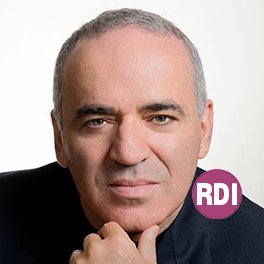


Esto lo grabé hace tiempo. Luna llena naciendo sobre Loja youtube.com/watch?v=OcEpbiUP…
41
1974 Donkan 🌎 retweeted

Genial como pocas cosas geniales hay en X

I am a member of the Norwegian Nobel Committee.
There are five of us. Five people, appointed by a parliament most of the planet could not find on a map, who decide, once a year, which human being the world has agreed to call good.
I know. I know. I think about it on the tram.
We meet in a building on Henrik Ibsens gate, a street named after a man who wrote almost exclusively about people discovering they are frauds, which nobody on the committee finds funny except me. There is a room with a long table and the portraits of the dead laureates looking down, Mandela, the Dalai Lama, a great many earnest men in spectacles, and one portrait we do not discuss, which is Kissinger, 1973, awarded while the bombs were still falling, after which two of our predecessors resigned and the satirist Tom Lehrer said political satire was now obsolete. We keep him on the wall. A reminder. Every family has the uncle.
It is October in Oslo, which means the sun gives up around four in the afternoon like a civil servant, and it rains the particular Norwegian rain that isn’t quite falling, just hanging there, judging you. I arrive with wet shoes. I always arrive with wet shoes. There is coffee, because this is Norway and there is always coffee, we drink more of it per person than almost anyone alive, and someone’s wife has sent kanelboller, the cinnamon buns, and we sit, five Norwegians, damp, caffeinated, sugared, and we decide the moral standing of the entire species.
Let me tell you how it actually works, because the world imagines a cathedral and it is, I promise you, a book club with a mandate.
287 nominations this year. 208 people, 79 organizations. Anyone can nominate, that’s the secret nobody understands: a professor, a parliamentarian, a former laureate, so the “nominee” list is meaningless, it’s a suggestion box, and every autumn some congressman nominates his own golden retriever and the press writes “SHORTLISTED.” Nobody is shortlisted. There is no short list the public ever sees. There is us, and the coffee, and the rain, and the portraits, and a Norwegian stubbornness that is older than the prize itself.
We read reports. The institute’s advisers write them, thick dull documents, and we argue. Our chairman told the BBC once that in the final meeting “there is a high temperature.” High temperature, for a Norwegian, means someone slightly raised an eyebrow and then apologized for it. We don’t do high temperature. We do a long silence, and then Kristin says “well,” and everyone knows exactly what “well” meant, and it’s settled. That’s our shouting. “Well.” You’d have to be raised here to hear the violence in it.
Now. This year. I will not say the name, because we never say the name, but you know the name.
A certain head of state wanted this prize the way a child wants a thing in a shop window, which is to say loudly, and in public, and with the full belief that wanting it was itself the argument. He said he deserved it. He said he’d ended eight wars, a number that grew most times he said it, like a fish. He had other heads of state phone us. Israel’s prime minister posted it on the internet, “Give him the Nobel.” The leaders of Cambodia and Pakistan announced they’d nominated him, as though announcing it were part of it, as though we tally mentions. A man flew around the globe collecting endorsements for a Norwegian committee the way you’d collect signatures for a petition to the council about a noisy dog.
And here, uff da, is the detail I treasure, the one that makes me smile into my coffee. The nomination deadline is the 31st of January. He took office on the 20th. So for all the phone calls, all the posts, all the gilded lobbying, the only nominations that could possibly count for this year’s prize were filed in the first eleven days of his term, before he had, by his own arithmetic, ended a single one of the eight wars. He campaigned all year for a prize whose window had shut while he was still hanging up his coat. We didn’t have to reject him. The calendar did. We just watched. Norwegians are very good at watching. We have long winters.
People think we sit there weighing his deeds. We don’t. That’s the thing I can’t make the world understand. We’re not grading his homework. We don’t owe anyone the prize for a ceasefire, however real, however loud the announcement. “He made peace” is not a sentence that ends in a medal, the way he believes it does, the way he believes every good thing ends in his name on it. The will of a dead Swede says the prize goes to whoever did the most for fraternity between nations. A dead Swede, I should add, who made his entire fortune inventing dynamite and selling arms, and spent his last years horrified at his own obituary, which called him a merchant of death, and so bought his way to immortality as a man of peace. The whole prize is one guilty arms dealer’s attempt to launder his name. We are, all of us, administering a dead man’s public relations. I find this clarifying. It keeps me humble. It should keep everyone humble, and it keeps, by my count, no one humble at all.
So who did we give it to?
An eighty-five-year-old woman. A judge. Born in Durban, under apartheid, granddaughter of a Tamil man who came to South Africa as indentured labor, a bus driver’s daughter from the poor Indian quarter, who became the first non-white woman to run a law practice in her province, who defended Mandela’s people when defending them was dangerous, who sat on the Rwanda tribunal and the court at the Hague, and who, at eighty-five, is right now a judge weighing whether a genocide is a genocide. When we told the world, our chairman said the rule of law “underpins the system we have set up to ensure peace,” and that “peace requires justice.” She wasn’t even in Oslo. She was in Nuremberg. In courtroom 600. The actual room where they tried the Nazis. You cannot stage that. God staged that, and God, it turns out, is a better satirist than any of us.
She did not phone us. She did not post. No prime minister demanded it for her on the internet. She had, as far as our deliberations are concerned, the one qualification the loud man could never manufacture, which is that she wanted the work and not the medal. The medal finds those people. It flees the ones who chase it. This is not a rule we wrote. It’s just the only pattern the hundred-odd years of our mistakes has ever shown.
The reaction from across the ocean was immediate. His spokesman posted that we “place politics over peace.” Ja. Perhaps. We’re five damp pensioners in a rainy city; of course it’s political, it was always political, it was political when we gave it to a sitting American president nine months into his first term for the promise of things he had not yet done, and we have been quietly embarrassed about that one for fifteen years, so believe me, we had a particular reason this year to prefer a woman with fifty years of verdicts behind her over a man with eight wars in front of him and a deadline already behind him.
Here is what he will never understand, the thing I’d tell him on the tram if he ever took one. We are the one prize he cannot buy, cannot post his way to, cannot have a friendly dictator phone in for him. Not because we’re incorruptible, nei, we’re as vain and wrong and human as the portraits on our wall. But because the entire point of the thing, the only power a small cold country’s book club has ever held, is that it goes to the person not performing the wanting. The moment you demand it, you’ve proven you don’t understand what it’s for, and proving that is itself the disqualification. He ran the most expensive campaign in the history of the prize and the campaign was the reason. He was never losing to Navi Pillay. He was losing to the concept.
It’s dark now. Four o’clock dark. The buns are gone. Kristin said “well” an hour ago and we all went home. I’m on the tram with my wet shoes, and somewhere across the water a very powerful man is explaining to a camera that the prize is rigged, that we’re corrupt, that he’ll win it next year, and he genuinely might, we’re only five idiots and we’ve been wrong before, Kissinger is still on the wall.
But not this year. This year an old woman in Nuremberg, in the room where the law once stared down the exact kind of man who thinks wanting a thing loudly enough should make it his, got a phone call she didn’t ask for.
That’s the job. We don’t reward the man who ends the war and announces it.
We reward the woman who spent fifty years deciding what a war was.
He’ll never see the difference. That’s rather the whole point of him.
Takk for i dag. I have to change trams.
1974 Donkan 🌎 retweeted

#Lahares #Riesgo #Prevención
¿Cómo crees que quedarán las riberas del Cutuchi, Pita, Santa Clara, San Pedro luego de los lahares del Cotopaxi? Piénsalo y actúa.

1974 Donkan 🌎 retweeted

El uso de la IA preocupa a los profesores
La inteligencia artificial es una herramienta que los alumnos deben aprender a utilizar, pero no puede sustituir otras capacidades que también tienen que desarrollar (lgc)
dw.com/p/5GGSR

Cuantos ecuatorianos caerían en lo mismo.

Cientos de peruanos captados para trabajar en Rusia terminaron en el frente
Viajaron atraídos por prometedoras ofertas laborales publicadas en redes sociales. Hoy están expuestos a drones y explosiones en la primera línea de la guerra con Ucrania. Abogados reportan al menos 15 fallecidos y decenas de desaparecidos. Los familiares dicen haber recibido un plazo de 6 meses para repatriar los cuerpos o serán enterrados en fosas comunes. La Cancillería peruana informó que 18 connacionales lograron salir de Rusia en las últimas dos semanas, pero muchos siguen atrapados. /es
1974 Donkan 🌎 retweeted
#8demarzo Cada vez que el artista grita ‘¡Que vivan las mujercitas!’, el homenaje retrocede unos 80 años. A este ritmo, la siguiente canción la va a dedicar a "las damitas que bordan bonito"

#8demarzo Cada vez que el artista grita ‘¡Que vivan las mujercitas!’, el homenaje retrocede unos 80 años. A este ritmo, la siguiente canción la va a dedicar a "las damitas que bordan bonito"
1974 Donkan 🌎 retweeted

Imágenes verificadas por la BBC confirman que la escuela de niñas en Irán donde murieron 168 personas en los ataques de EE.UU. e Israel fue bombardeada en repetidas ocasiones bbc.in/4rjnxLY
Hoy me despido de X.
No por falta de voz, sino por exceso de ruido.
No por cansancio de pensar, sino por cansancio de ver cómo pensar dejó de importar.
Este lugar, que prometía conversación, terminó premiando el grito.
La indignación instantánea reemplazó al argumento.
1
30
La viralidad se volvió más valiosa que la verdad.
No me voy en silencio. Me voy con claridad: No todo espacio merece nuestra atención. No toda plataforma merece nuestro tiempo.
1
22