Longevity MD | Building the future of health | Founder @ Next Generation Medicine | Chief Medical Officer @wearehims Mostly on LinkedIn
Joined October 2025
- Tweets98
- Following30
- Followers1.7K
- Likes10
Pinned Tweet
Phase 1 of the longevity market is over.
Phase 1 was access arbitrage: sell a bigger lab panel or a trending molecule, and early adopters paid just to get in the door. Now access is commoditizing fast.
Phase 2 is when longevity becomes the baseline:
1. Raw data stops being a moat unless it changes a real clinical decision.
2. Starting a protocol is table stakes; proving that metabolism, strength, or sleep improved six months later is the product.
3. Static playbooks lose to learning systems where the 10,000th patient gets a smarter plan from what was measured across the first 9,999.
Monday at 12:00 PM PT, I'm on the HLTH Main Stage for "When Longevity Becomes the Baseline" with Dawn Mussallem, Naveen Jain, and Heather Landi.
If you're in Vegas this week, come join us.
The opportunity in pure-play AI is saturating fast, and biology is the next major frontier.
As @chamath argued on @theallinpod, AI is consolidating into roughly ten vertically integrated megacorps owning everything from land and power up to the application. Software is getting squeezed from both ends.
Biology runs on very different terrain:
1. You cannot scrape human physiology off the open web; real biological ground truth has to be earned one assay, trial, and patient at a time.
2. Cheap intelligence makes simulation table stakes, shifting the real scarcity to clinical translation and proving durable outcomes in living humans.
3. Megacorp capex can corner chips and power, yet nobody can synthetic-data their way around closed-loop systems that learn from real patients over time.
As intelligence becomes a utility dominated by a handful of giants, the next wave of asymmetric value gets built where software meets wet biology and real clinical care.
"The basics are free" may be on of the biggest half-truths in longevity.
It’s true that sleep, sunlight, and exercise cost zero dollars, yet they require real drive, recovery, and mental bandwidth. Those resources are scarce when someone is chronically inflamed, exhausted, or hormonally depleted.
If "just try harder" worked at scale, we would have solved chronic disease decades ago. Discipline is heavily downstream of physiology.
Pitting medical therapies against lifestyle habits misses how real care works. Take testosterone therapy for men with clinically low levels. Treating the deficiency won't lift the weights or fix your sleep on its own, yet it lowers the activation energy required to train hard, recover, and show up again tomorrow.
At its best, medicine helps people get better at the basics, long enough for the habits themselves to compound.

ALT The image is a graph titled "The Activation Energy of the Basics." It features two curved lines: one labeled "Just Try Harder" in red, peaking high, and another labeled "Treat the Deficiency" in blue, following a lower curve. Key points are marked as "Stuck" on the left side and "Habits Compound" on the right, noting factors like "Inflamed - Low T" and "Sleep - Lift - Nutrition." Dr. Anant Vinjamoori is credited at the bottom.
We’re at a turning point in healthcare. People are moving away from waiting for symptoms to arise before treating them, and toward taking a more proactive role in their health.
After more than a decade in longevity medicine, I see the clinician’s role changing. It’s no longer only about treating what’s wrong. It’s about guiding what comes next, and deciding with each person what plan makes sense for them.
Peptides show why that matters. Interest among men looking to optimize their health is high, but the research sits at very different stages for different treatments. That’s where a clinician’s guidance counts most.
Empowering patients with plain facts, including where the science is still evolving, and ongoing care and support from licensed providers. That is the foundation of Peptides+ at Hims. Eligible men can access starting today. Read more, including important info: news.hims.com/newsroom/intro…
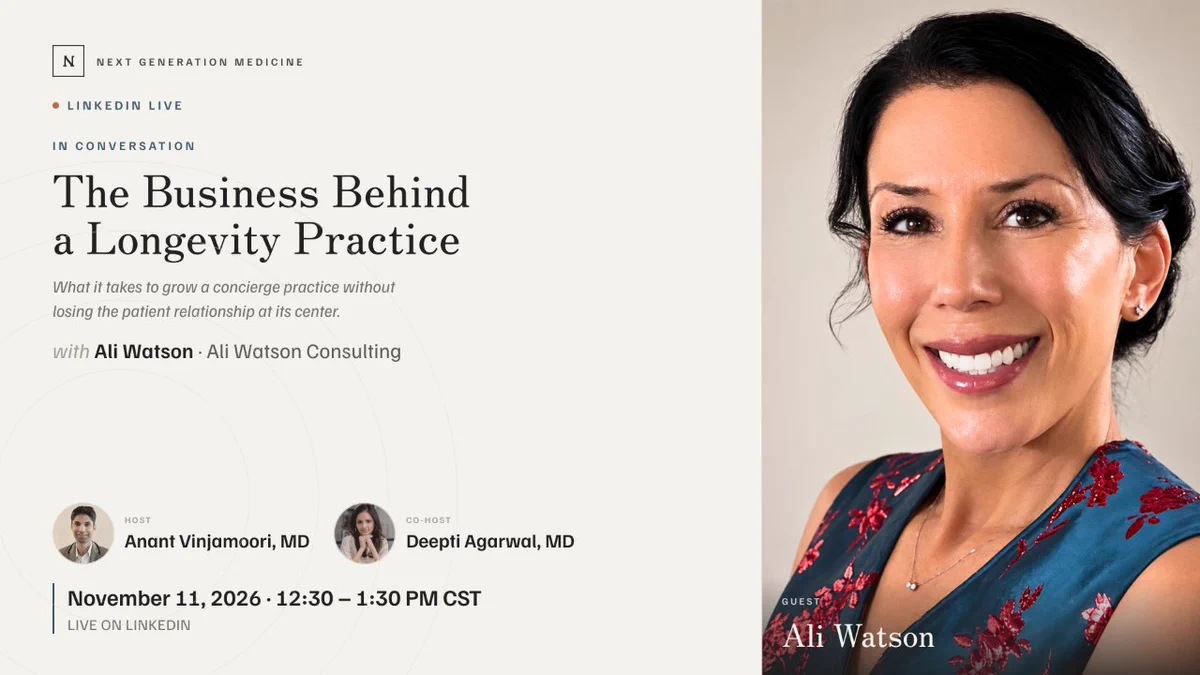
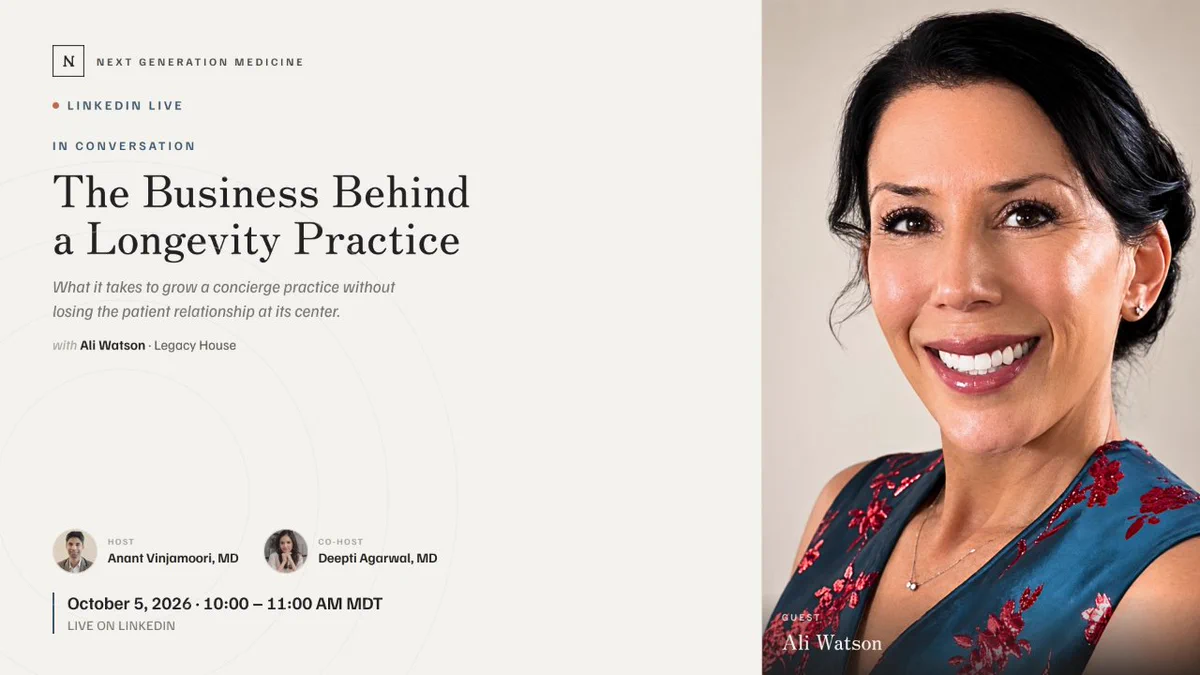
The Business Behind a Longevity Practice teapaw.org/i/broadcasts/2QnmOlAQE…
6
917
Today you can get a first look at Peptides+, our new specialty built around a clinically guided protocol and ongoing clinical support. We’ve been building for this. Join the list to be among the first in line when we launch: hims.com/peptides-plus
Important disclaimers here: news.hims.com/disclaimers/ca…
At Hims & Hers, we’re encouraged to see the administration make meaningful progress towards expanding access to peptide therapies through this draft interim policy. As more and more Americans seek these treatments, it is critical to have regulated channels, clinician oversight, quality standards, and transparency - none of which exist in the current gray market.
Our goal has always been to define what responsible access to care looks like. We have spent years building the infrastructure we need in our very own US-based peptide manufacturing facility, developing dosing protocols with clinical experts, and setting up frameworks to better understand these emerging treatments.
We'll keep working to bring these treatments within reach of those who need them, with more news to come soon.
Just wrapped a meeting with OIRA on HHS’s Interim Access Policy for Compounding Using Certain Peptides, and we’re grateful for the opportunity to discuss what regulated access to peptides should look like.
Let’s be clear: Countless Americans are already using peptides right now and the current environment isn’t serving them. Most are buying from unregulated gray markets, unvetted online retailers, or even at corner stores. They’re often getting products labeled ‘for research only’ or ‘for animal use,’ made entirely overseas under conditions no one can verify. These channels provide no real clinical oversight, no quality standards, and no record of what happened to the patient.
Peptide therapies hold meaningful potential to help millions of Americans live healthier lives, but only if they come with responsible, regulated pathways to care. Patients should be able to access peptides through licensed healthcare professionals providing ongoing clinical support, and US-based compounding, with active ingredients sourced from FDA-registered facilities. That’s how we’re building at Hims & Hers. That’s the standard for access we want to help set nationwide.
We appreciate the administration’s leadership in opening this path towards regulated peptide access, and look forward to seeing the interim policy move ahead.
People don’t realize that ChatGPT Dots are 10x more capable than Grokbot, Muse and Instinct.
Used the right way, you won’t ever need to touch your laptop again.
Yesterday's DevDay demo didn't help. The dot went quiet on stage, voice wouldn't start, and that's what most people walked away remembering.
But look at what's underneath. Every dot runs on its own cloud computer, and it can hand work off to Codex. Codex is far and away the best computer-use tool out there.
Instinct and Muse are both great. Neither one has Codex.
And ironically, voice is one of the best parts. You can just call your dot and talk through what you need.
I’ve been using it for a few days now it’s and it’s been incredible.
Have you tried it yet?
Comment DOTS for my setup to make this happen
4
5
528
Most people who fancy themselves as experts in the longevity field have no clue about what's going on in China.
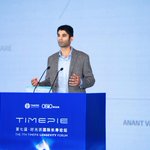
Last week I spoke at TimePie, the largest longevity conference in China and spent time surveying the longevity industry there.
My biggest takeaway: the pace of longevity R&D is far ahead of the international conversation about it.
Over 3 days, I learned about nearly a dozen novel nutritional products, supplements, devices and other technologies with real science behind them that people in our American longevity bubble have no idea about.
R&D is the foundation of longevity innovation and it's happening faster in China than anywhere else right now.
Yet most longevity conferences give you little or no exposure to what’s happening in China.
For anyone who care about building in this space, that’s a serious blind spot.
We will have strong representation from China at Next Generation Longevity. Our decision to hold the event in Osaka is not just about the incredible innovation happening in Japan, but about the whole Asia-Pacific region.
We still have a few spots left. Apply at the link below.
Still a few spots left for NGL2026. Apply now
nextgenerationlongevity.com/
186
Apple just entered the longevity space. The wearables and testing market is going to change dramatically.
Device capabilities are converging. The next advantage will come from connecting the data to a broader care ecosystem and a plan people can actually follow.
The new Apple Watch adds readiness scoring and more frequent HRV tracking, familiar territory for Oura users. Apple also plans to bring biomarker testing through Quest into the Health app later this year.
Inside longevity circles, this can feel like more of what is already everywhere.
But we underestimate how many people have never encountered these ideas.
Apple can put them in front of people who have never considered a longevity clinic or tracking their bloodwork over time. It could make getting tested, understanding the results, and retesting to assess progress feel routine.
That reach could make this one of the most significant moves in longevity.
For everyone building here, the opportunity is increasingly in what happens after measurement: interpreting the results, connecting them to care, and helping someone change course when their plan isn't working.
Could an ADHD medication promote brain longevity?
The ADHD medication atomoxetine increases norepinephrine by slowing its reuptake, so more of this chemical signal remains available between nerve cells.
That matters because norepinephrine also communicates with microglia, the brain’s resident immune cells. In experimental studies, it can reduce inflammatory signals from these cells.
The same system we associate with attention could therefore help shape the conditions in which neurons age.
There’s already an early human signal. In a randomized trial of 39 people with mild cognitive impairment due to Alzheimer’s disease, atomoxetine lowered tau and phosphorylated tau in cerebrospinal fluid, the fluid surrounding the brain and spinal cord.
The trial didn’t show improved cognition, so brain longevity remains a hypothesis.
But it opens a useful possibility: preserving the brain may partly depend on restoring the chemical signals that help regulate its immune environment.
1
4
314
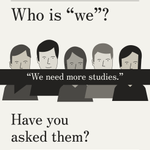
“We need more studies.”
I hear this often in conversations about peptides.
But who is “we”?
Who are you speaking for?
And have you actually asked whether they agree?
Before speaking for other people, make sure you’ve listened to them.
2
188
If you're buying exogenous ketones, start with one question: how high do you actually need your blood ketones to go?
Higher isn't automatically better. The right level depends on the job.
For a hard athletic effort, use a true D-BHB monoester. Take 20–30 g, or about 0.35–0.5 g/kg, 30–45 minutes beforehand, and target 3.0–5.0+ mmol/L. KetoneAid Ke4 is a current example of this chemistry and lists 30 g of monoester per bottle.
For a focused work block, use 10–15 g of monoester or 10–12 g of R-1,3-butanediol 30–60 minutes beforehand, and target 1.0–2.0 mmol/L. Ketone-IQ Original is a diol example and lists 10 g of R-1,3-butanediol per serving.
For fasting or appetite support, use 5–10 g of monoester, diol, or a high-purity BHB salt at the start of the fast or between meals, and target 0.5–1.5 mmol/L. Perfect Keto Base is a current example of the BHB-salt category, but treat it only as a class example: verify active grams and D/L specificity on the current label before dosing.
These are examples of the chemistry, not endorsements. A product name doesn't prove that one serving hits the target.
If you're new to monoesters, start with 10 g in 300–500 mL of cold water and drink it over 10–15 minutes. Only move toward 25–30 g if that's well tolerated.
Before buying, verify the exact chemical identity, D-BHB or R-BHB rather than an unspecified D/L mixture, active grams per serving, and independent testing.
If you take an SGLT2 inhibitor, have type 1 diabetes, stage 4/5 CKD, or a history of gout, stop there and review it with a clinician before starting.
2
365
We usually describe ALS as motor neurons slowly dying. That's true, but it may not be the whole story.
Researchers are also looking at the neighborhood around those neurons. In ALS, nearby support cells can become activated and release inflammatory signals, and this neuroinflammation is being studied as one contributor to how the disease progresses.
That's where regulatory T cells, or Tregs, come in. Tregs are immune cells that help apply the brakes to immune activity. Some research suggests weaker Treg activity may mean less restraint on inflammation.
M Regenerative Clinic's TALS approach isolates a patient's own Tregs, grows more of them outside the body, and reinfuses them.
This is investigational. Early human work has focused on safety and feasibility. We do not yet know whether it changes ALS outcomes.
Watch:
drive.google.com/file/d/1Bz5…
#ALS #NextGenerationMedicine
226
Shichimi might be the most powerful spice blend for health.
Its power comes from breadth: the blend engages several biological systems at once.
Capsaicin activates TRPV1, a heat-sensing receptor that starts thermogenesis—the production of heat.
Sanshool and gingerols activate TRPA1, a sensory channel involved in nerve signaling.
Capsaicin and gingerols also activate AMPK, the cell's energy-sensing switch. AMPK shifts metabolism away from storage and toward fuel use.
Gingerols, capsaicin, and sesame lignans activate Nrf2, which turns on the cell's antioxidant defense system.
Seaweed provides iodine for thyroid hormones, which regulate metabolic rate.
This is shichimi's real strength: it behaves less like a single spice and more like a biological network spanning energy, nerves, metabolism, and cellular defense.
Traditional food systems understood something modern nutrition often misses: combinations matter.
That is exactly the kind of idea I want to explore at Next Generation Longevity in Osaka—what traditional foods can teach us about health and aging.
If this is the kind of biology you want to explore with us, apply to attend NGL Osaka:
buildlongevity.org/#apply
2
1
300