

cardiology Fellow
Joined March 2021
- Tweets11.4K
- Following2.1K
- Followers313
- Likes17.1K







Clinical cardiology retweeted

We've created this Aortic Regurgitation Red Flags Quick-Guide as a practical tool for evaluating AR, identifying diagnostic red flags, and applying severity grading criteria.
Download it on our Valve Disease Resources page: bit.ly/4z4PUBB

Clinical cardiology retweeted

An updated #CardioSmart CAC infographic explains how a calcium heart scan works, how to interpret the results & what patients should discuss with their care team.
Share it with your patients to support informed conversations about CV risk & prevention. 🔗 bit.ly/3UM3ZFM

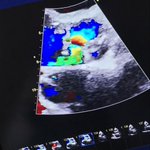
67 M , Hx of IE /4 6th months ago , Presented for Pre-operative evaluation …nice example of only getting accurate parallel US beam and calculating PISA from PLAX
@iamritu @alex1708ander @DrRajeshG1 @argulian


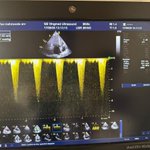
LVOT VTI 41 ,SV 170 , CO 10 L ….. increased Aortic gradient and Velocity despite adequate opening ,AVA 2.1cm2….. is this only due to very high CO and hyperdynmic state with AI ?!
@iamritu


Clinical cardiology retweeted

Acute pulmonary edema. Why?
With a 2nd case also
drsmithsecgblog.com/acute-pu…
@PMcardioApp


Clinical cardiology retweeted

PVC localization has been one of the harder things to learn and teach as a cardiology fellow interested in EP.
So I built learnpvcs.com to help connect the 12-lead ECG with 3D cardiac anatomy.
You can explore different PVC origins, rotate and look inside the heart, and work through practice cases.
It's an early educational prototype, and I'd love feedback from fellows, electrophysiologists, and educators.
Which PVC origin do you find hardest to localize?
#CardioTwitter #EPeeps #MedEd @OpenAI @WvuCvFellows @wvudeptofmed


Clinical cardiology retweeted

من أفضل مقاطع الفيديو في اليوتيوب التي رأيتها يشرح كيفية كتابة ورقة علمية. يستحق المشاهدة! إذا الوقت لا يناسبك ، احفظ التغريدة لوقت ثاني. 🔗
youtu.be/cs0REe7kRQk

Clinical cardiology retweeted

#Sharing for learning
A 25-year-old male presents with palpitations.
No prior cardiac intervention
No prolonged fever
No history of trauma
What is your diagnosis?
Differential diagnoses?
Key investigations?
Clinical cardiology retweeted

Among 1,198,544 pts in the #CathPCIRegistry, 15% w/ #NSTEMI had an acute coronary occlusion (ACO) w/ worse in-hospital outcomes than NSTEMI w/ no ACO (adj OR, 2.26) but better than #STEMI. ACO NSTEMI is high risk & warrants earlier recognition. #JACCINT
bit.ly/3TGreki

Clinical cardiology retweeted

State of the art review
High-risk
#arrhytmic_mitral_valve_prolapse
doi.org/10.1016/j.jcmg.2026.…


Clinical cardiology retweeted

One concept I had to revisit multiple times as a first-year Cards fellow learning echo: mitral E-wave velocity.
The key? E reflects the LA–LV pressure gradient, not relaxation alone.
Breaking down the physiology of diastolic filling in this infographic
#Echo #MedEd #MedTwitter

Clinical cardiology retweeted

A New Malignant MVP Phenotype?
@iamritu
🆓
Mitral valve prolapse (MVP) + SCD
Which patient?
jacc.org/doi/10.1016/j.jacca…

Clinical cardiology retweeted

What an inspiring Cardiovascular Grand Rounds by @yadersandoval on CT-guided PCI!
Excited for the upcoming @SYSTOLE_live hands-on CT guided PCI workshop in New Orleans!
youtu.be/5CLxBA92mgY?si=lnqS…
@TulaneCardio @AIrimpen @SunilUpMD

Clinical cardiology retweeted

Young man (40-45yo) who came for SOB and non-sustained VT in 24h Holter monitor. Exhaustive interrogation:No familiar Hx of cardiac disease
Clinical cardiology retweeted

Our 📝 Identifying the High-Risk Arrhythmic Mitral Valve Prolapse Phenotype by Imaging is out in @JACCJournals Imaging w/ @JudyHungMD @KristinaHaugaa & Francesca N Delling
authors.elsevier.com/a/1nw-R…


Clinical cardiology retweeted

Sometimes, a drug’s metabolite is more potent than its parent molecule, yet loses one of its most interesting pharmacological properties. Losartan is a fascinating example.
Following administration, losartan undergoes hepatic metabolism, primarily through CYP2C9 and CYP3A4, generating its active metabolite EXP3174.
This oxidation converts a hydroxymethyl group into a carboxylic acid, producing a molecule with substantially greater affinity for the angiotensin II type 1 receptor (AT₁R). Consequently, EXP3174 contributes significantly to losartan’s sustained antihypertensive activity by preventing angiotensin II-mediated Gq/11 signalling, phospholipase C activation and intracellular Ca²⁺ mobilisation.
But here comes the interesting part.
The parent molecule possesses a pharmacological activity that its more potent metabolite largely lacks: the ability to promote uric acid excretion.
In the kidney, URAT1 (SLC22A12), located on the apical membrane of proximal tubular epithelial cells, normally reabsorbs filtered urate through exchange with intracellular organic anions.
Losartan directly inhibits URAT1, reducing urate reabsorption and increasing its urinary excretion. This uricosuric effect lowers circulating urate concentrations.
Interestingly, the structural modification that enhances EXP3174's affinity for AT₁R markedly diminishes its ability to inhibit URAT1.
This demonstrates that losartan's uricosuric activity is mechanistically independent of AT₁R blockade and is primarily attributable to the parent drug.
Although other angiotensin receptor blockers may interact with urate transporters experimentally, losartan stands out for its consistently demonstrated clinical uricosuric activity.
One drug, two molecular targets, two distinct pharmacological effects. And a reminder that greater potency at one receptor does not necessarily mean broader biological activity.
