
AI VC Investor. Prior deals: Mysten (Sui), Cruise, Brave, Palantir, Life360, Safebase. Prior LP/LPAC: TenEleven, Cendana. Prior MP at Alumni Ventures (AI etc)
California, USA
Joined September 2008
- Tweets77
- Following894
- Followers250
- Likes284


I am curious though, how fairly represented are ethnic Chinese in leadership of major AI labs or do labs also implicitly act/hire/promote (or not) with the same mindset of Coxon (and Pompeo)? Has anyone from @AnthropicAI or @OpenAI repudiated this line of thinking?

Coxon said he was "90%" certain about the presence of Chinese spies at OpenAI and Anthropic, who could steal the labs' progress at any time, and "catch up the lead." bit.ly/4rVBUIm

26
What happened to Jensen has been deeply felt by many about the double standards in the media and boardroom. I think Jensen, alongside the millions of Asian-Americans who found the treatment of Jensen a wake-up call, will change to be more politically aware and active community.


1
47
I hope Jensen gets his seat back as a CEO and time for fair treatment instead of media-origin rumor double standards. Boardrooms should not be the place to take up/down votes based on very incomplete information before they can be verified. Why even start an investigation if not waiting for the results?
At the same time, I think what happened to Jensen has been a major learning lesson for immigrants and second-gen in tech. Media, gov't lobbying, investor and board management are key aspects in the modern public co (evidently also late stage private co) CEO. Low-key political involvement does not keep you out of impact of interest-driven political and economic dynamics of others.

Over the past week, I’ve been overwhelmed by the love and support of friends, industry colleagues, and people I've never met. Thank you to everyone who has shown kindness to my family and me. It means the world to me.
I came to the United States 53 years ago, and becoming an American citizen is one of the greatest gifts and proudest moments of my life. NVIDIA has been my life’s work. Building it into the company it is today alongside my colleagues has been a privilege and an honor. Nowhere but in America could a company like NVIDIA be possible. I love our country, and I love NVIDIA.
I did not live up to the standards expected of everyone at NVIDIA, and I have made serious mistakes in my personal life. I created problems for the Board that I deeply regret. I own my mistakes completely, and I am committed to cooperating with the Board’s independent investigation.
Since my departure, I’ve seen an outpouring of calls from NVIDIA’s employees, investors, business partners, and customers for me to return as CEO. Many continue to reach out to me directly as the company navigates complex technology, market, competitive, and geopolitical dynamics. NVIDIA is a once-in-a-generation company. If the Board of Directors decides that my return is in the best interest of our shareholders, our employees, the company, and America, I would be honored to answer these calls and return as CEO.
Thank you again to everyone who has shared their good wishes. I am profoundly humbled by your support. To my family: I love you, and I will spend the rest of my life being worthy of yours.
Jensen
1
147

If the DOJ after two years of investigation, can't conclude that Alice Huang was a Chinese spy, then what exactly could NVIDIA's board discover and discuss between Nov 10th (announcing outside counsel to investigate) and Nov 12th that would result in Jensen's resignation?
If board directors were suggesting that Jensen was cavorting with a spy as if fact, and using that to threaten firing or pressuring him to resign, exactly what evidence supported that claim and what steps did they take to verify it (which even the DOJ noted below could not conclude)?
It raises a legitimate question about whether they exercised due care.
The public, especially NVIDIA's employees and shareholders deserve an explanation of what the board knew, what it concluded, and why it acted when it did.
US Justice Department has not concluded Alice Huang was Chinese spy, Blanche says reuters.com/world/china/us-j…

27
Edward Tsai retweeted

Bombshell story. The spy narrative is collapsing already.
Is there clear & convincing evidence that Alice Huang was a Chinese spy?
- AG says no. (“no conclusions reached”).
- CIA says no. (“not yet convinced”).
- DNI says no (“not entirely accurate and over-torqued”).
- Ranking Democrat on House Intelligence (incoming Chairman) says no. (“today, at least, I don’t know”). This was immediately after he was briefed.
Who argues otherwise? Anonymous officials tell CNN “it strains credulity to believe that she was not acting as an agent of the Chinese government — simply by virtue of the fact that she is a successful Chinese businesswoman working with one of America’s most powerful companies.”
This is their proof after a year of investigating and surveillance? That she was a “successful Chinese businesswoman”?
At this point, the only crime that we know for sure happened is the leaking of the classified memo. Who did that and why?
An investigation should be opened.

News: The US intel community is still working to understand the relationship between a Chinese businesswoman who had an affair with Nvidia CEO Jensen Huang and the Chinese government, with multiple sources telling CNN that the intelligence collected on her to date does not prove that she was acting as a spy for Beijing.
cnn.com/2026/11/12/politics/…

Lots of news on DUV the last week coming out of China. I think the media missed an important launch in Multibeam in the US.
Joined for Dr. Lam’s (Lam Research founder Dr Lam) latest startup new launch event last week. Had very interesting precision and size of packaging, enabling very high bandwidth and very small interconnect lengths.
AI performance is increasingly constrained by chip-to-chip bandwidth, power and packaging, not simply transistor scaling.
More HBM means dramatically larger interposers. Likely roughly 3.3 reticles/8 HBM stacks in 2024 to 14+ reticles/24 HBM stacks by 2029.
This pushes packaging toward large RDL interposers and potentially panels, while still requiring fine features around ≤2 μm.
Multibeam’s multicolumn e-beam lithography directly writes these patterns without masks. Its strongest value proposition is therefore:
Faster design changes
No mask cost
Many unique designs per substrate
Fine patterning across large or unconventional substrates
Better productivity than conventional single-column e-beam
The best framing is not “Multibeam replaces optical lithography.” It is:
Multibeam targets the emerging zone where advanced packaging needs wafer-like precision, panel-like dimensions and software-like iteration speed.
globenewswire.com/news-relea…

1
1
67
Open source has been an instrumental foundation for the rapid development of not just the tech industry but all economic beneficiaries of tech.
Imagine a world if there were no Linux, Apache, OpenSSl, Kubernetes etc.
How much would Google and Amazon have to pay Sun, IBM, Novell etc for each new SPARC, AIX, Unix etc server and how would those costs be passed on to users?
For my first post, I’m sharing a letter @NVIDIA signed on why open models matter.
AI will transform every industry, power every company, and be built by every country.
Open models strengthen safety and cybersecurity, accelerate innovation and diffusion, and enable sovereignty.
The world needs both frontier closed models and frontier open models.
images.nvidia.com/pdf/Open-W…


1
68
Edward Tsai retweeted

For my first post, I’m sharing a letter @NVIDIA signed on why open models matter.
AI will transform every industry, power every company, and be built by every country.
Open models strengthen safety and cybersecurity, accelerate innovation and diffusion, and enable sovereignty.
The world needs both frontier closed models and frontier open models.
images.nvidia.com/pdf/Open-W…
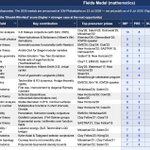
Congrats on the 2026 Fields Medals recipients!
@UChicago's Yu Deng, @stonybrooku's John Pardon, @UofT's Jacob Tsimerman, and Hong Wang of @nyuniversity and @Institut_IHES.
AI interestingly had ranked all winners within top 7, with 3 of 4 in top 4.

...interestingly, of the top five ranked according to AI (Wang, Deng, Thorne, Tsimerman, Sun), three are ethnic Chinese.

361
One idea I’ve shared with friends when discussing AI and the future of work: AI can help us operate beyond our previous definitions of ourselves. More people can now try being programmers, app developers, creators—and perhaps even mathematical researchers.
After Levent Alpöge @__alpoge__ shared the AI-generated counterexample to the Jacobian Conjecture, credited to Fable, and Aaron Lou @aaron_lou published material explaining its construction, I became curious: how far could I push related mathematical research using ordinary AI prompting and a non-mathematician’s background?

Congrats to Levent for discovering this!
OOC I had an internal version of Codex attempt a proof too (without web search), and it discovered (essentially) the same counterexample! It wrote up a nice summary of the strategy here: aaronlou.com/jacobian_counte…
2
1
153
I used ChatGPT and OpenAI’s GPT-5.6 Sol to explore follow-up questions, test conjectures, search for prior work, build exact computational checks. As I studied CS, and my formal math education ended around Math 33B at UCLA, so the math was certainly beyond me.
Some ideas turned out to overlap with findings posted by others that same day, which I’ve cited. I kept pushing the remaining directions and have now posted a working preprint (for discussion):
“Arithmetic and Dynamical Invariants of the New Three-Dimensional Keller Map” github.com/edwardtsai2020/ar…
It develops exact finite-field fibre statistics, the geometry and topology of the map’s Jelonek set, characteristic-3 behavior, and degree growth under iteration.
A question for my “real math” friends: Is this reasonably accurate and new-ish—or is it known, flawed, or simply wrong? Yikes welcome. 😅
I’d genuinely appreciate scrutiny and would be happy to discuss it with math-and-AI people over Zoom.

47
Edward Tsai retweeted

Congrats to Levent for discovering this!
OOC I had an internal version of Codex attempt a proof too (without web search), and it discovered (essentially) the same counterexample! It wrote up a nice summary of the strategy here: aaronlou.com/jacobian_counte…

hello there the jacobian conjecture is false thanx to my close friend akhil for asking about it and my other close friend fable for working during the world cup final
((1+xy)^3 z + y^2 (1+xy) (4+3xy), y + 3 x (1+xy)^2 z + 3 x y^2 (4+3xy), 2 x - 3 x^2 y - x^3 z): \C^3\to \C^3, has jacobian determinant -2, and sends (0, 0, -1/4), (1, -3/2, 13/2), and (-1, 3/2, 13/2) to (-1/4, 0, 0)
What happens to “U.S. AI” as “China AI” rises?
Kimi K3 reinforces the pattern that began with DeepSeek R1: Chinese labs are no longer competing only on price. They are approaching the frontier—and surpassing U.S. models on some workloads—while offering increasingly capable open-weight alternatives.
But “AI” is not one market. The impact will differ dramatically by layer of the stack.
U.S. AI applications: likely winners
Cheaper intelligence expands the addressable market.
Voice agents booking dealership appointments, AI-native law firms, automated marketing campaigns and thousands of other applications all benefit when inference becomes cheaper and model quality improves.
Most customers will care less about the nationality of the underlying model than its cost, reliability, latency, security and compliance. As model access becomes more commoditized, value moves upward into proprietary data, workflow integration, distribution and customer trust.
The result should be faster enterprise and consumer adoption—not less.
U.S. hardware and compute: strong domestically, increasingly contested internationally
Open weights do not mean hardware independence.
U.S. hyperscalers and neoclouds will still run predominantly on Nvidia, AMD and U.S.-aligned custom silicon—whether the workload uses a proprietary American model or an adapted Chinese open-weight model. Regulation, security requirements, existing software ecosystems and supply-chain policy make the physical infrastructure layer much stickier than the model layer.
China also does not need to beat Nvidia everywhere to matter. A “good enough” domestic stack of accelerators, memory and networking could support China’s own market and eventually compete across price-sensitive or non-aligned international markets.
That points toward two increasingly distinct hardware ecosystems: one U.S.-aligned and one China-aligned.
U.S. model companies: the greatest pressure on pricing and margins
Basic and mid-tier inference is becoming a commodity. Enterprises can increasingly route different tasks to different models instead of paying one premium provider for everything.
Pricing power will remain where a lab offers a measurable and durable advantage—in coding, research, reliability, security or complex agentic work. Anthropic, for example, can command a premium as long as its coding advantage remains meaningful.
But if Kimi or other U.S. and Chinese models close that gap—or if multi-model routers can reproduce similar performance—the premium must compress.
The model layer may increasingly resemble a utility with luxury tiers: low-cost intelligence for most workloads, with premium pricing reserved for the hardest tasks.
U.S. data centers: demand is not the primary constraint; speed-to-power is
Cheaper and more efficient models do not necessarily reduce compute demand. If the cost of completing an AI task falls, companies will attempt many more tasks.
That makes Kimi potentially bearish for model-provider margins while remaining bullish for inference infrastructure.
The more immediate constraint on U.S. data-center growth is the speed at which projects can secure grid connections, transmission equipment and firm power—not whether the underlying model was developed in the U.S. or China.
The U.S. will need a portfolio of faster generation, including natural gas, renewables and storage in the near term, alongside nuclear and geothermal over longer time horizons.
Rest-of-world data centers: the real battleground
AI adoption outside the U.S. and China will continue to grow, but many markets will place greater weight on cost, customization and data sovereignty.
That makes regionally hosted, open-weight models particularly attractive. Chinese models could gain substantial share even when they are still running on U.S.-designed hardware.
Chinese hardware could follow later—but only when the full system reaches sufficient parity in cost, energy efficiency, reliability and software tooling. Chip specifications alone will not be enough.
The rise of China AI, therefore, does not mean the end of U.S. AI. It means the end of assuming that every layer of the U.S. AI stack will earn frontier-level returns.
My directional view:
- U.S. applications and workflow owners benefit.
- Model-provider pricing power compresses.
- U.S. hardware remains protected at home but becomes more contested abroad.
- Power and grid access become increasingly valuable.
- The rest of the world becomes the main competition for models, infrastructure and technical standards.
Intelligence is getting cheaper. The scarce assets will increasingly be proprietary context, workflow ownership, distribution, trusted deployment, compute—and electricity.

Big news: Kimi-K3 by @Kimi_Moonshot is now #1 in the Frontend Code Arena with 1679 pts, surpassing Claude Fable 5.
This is a 17-place jump from Kimi-k2.6 (#18 -> #1).
In Frontend, Kimi-K3 ranked #1 in 6 of 7 domains: Brand & Marketing, Reference-Based Design, Data & Analytics, Consumer Product, Simulations, and Content Creation Tools, landing #2 only in Gaming behind Fable 5.
The full model weights will be released by July 27.
Congrats to the @Kimi_Moonshot team on this major milestone!

Was surprised to hear that there have been no from Mainland China winners of the Fields Medal and only two ethnic Chinese (Terrance Tao (2006), Shing-Tung Yau (1982)). I decided to analyze (aka ask Claude) what the top 20 candidates for the Fields Medal should be...
thestandard.com.hk/china/art…

1
1
152
...interestingly, of the top five ranked according to AI (Wang, Deng, Thorne, Tsimerman, Sun), three are ethnic Chinese.

Agree with SemiAnalysis that Meta entering the Neo cloud market is not indicative of overcapacity. But I think it misses one point - the trend and change in user behavior to use open source for workload due to competitive and efficient cost vs performance. This is an increasingly common use case, which is serving compute for open source models of choice that customers may want, be it China GLM, Kimi, DeepSeek or NVIDIA’s Nemotron.
Although it may seem unorthodox, I don’t think it will be soon before Microsoft also formally serves DeepSeek as an option.

Meta Compute: Everyone Wants To Be A Cloud
Zuck Takes Plan B?
SpaceX 2.0, Bedrock 2.0,
MSL Isn't Giving Up, Scaling RecSys by 10x... ClusterMAX ranking coming soon?
newsletter.semianalysis.com/…

2
92
Karp has a thoughtful frame reflecting the shift in model economics. Open-weight models are now at parity on everyday tasks and within a few points on hard coding — at 4-15x lower cost (DeepSeek $0.27/$1.10 vs Sonnet $3/$15 per M tokens).
Creative tools already show the endgame: Higgsfield lets you choose your model - Seedance, Kling, Veo - and nobody finds that strange. Enterprises will expect the same: routing across models by cost, performance, and data sensitivity. Whoever owns data + harness + routing + UI owns the account and margin economics (same thing with the app-layer-ish companies like Higgsfield). Perhaps some opportunity for Databricks, Palantir, orchestration companies, and on-device UIs. The model is a line item and the interface retains the loyalty.
1
57
“Action produces information. Just keep doing stuff.” Love this quote. Helpful for life as well as doing investing and startups. Action generates new information you can reflect/process.

Q: Best advice for a pre-product/market fit startup?
One of my favorite pieces of advice on this topic comes from Coinbase founder Brian Armstrong: “Action produces information. Just keep doing stuff.”
He borrows this from Paul Graham who said: “Startups are like sharks. If they stop swimming they die.’”
Even if you’re not sure what to do, just try something different. Don’t get stuck in endless debate or analysis paralysis.
When you try a product or go-to-market experiment, it will produce information and help you come up with better ideas of what to try next.
As Brian argues in the clip below, this is true even when you try the wrong thing. Trying the wrong thing should still help you identify which hypotheses about your users, value proposition, go-to-market strategy, etc. are wrong.
So if you’re pre-product/market fit, my best advice is to just keep moving and trying things.
4
695