
The Environmental Governance Institute (EGI) is non-governmental organisation dedicated to promoting the sustainable management of natural resources in Uganda
Kampala
Joined April 2019
- Tweets781
- Following323
- Followers448
- Likes487



Healthy rangelands are essential for the people of Karamoja. They provide pasture for livestock, support household incomes and help families put food on the table. But prolonged dry spells, water shortages and changing weather patterns are putting these livelihoods under increasing pressure.
As Uganda prepares for COP31, there is a need for greater investment in climate adaptation, including restoring degraded grazing lands, improving access to water and supporting sustainable grazing practices.
EGI calls for climate action that listens to pastoralist communities and gives them the resources they need to protect their livelihoods and adapt to a changing climate. At COP31, their voices must be heard, and their needs must be part of the solutions.

What does access to renewable energy mean for rural communities?
Through interviews conducted in Kyotera and Rakai districts, community members shared their experiences with solar energy and how it supports their daily lives, improves security at night and provides an alternative for households that are not connected to the national electricity grid.
These community voices remind us that the just energy transition must go beyond generating electricity. It must ensure that clean, affordable and reliable energy reaches rural households, supports local livelihoods and leaves no one behind.
As the world prepares for COP31, these community voices send a critical message to climate negotiators: climate commitments must translate into tangible solutions that improve people's lives. This requires increased climate finance, investment in decentralised renewable energy and policies that make clean energy accessible and affordable, particularly for underserved rural communities.
COP31: Turn Promises into Action!
Climate action cannot wait. As the world prepares for COP31 in Antalya, Türkiye, from 9–20 November 2026, vulnerable communities continue to face the devastating impacts of climate change.
At COP31, world leaders must agree on a clear delivery plan to accelerate adaptation finance, close the funding gap and ensure that vulnerable countries are not left behind.

7
113
The Environment Governance Institute (EGI) engaged communities in Kyotera and Rakai, shaping their understanding on various renewable energy technologies, highlighting the role of clean, affordable and accessible energy in improving livelihoods and building climate resilience.
As the world prepares for COP31, the experiences and priorities of communities must inform global climate decisions. Access to renewable energy is essential for sustainable livelihoods. The need to reduce dependence on fossil fuels and foster community conversations on just energy transition that leaves no one behind.
COP31 must deliver on climate finance, investment in decentralized renewable energy and meaningful community participation to ensure that the transition to clean energy benefits everyone.
Community voices matter. Renewable energy is part of the solution. Climate action must deliver for all.


As the world prepares for COP31 in Antalya, Türkiye, from 9–20 November 2026, the hunger crisis in Karamoja, Uganda, highlights the urgent need to connect climate commitments with the realities of vulnerable communities. Nearly one in three people assessed in the region is facing crisis-level food insecurity or worse, including 41,000 people already in Emergency.
Climate shocks can threaten livelihoods, undermine agricultural production and deepen food insecurity. COP31 must turn commitments into action by delivering accessible adaptation finance, strengthening climate-resilient food systems and supporting communities to withstand droughts and other climate-related shocks.
Climate action must reach the people who need it most. Karamoja cannot be left behind.

1
71
Adaptation finance fell from $28 billion in 2022 to $26 billion in 2023, while developing countries need an estimated $310 billion annually to adapt to climate change. This widening gap leaves vulnerable communities struggling to cope with climate impacts they have contributed least to causing.
As the world prepares for COP31, closing this adaptation finance gap must be a priority. Governments must move beyond promises and commit real, accessible funding to support communities on the frontlines of climate change.
COP31 must also advance a just transition mechanism backed by adequate financing, with civil society, workers, and affected communities meaningfully represented in decision-making.

Karamoja shows what the climate crisis looks like when adaptation finance doesn't arrive. Repeated drought, failed harvests and high food prices are pushing communities into a cycle of crisis. COP30 agreed to triple adaptation finance, by 2035. For communities in Karamoja, that is too late. As COP31 approaches, we are calling for finance that reaches the people on the frontline

As Uganda celebrates 64 years of independence, the Environment Governance Institute (EGI) calls for renewed commitment to protecting our environment and safeguarding our natural resources for present and future generations.
True independence also means building a nation that is free from environmental degradation, where communities can access clean and affordable energy, benefit from their natural resources, and live in a healthy and sustainable environment.
This Independence Day, let us reflect on our collective responsibility to protect our forests, restore degraded ecosystems, address climate change and advance a just energy transition that puts people and the planet first.

1
44
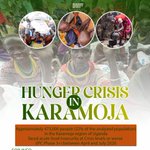
473,000 people in Karamoja are struggling with acute food insecurity.
Between April and July 2026, nearly one in three people in the region faced serious hunger, with 41,000 pushed into Emergency levels requiring immediate humanitarian assistance.
Behind these figures are families whose livelihoods have been disrupted by climate change, prolonged dry spells and declining agricultural productivity. The situation calls for more than emergency food relief; it demands long-term investment in climate resilience, sustainable livelihoods and accountability for climate-related losses.@UNEP @theGEF

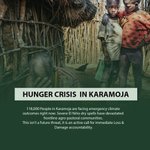
Climate change is already taking a heavy toll on communities in Karamoja, with 118,000 people experiencing the harsh realities of prolonged drought, food insecurity and disrupted livelihoods.
Behind these numbers are families struggling to survive and communities whose livelihoods depend on increasingly unpredictable weather. Their suffering calls for urgent climate action, support and accountability for the losses they continue to endure.

1
5
80
Last week, EGI, in partnership with @Powersofafrica, held community trainings in Kyotera and Rakai districts under the WhatsApp Africa campaign, aimed at strengthening community awareness and participation in Africa’s transition to clean and renewable energy.
With many communities still facing limited access to reliable, affordable and sustainable energy, the training focused on ensuring that communities are not only beneficiaries of renewable energy investments, but are also informed participants in shaping their own energy future.
Participants strengthened their understanding of renewable energy technologies, available energy options and the principles of a just energy transition. They also explored how households and local businesses can benefit from clean energy, engage decision-makers and advocate for affordable and equitable energy access.
The sessions are helping build a network of informed community members who can share knowledge and champion clean energy solutions within their communities.


For more than a decade, families affected by the Karuma Hydropower Project lived with uncertainty, waiting for promised resettlement, compensation and livelihood support.
EGI walked alongside these communities, listening to their concerns, documenting their experiences, gathering evidence and supporting them to engage decision makers. Through sustained community-led advocacy and engagement with Parliament, the concerns of affected families were brought to the national accountability platform.
In June 2026, Government moved towards procurement of resettlement houses and access roads for affected families, a significant milestone in a journey that began with communities demanding to be heard.
📖 Read our success story
egiuganda.org/wp-content/upl…

Our publication in News Network Africa highlights how prolonged drought, land degradation and climate change are worsening food insecurity and malnutrition in Karamoja.
As the region continues to face a devastating hunger crisis, climate action must go beyond global commitments and policy discussions. It must translate into meaningful, locally driven solutions that address food insecurity, land degradation, water scarcity and the growing impacts of climate change.
Read the full publication in News Network Africa.
nnafrica.com/20260827/6490/e…

Approximately 122,100 children under five in Karamoja are projected to require treatment for acute malnutrition.
In Napumpum, Kotido District, the situation is even more alarming, with Global Acute Malnutrition reaching 40% far beyond the WHO emergency threshold.
Behind these statistics are children whose lives and futures are at risk. The hunger crisis in Karamoja demands urgent action.

Food assistance is critical during emergencies, but lasting solutions require investment in restoring degraded land, strengthening water systems, restoring rangelands, supporting climate-resilient agriculture and strengthening community livelihoods.
Addressing hunger in Karamoja must go beyond giving food today.

As the 17th Session of the Conference of the Parties (COP17) to the UNCCD takes place under the theme “Restoring Land. Restoring Hope,” the hunger crisis in Karamoja deserves urgent attention.
Addressing hunger in Karamoja must go beyond providing food today. It must focus on long-term, sustainable solutions that enable communities to produce food, restore their land and sustain their livelihoods.
Drought, and land degradation continue to undermine food production, livestock and pastoralist livelihoods across the region. The UNCCD COP17 must therefore give greater attention to the realities facing communities in Karamoja and ensure that land restoration and drought resilience translate into tangible support for food security.

1
89
Humanitarian Action Through Climate Justice.
On International Humanitarian Day, EGI recognizes that humanitarian crises are increasingly shaped by climate change. Communities facing displacement, loss of livelihoods, food insecurity and destruction of homes are often those with the fewest resources to recover.
For us, climate justice means putting affected communities at the center of solutions—not only providing support after disasters but addressing the systems that deepen vulnerability in the first place.
From supporting resilient livelihoods to advocating for a fair transition to clean energy, humanitarian action and climate action must go hand in hand.
A just response is one that protects people today while building a safer and more equitable tomorrow.
#InternationalHumanitarianDay #ClimateJustice

5
83
Youth Voices, Energy Futures!
We spotlight the perspectives of young people on the future of energy, climate action and sustainable development.
Young people are not just the leaders of tomorrow, they are voices and changemakers today, calling for clean, affordable and inclusive energy solutions that leave no one behind.
Watch the conversations
youtube.com/watch?v=tawCKgpA…

2
73
EGI’s Newsletter is out!
From advancing Mission 300 and clean energy access to amplifying community voices, advocating for environmental and human rights, supporting sustainable livelihoods, and strengthening partnerships across Africa, this edition captures some of EGI’s key engagements and stories.
Read our latest newsletter and discover the work we are doing to advance community justice, inclusive governance, and a just energy transition.
egiuganda.org/wp-content/upl…

Young people are not just the future of climate action—they are driving solutions today.
From clean energy and recycling to climate-smart innovations, youth across Uganda are creating solutions for a cleaner, more just and sustainable future.
Read our latest article on why young people hold the key to climate justice.
dailystar.co.ug/youth-led-cl…

1
60