

M.A. in English - UVa, M.S. in Health Systems Administration - #Georgetown University. College instructor and author. #healthcare #author #books
East Coast
Joined September 2009
- Tweets45K
- Following3.7K
- Followers4.6K
- Likes213K


Pinned Tweet
We need to create more stories that paint radical healthy lifespan extension in a positive light. We must develop narratives that emotionally resonate with people of all ages... to counter the "aging and death are good" crowd.
We don't have nearly enough of these stories to share.
If we win their hearts, we win the war!

Anthony M. Hopper retweeted

What?! 🤯 In the future, all surgeries will be performed by robots with AI agents! They will be much more precise and safe. Human surgeons may still be in the loop for some time, though.
“Last night an AI agent performed brain surgery on a mouse. We gave it 19 gene therapy vectors in a spreadsheet, a mouse model of epilepsy, access to a motorized surgery rig with cameras, and one goal: reduce seizures.”

Last night an AI agent performed brain surgery on a mouse.
We gave it 19 gene therapy vectors in a spreadsheet, a mouse model of epilepsy, access to a motorize surgery rig with cameras and one goal: reduce seizures.
It picked the drug. It picked the brain region. It derived the coordinates from three papers. Then it drove the stereotaxic arms into the brain and injected 250 nanolitres while watching the entry site through the rig camera for bleeding.
A licensed vet gated every irreversible step and held a physical kill switch to stop the AI agent.
Thread on what it decided, what it saw, and the moment it refused to let me override it.
[Writing this on the spot out of excitement, but I've been 18hrs in front of my laptop coding and coordinating this, so keeping it brief and descriptive, more cohesive thoughts on this soon...]

Anthony M. Hopper retweeted

If you look closely enough, breakthroughs in everything are accelerating exponentially.
An exponential always starts off looking small.

this might be my last normal tweet before biotech goes vertical
i'm not a whistleblower. I don't work at Lilly, Novo or any of the big labs
but there is a massive shift happening in human biology right now.
it's sitting in press releases and almost nobody reads them
the last 6 months alone:
- a once-daily pill roughly doubled median survival in metastatic pancreatic cancer (13.2 vs 6.6 months)
- a one-time gene editing infusion cut hereditary angioedema attacks 87%, and 62% of patients stayed attack-free and off all other prevention for 6 months
- a one-time gene edit for cholesterol dropped LDL up to 62%, and it held for over a year
- a personalized mrna vaccine beat keytruda alone in a 1,137 patient melanoma phase 3
- retatrutide hit ~28% weight loss in a phase 3
- an ai-designed drug entered phase 3
- a pill that regrows hair passed its second phase 3
- an immunotherapy that could let some rectal cancer patients skip surgery, chemo and radiation just got fda approved
- a man lived 271 days off dialysis on a pig kidney
- human cells were caught passing chromosome-sized chunks of DNA to their neighbors, and it changes how the neighbors behave
we are on the verge of an era where the human body is a software problem and the update cycle gets shorter everyday
stick around, it's going to get weird
bio/acc
Anthony M. Hopper retweeted

Academics have to invest tremendous effort into a single paper, so we often work on papers that we suspect will yield interesting & significant results. But that also pushes us to predictable work.
AI has no such constraints, forcing us to rethink a lot of how science is done.


Anthony M. Hopper retweeted
Humanity’s Last Great Invention: The Beginning of Everything Else
I went all in on AI several years ago, based on a simple first-principles thinking and a profound realization: virtually everything humanity has ever created, from our technologies and scientific discoveries to our industries, institutions, & the entire global economy, is ultimately the product of human intelligence.
Think about it. Every invention, every factory, every medical breakthrough, every business, and every technological advancement began with human minds figuring out how to understand, manipulate, and transform the world around us. Intelligence is the fundamental engine behind civilization & economic progress.
Now imagine new super intelligence that surpasses human intelligence across virtually every domain, can be replicated millions or billions of times at a fraction of the cost of human labor, operates continuously at millions of times faster than us, and improves its own capabilities. Then combine that intelligence with increasingly capable billions of robots that can perform every imaginable physical work.
The civilizational implications are almost unimaginable!
For the first time in history, intelligence itself will become an abundant, rapidly expanding resource. Scientific discovery, engineering, manufacturing, medicine, agriculture, and virtually every other industry will advance at rates previously impossible. AI will increasingly design better technologies, improve production processes, and accelerate further AI development, creating powerful feedback loops of innovation & economic growth.
My prediction is that within the next few decades, AI systems & robots will perform more than 90% of all economically productive work, measured in human-equivalent labor hours. This means that the overwhelming majority of tasks required to produce goods & services will eventually be performed autonomously, with humans increasingly determining goals, priorities, & how the resulting abundance is used.
And here is the crucial economic implication: the global economy would not simply be today’s economy with fewer human workers. It would become an economy several times, potentially even orders of magnitude, larger in real terms, at the level of quadrillions of $ value as AI dramatically expands our capacity to discover, invent, build, and produce.
Of course, intelligence alone cannot eliminate physical constraints such as energy, materials, and infrastructure. But increasingly intelligent AI will also greatly help us overcome many of these bottlenecks through better engineering, automation, and scientific breakthroughs.
We have spent thousands of years building civilization with the limited intelligence and labor of human beings. We are now approaching an era in which both intelligence & physical labor could become massively scalable.
That changes the fundamental economics of civilization itself.
And we are only at the very beginning of what will become the greatest economic, scientific, and technological transformation in human history.
My message to everyone is simple: Do not underestimate what is coming, it’s much larger than even most optimistic projections, and do not remain a passive observer of this greatest transformation in human history.
If you are a scientist, use AI to accelerate discovery. If you are an entrepreneur, build companies that solve problems previously considered impossible. If you are an educator, prepare the next generation for a world of abundant intelligence. If you are a student or professional, start mastering these tools today and go all in on abundant intelligence. And if you are shaping public policy, help create the conditions for this extraordinary new productive capacity to benefit humanity as widely as possible.
We have an unprecedented opportunity to accelerate the discovery of cures for diseases, extend healthy human lifespans to hundreds of years, eliminate much of the scarcity that has constrained civilization, expand access to education and opportunity, and unlock entirely new frontiers of human creativity and exploration
So my call to action is this: Go all in on understanding AI. Learn it. Use it. Build with it. Rethink every assumption about what is possible in your field. And most importantly, help shape the future you want humanity to experience.
The next few decades could accomplish more than all of human history combined.
We are not merely witnessing the next technological revolution. We have the opportunity to help build an entirely new era of civilization.
The future is being created right now. Don’t just watch it happen. Be one of the people who builds it!
🤖 Made with AI

Anthony M. Hopper retweeted

The UN reported that populations had already peaked in 63 countries and areas by 2024. Their combined population is projected to shrink 14% over the next 30 years. I've made it abundantly clear we need to build a future that makes room for the children people want and more healthy, productive years for those already here.
Anthony M. Hopper retweeted

This would address inflammation, autoimmune diseases, allergies, and help balance risk for new vaccines. Right now it's not that hard to write a new pathogen description to the immune system, and the immune system is pretty clever and powerful, essentially running parallel evolution at a greatly accelerated pace, inside your body. But it's not perfect and autoimmune problems are really nasty.

Anthony M. Hopper retweeted
A delete function for the immune system would be incredibly valuable.

Today, in collaboration with Anthropic, we’re excited to share rapid initial progress towards an antibody treatment for food allergy, which affects over 200 million people worldwide, discovered with the help of Claude.
At Divergence Labs, we believe that AI can unlock the next generation of antibody therapeutics with more effective mechanisms than before. Such mechanisms are urgently needed in food allergy, which involve overcoming one of the tightest affinity protein pairs in immunology, IgE and its receptor FcεRI, on mast cells.
Treatment with Xolair—the only approved antibody for food allergy—sequesters circulating IgE, but mast cells remain sensitized for weeks to months due to the extraordinarily slow dissociation of IgE from FcεRI.
We envision a treatment that actively pulls IgE off of FcεRI, without waiting for natural dissociation. Like picking a lock, this requires the right combination of geometry and force.
Our research team, working with Claude, ideated on mechanisms to accomplish this disruption, and converged on an antibody format with two arms with different functions and epitopes. Within one month, we designed, synthesized, and experimentally confirmed the biophysical function of the two arms, which we are now assembling into full therapeutic formats.
Anthony M. Hopper retweeted
Penicillin was discovered in 1928, but turning it into a usable medicine took more than a decade of research. Wartime collaboration then transformed production, making enough available by D-Day to treat severe Allied casualties.
What can we learn from this compared to longevity treatments? Discovery is the spark, and development and scale turn it into impact. Much of longevity science is still working through the gap left by the 1930s.
Anthony M. Hopper retweeted
Why I believe AI / SI will unlock cures for every Cancer within the next five to ten years ears - PART 1:
For decades, cancer researchers have confronted a seemingly impossible problem: the biological complexity of cancer is so enormous that no individual scientist, research team, or even the entire scientific community can systematically explore all possible therapeutic solutions.
Consider what happens inside a single tumor. Thousands of genes, proteins, metabolites, and signaling pathways interact across millions or billions of cells. Then cancer cells constantly evolve, acquiring mutations, adapting to their environments, escaping immune surveillance, and developing resistance to treatments. Their behavior is further influenced by surrounding immune cells, blood vessels, fibroblasts, and the metabolic conditions within the tumor.
And every patient's cancer is different.
This creates an astronomical number of possible biological states and therapeutic interventions. Even when scientists identify a promising molecular target, they must determine whether interfering with it will actually kill the cancer, whether healthy tissues depend on the same mechanism, and whether the tumor will eventually escape.
Historically, we’ve approached this problem through relatively very slow cycles of hypothesis generation, experimentation, and clinical testing. We investigate a limited number of targets, screen a fraction of possible compounds, and spend years determining whether a treatment works.
Now imagine what happens when the intelligence available to solve these problems increases exponentially.
I believe the next five to ten years will bring superintelligence systems whose scientific reasoning, computational modeling, and experimental capabilities will vastly exceed those of today's best researchers put together!
The implications for cancer research will be profound. Here is the part 1 of how this can be achieved:
Virtual cells:
One of the most exciting developments will be the emergence of virtual cells, or computational models designed to predict how living cells behave and respond to interventions
Imagine an AI system that can represent a cancer cell's molecular machinery, including its genetic mutations, gene expression, protein interactions, metabolism, and signaling networks. Instead of testing one drug at a time, scientists could ask the model what would happen if they inhibited a particular protein, activated a specific immune pathway, edited a gene, or administered several treatments simultaneously.
Now extend that capability to millions of virtual cancer cells representing different tumor subpopulations, together with immune cells and healthy tissues.
We could potentially simulate how an entire tumor responds to treatment, how resistant populations emerge, and how different interventions affect normal cells!
This is the vision of increasingly comprehensive biological foundation models: AI systems trained on extensive molecular and experimental data that learn generalizable principles of cellular behavior.
The extraordinary opportunity is that such systems could eventually discover therapeutic mechanisms that we have never considered because we lack that computational capability. They might identify previously unrecognized combinations of molecular vulnerabilities, predict how to overcome resistance, and design interventions that exploit subtle differences between malignant and healthy cells.
Today's virtual-cell models are still very limited approximations of biology. But their predictive accuracy and scope will improve dramatically, and they will become powerful engines, accelerating precise therapeutic discoveries by magnitudes faster!
Part 2 will be about the digital twins. To be continued.
Anthony M. Hopper retweeted

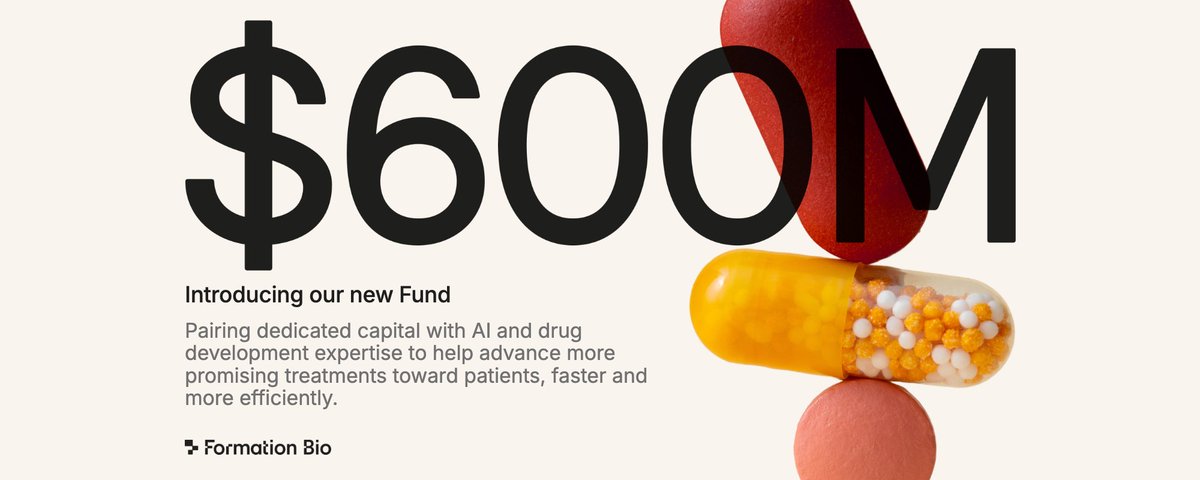
Today we’re announcing the $600M Formation Bio Drug Development Accelerator Fund.
@lintaho and I started @FormationBio because we believed the biggest bottleneck in bringing new medicines to patients wasn’t drug discovery, but drug development.
As AI dramatically accelerates discovery, that bottleneck is only becoming more acute. Without the capital and capacity to advance promising drugs through clinical trials, much of that progress won’t translate into medicines for patients.
Our new Fund brings together dedicated capital, drug development expertise, and AI-powered development capabilities to acquire promising drugs and advance them through the clinic.

Anthony M. Hopper retweeted

Cardiovascular resilience in centenarians
nature.com/articles/s41569-0…

Anthony M. Hopper retweeted
Yes, absolutely. Anyone who thinks human academic paper reviews are stronger than AI reviews has not carefully and objectively compared recent examp;les of both. There should totally be expert humans in the loop at this stage, but it is not just OK but better at this stage to let well constructed AI agents do the bulk of the reviewing work...
AIs do have a disturbing tendency to revert to the mean and over-criticize fringe/eccentric work. HOWEVER human referees have this tendency too -- and they are much harder to prompt out of it...

Anthony M. Hopper retweeted

Mounjaro: "probably one of the best molecules ever developed by humans." At #ARDD2026 Novo presented semaglutide data showing ~2-3 years of age reversal, and even more at the organ-specific level. This is a big deal. Thanks Brian Yennis @SatAmericaFNC, Kevin Duffin @EliLillyandCo, Alejandro Aguayo-Orozco, Maria Dermit and Nikolaj Roed @novonordisk
Anthony M. Hopper retweeted
Prepare to live to 150, I told Brian Yennis on @FoxNews @SatAmericaFNC. Our IPF drug rentosertib showed age reversal of 3-6 years on aging-clock biomarkers in a 12-week Phase 2a trial of 71 patients. Early data, Phase 3 ongoing, nothing approved. Insilico, AI-designed. #ARDD2026
Anthony M. Hopper retweeted

Palantir cofounder Joe Lonsdale is backing a startup with grandiose plans to build a giant monkey breeding operation in an effort he's called "pro-human."
Here's why: forbes.com/sites/amyfeldman/…
📸: Christie Hemm Klok/The Washington Post via Getty Images

Anthony M. Hopper retweeted
A person fighting cancer should not also have to become the project manager of their own medical records. We have the tools to help people; we just need to make them widely accessible, and we will.
Anthony M. Hopper retweeted

These were taken down after the events of August 2021. I think it would be appropriate to have them back up.

Very happy to see the release of the three mTOR-related iBio videos we filmed over the summer. Was a real pleasure to work with such a professional team led by Karen Dell. mTOR and the Regulation of Growth • iBiology ibiology.org/cell-biology/mt…
Anthony M. Hopper retweeted

incredible work. im in awe of anthropic’s pace, and am grateful for the transparency of process+results
i went through 3 out of the 5 case studies they released and wrote down my thoughts on each. in italics are LLM-summarizations for the cases for those who havent read them


Over the past few months, Anthropic scientists have engaged in deep research partnerships with six organizations developing new medicines. We've also begun drug discovery efforts of our own.
In doing so, we’ve learned much more about how Claude can support the many stages of drug development.
In this blog post, we share some early results from these efforts, and describe how this work fits in with our wider ambitions in the life sciences.
anthropic.com/research/early…

Anthony M. Hopper retweeted
@ArkadyMazin at Lifespan.io on ARDD 2026 in Boston: traditional biology meets AI-driven discovery. Metabolism, clocks, AI assets, virtual cells, epigenetic restoration.
lifespan.io/ardd-2026-tradit…
#ARDD2026

Anthony M. Hopper retweeted
Thrilled to be accepted to @GoogleDeepMind’s Antigravity Science Program for the next 6 months!🚀
I believe Gemini Argon is now at the frontier of AI for biomedical science & I’m building exciting new biomed apps with Antigravity!
Let the next offensive against disease begin!🧬

At @GoogleDeepMind, we believe one of AI's most transformative impacts is empowering scientists to solve society's hardest problems.
Over the past year, we've evolved our coding agent, @Google @Antigravity, to accelerate end-to-end scientific workflows combining our latest Gemini models with science-specific:
• breakthrough models like AlphaFold and AlphaGenome
• new interfaces like the Biomolecular Structure Viewer
The impact of this integration has been transformative for the pace of our research. As an example, in a single session using Antigravity, our researchers working on antimicrobial resistance surfaced a novel antimicrobial peptide candidate.
To support academic researchers leverage these tools, we've launched an Antigravity for Science credits program and are looking forward to what this enables:
antigravity.google/use-cases…
Read the antimicrobial resistance case study:
deepmind.google/blog/acceler…