Ernst Schmid retweeted

Really excited to share! In this day and age the hype might suggest we’ve “solved” protein biophysics, but all the models we tested are far from predicting simple N chemical shifts. Hoping releasing our cleaned / curated data and models can help all protein ML space better learn biologically-relevant chemistry and dynamics!

1/ 🧵 New preprint! Do protein foundation models really understand local chemistry?
We probed them with NMR chemical shifts, per-atom reporters of chemical environment.
Short answer: they struggle exactly where the biology gets interesting 👇
[link] biorxiv.org/content/10.64898…

Ernst Schmid retweeted

Excited to share a preprint of my main PhD work in @nickpolizzi_'s lab - introducing LUCI-tag, a new orthogonal self-labeling protein tag based on K-Ras(G12C) and its covalent inhibitors! biorxiv.org/content/10.64898… (1/16)

Ernst Schmid retweeted

Our in vivo multiplexing scaled so far we had to build a design framework to keep up. Introducing mBER-2, the latest iteration of our scaled protein binder design platform, updated from experimental feedback from millions of measured designs.
Ernst Schmid retweeted

Today, we’re announcing mBER-2, our latest AI protein design system, and sharing a bit of how we use it to explore biology in vivo at scale.
For a long time, we’ve been working on what I think of as “frontier problems” in medicine and biology. We know a lot about the targets involved in disease, but there is still an enormous amount of biology we haven’t explored, and potential uses for that biology we haven’t discovered.
One of those problems is drug delivery. There are thousands of potential targets, and most receptors remain unexplored as routes for delivering medicines. We want to understand which ones we can use, where they can take a drug, and what kinds of molecules make that possible.
Ultimately, we need to test these molecules in vivo to understand what they actually do. We’ve spent the last six years building measurement technologies that let us generate millions of measurements in living systems.
mBER-2 is an AI protein design system built for that scale of in vivo measurement. Our goal is to generate binders across the full range of targets we care about, while systematically exploring the possible binding sites on each one. It’s not just what you bind, but where and how you bind that determines whether a molecule performs it's function. mBER-2 lets us probe those differences at massive scale.
We’re also sharing a look at some of our in vivo data. We’ve designed more than 50 million molecules across over 4,000 targets, and screened millions of molecules in living systems. By probing hundreds of receptors, we’ve found new pathways for delivering genetic medicines into fat that outperform industry benchmarks by a large margin.
This is just the beginning. We call the space of all bindable sites across proteomes the EpiTome. As we explore it, we’re building the data to connect AI design, receptor binding, and what a molecule actually does in a living organism.
Much like the idea of a virtual cell, we envision a Virtual Organism that helps us design medicines with specific properties in mind. The foundation is our own in vivo data, connecting molecular design to outcomes measured in living systems.
The endgame is to use AI to explore more biology, measure what happens, and use what we learn to design better medicines. Every round should deepen our understanding of biology and improve our ability to build molecules that do what we need them to do.
Ernst Schmid retweeted

👀

imo the millennium problem list in biology should be a list of very specific datasets
like ‘a catalog of epitope-resolved nm protein binders across the human proteoform in X environment’. hard because it requires knowing the full range of human ptms/isoforms and having some way to do scalable generation/testing of epitope-specific binders (computationally or otherwise). both very difficult but achievable
also verifiable!

Ernst Schmid retweeted
Manifold Bio is heading to @RosettaCommons Summer RosettaCon 2026 next week.
Erik Swanson and Mike Nichols will present the EpiTome, our proteome-scale effort to design binders to every addressable epitope on every human cell-surface receptor.
We’ll talk about highlights from our latest million-scale de novo antibody design and validation campaigns. Our data now exceeds the number of antibody-antigen interaction complexes in the PDB by more than an order of magnitude.
We're pushing the boundary of data scale in protein design, closing the loop between design and validation at a pace and density the field has never seen. DM to connect with Erik or Mike.
📅 August 6, 2026, 1:30pm PT
📍 Seattle, WA

Ernst Schmid retweeted

Excited to share our now published manuscript @CellCellPress highlighting advances in modeling the evolution of protein-protein interactions with MSA Pairformer. Big thanks to @ZhidianZ, @oliviatang116, @eunbelivable, Milot Mirdita, Martin Steinegger, and @sokrypton !🧵 (1/10)
cell.com/cell/fulltext/S0092…

Ernst Schmid retweeted

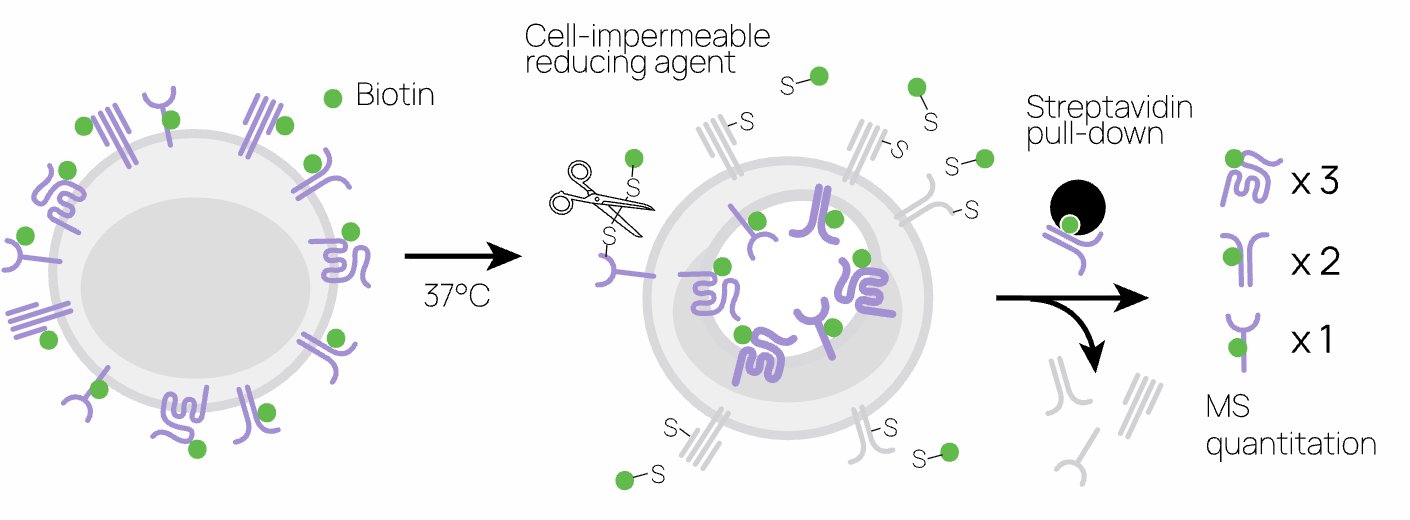
We're excited to be hiring an experienced chemoproteomics / surfaceomics researcher to help build new platforms with us at @Deliverome in a joyful, mission-driven environment. Come build at industry speed while making your work openly available for the benefit of all people.

Ernst Schmid retweeted

Our lab website is finally online! pacesalab.com/
You can find information about our research, publications, and on-going developments in the lab.

Ernst Schmid retweeted
Getting the right drug to the right tissue is one of the hardest problems in medicine. @ManifoldBio is presenting data on how we're solving it at the Barriers of the CNS Gordon Research Conference next week.
Supriya Ravichandran will present our poster on ultra high-throughput in vivo screening for CNS shuttle discovery. Screening hundreds of thousands of in silico-designed molecules simultaneously in vivo, we identify novel receptor portals and tissue-targeting shuttles with differentiated biodistribution profiles.
Massively multiplexed in vivo screening is how we turn drug localization from a bottleneck into a solvable design problem, with the same engine extending across tissues and indications.
Attending? DM us to connect with Supriya or Marshall Case. 👋
📅 June 14-19, 2026 | New London, NH
📍 grc.org/barriers-of-the-cns-…

Ernst Schmid retweeted

Structural motif search across the protein universe with Folddisco go.nature.com/4g8lCb0

Ernst Schmid retweeted
Many powerful medicines fail or cause serious side effects because they do not reach the exact cells in the body that need treatment.
Today @beccajcarlson and I are launching @deliverome with @beckypferdehirt and @radialscience at @AsteraInstitute to address this problem. A 🧵:
Ernst Schmid retweeted

Today we're announcing ESMFold2, an open scientific engine to power prediction, design, and discovery across protein biology.
The new model delivers state of the art performance on protein interactions, especially antibodies, a critical modality for therapeutics.
We have designed and validated miniprotein binders and single chain antibodies across five therapeutic targets that are important in cancer and immunology. We are seeing very high success rates, and affinities at levels consistent with therapeutic activity.
We’re also releasing an atlas of 6.8 billion proteins, and 1.1 billion predicted structures.
ESMFold2 is built on a state of the art language model that has been trained on billions of protein sequences.
A world model of protein biology emerges through language modeling.
We’ve used the techniques of mechanistic interpretability developed to understand large language models to understand the concepts ESM uses to represent proteins.
The model’s representation space has a compositional organization of features across scales, levels of complexity, and abstraction, that reflects and mirrors the understanding of protein biology developed through a century of empirical science.
This understanding emerges without prior knowledge, just from language modeling of protein sequences.
Language models are becoming a powerful substrate to understand and program biology.
The design of protein interactions is one of the most fundamental problems in biophysics, and has critical implications for the discovery of new medicines. A simple gradient based search with the model was able to discover high-affinity protein binders.
I'm excited by the potential this has to accelerate basic science and the understanding of proteins. And especially for the new avenues it opens up for therapeutic design and medicine.
Ernst Schmid retweeted
We’re excited to join @AnthropicAI for the Founders’ Lab: AI for Life Sciences during #BOSTechWeek tomorrow May 27th in Boston.
@ManifoldBio 's Co-Founder & CEO, @glebkuz , will speak on a panel with other AI x Bio leaders about how Manifold is building the Virtual Organism and the agentic infrastructure enabling it.
📍 Boston
🗓 Wednesday, May 27
⏰ 1:30–5 PM ET
Limited-capacity event; approval required to attend.
Event Link: partiful.com/e/gKBL52v6jIOhz…

Ernst Schmid retweeted
Hiring our first People lead at @ManifoldBio.
We have epic momentum building at the intersection of AI and drug discovery. Scientist x engineer team, fast pace, very high bar.
Looking for first-principles thinkers with high slope who are obsessed with how great teams actually get built.
Boston, on site. Please reach out directly.
Ernst Schmid retweeted
Great essay that captures the nuances of what's happening on the ground in data rich biological endeavors.
We're seeing this evolve organically at @ManifoldBio. As one of the greatest data generators in the world, we've historically been bottlenecked by analysis as most of our data is some variation on next-gen DNA sequencing data. Now all scientists (not just computational) are armed with agentic systems wired up to our databases and empowered to do (read: prompt) quite advanced analyses on their own data on the scale of hours.


Ernst Schmid retweeted

Bittersweet announcement: this is the final work of my research fellowship at the Align Foundation.
I am extremely proud of this experimentally heroic effort to benchmark generative AI models for protein design.
doi.org/10.64898/2026.05.08.…

Benchmarking generative protein models at scale with GROQ-SEQ 📊
We built a unified benchmarking framework and experimentally tested alignment-based, language, and structure-based models on TEV protease.
Structure-based models achieved up to 74% hit rates, a remarkably high level of experimental success, while computational predictions showed weak agreement with experimental activity.
This collaboration with the @Deborah Marks Lab enabled large-scale experimental benchmarking of today’s leading generative protein models.🔬
🔗 Dive into the details: hubs.la/Q04gpnfg0
#ProteinEngineering #ProteinDesign #MachineLearning #SyntheticBiology #Biotech #AIinBiology #DataScience #GROQseq

Ernst Schmid retweeted
Great to see Manifold’s #mBER AI protein design model in action!
As part of the Amazon Bio Discovery launch this week, @AmazonScience performed agent-guided de novo design using three independent methods including @ManifoldBio 's #mBER to design nanobody binders against a novel cancer target, identifying several sub-nanomolar hits.
mBER is now available via Amazon Bio Discovery.