

Keto diet (2014), intermittent carnivore diet. Radically changed my life; went to medical school to see why there is so much disinformation. Not medical advice.
Clinton, MO
Joined June 2017
- Tweets4.6K
- Following802
- Followers850
- Likes3K







Pinned Tweet
I recorded a ton of info after going from keto to pure carnivore diet. Below is the case report for that experiment. I did great on meat (mostly beef), salt, and water. Rapidly lost a ton of weight despite not really being overweight.
pubtexto.com/article_pdf/687…
Nice 👍

I’m thrilled to announce that a big project I’ve been working on has just gone live! 🧠 My popular Ketogenic Diets for Mental Health clinician training program is now available for FREE on MyCME to everyone.
This comprehensive, newly updated CME course consists of 5 modules: Science, Assessment & Engagement, Implementation, Medication Management, and Troubleshooting
If you’re curious about how metabolic approaches could improve the mental health and total health of your patients, this program is for you.
Start here: mycme.com/pages/ketogenic-di… and please share this link with colleagues who may also be interested.

💯optional

Literal NONSENSE from WebMD.
They admit carbs raise your blood sugar. Then they tell diabetics to eat more of them.
Their "best foods" article:
6 to 8 servings of whole grains a day.
Potatoes, corn and green peas as "better choices."
Fresh orange juice as a "better option" for sweets. The same article says to limit juice.
Limit egg yolks, beef, bacon and butter.
The ADA's own 2019 consensus report says: "Reducing overall carbohydrate intake for individuals with diabetes has demonstrated the most evidence for improving glycemia."
The MOST evidence. Not whole grains. Not juice.
Same report: your body can make the glucose it needs on its own.
If carbs raise your blood sugar, eat fewer carbs. It's not complicated...
Carbs are optional & not needed.
💯 Gotta plan on emptying the junk from your pantry and freezer. It's a good way to taper off the junk and transition to some real grub 😁

Stopping tirzepatide usually brings much of the weight back. In the trial that tested this, people who had lost about 21% of their body weight and then switched to placebo gained 14% back over the next year, while those who stayed on the drug kept losing.
The drug works well while a person takes it, but the appetite it controls returns when it stops. I think the time to build the habits that hold the weight, like eating fewer carbs and lifting to protect muscle, is while the drug is still working.
Anyone starting a GLP-1 should have a long-term plan with their doctor from the beginning.
Your dog didn't get fat, diabetes, cataracts, pancreatitis, gout, HTN, arthritis, or any of the other Western conditions based only on genetics
... Or the inability to count how much heat is generated from a gram of fat or crude oil (& subsequently how many grams he consumed) 😂

When scientists let dogs pick their own food, something surprising happened. The dogs did not reach for the starchy kibble most owners buy. Instead, they built their own meals that looked a lot more like what wolves eat in the wild.
In one careful study, dogs from different breeds were offered several foods at once. Some were high in protein, some high in fat, and some high in carbs. After the dogs had time to learn what each food did, they settled on a clear pattern. About 30 percent of their calories came from protein, 63 percent from fat, and only 7 percent from carbohydrate. The same balance showed up across breeds. They actively avoided the high-carb options and kept going back to the fatty ones. When food was unlimited, they also ate more total calories than their bodies strictly needed—an old “feast or famine” habit that helped wild dogs survive lean times.
A follow-up test that ran longer found the same idea. Dogs started by grabbing the fat-rich food first. Over the days they slowly added more protein, but carbohydrates stayed a tiny part of what they chose. Other work with free-ranging dogs shows they hunt for meat smells even when cheaper scraps are easier to reach.
These studies do not prove every dog should eat only raw meat. They do show that, given a real choice, most dogs still prefer a high-fat, moderate-protein, low-carb mix. That preference lines up with their ancestry far better than the carb-heavy bags sold at most pet stores.

A. Introduce a time-restricted eating schedule
B. Decrease daily energy intake by approximately 500 calories
C. Begin a weight-loss supplement containing garcinia cambogia
D. Replace his current dietary pattern with a ketogenic diet

Dysmenorrhea, or crampy abdominal and pelvic pain during menstruation, is common and caused by the release of prostaglandins during endometrial shedding.
Knowing this, would you do which of the following?
All the protests today over this!? King Trumpet is actually delectable, unless you have the derangement!


We all know the correct answer and the “experts” answer. One outperforms all the other methods in theory, in practice, and in clinical trials, and the others are pushed by the mainstream and their sponsors.

Michael Wood, DO retweeted

Imagine walking into an emergency room with a broken arm. You leave with a bill so high it looks like a phone number. Here’s the surprising part: your insurance company can actually make more money when that bill gets bigger.
The Affordable Care Act (ACA) created a rule called the Medical Loss Ratio. It says insurance companies must spend at least 80% of the money you pay them (your premiums) on actual medical care. They can keep only 15–20% for running the company and for profit. The goal was to stop insurers from pocketing too much of your money.
But there’s a catch. The rule limits profit as a percentage, not as a fixed dollar amount. When medical costs rise, insurance companies raise premiums. The percentage they keep stays the same, but the actual dollars they keep grow.
Here’s a simple example. Say an insurance company collects $100 in premiums. It spends $85 on medical care and keeps $15. Now medical costs rise 20%. The company charges $120 in premiums, spends $102 on care, and keeps $18. Same percentage—but more money in their pocket. The more expensive healthcare becomes, the bigger their profit can get, without them doing anything differently.
This reduces the pressure on insurance companies to fight hard against rising prices. Higher bills from hospitals and doctors simply expand the pie they get a slice of.
Some large insurance companies have also bought hospitals, clinics, and pharmacies. They can pay their own businesses higher prices. Those payments count as “medical spending” under the rule, helping them meet the percentage requirement, while the extra money stays inside the company.
The rule was meant to protect patients. Instead, it can reward a system where higher costs mean higher absolute profits for insurers. That’s one reason medical bills keep climbing while insurance companies stay profitable.

What say you, @SBakerMD ?
A. Recommend jogging with a goal of 150 minutes per week.
B. Recommend a low-carbohydrate diet.
C. Refer for Roux-en-Y gastric bypass surgery.
D. Start liraglutide

💯And they also prefer human farts to cow farts/burps. If it’s better to burn coal to pollute rural areas so that electricity can be sent to cities for electric cars to keep their air clean, let cows fart in rural areas so that cities don’t have to stink like vegan farts 🤢

If you travel around the world and some asshole gives you a paper straw to drink with because of local ordinance, I can 100 percent assure you that they are also giving out drug needles in the same area for free.
Snap the ends off and you will not have to suffer that shitty feeling of paper straw on your lips. That feeling sucks.
Just throw the unused needle part in a local playground. That seems to be the custom and what they want.
(I am working on tips for that moronic wooden fork and knife bullshit)

It’s apparently ok to expose kids to obesogenic foods, pornography, unrestricted smart phone use, and other things they wouldn’t have if they didn’t have a job. Society/parents give kids those things and teach them to use them as crutches (dopamine spikes) when things are tough.

Reasonable people could disagree about whether these risks are acceptable, but our society has given up any rights to police high-risk/high-reward parenting in light of our official comfort with the medicalized maiming of children. This kid is likely to be an exceptional, well adjusted adult. End of story.
Michael Wood, DO retweeted

In 2023, headlines linked a “keto-like” diet to higher cardiovascular risk. This session looks at what the study actually measured.
SMHP™ Research Academy Journal Club
Saturday, October 10 / Noon PT / 3:00 PM ET
Matthew Calkins, MD, MHP, DABOM, will present and lead discussion on:
A Critical Appraisal of Iatan et al.: “Association of a Low-Carbohydrate High-Fat Diet With Plasma Lipid Levels and Cardiovascular Risk.”

Do you have menopausal symptoms and type 2 diabetes? Don't settle for progressive disease that the mainstream guidelines promote, reverse diabetes and all its associated ills in style with ribeyes 🥩
@OfficialADSOrg
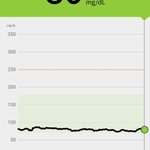
To the "meat causes diabetes" imbeciles. 12 years of very low carb high fat eating and this is what my CGM looks like.
