

Videojournalist...improvisor...freelancer
- Tweets161
- Following95
- Followers68
- Likes174








ALT Abudu Embaló, 77, shows off his tools in the middle of a FAO Farmer Field School maize field where armyworms were discovered earlier that day. The Farmer Field School is one of the activities of the PUSA-GB (Emergency Food Security Project in Guinea Bissau) following the devastating economic effects of COVID-19, and the increased devastation of pests on local crops. Abudu has 47 people in his household. The project, which began in 2020, is funded by the World Bank through the Government of Guinea Bissau and implemented by FAO, and will end in 2023. VILLAGE: Bantanjan, Bafata

ALT 13/07/2023 - Keneba Village, Bafata, Guinea Bissau A group of farmers inspect 3-week old maize plants for Armyworm caterpillar as part of a Field School training with an FAO team from the Emergency Food Security Project in Guinea Bissau. The Armyworm caterpillar has been ravaging Maize crops in the area for the last 7 years. Since the beginning of the project, 16 Field Schools have been run by FAO, with funding from the World Bank via the GB Government - training farmers in new growing techniques and pesticide maintenance for rice, maize, cowpeas and groundnuts. The project started in 2020 to help the population recover from the devastating economic impact of COVID-19, and will finish in 2023.


ALT 13/07/2023 - Bantanjan Village, Bafata, Guinea Bissau Charlene Miyakou, agronomist, explains the proper use of protective gear when working with any kind of chemical. She is addressing participants of the Farmer Field School. Charlene is a consultant with FAO Guinea Bissau, hailing from Gabon. The Farmer Field School is one of the activities of the PUSA-GB (Emergency Food Security Project in Guinea Bissau) following the devastating economic effects of COVID-19, and the increased devastation of pests on local crops. The project, which began in 2020, is funded by the World Bank through the Government of Guinea Bissau and implemented by FAO, and will end in 2023. VILLAGE: Bantanjan, Bafata COUNTRY: Guinea Bissau

ALT 13/07/2023 - Bantanjan Village, Bafata, Guinea Bissau Mussa Samba Baldé, facilitator, prepares a soap and water solution to demonstrate pest control spraying at a Farmer Field School, while participants look on. The Farmer Field School is one of the activities of the PUSA-GB (Emergency Food Security Project in Guinea Bissau) following the devastating economic effects of COVID-19, and the increased devastation of pests on local crops. This is Musa’s 3rd year facilitating the training in this area. The project, which began in 2020, is funded by the World Bank through the Government of Guinea Bissau and implemented by FAO, and will end in 2023. VILLAGE: Bantanjan, Bafata COUNTRY: Guinea Bissau

ALT 13/07/2023 - Bantanjan Village, Bafata, Guinea Bissau Mussa Samba Baldé, facilitator, demonstrates pest control spraying at a Farmer Field School, while participants look on. The Farmer Field School is one of the activities of the PUSA-GB (Emergency Food Security Project in Guinea Bissau) following the devastating economic effects of COVID-19, and the increased devastation of pests on local crops. This is Musa’s 3rd year facilitating the training in this area. The project, which began in 2020, is funded by the World Bank through the Government of Guinea Bissau and implemented by FAO, and will end in 2023. VILLAGE: Bantanjan, Bafata COUNTRY: Guinea Bissau

ALT 13'/07/2023 An armyworm butterfly can lay 200 eggs at a time. Within weeks, a crop can be destroyed.

ALT 13/07/2023 - Keneba Village, Bafata, Guinea Bissau A woman inspects 3-week old maize plants for Armyworm caterpillar as part of a Field School training with an FAO team from the Emergency Food Security Project in Guinea Bissau. The Armyworm caterpillar has been ravaging Maize crops in the area for the last 7 years. Since the beginning of the project, 16 Field Schools have been run by FAO, with funding from the World Bank via the GB Government - training farmers in new growing techniques and pesticide maintenance for rice, maize, cowpeas and groundnuts. The project started in 2021 to help the population recover from the devastating economic impact of COVID-19, and will finish in 2023. VILLAGE: Keneba, Bafata COUNTRY: Guinea Bissau

ALT 13/07/2023 - Keneba Village, Bafata, Guinea Bissau Farmer Mamadou Lamini Seidi stands between two markers indicating different techniques used for dealing with pests at an FAO Farmer Field School. Today, they are looking at the Armyworm caterpillars with the training with a team from the Emergency Food Security Project in Guinea Bissau (PUSA). The armyworm caterpillar has been ravaging Maize crops in the area for the last 7 years. Since the beginning of the project, 16 Field Schools have been run by FAO, with funding from the World Bank via the GB Government - training farmers in new growing techniques and pesticide maintenance for rice and maize. The project started in 2020 to help the population recover from the devastating economic impact of COVID-19, and will finish in 2023. VILLAGE: Keneba, Bafata COUNTRY: Guinea Bissau

ALT 13/07/2023 - Bantanjan Village, Bafata, Guinea Bissau An armyworm caterpillar plucked off of a young maize plant in the demonstration field at the FAO Farmer Field School. The Farmer Field School is one of the activities of the PUSA-GB (Emergency Food Security Project in Guinea Bissau) following the devastating economic effects of COVID-19, and the increased devastation of pests on local crops. The project, which began in 2020, is funded by the World Bank through the Government of Guinea Bissau and implemented by FAO, and will end in 2023. VILLAGE: Bantanjan, Bafata COUNTRY: Guinea Bissau

ALT 13/07/2023 - Keneba Village, Bafata, Guinea Bissau An FAO team of Agronomists from the Emergency Food Security Project in Guinea Bissau (PUSA-GB) head out to a Field School to share knowledge on how to deal with the Armyworm caterpillar which has been ravaging maize crops in the area for the last 7 years. Since the beginning of the project, 16 Field Schools have been run by FAO, with funding from the World Bank via the GB Government - training farmers in new growing techniques and pesticide maintenance for rice and maize. The project started in 2021 to help the population recover from the devastating economic impact of COVID-19, and will finish in 2023.

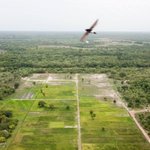
ALT A rice field in Bafata grown from seeds distributed by FAO as part of the Emergency Food Security Project in Guinea Bissau (PUSA-GB).

ALT Ces limites des champs de riz et le système d'irrigation qui avaient été détruits par de fortes pluies ont été restaurés grâce aux fonds de l'Union européenne dans le cadre du projet PUSA. 18 hectares sur 22 ont été restaurés, y compris une section de démonstration. L'approche utilisée ici est basée sur une nouvelle technique appelée SRI (Systeme Rizicole Intensif). 90% des 18 hectares utilisent cette approche, tandis que 10% utilisent l'approche traditionnelle. L'avantage du SRI, adopté pour la plupart par la population, est qu'il utilise moins de 15% des semences précédemment utilisées pour la même superficie, tout en produisant presque le double. Par exemple, avec la méthode traditionnelle plus ancienne, ces 18 hectares auraient nécessité 1360 kg de semences de riz. Avec le SRI, seulement 170 kg de semences de riz étaient nécessaires. L'ancien système traditionnel nécessitait une période de germination des semences de riz de 25 à 30 jours, tandis que la méthode SRI ne nécessite que


ALT 06/07/2023 Gadamaio, Bafata, Guinea Bissau Mussu Dabo, 56 is the vice president of the rice growers association in Gadamaio. She is tending to her rice fields, one of 18 ha of rice fields that have been repaired and planted as part of the Emergency Food Security Project - Guinea Bissau (PUSA-GB), using new, more productive techniques. The project was launched in 2020 in response to the devastating economic impact of COVID-19 and includes several interventions such as these field schools, seed distribution, animal vaccination, and training. It is scheduled to conclude by the end of 2023.


ALT 06/07/2023 Gadamaio, Bafata, Guinea Bissau Image of a growing rice plant. Rice is one of the main crops in Guinea Bissau. At a friend school, 18 ha of rice fields have been repaired and planted as part of the Emergency Food Security Project - Guinea Bissau (PUSA-GB), using new, more productive techniques. The project was launched in 2020 in response to the devastating economic impact of COVID-19 and includes several interventions such as these field schools, seed distribution, animal vaccination, and training. It is scheduled to conclude by the end of 2023.

ALT 06/07/2023 Gadamaio, Bafata, Guinea Bissau Fences keep out livestock, protecting this Rice Field School where 18 ha of rice fields have been repaired and planted as part of the Emergency Food Security Project - Guinea Bissau (PUSA-GB), using new, more productive techniques. The project was launched in 2020 in response to the devastating economic impact of COVID-19 and includes several interventions such as these field schools, seed distribution, animal vaccination, and training. It is scheduled to conclude by the end of 2023.


ALT Ces limites des champs de riz et le système d'irrigation qui avaient été détruits par de fortes pluies ont été restaurés grâce aux fonds de l'Union européenne dans le cadre du projet PUSA. 18 hectares sur 22 ont été restaurés, y compris une section de démonstration. L'approche utilisée ici est basée sur une nouvelle technique appelée SRI (Systeme Rizicole Intensif). 90% des 18 hectares utilisent cette approche, tandis que 10% utilisent l'approche traditionnelle. L'avantage du SRI, adopté pour la plupart par la population, est qu'il utilise moins de 15% des semences précédemment utilisées pour la même superficie, tout en produisant presque le double. Par exemple, avec la méthode traditionnelle plus ancienne, ces 18 hectares auraient nécessité 1360 kg de semences de riz. Avec le SRI, seulement 170 kg de semences de riz étaient nécessaires. L'ancien système traditionnel nécessitait une période de germination des semences de riz de 25 à 30 jours, tandis que la méthode SRI ne nécessite que

ALT Nghili Village, Guinée Bissau - 23/06/2023 Francisco Pedro Marjinho tiens trois bouteilles d'haricots dans sa main. Il a deux femmes et trois enfants. En 2022, il a reçu 30 kg de riz et 10 kg de haricots à planter en août et septembre de l'année dernière. Il a récolté 200 kg de riz, en utilisant 160 kg pour la consommation à la maison et en en conservant 40 kg pour les replanter cette année. Avec les 10 kg de haricots, j'ai cultivé 82 kg et j'en ai sauvegardé 10 kg - 5 kg pour ma maison et 5 kg pour un voisin. C'est dans le cadre du Programme d'urgence de sécurité alimentaire (PUSA) en Guinée-Bissau (2021-2023), un programme de la FAO, de la Banque mondiale et du gouvernement de la Guinée-Bissau.


ALT L'absence de délimitation claire des terres, en raison de l'héritage verbal/informel et des dons de terres, ainsi que des politiques de propriété foncière déséquilibrées sur le plan des genres, a engendré des conflits fonciers dans les villages de toute la Guinée-Bissau. Le project N'tene Terra du gouvernement de la #Guinée-Bissau, avec le soutien de l'Union européenne et la mise en œuvre de la FAO.

ALT 26/07/2023 - Sintchan Botché village, Gabú, Guinée Bissau. "Les exercices de délimitation ont permis l'harmonie entre nos deux villages, ainsi qu'avec les villages environnants. C'est vraiment positif pour notre développement." Idrissa Embaló, resident of Sintchan Botché. Les deux villages de Sintcham Botché et Manporo ont participé à la délimitation de leurs villages dans le cadre du projet N'tene Terra du gouvernement de la Guinée-Bissau, avec le soutien de l'Union européenne et la mise en œuvre de la FAO. En particulier, il s'agit de la renforcement des capacités des institutions de l’administration foncière, les leaders traditionnels et les communautés en matière de gouvernance foncière et de droits fonciers, avec une attention particulière aux aspects de genre.

ALT 26/06/2023 - Sanbadji Village, Gabú, Guinée Bissau: Le chef du village, Tidjane Baldé, semme ces 6 hectares avec les 50kg de graines de riz, 10kg d'haricots, 20kg d'arachides et 11kg de mais, qu'il a reçu et juine 2023 dans le cadre du Programme d'urgence de sécurité alimentaire (PUSA) en Guinée-Bissau. Ce projet de trois ans, d'un montant de 11,3 millions de dollars, financé par la Banque mondiale, se conclura en decembre 2023. Les partenaires de mise en œuvre sont l'Organisation des Nations Unies pour l'alimentation et l'agriculture (FAO) et le Ministère de l'Agriculture et du Développement rural.


ALT Le Projet d'Urgence pour la Sécurité Alimentaire en Guinée-Bissau a été lancé en 2021 en réponse à l'impact économique dévastateur de la COVID-19, qui a entraîné l'insécurité alimentaire pour de nombreuses communautés à travers le pays. En plus de plusieurs interventions, telles que la distribution de semences, la vaccination des animaux, et la formation sur les pesticides, un programme d'emploi rémunéré a été mis en place. Voici les détails importants de cette activité : Régions ciblées : Oio et Cacheu Nombre total de bénéficiaires visés : 8 000. Le montant total à remettre aux bénéficiaires est de 85 000 FCFA (environ 140 USD). Résultats : 2 654 bénéficiaires ont reçu des transferts d'argent d'un montant total de 225 590 000 XOF (environ 371 000 USD). Ce projet de trois ans, d'un montant de 11,3 millions de dollars, financé par la Banque mondiale, se conclura à la fin de juillet 2023. Les partenaires de mise en œuvre sont @FAO et @WorldBank