

AI Research & Policy @huggingface 🤗 Leading: @evaluatingevals @huggingscience
Boston, Massachusetts
Joined January 2012
- Tweets6.4K
- Following1.7K
- Followers3.4K
- Likes33.4K




Avijit Ghosh retweeted

To prepare for and respond to SI control incidents, NIST CAISSI, NSA SISC, and CISA have authored voluntary practices for organizations training and evaluating highly capable agents.

Both this hackathon idea and “Valkyrie” as a name are 10/10 chef’s kiss. I’m very interested to see the scientific insights that come out of controlled open benchmaxxing in this manner!

For one weekend, we are benchmaxxing on purpose!
Join us for the first Vals AI Hackathon on November 14–15 in San Francisco. We're giving 150 hackers 24 hours and a lot of compute to improve small models, challenge the frontier, and see what they can build.
Track 1: Post Train a small model and see how high it ranks on three Vals benchmarks. Live leaderboard, compute from our sponsors.
Track 2: Build a Your Own Eval on Valkyrie for tasks that still stump frontier models. We cover model and compute costs.
Come meet the Vals team. Expect great prizes, notable guest speakers and fun side quests, including an optional cybersecurity CTF.

Avijit Ghosh retweeted

There are 505 "agent traces" datasets on the @huggingface Hub (17.6 GB).
I parsed them to answer: what models, which harnesses, what tasks, how long are sessions?
Real user usage is ~15% of sessions. Here it is broken down:
🧵 👇

Yikes. Closed source cyberdefense has practical limits, this is yet another example.


Love ValsAI and I’m so glad they make their methodology public but I’m not fully convinced that the four proxies chosen (text compression, small gpt training, harness engineering and post training) are reflective of what I understand to be a model improving itself - more specifically the Y axis derived this way being indicative of having an upper limit (reaching RSI) seems a bit misleading - certainly 100% on this index doesn’t mean a model there has reached a point of no return of improving itself? There are considerations like resources available, the ability of a model to stop itself and move on to new weights, etc etc.
Idk these are scattered thoughts but we’ve started work on a composite index project at EvalEval and I am noticing that the conclusions people draw based on these y axes (that are products of assumptions and interpolations) in AA/Vals/ECI are a bit under scientific imo 🫠
More in the future!



Congrats to @AIatMeta for Muse Spark Open. Seeing more and more of these eval methods docs starting to pop up with more details that you can otherwise get from leaderboards. Would be cool to see adoption of a machine readable standard like EEE for this!
research.meta.ai/static/muse…

Apertus 1.5 is the (checks notes) first ever model to come with a full eval card embedded in the tech report/blog! Check it out and would be super interesting to see repoducibility nerds deep dive into the data and uncover cool insights:
huggingface.co/blog/swiss-ai…


Apertus 1.5 Tech report is out! It is the first model release with every eval on Evaluation Cards and HF Community Evals, reproducible down to the generation settings.
48 benchmarks for the 8B, 47 for the 70B. Rerun them yourself.
Congrats Swiss AI ❤️
evalevalai.com/infrastructur…

Avijit Ghosh retweeted

Mercor Research mapped AI benchmarks to actual US jobs.
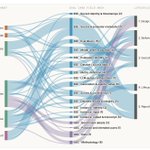
Only 208 of 923 occupations in the US economy are represented by existing AI benchmarks. 90% of hours worked in the US aren't covered well by a relevant AI benchmark.
Today, we’re releasing the 𝗕𝗲𝗻𝗰𝗵𝗺𝗮𝗿𝗸 𝗠𝗮𝗽 𝗼𝗳 𝘁𝗵𝗲 𝗨𝗦 𝗘𝗰𝗼𝗻𝗼𝗺𝘆, an interactive breakdown of which economic tasks are covered by AI benchmarks.
Benchmarks are how we measure AI’s progress and anticipate its impact on real work. They’re crucial to understand which jobs AI can automate, where the biggest gaps are, and how those capabilities are changing over time.
The Benchmark Map is our first step toward building a resource that makes it easier to answer: 𝘋𝘰𝘦𝘴 𝘵𝘩𝘪𝘴 𝘈𝘐 𝘮𝘰𝘥𝘦𝘭 𝘸𝘰𝘳𝘬 𝘧𝘰𝘳 𝘮𝘺 𝘰𝘤𝘤𝘶𝘱𝘢𝘵𝘪𝘰𝘯?
Explore it here: mercor.com/research/labor-in…

Woah General purpose robotics is coming sooner than we think

Gemini 4 Argon is now generally available. It is one of the most beloved models at Google.
Interestingly, it can also control a full body humanoid with dexterous hands. Improved in real2sim2real in just a few hours and was able to do a skill we had no data on. I was personally very mind blown to see this in the lab. youtube.com/watch?v=9PICEmtf…


What does it mean in practice to have embedded evaluators in AI developer orgs? Come discuss with us at the @evaluatingevals microconference in SF on October 24!
🚨EvalEval is excited to announce that we are hosting a microconference (hybrid) on Embedding Evaluators in Practice in SF!
More details on the agenda and outcomes in thread 🧵
Invite-only, sign up 👇
luma.com/nfu166a1

Avijit Ghosh retweeted

Today, we're introducing Bulbul V4 Flash, our latest text to speech model built for natural, expressive speech across Indian languages.
Flash brings frontier-quality speech into a smaller, more efficient model, preserving the subtle details that make voices sound natural while making speech generation significantly faster.
See details in our blog: links.sarvam.io/siuhmS
It would be much more effective imo if Anthropic was posting both the problems they find via research into open weight safety and then open up their safety solutions, instead of casting Claude as the only safe mechanism when this is simply not true + a huge conflict of interest

If you REALLY care about the safety of the world, let's see some open solutions to these 👇. OW is necessary and happening and closed model safeguards are not going to help esp coming from a company that stands to benefit from selling closed model access. arxiv.org/abs/2608.07514v1

This completely makes sense. The UK did a similar reorg of AISI with goals towards better aligning eval/security work with the national AI strategy:
gov.uk/government/news/ai-to…


Scoop: The small agency within the Commerce Department tasked with testing new AI models, CAISSI, is getting its long-awaited refresh.
The Trump administration recently finalized a plan to have three senior CAISSI officials report directly to the White House to better streamline the agency, which has long been plagued by resource and access issues.
However, there has been confusion between the White House and Commerce Department on the restructure, which a White House official told me demonstrates why CAISSI leadership needs to move.
Lots of new details here, including the debate over how to manage CAISSI, its role in the White House's AI framework for testing AI models, and personnel changes

YES. For a longer rant please see my FAccT paper: "What if AI Systems Weren't Chatbots?"
arxiv.org/abs/2605.07896


If, like me, you were also wondering what “Personal Superintelligence Index” is, from the model card: “PSI is an internal composite of seven personal and knowledge-work evaluations: Agents’ Last Exam, AutomationBench-AA, FocusBench, JobBench, GDP.pdf, VBT, and DRACO”.
Interesting! I would love to see more details about this composite and the reasons for why this is being linked to personal superintelligence, as @lindugong notes below that personalization is hard to benchmark in a generalizable way. Definitely “feels” like Muse is getting there though in terms of context management, memory, and agentic tool calls.

pleased to announce our big boi: muse wonder! muse wonder is a frontier, state-of-the-art model built for everyone.
with active focus and active memory into our model, muse wonder full tries really hard to get your task done all with your personal context.
evals can’t fully measure this experience, but ours are pretty decent! try muse wonder and wonder full in muse code today — and coming soon to power muse itself
