






Frederik Tilmann retweeted

DepthPhaseTEAM and DepthPhaseNet are two deep learning models that can help scientists better constrain depth of seismic sources. @jannes_munch, Joachim Saul and @f_tilmann of @GFZ_Potsdam present these models in this new #SRL paper.
buff.ly/3GD1uef

Frederik Tilmann retweeted

SeisBench v0.5.0 is out with new models, new datasets, new features, and performance improvements. Thanks to all contributors! Got a contribution for machine learning in seismology for v0.6? Submit a PR on Github!
github.com/seisbench/seisben…

Frederik Tilmann retweeted

#IUGG2023 GFZ booth: Angelo Strollo (r.), our expert for the worldwide GEOFON network, helpes explain how we detect earthquakes all over the world. Come by and meet him today.
More about GEOFON
👉gfz-potsdam.de/en/section/se…
and the Earthquake Explorer
👉geofon.gfz-potsdam.de/

ALT Ulrike Sylla (l.) and Angelo Strollo (r.) from the GFZ explain earthquake detection for two visitors at the GFZ booth. In the middle on a table: a map of all measured earthquakes from 2008-2020 with our worldwide GEOFON network.
Frederik Tilmann retweeted

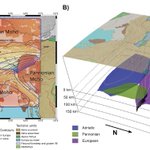
Seismicity in subducted slabs is principally controlled by compaction and dehydration reactions in regions of hydrated mantle and by enhanced flexural stresses in regions of anhydrous mantle
@crpiceda @f_tilmann @GFZ_Potsdam
nature.com/articles/s43247-0…

Frederik Tilmann retweeted
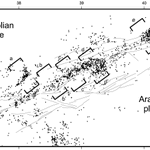
As a service to those researching, responding and speaking to the public about the 6 Feb. 2023 earthquakes in Turkey, we have compiled several articles related to the faults in the region. These papers will be FREELY available until 14 Feb.
pubs.geoscienceworld.org/bss…

Frederik Tilmann retweeted

This is the map of earthquake hazard in Türkiye, produced in 2018 by the national agency AFAD. It shows that the two distinct fault zones for both the M7.8 and the M7.5 were both identified as high hazard. Source: afad.gov.tr/turkiye-deprem-t…

Frederik Tilmann retweeted

In case you want to see how they deployed the 50 Ocean Bottom Seismometers that “felt” those seismic waves:
Part 1: youtube.com/watch?v=squhUch4…
Part 2: youtube.com/watch?v=reTna3Gx…
Videos by @colabatlantic for @UPFLOWEU

Frederik Tilmann retweeted

📢 Last minute chance to join the first Geo.X Science Retreat! Due to cancellations we have a very limited number of seats available (for free)! Send us a DM if you are interested! #Geoscience #Berlin

Frederik Tilmann retweeted
Our paper on earthquake rupture predictability is out now in GRL! We use mixture density networks to study rupture predictability from a probabilistic viewpoint based on moment rate functions and teleseismic waveforms.
@f_tilmann #OpenAccess
doi.org/10.1029/2022GL098344

Frederik Tilmann retweeted

The @VolkswagenSt accepts proposals from Ukrainian scientists for continuing their research at a German university ⬇️
@VolkswagenSt приймає пропозиції українських вчених щодо продовження досліджень у німецькому університеті

Unterstützung für geflohene Forschende aus der #Ukraine: Die Stiftung unterstützt Wissenschaftler:innen dabei, ihre Tätigkeit vorübergehend in Deutschland fortzusetzen. Anträge können ab sofort eingereicht werden👇 volkswagenstiftung.de/aktuel…… #ScienceForUkraine #StandWithUkraine

Frederik Tilmann retweeted

A new #AGUpubs study compared deep learning models to find out which performs best across various data sets.
Research by @jannes_munch, @f_tilmann, @TornadoDart, and @cjunkk.
eos.org/research-spotlights/…
Frederik Tilmann retweeted

Can earthquakes be predicted?
Applying #AI to #geophysical #data offers new hope! Join #AIforGood with Paul Johnson from @LosAlamosNatLab and @f_tilmann @GFZ_Potsdam next week to learn more:
🌐loom.ly/BRzpScM
🗓️ 24 February 17:00 CET

Frederik Tilmann retweeted
We just released SeisBench 0.1.10 and added a first non-picking model: DeepDenoiser (Zhu et al 2019) is now available through SeisBench!
Below a before/after comparison showing how DeepDenoiser reveals small events hidden in the coda of a larger event.


Frederik Tilmann retweeted
You've heard about deep learning based seismic pickers, but you don't know which one to use? Then maybe our new preprint "Which picker fits my data? A quantitative evaluation of deep learning based seismic pickers" can help you out! arxiv.org/abs/2110.13671
🧵
Frederik Tilmann retweeted
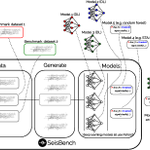
Our preprint "SeisBench - A Toolbox for Machine Learning in Seismology" is now available on arxiv! arxiv.org/abs/2111.00786
This 🧵 give a small intro to SeisBench.
@f_tilmann @cjunkk @TornadoDart
Frederik Tilmann retweeted

How fast is the pulse of our 🌎?
🇪🇺#EUfunded researchers @ucl will deploy instruments on the floor of the #Atlantic🌊to help us better understand earth’s ground motions.
📹Video: https://teapaw.org/t.co/ZV1KWJtQbg
📖Story: https://teapaw.org/t.co/07e5h1XO5l
@UPFLOWEU @colabatlantic @ES_UCL @ipma_pt

Frederik Tilmann retweeted
Happy to announce that our new paper on real time earthquake magnitude and location assessment using transformer networks was just published in GJI.
@f_tilmann @GFZ_Potsdam @Geo_X_ @HIDAdigital
doi.org/10.1093/gji/ggab139
Open access at
arxiv.org/abs/2101.02010
Frederik Tilmann retweeted
The SPIN @spin_itn research and training network is now recruiting! 15 seismology PhD opportunities for new sensors, monitoring (and some computational modelling, too!) #geotweeps
teapaw.org/InSeismoland/status/13…

Looking for a PhD in #seismology? Help build the future of seismology by joining an exciting research & training network of leading European institutes: spin-itn.eu Now recruiting 15 PhDs in a new #MSCA #ITN 'SPIN' focusing on new sensors and geohazard monitoring!
Frederik Tilmann retweeted

Best candidate fault structure for today's M6.4 #earthquake near Petrinja & Sisak, Croatia; NW-SE trending Petrinja fault zone (red arrows - HRCS027 in SHARE db) clearly visible in the terrain morphology. Epicenters (yellow) from @EMSC, foc mechs from GFZ.

