LoCov 🇪🇺 Kane (@falsel_net) header
LoCov 🇪🇺 Kane (@falsel_net) profile picture

Retired Drs. Med, MBA, 40+ years biomedical research-, development-, regulatory-, marketing-, business development-, strategy- and alliance management.

Joined September 2016
Photo by LoCov 🇪🇺 Kane (@falsel_net)Photo by LoCov 🇪🇺 Kane (@falsel_net)Photo by LoCov 🇪🇺 Kane (@falsel_net)Photo by LoCov 🇪🇺 Kane (@falsel_net)Photo by LoCov 🇪🇺 Kane (@falsel_net)Photo by LoCov 🇪🇺 Kane (@falsel_net)Photo by LoCov 🇪🇺 Kane (@falsel_net)Photo by LoCov 🇪🇺 Kane (@falsel_net)Photo by LoCov 🇪🇺 Kane (@falsel_net)Photo by LoCov 🇪🇺 Kane (@falsel_net)
Study provides imaging evidence for mid- to long-term microstructural abnormalities in the #brainstem. These effects are independent of age and gender: academic.oup.com/brain/advan… Figure 2 Box plots of differences in the regional average χ [quantitiative susceptibility] between the #COVID group and the healthy control group obtained from the brainstem.
#SARSCoV2 penetrating defined neuroanatomical areas including the primary respiratory and cardiovascular control center in the medulla oblongata. #Neuroinvasive #BloodBrainBarrier #BBB #Brainstem teapaw.org/falsel_net/status/1260… New study: nature.com/articles/s41593-0… Fig. 6:
5
11
3
34
21,060
Matched 24/7 daily- and sleepy vital signs including peripheral oxygen saturation with changes in immunological- and haematological lab values, interpolated between sample dates: Multiple regression analyses on explanatory causal- or confounding parameters are deeply disturbing for the previous 215 days of clean data. The higher Heart Rates (e.g. cycling & walking) immediately cause lower 24-hours peripheral oxygen saturation (Ø SpO2):
1
2
223
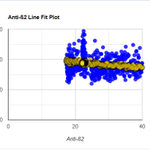
As anti-ß2 adrenergic receptor antibodies viollier.ch/en/analysis/5269…, triggered by SARSCoV2 have a significantly negative chronotrope effect (with kids too sciencedirect.com/science/ar…) it's rather difficult to recover from reinfection(s). Here's 650 days of correlations between these anti-neuroreceptor-IgG antibodies and parameters of cardiovascular fitness: Heart Rate % hi/lo = 111.7 - 0.2 Stress - 0.3 Anti-ß2:
1
1
22
Vivosmart 5 Vital signs monitoring & anti-ß2 adrenoceptor antibodies' data on file viollier.ch/en/analysis/5269…, 13.02.2025 - YTD 2026; 650 days of observations:
7
LoCov 🇪🇺 Kane retweeted
As anti-ß2 adrenergic receptor antibodies viollier.ch/en/analysis/5269…, triggered by SARSCoV2 have a significantly negative chronotrope effect (with kids too sciencedirect.com/science/ar…) it's rather difficult to recover from reinfection(s). Here's 650 days of correlations between these anti-neuroreceptor-IgG antibodies and parameters of cardiovascular fitness: Heart Rate % hi/lo = 111.7 - 0.2 Stress - 0.3 Anti-ß2:
1
1
22
LoCov 🇪🇺 Kane retweeted
Immunology & inflammation drug programs stopped by pharma this year. My favourite is a Sanofi drug for osteoarthritis, stopped due to the nebulous 'benefit-risk' ratio: a trispecific nanobody that anchors to cartilage and inhibits two cartilage-degrading enzymes, MMP13 and ADAMTS5. There's a lot of interesting ones:
5
18
2
104
9,477
Post Covid Condition (#PCC) PYD, tagsüber niedrig dosiert ist (für mich) wirksam und sicher. Das wurde sowohl in zirkadianen longitudinal- als auch in transversal-Analysen festgestellt; das Modell zeigte eine deutliche Prognosekraft (F(6, 939) = 56.71, p < .001). Dies ist auch unter hypoxaemischen Umständen (sTfR ↓ 0.83) von bedeutendem pathophysiologischen und diagnostischen Wert: onlinelibrary.wiley.com/doi/…. Man braucht gut funktionierende Muskeln & #Sauerstoff: teapaw.org/falsel_net/status/2065…
Evidence that skeletal muscle microvascular reactivity is significantly impaired in patients with post-COVID-19 syndrome (PCS) compared with recovered controls. Using near-infrared spectroscopy to determine the absolute ratio of oxygenated to total hemoglobin, demonstrated that a blunted microvascular reperfusion persists even after adjusting for maximal oxygen uptake: Excellent study from Tübingen, Germany: journals.physiology.org/doi/…
1
470
Guten Morgen☕️! Die Schlafphasen (Tiefschlaf 36%, Leicht 45% und REM-Schlaf 19%) haben keinen Einfluss auf den Atemrhythmus: Ø Atemfrequenz 14 brpm. Mit der Bitte, dies an die Abteilung scmeddok weiterzuleiten, zur Digitalisierung meiner Krankenakte😉: bag.admin.ch/de/newnsb/YjJUK…
1
31
Was sich transversal zur Stundenzeit ankündigte, lässt sich auch longitudinal signifikant berechnen. Das bedeutet, dass das Pyridostigmin wirksam ist. Klinisch relevant: teapaw.org/falsel_net/status/2125…
Auch bei Kindern, die nach dem breiten Testen deutlich häufiger infiziert wurden, könnte man überlegen ob das Pyridostigmin in niedriger Dosierung tagsüber eingesetzt werden kann, wenn ihre Muskelschmerzen die Bewegungsfreiheit einschränken. Bei mir jedenfalls wirkt das Zeug gut:
13
LoCov 🇪🇺 Kane retweeted
Interesting part. Long term effects. Each 1 SD rise in the score goes with roughly 18-23% more people reporting symptoms lasting over 3 months, and over 6 months. At 6 months the symptoms that stick are taste problems, shortness of breath and fatigue. Higher scores also go with more depression and anxiety symptoms and worse sleep on questionnaires.
1
1
12
373
Da das SARS-CoV-2-Virus so extrem immunogen wurde, habe ich seit dem Sommer 2024 (die KP.3* Varianten) immer wieder versucht, dies dem örtlichen Spital zu erklären. Hier sehen Sie, welche Auswirkungen diese späteren Varianten auf die durchschnittlich täglichen Anti-Nukleokapsid-Antikörperlast hatten und haben: viollier.ch/de/analysis/4201…
32
LoCov 🇪🇺 Kane retweeted
Mit dem Programm DigiSanté fördert der Bund die digitale Transformation im Gesundheitswesen. An der Informationsveranstaltung vom 23.11.2026 wurden wichtige Fortschritte von DigiSanté aufgezeigt und aktuelle Entwicklungen des SwissHDS vorgestellt. 🗞️ bag.admin.ch/de/newnsb/YjJUK…
1
2
6
3,158
SARS-CoV-2 im Basler Abwasser ~250 e+11 (Genkopien pro 100 000 Personen): data.bs.ch/pages/abwassermon…
48
LoCov 🇪🇺 Kane retweeted
Infants <1 have the highest COVID cases rates per 100k population so far this year, ages 75+ have the second highest rate, followed by ages 65-74 and then closely behind are ages 1-4. 10/
1
9
1
21
316