

Katedra fyzikální chemie, Univerzita Palackého v Olomouci Department of Physical chemistry, Palacky University Olomouc
- Tweets31
- Following47
- Followers45
- Likes34




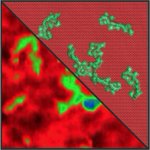
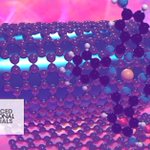


ALT Cover image in @CommsBiol about our Featured article on the development and overcoming of bacterial resistance to AgNP. The mechanism of resistance is the same for both types of bacteria and involves the aggregation of silver nanoparticles leading to the formation of black precipitates. However, the way in which Gram-positive and Gram-negative bacteria induce aggregation of silver nanoparticles is completely different. Chemical analysis of the surface of the silver precipitates shows that aggregation is triggered by flagellin production in E. coli and by bacterial biofilm formation in S. aureus. However, resistance in both types of bacteria can be overcome by using pomegranate rind extract, which inhibits both flagellin and biofilm production, or by stabilizing the silver nanoparticles by covalently binding them to a composite material containing graphene sheets, which protects the silver nanoparticles from aggregation induced by the bacterial biofilm produced by S. aureus.

ALT pomegranate - its rind is used for extract


