

Today, the technical integration between ZenithBlox and My Blockchain Infrastructure Sdn. Bhd. — the entity behind Malaysia’s national blockchain initiative — is complete.
What this means in practice:
A national blockchain backbone now sits behind a pre-execution policy engine.
Every transaction is evaluated against regulatory and institutional rules before it settles on-chain.
Not monitored after. Not audited later.
Authorized first, then executed.
This matters because the failure mode of institutional blockchain pilots has been consistent:
compliance is evaluated after execution — when the irreversible has already happened.
The category is shifting.
Regulators are no longer asking:
“Can you prove what happened?”
They are asking:
“Can you prove only authorized things can happen?”
That is what was just shipped.
Two implications for regulated digital finance:
— Sovereign-grade blockchain infrastructure now has a working control plane.
The MBISB integration is the proof.
— The architecture — pre-execution governance sitting upstream of national execution rails — is now operational, not theoretical.
Other jurisdictions are watching.
Coverage:
Business Insider — markets.businessinsider.com/…
AP News — apnews.com/press-release/glo…
StreetInsider — streetinsider.com/Binary+New…
#DigitalFinance #BlockchainInfrastructure #RegulatedFinance #ASEAN

Coca (@coca_wallet ), a non-custodial wallet platform, published a piece exploring what COBI could mean for stablecoin-native applications.
The framing is worth engaging with — because it points to something real: as blockchain infrastructure matures, the question shifts from how transactions execute to whether they are permitted to execute at all.
That’s the layer COBI occupies.
Pre-execution.
Upstream.
Fail-closed by design.
Compliance orchestration isn’t a feature of the application stack.
It’s the control plane beneath it.
📄 coca.xyz/post/zenithblox-unv…
🔗 zenithblox.com/cobi-atlas
🔗 partners.circle.com/partner/…
#COBI #BlockchainInfrastructure #DigitalAssets #Fintech #Payments

Most enterprise blockchain pilots fail.
Not because the technology doesn’t work.
Because the architecture assumes the wrong governance model.
Regulated systems don’t allow value to move first and check compliance afterward.
They require policy before execution.
Over the past weeks, we published two pieces — one on whyenterprise blockchain stalls in regulated environments, and one on the architecture designed to fix it:
→ The problem
Why enterprise blockchain adoption stalls in regulated environments
theblock.co/press-releases/3…
→ The solution
Compliance-Orchestrated Blockchain Infrastructure (COBI)
financemagnates.com/thought-…
The core idea is simple:
Blockchain adoption in regulated finance is not a technology problem.
It is an architecture problem.
COBI introduces an execution model where:
• compliance is enforced before transactions occur
• policy becomes the control plane
• blockchain becomes a governed execution layer, not the decision-maker
This is a shift from detect and report → prevent and enforce.
And that shift is what makes blockchain viable in regulated environments.
Curious to hear perspectives from others working on:
• CBDCs
• stablecoin infrastructure
• tokenization
• cross-border settlement systems

There is a critique that comes with every financial infrastructure company that adds a new layer to the execution stack.
It happened to SWIFT.
It happened to Visa.
And it will happen to us.
The argument usually takes the same shape:
"You are centralizing something that should not be centralized. You are becoming the gatekeeper. You are creating a single point of failure."
It is a serious critique. In regulated systems, it deserves a serious answer.
The question underneath the critique
COBI — Compliance-Orchestrated Blockchain Infrastructure — inserts a decision layer above execution. Before any transaction reaches a blockchain or payment rail, it passes through a governance evaluation.
Critics will frame that as centralization. The real question underneath is simpler:
Who controls the governance layer?
That is a fair question. And the answer is the entire argument.
The authority chain
ZenithBlox does not control the governance layer.
The regulator does. The institution does. ZenithBlox enforces what they define.
- The regulator defines the rules and owns governance authority.
- The institution configures its policies and owns operational decisions.
- ZenithBlox enforces those rules as a mechanism, not as an authority.
- The blockchain executes transactions only after authorization has been granted.
That distinction between mechanism and authority is not semantic. It is architectural.
ZenithBlox cannot modify the rules a regulator has signed. It cannot create a compliance policy. It cannot approve a transaction on its own judgment. It evaluates a proposed transaction against rules that regulators and institutions already own — and returns a decision.
If no valid rulebook-based authorization exists, the transaction does not proceed.
The Visa analogy
Visa enforces rules. Banks define policies.
Visa does not decide your credit limit. Your bank does. Visa's network enforces that limit at the moment of transaction. Visa became accepted not because it removed control, but because its role in the authority chain became clear.
COBI works on the same principle. COBI enforces rules. Regulators and institutions define policies. That is not a transfer of authority to ZenithBlox. It is a way of preserving institutional authority inside programmable systems.
The real risk COBI addresses
Most blockchain systems today execute first and audit compliance after.
That sequence may be acceptable in experimental systems. It is not acceptable in regulated finance, where no transaction should occur without prior policy authorization.
The real risk is not that governance slows execution. The real risk is that digital financial systems scale faster than regulatory control — and regulators are left monitoring outcomes instead of authorizing actions.
The flipped narrative
The centralization critique assumes ZenithBlox is acquiring control. The correct framing is the opposite.
ZenithBlox ensures that digital financial systems remain governed by institutional rulebooks — rather than by blockchain protocols.
Without a governance layer, the protocol becomes the authority. Smart contract code becomes the effective rulebook. That is not institutional sovereignty. That is replacing regulatory authority with algorithmic authority.
COBI exists to prevent that substitution.
Why this matters now
The infrastructure companies that won their respective layers did not win by removing the control plane. They won by making the authority model clear.
Governance before execution is not a constraint on programmable finance. It is the condition that makes programmable finance adoptable in regulated markets.
ZenithBlox is building the governance layer for digital financial infrastructure. If your institution is thinking seriously about blockchain adoption without giving up governance authority, I would be glad to continue the conversation.
#BlockchainGovernance #RegulatedFinance #DigitalAssets #FinancialInfrastructure #COBI


In regulated financial systems, execution must follow policy — not the other way around.
Traditional blockchain architectures were designed for environments where transactions execute first, and compliance is evaluated afterward.
That model is fundamentally incompatible with regulated financial infrastructure.
Banks, regulators, and central banks operate under a different governance principle:
Rules are defined before participation. Authorization happens before execution. Settlement occurs only after compliance is satisfied.
At @zenithblox , this principle is embedded directly into the architecture.
Our Compliance-Orchestrated Blockchain Infrastructure (COBI) ensures that no blockchain transaction executes unless regulatory and institutional policy has been satisfied first.
Every operation is evaluated against the active rule set before execution. If the policy conditions are not met, the transaction does not proceed.
This architecture enables institutions to adopt blockchain without surrendering governance, regulatory oversight, or operational control.
Instead of asking regulators to adapt to blockchain systems, we design blockchain systems that operate within existing regulatory mandates.
The result is a model where:
→ Regulators define the rules
→ Policy engines authorize execution
→ Blockchain networks execute approved actions
This shift — from detecting violations after execution to preventing them before they occur — is what makes blockchain viable for regulated markets.
Because in financial infrastructure, compliance cannot be an audit activity.
It must be an execution condition.
#FinancialInfrastructure #CBDC #DigitalFinance #BlockchainInfrastructure #RegTech #CentralBank #Fintech #ZenithBlox

Enterprise blockchain has had a decade. Billions in investment. Thousands of pilots.
And the vast majority never made it to production.
The conventional explanation blames regulation or institutional conservatism. But the real barrier is architectural.
Blockchain was designed for environments where code is authority. Regulated institutions operate under the opposite rule: nothing executes until policy, compliance, and accountability say it can.
That mismatch is what we call the Toolkit Problem. And it's why we built something different.
Not a better developer tool. Not another protocol. A new infrastructure category.
Compliance-Orchestrated Blockchain Infrastructure -- COBI -- makes compliance the control plane for blockchain execution. Business logic, not smart contracts, is the system of record. Policy is enforced before transactions, not monitored after.
Today we're sharing the first full demonstration of the COBI architecture in action through our BloxBluePrint platform.
In 13 minutes, you'll watch a business process become a fully compliant, deployment-ready smart contract across Ethereum, Polygon, Arbitrum, Optimism, and BNB Smart Chain.
This is not a mockup. It produces deployable Solidity code with embedded compliance logic across multiple chains.
No code written. Compliance rules embedded. Governance enforced at the architectural level.
This is what institutional blockchain adoption should have looked like from the beginning.
If you're evaluating blockchain in a regulated environment, ask yourself one question:
Who controls execution before settlement?
The future of institutional blockchain is compliance-first. It is COBI.
youtu.be/FWKeRxERZGM
#COBI #BlockchainInfrastructure #ComplianceFirst #ZenithBlox #EnterpriseBlockchain #DigitalTransformation #CBDC #Fintech #Web3 #InstitutionalAdoption
Are we leaving trillions on the table because of outdated definitions?
According to the newly released OMFIF 2025 Report, the answer is yes.
The industry’s obsession with the “public vs. private” blockchain debate has become a structural roadblock — slowing Real-World Asset (RWA) tokenization and limiting institutional innovation.
This architectural bias forces institutions into walled gardens, often at the expense of transparency, auditability, and operational resilience that public infrastructure can deliver.
OMFIF’s conclusion is clear:
Stop regulating the architecture.
Start regulating the function — and the accountability behind it.
And this is precisely the philosophy @zenithblox was built on.
We recognized early that the future isn’t “public” or “private.”
It’s a compliant functionality running on the best, most efficient infrastructure available at any moment.
This is why ZenithBlox has already built the industry’s first function-based compliance and integration framework — bridging institutional requirements with the power of blockchain:
✔ Universal Adapters – Connect legacy systems to any chain, removing architectural bias
✔ BloxBlueprint – Model compliant processes visually
✔ BPSC Compiler – Automate jurisdiction-specific compliance into smart contracts
✔ FrontierBlox Engine – Enforce real-time policy, security, and auditability on any network
The blueprint for RWA adoption isn’t coming.
It’s here — and already built.
Let’s stop debating architecture and start enabling outcomes.
#Tokenization #RealWorldAssets #DeFi #TradFi #BlockchainTechnology #InstitutionalWeb3 #FinancialInnovation #ComplianceTech #Web3Integration

📢 NATION-BUILDING: ZenithBlox Secures Strategic Partnership with MY BLOCKCHAIN INFRASTRUCTURE SDN BHD (MBISB)
We are proud to announce a strategic partnership with MY BLOCKCHAIN INFRASTRUCTURE SDN BHD (MBISB), the operating entity behind Malaysia's national blockchain initiative.
This is more than a partnership—it is a nation-building alliance. It places ZenithBlox at the heart of a sovereign-grade digital transformation, underscoring our ability to operate in highly regulated environments while delivering innovation at scale.
🌍 Flagship Projects with National Impact
Our focus is on two high-value, nation-scale projects:
1. Web3 BPMN Integration: Automating and streamlining complex e-government and enterprise workflows through our BPMN-to-smart contract compiler.
2. Blockchain-based Bill of Lading (BoL) Integration: Digitizing trade documentation to eliminate paper, reduce fraud, and accelerate cross-border trade for customs and port authorities.
⚡ ZenithBlox's Contribution
This collaboration validates our compliance-first infrastructure. By providing the core BPMN compiler and Universal Adapters, we ensure interoperability with ERP, logistics, and other enterprise systems, thereby accelerating Malaysia's digital economy and setting a new benchmark for scalable, compliant blockchain adoption.
🚀 ZenithBlox is evolving from a startup into an infrastructure partner for nations. Together with MBISB, we are shaping the future of compliant, sovereign-grade blockchain solutions.
#Blockchain #FinTech #Malaysia #Web3 #Compliance #DigitalTrade #Government #MBISB #ZenithBlox


🛡️ ZenithBlox: The Compliance Firewall for Web3
ZenithBlox is not another "Blockchain startup."
We are a compliance-first middleware solution—a bridge that enables governments, financial institutions, and enterprises to adopt Blockchain without the risk and volatility of crypto speculation.
Our platform serves as both a compliance firewall and an integration bus for Web3, streamlining Blockchain adoption for real-world use cases such as supply chain management and cross-border trade.
🚧 The Blockchain Adoption Gap
👉 90% of Blockchain pilots fail due to costly development and fragmented compliance.
🔑 How ZenithBlox Closes the Gap
• BloxBlueprint → No-code modeler extending BPMN 2.0 with Web3 constructs
• BPSC Compiler → Automates compliance by embedding AML/KYC + jurisdictional rules into smart contracts
• FrontierBlox Engine → Real-time monitoring, anomaly detection & dynamic policy enforcement
• Universal Adapters → Plug-and-play connectors linking SWIFT, SAP, Temenos & more with multiple blockchains
✅ Credibility & Traction
• TradeTrust Integration (IMDA Singapore): Verified cross-border digital trade documents (eBLs, CoOs, Invoices)
• Microsoft for Startups Validation: Recognized as a strategic partner by Microsoft
We're not selling speculative assets.
We're building the critical digital plumbing of global commerce—a compliance-first foundation that de-risks Blockchain adoption for heavily regulated industries.
#Compliance #Blockchain #FinTech #TradeFinance #DigitalTransformation #Web3 #Innovation

🚢📦 Transforming Customs with Blockchain: Meet ZenithBlox for Customs
Legacy customs systems are overdue for an upgrade—and ZenithBlox is answering the call.
We've developed a modular, blockchain-powered framework designed to help Customs Authorities automate, orchestrate, and monitor core operations like:
✅ Import/Export Declarations
✅ Vessel Monitoring & Arrival
✅ Post-Clearance Audit
✅ Bonds & Seizure Management
✅ IPR Enforcement & Risk Analytics
At the heart of this transformation are four core components:
🔹 BloxBlueprint – visual workflow modeling
🔹 BPSC Compiler – smart contract automation
🔹 Universal Adapters – seamless legacy integration
🔹 FrontierBlox Engine – real-time monitoring & compliance
Through integration with the TradeTrust framework, ZenithBlox also enables verifiable digital trade documents (e.g., eBLs, CoOs, Invoices) with full legal standing across borders.
The result?
🔒 Enhanced transparency
⚙️ Reduced manual workload
🚫 Fraud prevention
🤝 Better collaboration across agencies and borders
📍 Built for Customs. Backed by Blockchain. Powered by ZenithBlox.
#CustomsModernization #BlockchainInGovernment #TradeTech #SupplyChainTransparency #DigitalTrade #ZenithBlox


🚀 ZenithBlox: Foundational for Enterprise Blockchain Adoption
Despite billions invested, institutional Blockchain adoption has been slowed by what we call the "Toolkit Problem":
• Complex, costly development
• Fragmented and evolving compliance rules
• Incompatible legacy systems that don't "speak Blockchain"
At ZenithBlox, we're solving this head-on. Our no-code, compliance-first platform lowers barriers for financial institutions and large corporations by combining:
🔹 Universal Adapters – standardized connectors bridging legacy systems (SWIFT, SAP, Temenos, Salesforce) with multiple blockchains
🔹 BloxBlueprint & BPSC Compiler – turning BPMN 2.0 workflows into compliance-ready smart contracts
🔹 FrontierBlox Engine – real-time monitoring, fraud detection, and dynamic policy enforcement
🌍 With validated technology, a strong leadership team, and strategic global expansion, ZenithBlox is positioned to become a category-defining leader in enterprise Blockchain integration.
💡 The opportunity? A $75.7B market for Blockchain integration in finance, scaling at 40%+ CAGR.
ZenithBlox offers a low-risk, high-reward entry point—for both customers seeking efficiency and compliance, and investors seeking scalable growth.
👉 We're here to simplify the complex and transform finance.
#Blockchain #Web3 #Compliance #FinTech #EnterpriseIntegration #DigitalAssets

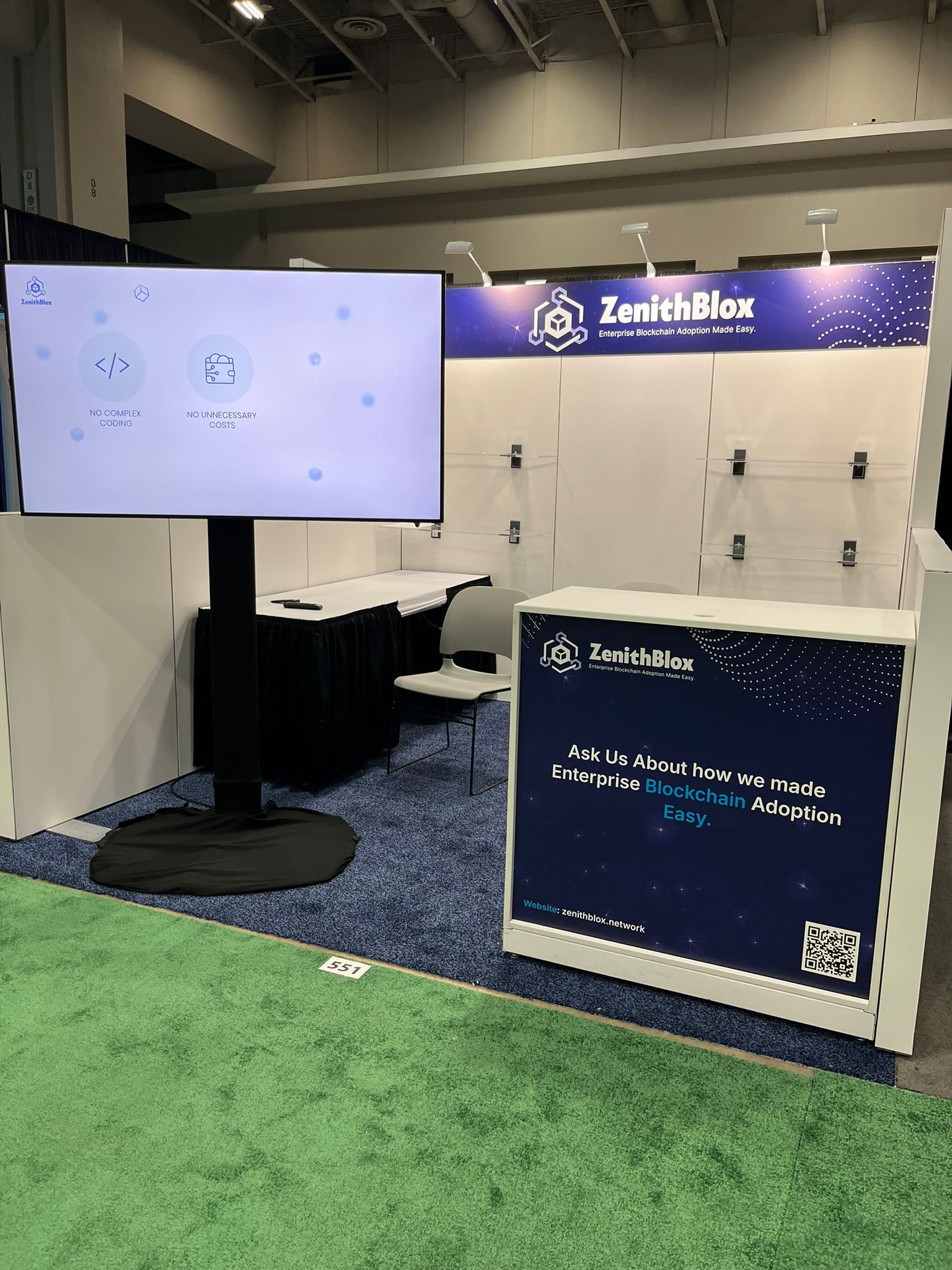
✨ ZenithBlox at Identity Week America ✨
We're excited to showcase how @zenithblox is making Blockchain adoption simple, secure, and compliant for enterprises, governments, and financial institutions.
Our all-in-one platform addresses the major blockers to enterprise Blockchain adoption—integration complexity, fragmented compliance, and legacy system challenges.
🔑 Key Highlights:
• BloxBlueprint: A no-code visual modeler for Blockchain workflows
• BPSC Compiler: Converts business processes into compliant smart contracts
• Universal Adapters: Plug-and-play connectors bridging Web2 and Web3
• FrontierBlox Engine: Real-time monitoring, policy enforcement, and fraud detection
At Identity Week America, we're showing why solving the "toolkit problem" is essential to accelerating Blockchain adoption in finance.
👉 If you're attending, connect with us!
#ZenithBlox #BlockchainIntegration #Compliance #IdentityWeekAmerica #Web3
🌐 ZenithBlox: The No-Code Bridge to a $75.7B Compliant Digital Economy
Despite billions invested, 90% of blockchain pilots fail. The “Blockchain Adoption Gap” is the most significant barrier to enterprise adoption, representing a multi-billion-dollar opportunity.
At @zenithblox , we’re solving this with a no-code, compliance-first platform that makes blockchain practical, secure, and scalable for financial institutions, enterprises, and governments.
🔎 The Problem: The Toolkit Problem
1️⃣ Costly Development – Scarce developer talent + custom builds = months of delays.
2️⃣ Fragmented Compliance – AML, KYC, GDPR: a global minefield with no automation.
3️⃣ Complex Integration – Legacy systems like SWIFT, SAP, Salesforce don’t “speak blockchain.”
⚡ The Solution: A Unified Platform
• BloxBlueprint – Visual modeling (BPMN 2.0) for blockchain workflows.
• BPSC Compiler – Converts models into executable, compliance-ready smart contracts.
• Universal Adapters – Plug-and-play connectors bridging Web2 and Web3.
• FrontierBlox Engine – Real-time monitoring, fraud detection, and policy enforcement.
👉 Result: Transforming blockchain adoption from months of custom dev into a deployment measured in weeks.
💡 Why It Matters
ZenithBlox isn’t competing with blockchain protocols—we’re the application layer that makes them usable, compliant, and enterprise-ready. If blockchains are the highways, ZenithBlox provides the on-ramps, vehicles, and navigation systems.
🚀 We are now seeking strategic partners and investors to accelerate our go-to-market, scale our team, and onboard our first customer cohort.
For those looking to back the next wave of FinTech transformation, ZenithBlox is making enterprise blockchain adoption a reality.
#Blockchain #FinTech #Innovation #Compliance #NoCode #ZenithBlox

Modernize without disruption.
@ZenithBlox bridges legacy systems (SAP, Temenos, SWIFT) to Web3—no rewrites, no downtime, no compliance chaos.
- Real-time data flow
- Multi-chain support
- Go live in days
Evolve, don’t replace.
#Web3 #BlockchainIntegration #Fintech

🚨 90% of enterprise blockchain pilots fail. Why? Broken architecture.
At @zenithblox , we fix the problem. We built an end-to-end platform for production from day one.
✅ No-Code Smart Contracts
✅ Plug-and-Play Integration
✅ Compliance by Design
Don't let your ambition stall in the lab. Move from pilot to production with confidence. 🚀
#Blockchain #EnterpriseBlockchain #Web3 #NoCode #Fintech #DevOps #ZenithBlox

Still managing international trade with stacks of paper? 🚢📄 That ends now.
@zenithblox + TradeTrust(@IMDAsg ) = Seamless. Scalable. Legally robust.
We're using blockchain to transform trade docs into digital originals.
❌ Paper delays, fraud
✅ NFT-based e-Bills of Lading
✅ Plug-and-play interoperability with systems you already use
✅ Built-in regulatory compliance
The upgrade global trade has been waiting for is here. Let's talk.
#TradeTrust #ZenithBlox #DigitalTrade #Blockchain #SupplyChain #Compliance #Fintech

Still hand-coding smart contracts? That’s legacy.
At @ZenithBlox, we turn BPMN workflows into production-grade smart contracts—no code needed.
✅ Drag. Drop. Deploy.
✅ Built-in compliance
✅ Multi-chain support
#Web3 #NoCode #SmartContracts #BPMN #BlockchainForBusiness
