

Advancing the understanding, appreciation, & protection of the environment through community-based natural science education & research.
Vermont, USA
Joined February 2019
- Tweets458
- Following380
- Followers145
- Likes433


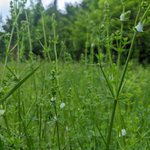


“In any environment, both the degree of inventiveness and creativity, and the possibility of discovery, are directly proportional to the number and kind of variables in it.” – Simon Nicholson: The Theory of Loose Parts, 1971
fwni.org/2023/08/23/loose-pa…
#fwni #fourwinds #nearbynature
Four Winds artist-naturalist-educator, Susan Sawyer, shares her observations on vines this summer. Read more in this week's FWNI blog post.
fwni.org/2023/08/09/notes-on…
#fwni #fourwindsnatureinstitute #fourwinds #nearbynature – at Vermont, USA

Follow a glittering slimy trail, past munched mushrooms, through shaded corridors, under rotting logs, and you might find a creature that has been oozing around Earth for 40-50 million years – a slug or snail!
fwni.org/2023/07/26/snails-s…
#fwni #fourwindsnatureinstitute #fourwinds – at Vermont, USA

National @Moth_Week starts this Saturday! Curious to see how many different species of moths are living around you? Learn more by reading this week's FWNI blog post.
fwni.org/2023/07/19/mothing/
#fwni #fourwindsnatureinstitute #fourwinds #nearbynature #mothweek – at Vermont, USA

Our hearts are in every community, home, and natural area experiencing damage from floodwaters. The power of water is humbling and cannot be underestimated. We are here alongside you to rebuild, restore, and regrow.💚
#vermontstrong #vermontflooding #vermont #fwni – at Vermont, USA


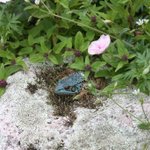
A blue frog in Vermont!? This frog has a pointed snout and ridges extending down the body like that of a green frog, but this frog is blue! What is it? Find out on our blog this week. 📸 Barbara Slaiby
fwni.org/2023/07/05/natural-…
#fwni #fourwinds #naturalhistorymystery – at Vermont, USA

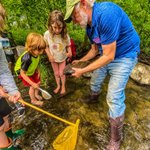
“Their excitement to get into the brook and overturn stones in search of mayfly, stonefly, and caddisfly larvae was so much fun to be a part of,” shared Four Winds volunteer Chapin Kaynor. Read more on our blog.
fwni.org/2023/06/28/creating…
#fwni #fourwindsvolunteer

Join us at the @JerichoLibrary on 6/22 for a special Outdoor Playgroup!
#naturebasedplay #outdoorplaygroup #fourwindsnatureinstitute #fwni – at Jericho, VT

Who’s been spitting in the field? Stick your fingers into the frothy mass (or read this week's FWNI blog post) to find out!
fwni.org/2023/06/07/natural-…
#fwni #fourwindsnatureinstitute #fourwinds #nearbynature #naturalhistorymystery – at Vermont, USA


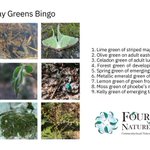
May dazzles us with innumerable tones of green. How many different greens can you find this May? Here’s a bingo board with a sampling of green shades to be on the lookout for!
Get your own bingo card here: fwni.org/2023/05/10/may-gree…

Get ready for spring outdoor play! Join us for a free discussion series to explore topics and best practices in supporting nature-based play and adventure while nurturing a sense of wonder, place, and well-being. Details here: fb.me/e/17EWn7UBE

There is a new Natural History Mystery over on our blog!
What could this possibly be?? 🤔❓
fwni.org/news/

I love telling the students, “I wonder?”
-Katie Scanlon, Four Winds volunteer for Hanover Street School in Lebanon, NH
Read more of Katie's experience with wonder and curiosity here: fwni.org/news/

We hope you had a chance to read our newest blog post! It contains some great ideas for getting your littlest explorer outside.
Read the blog post here: fwni.org/news/

This week's blog posts has lots of great tips and tricks for getting babies outside. Jill Oudman gives us all the gentle reminder that "You can start small. Nature is right outside your door."🌱
👉 Read the full blog post here: fwni.org/news/

Mud kitchens can be as simple or complex as you would like.
We often use an old muffin tin, empty maple syrup jug, broken whisk, mixing bowl (with a small hole), tin pie plate, and various measuring cups and spoons. They made soup, muffins, cake & more. Yum!

☁️Cloud watching is the perfect summer activity for any age and it has so many benefits!
Watching clouds encourages:
*Relaxation
*A time to connect with nature
*Enhance imagination
*Focus
Will you take a moment to pause and watch the clouds go by this summer?

Bunchberry
When large pollinators land on these flowers, the petals spring open. The stamens then catapult pollen more than ten times the height of the flower!
Try gently touching your fingers to the closed flower petals to see this explosive pollination strategy for yourself!


