
vc at @sparkcapital past: head of product at @openai; co-founder/ceo of an AI startup that was acquired by Airbnb
Joined December 2006
- Tweets336
- Following276
- Followers14.2K
- Likes5.7K







Instruction Following was critical to us at @OpenAI making AI useful for humans. @CompleteSkeptic was a force on the research side, ensuring it was a good product. When he left to focus on machine-native intelligence, with @EGafni and @hackgoofer, we at @sparkcapital needed to be involved.
What they've done in the two+ years since is remarkable and the response from the community these past 24 hours reminds me of July 2020, when we first introduced GPT-3 in the API. So much beauty and creativity already from this new primitive. I'm excited to see all that is built on it.

After co-inventing ChatGPT, I kept asking myself: why have superhuman chat models not led to AGI?
I’ve spent the last 2 years in stealth building a new way to train models (RLCD), and a new type of frontier AI model that we are releasing today: Jev
• 20-200x faster
• 40-400x cheaper (w/ output tokens free)
• Frontier composable intelligence optimized for decisions
AFAICT the shortest path to AI-based economic revolution
2
34
4,093
Embodied foundation models are few shot learners

Most AI-in-pharma stories are about going faster. Profluent and Lilly's partnership is a scientific moonshot -- using AI to design large-scale DNA editors for genetic diseases where one-mutation fixes don't work, reaching patients conventional approaches can't

AI has two modes in drug discovery. Accelerate: moving faster through the existing playbook. Unlock: opening frontiers that weren't possible before.
Excited to announce Profluent is partnering with Eli Lilly, the global pharma powerhouse, to unlock breakthrough medicines for patients.
It's a big deal beyond the numbers ($2.25B + royalties): we’ll get to use our frontier AI models and foundational datasets to design proteins focused on large gene insertion, a therapeutic moonshot.
Proteins govern almost everything in biology. We've built a generalizable AI platform to design all proteins. Onward!
1
9
1,901
There's enough evidence now that it's all going to work just like LLMs.
"Will it work?" is the wrong question. "How fast?" and "How to do it faster?" become the questions.

Scale is all you need (again). Generalist has pretrained a robotics foundation model from scratch, scaled it up, and it's all working as you'd expect if you truly believe in the scaling hypothesis
The scaling laws they showed previously continue to hold. New capabilities emerge at scale. Some capabilities cross a threshold and are now commercially deployable
generalistai.com/blog/apr-02…
I’m a daily user of Poke. This type of product — a helpful personal assistant, universally available via messaging — will be one of the most important products of this era.
Text is the universal interface. It’s intuitive, without a learning curve. And while a button can only do what a button says, a text box can do anything the user can articulate. There’s a reason why over the history of the consumer internet only two UI paradigms have reached a billion-user scale: the media feed and the chat interface
Poke.com - now available for everyone


Starting today, personal superintelligence is just one tap away.
No download, no signup.
Text Poke for free now:
Poke.com 🌴
—
0:00 – What's Poke?
0:50 – Introducing Poke Recipes
1:25 – Create a Recipe in 10 seconds
1:43 – Earn on Poke
2:44 – Build with npx poke
12:58 – Recap
13:36 – Parisian Love
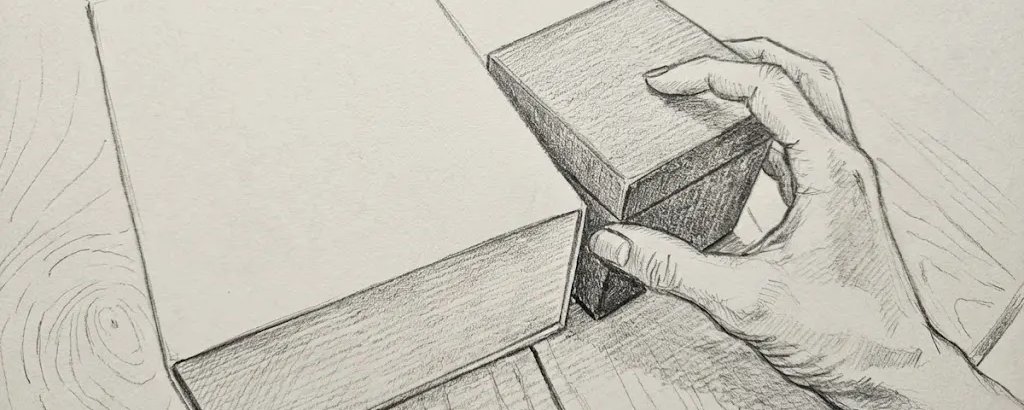
Little nudges, adjustments, and taps... human intuition that helps us get things done when working with our hands.
@GeneralistAI is showing emergent behavior where the model starts to react, correct, and recover in real-time. Weirdly human to see.

"Any task that frontier AI can sort of do today, it’ll likely be able to do reliably one year from now" applies to biology, too, suggesting a remarkably optimistic future.
We at @sparkcapital are thrilled to continue to support Ali and the amazing team at @ProfluentBio
We've raised $106M from @AltimeterCap @JeffBezos @sparkcapital @insightpartners @airstreet. The number is a green light to push harder.
AI provides a credible path to design biology with precision and control. This will yield an age of abundance in curing disease and beyond.
1
3
1,220
Empire of AI by @_karenhao is by far the most accurate telling of the era when I was at OpenAI, which was an important few years – from the first commercial step to shortly after the launch of ChatGPT.
There is one important piece that is incorrect: the portrayal of @sama
He’s presented as some machiavellian and reckless leader and the facts don’t support that.
I joined OpenAI when we were about 100 people and purely a research lab. As head of product, I helped transition OpenAI from a research org to one deploying our research as products. During this time a number of large and complex decisions were worked through. There were no easy and obvious solutions to any of these and many of these decisions were seemingly at odds with past decisions.
Complex situations often look very different to people and there were dynamics at OpenAI during this time that made everything more challenging – from the org’s structure to philosophical belief structures and much in between.
The weirdness of OpenAI at this time appealed to me – the unusual structure felt like it created space for something different and the differing beliefs (while exhausting at times) felt necessary for navigating genuinely novel territory.
But that same weirdness created real tensions as we worked through three major challenges. First, the Microsoft partnership: how do we take billions from a tech giant without compromising independence and our mission? Second, productization: how do we go from a research lab to shipping products without abandoning our original purpose? Third, deployment: how do we deploy AI research fast enough to matter while being careful enough to be responsible?
In the moment, none of these had obvious answers. The right path forward was uncertain, and reasonable people disagreed – often strongly – about what we should do. Led by Sam, we worked through each of these tensions carefully and deliberately. With the fullness of time and the ability to see how things actually played out, I believe the evidence shows we reached the right decisions on all three.
When negotiating the early Microsoft deal the entire term sheet was shared with everyone at the org. We’d add questions and comments and then Sam would host an endless meeting where we’d talk through the questions, discuss the spirit of what we cared about, gather feedback on what missed the mark, etc. Each iteration of the term sheet, month after month, progressed like this. Some opposed the partnership, but their voices were always heard and attempts to address their concerns were made. In hindsight, a deal of this sort was required – there was no other viable path – but Sam ensured that our independence and our mission were preserved while spending time working through everyone’s concerns.
The first product roadmap spent considerable time articulating why shipping product supported our mission and how we could do so safely. I spent significant time working through my colleagues’ concerns about productization because getting buy-in across the org on the why was essential to doing it right. With Sam’s full support, we consistently slowed down our product work and made decisions that hurt our business and metrics. We refused to allow entire use-cases we felt we couldn’t handle responsibly. We learned what was required – technically and operationally – to comfortably support select use-cases and prioritized that work. We fired some of our biggest customers because we were concerned about misuse. We didn’t get everything right during this era, but we did an excellent job identifying, sizing, and mitigating risk while building one of the most widely-used products in history. This wasn’t luck, it was the result of the deliberate, sometimes frustrating culture Sam insisted we work through.
On deployment, many of us believed that deployment was essential to the safety strategy (not separate and something to fear). Learning to deploy the research responsibly would require practice, and the time to practice was when the stakes were lowest. And so we embraced an iterative deployment strategy. While other labs struggled with misuse and PR crises, we consistently deployed without major incidents and we learned and improved with each model release. We all understood that being able to shape the norms and standards of AI was critical to our mission. Sam argued that writing policy memos could only go so far and we’d be in a much stronger position to define norms aligned with our values if we were consistently the first to deploy responsibly. His argument proved more correct than many of us realized at the time.
One question I’ve reflected on a lot is why brilliant, well-intentioned people have such different views of this era and Sam’s leadership. I have respect for many who have framed Sam’s leadership negatively, and count many of them as friends, and so it’s somewhat uncomfortable to share my conclusion. Over the years, when I’ve listened to people share examples of what they saw as problematic behavior, I’ve noticed that it often traces back to one of these dynamics: someone who lost an internal debate and attributed it to bad faith rather than legitimate disagreement; someone who struggled to accept that complex situations made previous plans untenable; someone unfamiliar with how large organizations with multiple stakeholders actually function; or someone who pursued power and lost.
I don’t say this to dismiss the substance of these perspectives – the concerns about Microsoft, productization, and deployment were real. But I think these underlying dynamics shaped how people interpreted complex, ambiguous situations. When I joined I was told we’d only ever be 200 people. For reasons I understood, we had to abandon this idea. I didn’t feel lied to or misled. I understood we were navigating novel territory where plans had to evolve. Not everyone experienced it that way, and I understand why. But those different experiences don’t mean Sam was acting in bad faith. With several years of distance, I believe the major decisions from that era have held up remarkably well. That doesn't mean we got everything right or that the concerns weren't legitimate – but it does suggest Sam was navigating these tensions with more wisdom than many give him credit for.
"These models, they just want to learn"
Introducing GEN-0, our latest 10B+ foundation model for robots
⏱️ built on Harmonic Reasoning, new architecture that can think & act seamlessly
📈 strong scaling laws: more pretraining & model size = better
🌍 unprecedented corpus of 270,000+ hrs of dexterous data
Read more 👇
5
2,770
Am a collector


After a formative time at OpenAI, I’m launching Maison AGI (@maisonagi), a fashion house creating cultural artifacts for the AI era.
Our first collection, Relic of Thought, is a collaboration with Ilya Sutskever (@ilyasut), featuring his original artworks alongside a signature hat modeled after his iconic head. It is a study in conviction and the clarity of vision that gives thought its form.
I believe we're living through something extraordinary that deserves to be remembered. Not in research papers or technical model cards, but in tangible objects we can hold, wear, and pass down.
Working alongside some of the world's brilliant researchers building Claude and ChatGPT, I've come to realize they are among the most creative minds alive. Research, at its best, is an act of imagination: the ability to glimpse what doesn't yet exist and then build toward it. Many of them remain unseen, even as their work quietly reshapes our future.
Though AGI progress can feel incomprehensible from the outside, its story is deeply human - full of curiosity, conviction, and creation. We're bridging that world with the creatives who give form to ideas.
This may be humanity's last time to create a hand-crafted project before what we build surpasses us. Each collection is also a message to superintelligence itself: that we cared, and that we tried to make beauty out of understanding.
6
1,577

Ali and team at @ProfluentBio release ProGen3, showing:
1. scaling laws for generating biology with AI
2. emergent capabilities as models scale
3. single-shot design of antibodies for 20 drugs that have $660B in sales
4. design of a compact gene editor
The same trajectory that took us from GPT-2 to ChatGPT is playing out in robotics and biology:
Era 1: it's a toy, easily dismissible
Era 2: starts to become useful, not valuable
Era 3: useful, starts to become valuable
Era 4: valuable
In a decade marginal cost of labor for many tasks will be zero, AI-designed molecules will cure many diseases
We just need the data


"These models, they just wanna learn"
Whether letters, code, amino acids, or robotic controls, a token is a token. And with scale, it's all going to work

2
5
3,649
I’m thrilled to share that Spark Capital is co-leading a $22m investment in @elicitorg
Today, Elicit’s AI Research Assistant automates the ability to understand what is known. We are excited for a world where Elicit automates the scientific method
More in the thread below
@stuhlmueller and @jungofthewon, cofounders of Elicit, are building an exceptionally talented, mission-driven team focused on radically increasing good reasoning in the world
1
7
870

