

Statistical modeling, Bayesian inference, causal effect estimation, hierarchical structures; FMRI data analysis; classical music; jogging; reading; meandering
Joined March 2010
- Tweets516
- Following233
- Followers760
- Likes3.1K







Does the brain really favor a particular threshold of statistical evidence, or should one just let the statistical tail wag the science dog?
Why not show the continuity of fMRI results rather than drawing an arbitrary line? More information, greater transparency/reproducibility.

Have you ever felt like something was missing from your #fmri results? Have you worried about reproducibility issues?
This new @natmethods.nature.com article with 40+ coauthors shows how the simple change to transparent thresholds helps both. Go Figure! rdcu.be/B4tikBETdQZa
Data only shows associations, not mechanisms. To move toward causation, we need a Rosetta Stone of prior knowledge and theory. Resting-state fMRI is observational; correlation is largely its currency. From this, plenty of "theoretical toys" about brain function can be built...

Resting-State fMRI and the Risk of Overinterpretation: Noise, Mechanisms, and a Missing Rosetta Stone biorxiv.org/content/10.1101/… #biorxiv_neursci

Gang Chen retweeted

Maybe slightly odd timing, but we'd like to announce:
A new AFNI Bootcamp for FMRI/MRI, Jan 29-31, 2025. This part will focus on group analysis, statistics, surface analyses, results reporting and more.
This event will be virtual. Please see here:
discuss.afni.nimh.nih.gov/t/…

Programming: where failure lurks around every corner, and debugging feels like trudging through a minefield. Yet, there's magic in the madness—when the code finally works and offers a generic solution, it's like wielding a Swiss Army knife with a triumphant smile.
6
296
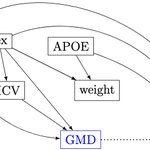
Science is about uncovering how causes create effects. Covariate selection may seem like a small step in model building—but it can spark big chaos if mishandled. Glad to share the lesson we learned: don’t let your model wag the science; let science lead the way in model building.

Chen et al. present an exploration of causal inference principles to guide experimental design, model-building, and result interpretation: doi.org/10.52294/001c.124817
@gangchen6 @afni_pt @mallarchkrvrty1 @fMRI_today @OHBM

Gang Chen retweeted
Pleased to announce an AFNI Bootcamp Oct 28-30. It will be virtual, see here:
discuss.afni.nimh.nih.gov/t/…
This is Part 1 of the typical course. It will cover FMRI visualization and single subject processing, including discussions of alignment, templates, ROIs and quality control.
Ever noticed how neuroimaging papers love flaunting t, Z, or p values with color bars and tables but rarely show actual effect magnitudes? It’s like physicists talking about the speed of light and just giving a p-value—great for keeping things mysterious! ln.run/snpmf

Can't resist the siren call of cluster boundaries? Small regions in multiple comparison adjustments get penalized for their size, even with comparable or larger effects. This raises a neurological justice issue: Is such outright discrimination justifiable? ln.run/snpmf
Was the lack of stringency in multiple comparison adjustment a "cluster failure" in neuroimaging, or just a challenge in recognizing data hierarchies? Perhaps slapping a Band-Aid on a multiplicity wound post hoc isn't as efficient as proactive modeling! ln.run/snpmf

How correct are the common methods for multiple comparisons in neuroimaging? Contrary to popular claims, could stringent thresholding be causing more reproducibility problems than flexible pipelines? The NARPS project might have just spilled the beans! ln.run/snpmf
2
614
How correct are the common methods for multiple comparisons in neuroimaging? Contrary to popular claims, could stringent thresholding be causing more reproducibility problems than flexible pipelines? The NARPS project might have just spilled the beans! ln.run/snpmf
Multiple comparisons in neuroimaging are like an uninvited party crasher who overstays! Are we just depleting our arsenal of methodological treats? Is this intense focus on rigor in one particular aspect causing the field to miss the forest for the trees? ln.run/snpmf
Multiple comparisons in neuroimaging are like an uninvited party crasher who overstays! Are we just depleting our arsenal of methodological treats? Is this intense focus on rigor in one particular aspect causing the field to miss the forest for the trees? ln.run/snpmf


Is the intention to "control" a variable sufficient justification for including a covariate in neuroimaging data analysis? Not really. Discover why and learn about proper covariate selection at poster #1887 #OHBM2024 discuss.afni.nimh.nih.gov/t/…
Why is result reporting so crucial in neuroimaging? Explore how it impacts scientific integrity and reproducibility discuss.afni.nimh.nih.gov/t/…
Gang Chen retweeted
Started in 2006 for generating FMRI processing pipelines, AFNI's afni_proc.py has never had a methods paper describing it in detail.
Until now: arxiv.org/abs/2406.05248
A brief 🧵.

Gang Chen retweeted

(1/5) The final version of our review on approaches to #subthreshold effects in #fMRI is now available in Clin Neuroradiol: doi.org/10.1007/s00062-024-0…. Briefly, we introduce the risk of selective interpretation of #neuroimaging maps, potentially leading to a localizationist #bias...
