

We study non-genetic mechanisms of cell-to-cell variation in cancer and development. Clinical practice in molecular diagnostics.
Yale University
Joined March 2019
- Tweets45
- Following215
- Followers172
- Likes242




Garg Lab retweeted

Congratulations to 3 physician-scientists at Yale for receiving research grants from @AmericanCancer!
▪️Mark Lee, MD, PhD @Yale_LabMed, a Yosemite-ACS Award
▪️Benjamin Lu, PhD, Clinician Scientist Development Grant
▪️Salil Garg, MD, PhD @garg_lab, a Discovery Boost Grant
bit.ly/4sgqiht
@SmilowCancer @YaleMed @YNHH

Deeply honored for our laboratory to receive a NIH Director's New Innovator Award from @NIH_CommonFund. Delighted to see what we can learn about the origins of heterogeneity in cell systems over the coming years! #NIHHighRisk

Garg Lab retweeted
Congratulations to Dr. Timothy Robinson, @kenleonloh, @garg_lab, and @MonicaValero16, recipients of 2024 ACS-IRG Pilot Grants.
@SmilowCancer @YaleMed @YNHH @americancancer

Garg Lab retweeted

Lab Med had a wonderful visit with Heidi @Yale PD's service dog 🐕🦺 Big thanks to Heidi's handler Officer Rich Simons who was eager to share Heidi with us! Check out our #SmilesForMiles😃
Go fetch Heidi & Officer Simons by following #OfcHeidi_YalePd on Instagram.


Garg Lab retweeted
Our Genetics, Genomics, and Epigenetics Program welcomes Dr. Salil Garg @garg_lab, as Assistant Professor of Laboratory Medicine and Pathology. @Yale_LabMed @yalepathology @SmilowCancer @YaleMed @YNHH

Very honored to receive a Charles Hood Foundation Child Health Award! We will be working on discovering the developmental origins of pediatric tumors, and using this information for diagnosis.
charleshoodfoundation.org/po…
Garg Lab retweeted

In the November issue—
Developmental Deconvolution for Classification of Cancer Origin, by Moiso, @garg_lab et al.
bit.ly/3AjLpHN
@MIT @kochinstitute @broadinstitute @MGHPathology #cancerofunknownprimary

Interested in non-genetic heterogeneity in development and cancer? Garg lab (garglab.org) is recruiting at multiple academic levels! (please RT) @Yale_LabMed @YaleRNA
Postdoctoral associate info here: postdocs.yale.edu/postdoctor…
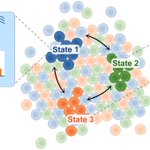
Happy to share our latest, online @MolecularCell. In order to form different cell types, stem cell systems need to drive cell-to-cell variation in gene expression. But do the instructions always come from outside the cell, or can they be self-encoded? If so, how? (1/10)

Online Now: Transcription factor antagonism regulates heterogeneity in embryonic stem cell states dlvr.it/ScVpLB
The work was led by @HarvardMITmdphd student Sofia Hu working alongside many other members of @garg_lab and a great team, including collaborators Abhyudai Singh, Jacqueline Lees, and @DigbijayMahat. @YaleRNA, @Yale_LabMed (10/10)
Also want to (belatedly) share this piece on our work from Bendta Schroeder @kochinstitute and @MIT news:
news.mit.edu/2022/using-mach…
Bendta explains the findings more clearly than I could:
Love this commentary piece on our recent study by @IamLinghua @MDAndersonNews in @CD_AACR:
doi.org/10.1158/2159-8290.CD…
Lays out the future challenges and opportunities really well!
