

Por aquí encontrarás matemáticas, actualidad, deportes y a veces cosas graciosas...Porque todo tiende a infinito...
Puertollano, España
Joined May 2009
- Tweets55.1K
- Following1K
- Followers34.8K
- Likes670






Pinned Tweet
Hoy es un día muy especial para mí: Gaussianos cumple ¡¡20 años!! Mira la cifra y casi que no me lo creo...
He escrito una entrada en la que, entre otras cosas, hablo un poco de todas las épocas por las que ha pasado Gaussianos y algo de su futuro gaussianos.com/gaussianos-cu…


Totalmente de acuerdo con @GonZalocla 👏

It was nice to be in Madrid last Wednesday and meet a lot of people in the award ceremony of the Spanish Math Society (RSME) & the BBVA Foundation.
I had to give a short speech and (of course) I talked about AI & Math. I share that part here:
" I believe we are living through the greatest transformation in the history of mathematics, greater even than the axiomatization of the late 19th and early 20th centuries. We mathematicians, and society as a whole, must ask ourselves what the value of human understanding is now that a machine can prove theorems that humans cannot. This is an open debate.
My view is that we don't do mathematics to know the answer, but to understand it. For a mathematician, being convinced that a statement is true is not enough. We need a proof because the proof allows us to understand. And that understanding is what mathematics contributes to other sciences and, ultimately, to society. Today we must stand up for that goal. A future where the human role is to understand and pass on what machines discover may sound sad; but a future where we could not even understand those discoveries would be far sadder and more dangerous.
All of this forces us to rethink part of our identity. We are mathematicians, in part, because we are good at proving theorems. That has been a large part of our motivation and of our contribution to society; it has earned us the recognition of our colleagues, it has given us joys and sorrows and, for those of us here today, it has won us a prize. That source of motivation is coming to an end. But I want to focus on another great source of motivation for me: curiosity. I am a mathematician because I want to understand, and because I want to teach what I understand. My ego cares whether a theorem is mine or the AI's. My curiosity doesn't care: my curiosity wants to know, and makes me ask new questions. And that is why I believe that, in this new era of mathematics, we need less ego and more curiosity. "
gaussianos retweeted

It was nice to be in Madrid last Wednesday and meet a lot of people in the award ceremony of the Spanish Math Society (RSME) & the BBVA Foundation.
I had to give a short speech and (of course) I talked about AI & Math. I share that part here:
" I believe we are living through the greatest transformation in the history of mathematics, greater even than the axiomatization of the late 19th and early 20th centuries. We mathematicians, and society as a whole, must ask ourselves what the value of human understanding is now that a machine can prove theorems that humans cannot. This is an open debate.
My view is that we don't do mathematics to know the answer, but to understand it. For a mathematician, being convinced that a statement is true is not enough. We need a proof because the proof allows us to understand. And that understanding is what mathematics contributes to other sciences and, ultimately, to society. Today we must stand up for that goal. A future where the human role is to understand and pass on what machines discover may sound sad; but a future where we could not even understand those discoveries would be far sadder and more dangerous.
All of this forces us to rethink part of our identity. We are mathematicians, in part, because we are good at proving theorems. That has been a large part of our motivation and of our contribution to society; it has earned us the recognition of our colleagues, it has given us joys and sorrows and, for those of us here today, it has won us a prize. That source of motivation is coming to an end. But I want to focus on another great source of motivation for me: curiosity. I am a mathematician because I want to understand, and because I want to teach what I understand. My ego cares whether a theorem is mine or the AI's. My curiosity doesn't care: my curiosity wants to know, and makes me ask new questions. And that is why I believe that, in this new era of mathematics, we need less ego and more curiosity. "

Recoge el premio Vicent Caselles Gonzalo Cao Labora @GonZalocla (@EPFL) por sus contribuciones al estudio de las singularidades en los fluidos compresibles como el aire #PremiosMatemáticas

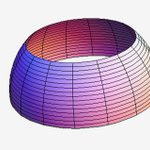
Segunda parte de la revisita al problema de las 3 casas y los 3 suministros. Hoy, resolvemos el problema de las 3 casas y los n suministros en un toro para todos los valores de n. Muchas gracias a @sam10rc por la demostración y por los gráficos 🤗 gaussianos.com/el-problema-d…

Si tenéis un rato que queráis llenar dándole un poco al coco, aquí tenéis "Abako": reto diario tipo la prueba de cifras de "Cifras y Letras", cálculo mental que te da tu "elo" y alguna cosilla más. Entretenido 😉 abako.games/

gaussianos retweeted

El problema de las tres casas y los cuatro suministros en un toro, resuelto por Vicente Muñoz (UCM). @gaussianos gaussianos.com/el-problema-d…

El problema clásico de conectar 3 casas con 3 suministros no tiene solución...en un plano, pero sí la tiene en un toro. ¿Y si le añadimos un suministro más? Ése fue el problema planteado por Vicente Muñoz y aquí tenéis la respuesta gaussianos.com/el-problema-d…


¡Ya hay ganadores de los sorteos del 20 aniv de Gaussianos! Son @sam10rc, @titlopez, lagf_21 (IG) y Sive (gran comentarista del blog). Samuel ya tiene su libro; el resto, lo tendrán pronto. ¡Enhorabuena a los 4 y muchas gracias a todos por participar! 🤗 gaussianos.com/ganadores-de-…


Un problema sobre primos y compuestos realmente curioso. Merece la pena pensarlo antes de mirar la solución (que, por si acaso, está en los comentarios 😉) gaussianos.com/mezclando-pri…

Una explicación de por qué el famoso problema de las tres casas y los tres suministros no tiene solución: los grafos de Kuratowski gaussianos.com/grafos-de-kur…

gaussianos retweeted

Un #ejemplotop de #matemáticas.

¿Sabes cómo calcular el volumen de la figura que representa una cuenta de un collar? ¿Y cómo es el volumen comparado de dos cuentas de collar de distintos tamaños? Pues ocurre que, si ambas tienen la misma altura, los volúmenes son iguales. Echa un ojo gaussianos.com/sorpresa-calc…

gaussianos retweeted

Triángulo a partir de la división en tres partes de un segmento. En este applet se simular y ver como calcular la probabilidad.
ilarrosa.github.io/GeoGebra/…
¿Sabes cómo calcular el volumen de la figura que representa una cuenta de un collar? ¿Y cómo es el volumen comparado de dos cuentas de collar de distintos tamaños? Pues ocurre que, si ambas tienen la misma altura, los volúmenes son iguales. Echa un ojo gaussianos.com/sorpresa-calc…
gaussianos retweeted
Un #ejemplotop de #matemáticas.
Un problema que ya puede considerarse clásico es el cálculo de la probabilidad de que se pueda formar un triángulo con los tres trozos obtenidos rompiendo un palo por dos puntos escogidos al azar. De ello hablo hoy en el blog gaussianos.com/es-sencillo-p…

Un problema que ya puede considerarse clásico es el cálculo de la probabilidad de que se pueda formar un triángulo con los tres trozos obtenidos rompiendo un palo por dos puntos escogidos al azar. De ello hablo hoy en el blog gaussianos.com/es-sencillo-p…
Un bonito problema relacionado con los divisores de los números naturales gaussianos.com/el-problema-d…

gaussianos retweeted
¿Es el infinito un concepto que solo existe en matemáticas? theconversation.com/es-el-in… Mi última colaboración con @Conversation_E (cc @unisevilla)

