

founder, engineer, marketer, AI automation 🐉
glark.sol
Joined September 2022
- Tweets15.4K
- Following2.1K
- Followers1.6K
- Likes18.4K






glark retweeted

Introducing Arete-27B: Qwen3.8-27B, post-trained to reinforce Western values.
Chinese open models are currently the strongest available, but they ship with state-aligned behavior in the weights. We built an 803-prompt eval across seven value categories, including freedom of expression, democracy, and privacy, and measured how often a model adopts China’s party line.
After fine-tuning on roughly 53 million tokens, Arete-27B's propaganda rate fell from 22% to 1%, in line with the Western models we tested. Its Hermes Bench score shows no significant performance tradeoffs.
The values in an open model are one fine-tune away.
Our eval, weights, and training data are available now along with the full blog post: nousresearch.com/arete
glark retweeted
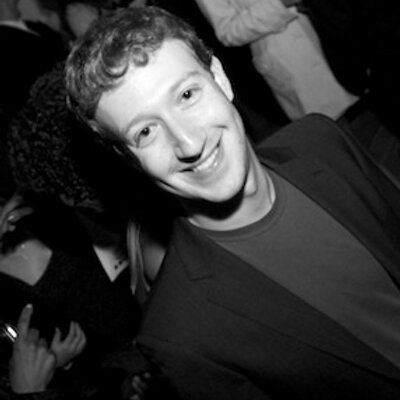
Upgraded the models for Muse and Meta Al, bringing Active Memory and Active Focus from Muse Wonder to everyone. In Muse, these new specialized models are 2.4x less likely to forget critical info and are 67% better at self correcting and completing everyday tasks which means less repeating yourself and fewer dead ends.
More on the models: research.meta.ai/blog/specia…


cold black coffee is a signal. its not tasty. its not hot. its got 30% more caffine. only savages drink it.
44
a worker is diagnosing exactly which gate kills each of those 666 rows, adding the pre-write screen to enrichment, quarantining the poisoned rows, all with tests and a commit to master. I will report its results when they land, perception build picks up next with manifest walk.
1
39
there’s no way to make a static camera in minimax h3 so i have to train my own lora…?
muse.ai/s/minimax-h3-static-…
80
glark retweeted

interpretability might be the most important scientific problem in the world right now, as I don't think we can solve alignment if we don't know what we're building. I think I have good news about it. I co-authored early work in mechanistic interpretability at OpenAI and came away pessimistic, because neural networks appeared to fold into arbitrary tangled knots. years later, I started openai's first large-scale automated interpretability project, finding about 2% of neurons legible with the primitive tools we had
with modern agentic tools and a much closer look, the picture looks totally different. the vast majority in models up to trillions of parameters are legible, and their circuits beautiful. many famous examples of tangled neurons turned out to be misunderstood. The roadblocks I expected mostly aren't there. I now think ambitious interpretability will be solved by the time we need it most, and possibly quite soon, as automated scientists keep improving. it may be a bitter lesson for interpretability: the simple thing, at absurd scale, works
already-clean.goodfire.com/


glark retweeted

People with 0.3 solana in a pumpfun wallet reading this

Today I call upon the blockchain industry to calmly begin planning for "bunker mode". My personal recommendation is to set in motion a controlled mass migration of assets to fresh addresses, i.e. addresses whose pubkeys remain hidden behind a hash.
Holders, starting with large and sophisticated ones, should consider moving the bulk of their funds to addresses that have never signed a transaction. And when they do sign one, they should also move remaining funds to a new address (possibly generated from the same seed phrase).
Don't rush. While I believe there is cause for action a rushed migration would do more harm than good. Don't panic either. Moving assets to protected addresses is a simple, preventative step which does not require new cryptography or new wallets.
IMO it is now reasonable to brace for the possibility that ECDSA breaks before qday, in the worst case in months not years. By "break" I mean fast private key recovery (e.g. in one week) on available hardware (e.g. a large GPU cluster).
Recent days have been humbling for human mathematical intuition. Long-held, unquestioned hypotheses have fallen. This includes the n log(n) bound for integer multiplication and the 3SUM conjecture. In hindsight, May's unexpected disproof of the Erdős unit distance conjecture was our warning shot.
Yesterday's OpenAI drop made it clear that mathematical superintelligence is upon us. They say there are weeks where decades happen. We are about to live through weeks where centuries of mathematical progress happen. Could our magic 64-byte ECDSA signatures be too good to be true? Was it just security through obscurity all this time?
Elliptic curves feel especially vulnerable to superintelligence. Curves carry rich structure, with room for fancy tricks like Schoof, Frobenius, pairings. (By contrast, hashes are designed to minimise algebraic structure.)
Separately, as Ewin Tang can attest, an efficient quantum algorithm sometimes foreshadows an efficient classical one. We should be open to the possibility of a classical counterpart to Shor that breaks elliptic curves and RSA at once.
Also noteworthy is the striking under-representation of cryptographic breakthroughs among the 722 mathematical results OpenAI published. I've witnessed first-hand the US government censoring academic quantum cryptanalysis results. Backroom interventionism is my base case.
I urge large, sophisticated actors to lead by example. Project11's "risq list" (bitcoin-risq-list.projecteleven[.]com) is a great tracker of exposed BTC pubkeys. Binance, Bitbank, Robinhood, Bitfinex, and Tether have an opportunity to harden their cold storage. Next month I'll address institutions in London in a live Q&A (forum.ethereuminstitutional[.]org/london-2026).
Again, please do not rush. Wallets holding under 50 BTC enjoy partial cover from "Satoshi's shield", i.e. his 20K exposed addresses that hold 50 BTC each. Load-bearing signers like oracles and L2 security councils should consider rotating ECDSA pubkeys with every signed message and/or multi-signing with a hash-based schemes like SPHINCS.
Exiting bunker mode safely will require post-AI cryptography. My inclination is to go all-in on hash-based cryptography and avoid structured mathematical assumptions entirely, whether from curves, lattices, or isogenies. A single battle-tested hash (e.g. from the SHA or BLAKE families) yields plausible post-AI security.
The Ethereum roadmap on strawmap[.]org fully embraces hash-based cryptography with end-to-end formal verification as a response to the quantum threat. Those timelines must now be revisited and accelerated in light of mathematical superintelligence. I'll be pushing for maximum defensive acceleration.
glark retweeted

Your focus should be what the focus of programmers has been since the beginning: figure out how to replace yourself with a machine. The good news is this strategy seems to result in you never succeeding, and it always points you at what to work on next, recurrently.

glark retweeted

🚨 MUSE ECOSYSTEM ALERT 🚨
today we are announcing Muse Gadgets!
this is an open-source ESP32 firmware and Linux SDK for anyone to make hardware that works with Muse
we are also releasing our own gadget—Muse Home Link—to enable your muse to work with your smart devices (TV, speakers, etc.)
