

gnowledge lab, home labs, phil of science, cognitive science, software freedom, Formerly Prof TIFR, Visiting Faculty IISER Pune https://teapaw.org/t.co/uVuwKUgI6u
Pune India
Joined July 2009
- Tweets6K
- Following724
- Followers1.1K
- Likes2.7K





NagarjunaG retweeted

The Gatherings in Biosemiotics comes to Asia for the first time. Join us at OIST in Okinawa, Japan, May 24–28, 2027, to explore signs and meaning in living systems. Abstracts due Jan 17, 2027. Call and poster: oist.jp/conference/biosemiot…

NagarjunaG retweeted

Had a wonderful conversation with Ram Ramaswamy
on Kosambi(s), their intellectual journey and the book...as part of Sakal Lit Fest at BORI, Pune


NagarjunaG retweeted

Microscopes have historically imaged organisms on a flat surface. You basically take some cells, put them under a coverslip, and image them. But cells in the wild don’t live like this; they move in 3D.
The Gravity Machine from Manu Prakash’s lab is such a brilliant way to solve this problem. It came out a few years ago, in 2020, but it really emphasizes this idea that discoveries are easier to make when we design our instruments in a way suited to observing them. This is basically a microscope that can record (marine) organisms moving in three dimensions. It looks like a car tire, with a water-filled channel running around its rim. You put your organism in the water and place the microscope on the side. As the organism swims up or down, the wheel rotates to compensate, keeping it in view.
The video below was taken with this Gravity Machine. It shows a single cell, Volvox aureus, swimming upwards. As it swims, the researchers flash a light, and you can see the cell rapidly shoot upwards. This is something we could never record with a normal microscope!
What else in biology are we missing because of poor measurement tools? (Apparently, for example, there are marine organisms that float up or down an entire kilometer as they are dividing.) I’ve seen 3D images of plant roots, but only after all the bacteria attached to them have been killed off. What if we could image the gut microbiome or an entire cube of dirt across space and time, without killing the organisms first?

NagarjunaG retweeted

Today in @Nature, we report a new approach to studying human brain development and modeling disease in vivo.
Human neural #assembloids and #organoids have opened new ways to study development in vitro, but they also have important limitations. Transplantation can provide a more physiological environment, yet human cortical cells then develop within a rodent brain that matures much faster, constraining their growth and integration.
To address some of these limitations and obtain more advanced functional readouts relevant to disease biology, we generated #apallial mice, in which ~98% of the cortex and hippocampus fail to form, creating space for transplanted human cortical organoids to grow and integrate extensively.
We call these #xenocortical mice (XCX).
Nearly 7 years in the making. Congratulations to an extraordinary team and wonderful collaborators!
Link to the article below 👇

NagarjunaG retweeted

Here it is - the official, revised, peer-reviewed version of my Platonic Space paper. mdpi.com/2409-9287/11/5/161 Of all the many unpopular positions I’ve taken over the decades - bitter controversies around the origin of left-right asymmetry in embryogenesis, bioelectricity and genetics, diverse intelligence, etc., this one has by far generated the most pushback: serious (grateful for those!) and energetic attempts to move me to other views, pleas to just drop it and not talk about it (for several different reasons), nasty emails and accusations, impacts on reviews of papers that have nothing to do with this, etc. Kind of amazing to me how incendiary this is. What can I say... Our job is to call it as we see it, and right now for me, this is it. Apologies to collaborators and colleagues for any shrapnel! Time will tell if this pans out or not; I've placed my bets. And btw, if you think this stuff is weird and uncomfortable, just wait… There’s much more on the way. The knob turns slowly but as long as the data keep coming, I'm going to say what I think it all means and follow it to the next steps it enables. Buckle up!

NagarjunaG retweeted

If you don’t know Michael Levin’s work, you should. One of the greatest thinkers of our time
He studies bioinformation & makes new living things such as Xenobots to understand how cells know what organ to make and when to stop growing 🫀🧠

NagarjunaG retweeted

We've been getting a lot of questions lately about how the Internet Archive digitizes books.
The short answer: page by page, by hand.
You may remember our viral 2021 video of Eliza Zhang scanning a book. That's still how we do it.
Meet Eliza, and learn how we scan books: blog.archive.org/2021/02/09/…
NagarjunaG retweeted
Remembering people who stood for science and scientific thinking....
link in comments section

NagarjunaG retweeted

The exceptional @drmichaellevin is all over the place today! I listened to him on @BBCRadio4 #Sideways this morning (bbc.co.uk/sounds/play/m002zg…) & then here he is in this rich portrait in @NYMag by @lizweil nymag.com/intelligencer/arti…

NagarjunaG retweeted

An artificial neural network built into a computer memory chip reconstructs the human cortex with high accuracy in real time.
Learn more in a new #SciencePerspective: scim.ag/4eLCqDQ

NagarjunaG retweeted

I’m Not in good shape but not so bad either...
Rather than asking me to break my fast please join me on 20th July... Peaceful March to the Parliament.
#cockroachjanataparty #jantarmantar #cjpprotest #chalosansad – at Delhi, India
NagarjunaG retweeted

The best “memory game” for older adults is not an app, it is telling the same stories out loud.
teapaw.org/FeelYouHappy/status/20…
NagarjunaG retweeted

Loving the open-access release of @MITPress's new volume on Dennett’s Real Patterns: direct.mit.edu/books/oa-edit…
It's the perfect primer for our forthcoming volume, "Embodied Intelligence" (out June 23rd!). 🧠
Once you explore how data structures and patterns define nature, join us to see how biological and artificial agents use those very architectures to navigate, sense, and act in the world. 🤖6/23/26
mitpress.mit.edu/97802620534…
#OpenAccess #MITPress. #EmbodiedIntelligence #CognitiveScience #ActiveInference

NagarjunaG retweeted

We sat down with @drmichaellevin, developmental biologist at @TuftsUniversity, about the emerging field of developmental bioelectricity: how electrical signals help control how organisms build and regenerate themselves.
Levin explains how voltage gradients, ion channels, and gap junctions guide embryonic development and encode large-scale anatomical information that cells use to determine what structures to build.
We also discuss two-headed planarian worms, ectopic eye formation, regenerative medicine, morphogenesis, and why bioelectricity may represent a layer of biological control that exists beyond genes alone.
Full episode is here on X and at the links below (see comment).
Timestamps:
00:00 - Intro
01:40 - Early Interest in Bioelectricity
05:22 - External Electric Stimulation
19:54 - Two-Headed Planarians
31:40 - Designing Bioelectric Experimental Methods
56:37 - Different Model Organisms
1:07:34 - TAME Theory
1:24:16 - Xenobots and Advice for Young Scientists

NagarjunaG retweeted
What if quantum mechanics isn't a separate reality, but just classical physics with a twist? A groundbreaking paper shows the Schrödinger equation can be solved exactly using only classical least action, deriving QM postulates directly—no semi-classical approximations needed.
By combining multi-valued classical action with classical density along "multipaths" (from double slits, boxes, or singularities), it constructs the exact wave function $\psi$.
It even extends to Klein-Gordon, Pauli, and Dirac equations, deriving wave collapse from classical density changes and entanglement from summed actions. Bonus: It offers a simpler, minimal-path computational alternative to Feynman path integrals!
teapaw.org/macrinephd/status/2047…
#QuantumPhysics #Feynman #Physics #TheoreticalPhysics #QuantumMechanics #Schrödinger #ClassicalMechanics #Physics #SchrodingerEquation #MathPhysics
#ScienceNews #Innovation #STEM #Sciencetwitter

Physics anyone? The gap between the "weird" quantum world and our everyday reality just got a lot smaller.
Researchers at @MIT have built a mathematical bridge showing that quantum behavior—like particles being in two places at once—can be calculated using the classical "principle of least action." By applying the same math we use to predict a falling ball to the double-slit experiment and quantum tunneling, they’ve found a common language for physics at all scales. news.mit.edu/2026/new-study-…
#Physics #QuantumMechanics #ScienceNews #MIT #Feynman #QuantumPhysics #Innovation #STEM #ScienceTwitter

NagarjunaG retweeted

This was a long but valuable read. While some are familiar points, it offers many interesting insights. Take some time and read.
"Philosophy of biology has the potential to contribute to biology by improving scientific reasoning. However, this potential is largely unrealized because of most biologists' lack of awareness of what philosophy can offer, because of deficits in biological expertise among most philosophers, and because of adherence to disciplinary norms in philosophy that render much work in philosophy of biology irrelevant to biologists. We believe that the philosophy of biology will contribute little to biology without a change of practice. We provide guidelines on how biologists can better engage with philosophy and how philosophers can better engage with biology to create a “philosophical biology” that improves our biological understanding."
academic.oup.com/bioscience/…

NagarjunaG retweeted
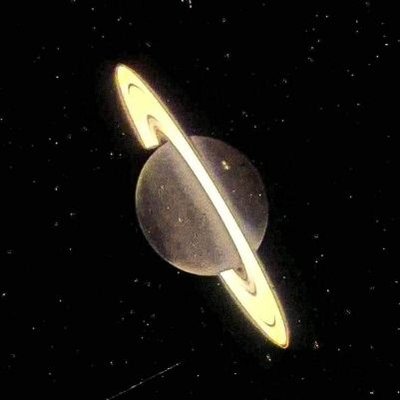
🚨: A photographer captured the Sun for three years straight from the exact same spot at the same time, then combined every position into one incredible image
NagarjunaG retweeted
Awesome new theme issue of Philosophical Transactions:
‘World models in natural and artificial intelligence’
Thank you @adamsafron!
royalsocietypublishing.org/r…
NagarjunaG retweeted
New #preprint, @PigozziFederico:
arxiv.org/abs/2605.06746
"The Causally Emergent Alignment Hypothesis: Causal Emergence Aligns with and Predicts Final Reward in Reinforcement Learning Agents"
"A hallmark of life on Earth is the ability of agents to exert causal power and be drivers of subsequent events. This is key to cognition at all scales. Causal emergence, measuring the degree to which an agent exerts unique predictive power on its future, is one consequence of causal power. Indeed, recent discoveries have shown that biological agents, even minimal ones, increase their causal emergence after learning new memories. However, there is a major knowledge gap regarding how causally emergent artificial agents are. We focused on Reinforcement Learning (RL) of neural-network agents across an array of environmental conditions, encompassing different algorithms, agent architectures, and six environments arranged on a complexity spectrum. For consistency, we computed the causal emergence of their latent-space representations over their lifetimes. We used the recently proposed {\Phi}ID to estimate causal emergence and tested how it related to learning performance. Our results suggested a Causally Emergent Alignment Hypothesis: successful agents exhibited causal emergence that was consistently predictive of final reward early in training and whose representational dynamics aligned with reward improvement in most tasks. This idea suggests that causal emergence may be a previously undisclosed axis of reorganization of neural representations in RL agents, with the potential to establish causal relationships and interventions that will lead to better RL agents. Our work also highlights the alignment between causal emergence and learning as another way biological and artificial creatures compare."
