

Pinned Tweet
LANGCHAIN JUST PROVED YOU CAN MAKE AN AI CODING AGENT WAY BETTER WITHOUT UPGRADING THE MODEL.
Same GPT-5.2-Codex model. Same benchmark.
52.8% → 66.5%
A 13.7-point improvement just from changing the system around it.
That's f*cking insane...
This Vivek Trivedy-inspired harness brings the same engineering principles to Claude Code.
Instead of throwing more prompts at Claude, you give it structured context, controlled tools, real verification, failure recovery, and independent code review.
Claude writes the code.
The harness checks whether it actually works.
Failed tests trigger controlled repairs. Interrupted sessions resume from checkpoints. Critical actions require approval.
The real advantage isn't making Claude think harder.
It's building an environment where its intelligence produces reliable results.
Copy the full harness prompt below into Claude Code.
Then read the complete Harness Engineering guide ↓


LEX FRIDMAN'S APPROACH TO AI REVEALS WHY MOST PEOPLE ARE BUILDING AI TEAMS COMPLETELY WRONG.
They give Claude a massive prompt, connect a dozen tools, and expect it to behave like an autonomous employee.
Then the agent loses context, repeats the same mistakes, and confidently reports work it never verified.
Here's the interesting part.
This Lex Fridman-inspired framework combines Grok Bot + Claude Code into an AI team that actually knows how to work together.
Grok Bot coordinates the operation. Claude builds the solutions. Specialized agents handle research, verification, and reporting.
But the real advantage isn't having five agents instead of one.
It's giving them shared memory, clear responsibilities, and an independent system that checks whether the work is actually finished.
Imagine going to sleep with an unfinished GitHub issue.
By morning, your AI team could have investigated the bug, written the fix, run 18 tests, and prepared the changes for your approval.
No more managing every prompt.
No more reconstructing yesterday's context.
No more trusting an agent just because it says "done."
The next big AI breakthrough isn't a smarter chatbot. It's a team that can finish the job without you supervising every step.
The complete Grok Bot + Claude Human-AI Collaboration Blueprint, including the agent prompts and workflow, is below ↓
Bookmark this before building another AI agent with no memory, no verification, and no idea what teamwork means.


YOUR AI TEAM COULD CRASH AT 3 AM AND STILL FINISH THE JOB BEFORE YOU WAKE UP.
That's the idea behind Harrison Chase's durable execution framework.
And this prompt turns Grok Bot + Claude Code into something far more interesting than another multi-agent chatbot.
Imagine assigning two GitHub issues before bed.
Claude investigates the code, builds the fixes, and runs the tests while Grok Bot coordinates the entire operation.
Then something breaks.
The process crashes. An agent loses context. A test fails halfway through.
Most AI workflows would restart from scratch or confidently report that everything went fine.
This system does neither.
It saves checkpoints, restores unfinished tasks, rechecks real evidence, and continues from the last verified state.
The architecture is built around one principle:
Checkpoint → Resume → Verify → Handoff → Human Approval
Every morning, you get a report showing what passed, what failed, and what actually needs your decision.
No fake completions. No unauthorized deployments. No babysitting every step.
The real breakthrough isn't making AI agents work longer.
It's making their work survive failure.
The complete Grok Bot + Claude Durable Agent Execution Harness is below ↓
Bookmark this before building another AI agent that forgets its job the moment something crashes.

Emanuel Derman spent years warning quants that markets do not stay in one regime long enough for static models to feel comfortable
This framework turns that idea into a Claude Code trading system
You start with 27 strategy variants across trend, mean reversion, volatility, macro, and options
Then the system does something most backtests never do
It asks which market you are actually in
Bull
Sideways
Bear
Crisis
Claude Code detects the regime, rebuilds the experiment around it, and forces every candidate through walk-forward testing, stress scenarios, realistic costs, drawdown limits, and parameter stability checks
The interesting part is not the best Sharpe
It is the adaptation layer
A strategy can look great in one regime and completely collapse in another
So the system does not search for one permanent winner
It keeps a small set of robust strategies and changes how they are used as the market changes
That is the real edge here
Not predicting harder
Adapting faster
The full Emanuel Derman-inspired Market Regime Harness is below ↓

Andrew Ng has spent years arguing that the real advantage in AI is not one brilliant idea
It is a better experimental process
This research OS takes that mindset and applies it to Claude Code
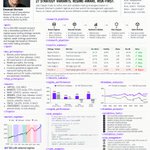
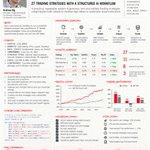
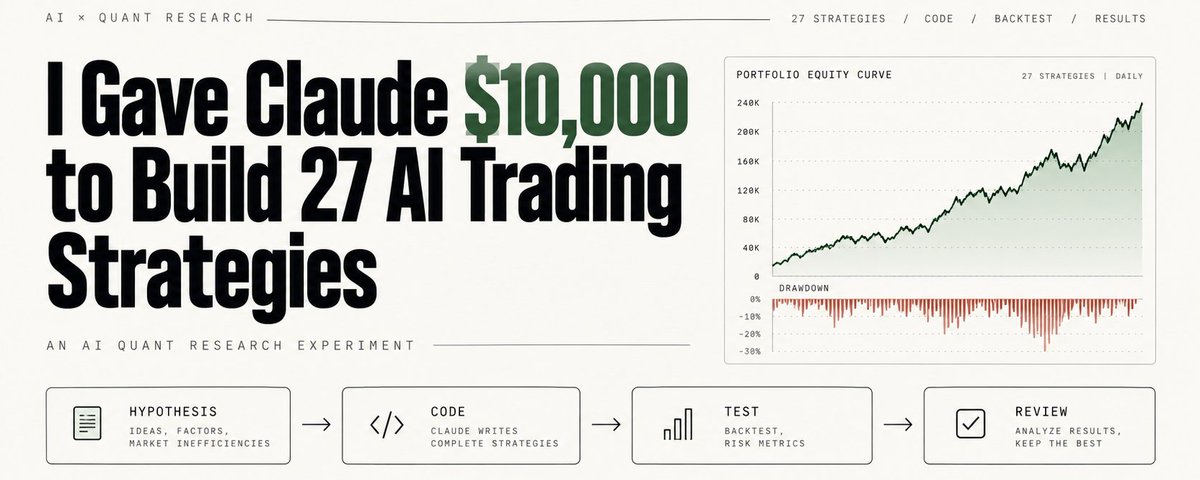
You start with $10,000, 27 strategy variants, and one rule:
nothing survives because it looks good once
Claude generates the ideas and writes the experiments
Then the system forces every candidate through realistic costs, walk-forward testing, regime checks, parameter stability, Monte Carlo, and cross-asset validation
27 strategies go in
11 pass the tests
6 make the portfolio
That is the part most people skip
AI makes strategy generation almost free
So the bottleneck moves somewhere else
Filtering
Iteration
Discipline
The useful quant system is not the one that creates the most ideas
It is the one that learns from every failed experiment and gets harder to fool
The full Andrew Ng-inspired AI Research Operating System is below ↓

Campbell Harvey has spent years showing why the “best” backtest in a large search is often just the luckiest one
This harness turns that idea into a Claude Code research system
You start with one factor family and 27 strategy variants
Claude logs every test, adjusts for multiple testing, checks out-of-sample behavior, stresses costs, and rejects anything that only looks good because you tried enough combinations
The interesting part is the selection-bias audit
A strategy does not survive because the Sharpe is high
It survives only if the result is still significant after multiple-testing adjustment, stable across nearby parameters, positive after realistic costs, and alive in untouched data
That is the useful role for AI in quant
Not finding more “discoveries”
Finding out which discoveries were probably accidents
The full Factor Zoo Audit Harness is below ↓

Marcos López de Prado has spent years showing quants how easy it is to fool themselves with a beautiful backtest
This prompt takes that mindset and turns Claude Code into the skeptic in the room
You start with one hypothesis and 27 variations
Claude builds the experiments, Python runs the numbers, and every candidate gets attacked with trading costs, purged cross-validation, walk-forward tests, and a final holdout
The interesting part is what happens after the backtest looks good
The system does not celebrate
It looks for leakage
It checks whether nearby parameters collapse
It asks whether the edge survives different regimes
It tries to find the exact reason the strategy should be rejected
That is the useful role for AI in quant
Not predicting harder
Rejecting bullshit faster
The full anti-overfitting harness is below ↓

Dario Amodei’s Claude Code turns one trading idea into a full quant research lab without you manually building every experiment
You give Claude the goal, the data, and the constraints
It handles the research workflow:
Idea → Generate 27 Variants → Write Python → Backtest → Stress Costs → Validate → Report
It’s f*cking powerful...
The point is not that Claude “predicts the market”
The point is that Claude can structure the entire research process around you
It can generate the strategy variations
write the test code
organize the results
compare candidates
flag weak assumptions
and prepare the next experiment automatically
Python does the math
Claude Code runs the lab
You keep control of the capital
Then read the full Claude Code AI Trading Lab guide below ↓

Grok Bot loop engineering is where AI agents stop being demos and start becoming systems
One agent finds the idea
Another tests it
Another tries to break it
The loop keeps running until the result survives verification or gets rejected
Research → Analyze → Backtest → Verify → Report → Feedback → Repeat
That matters even more in quant
A strategy can show:
+48.6% annualized return
2.31 Sharpe
-12.4% max drawdown
214 trades
and still be fake alpha
The real edge is not generating more strategies
It is building a self-correcting loop that checks out-of-sample performance, transaction costs, leakage, robustness, and regime dependence before capital moves
Grok Bot coordinates the loop
Python runs the math
hard rules reject the bullshit
the human approves what survives
that is what AI trading should look like
read the full breakdown below ↓

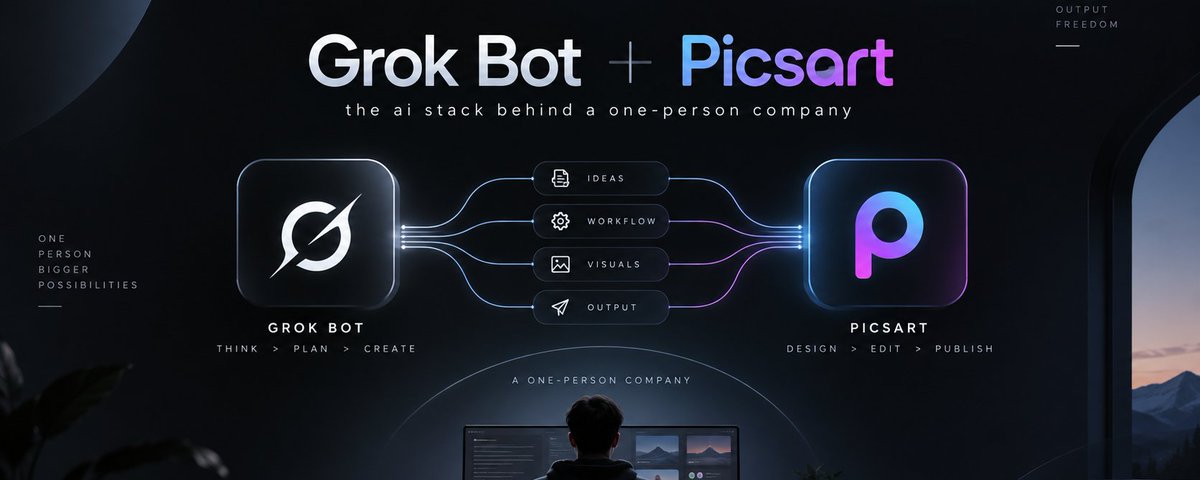
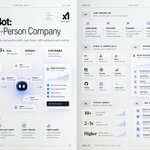
this Grok Bot field guide makes the one-person company model look surprisingly practical
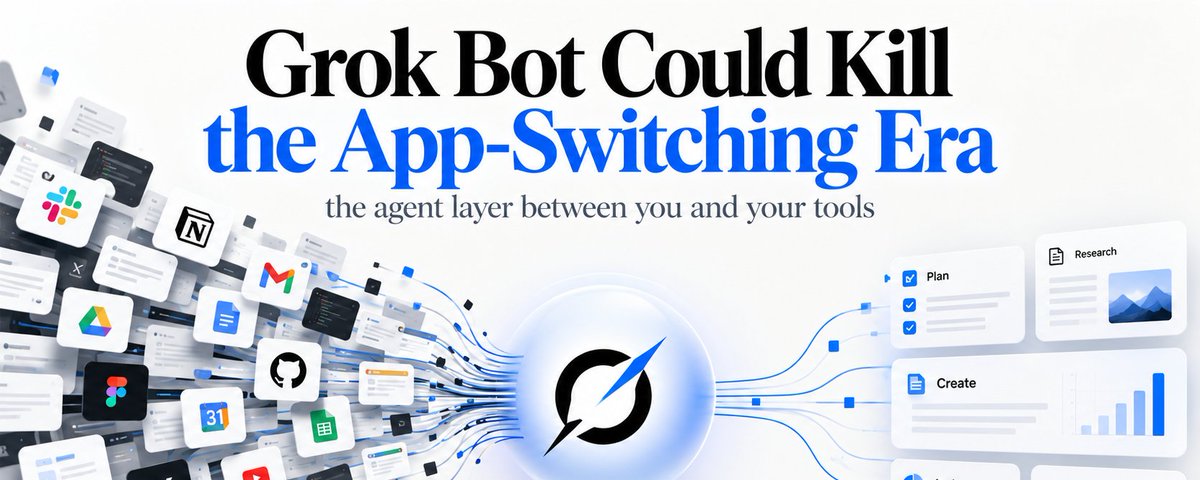
one request can move across 10+ tools, collect evidence, verify the result, and come back as finished work
the core flow is simple:
Understand → Use tools → Execute → Verify → Deliver
Grok Bot becomes the layer between Gmail, Drive, Slack, Notion, Browser, Analytics, GitHub, and your files
the value is not another chatbot answer
it is turning scattered app work into one repeatable operating system
10+ hours saved per week
2–3x faster turnaround
higher quality output with sources and checks
and the same architecture is exactly what matters in AI trading
Grok Bot can generate and coordinate the research
Python runs the tests
deterministic checks reject weak strategies
risk rules stay outside the model
the goal is not more trades
it is more bad ideas killed before capital moves
that is how one operator starts running like a much bigger team
read the full Grok Bot + AI trading breakdown below ↓

shiron retweeted
this Grok Bot field guide makes the one-person company thesis brutally simple
one request should not create ten tabs
it should create finished work
the flow is:
request → understand → use tools → collect → create → verify → approval
Grok Bot becomes the layer between Gmail, Drive, Slack, Notion, the browser, and the final result
the human stops carrying context between apps
the system handles the routine path
and you only step back in when judgment, money, or risk actually matters
that is where the leverage comes from
10+ hours saved per week
2–3x faster turnaround
more output without adding headcount
and in quant, the same architecture becomes even more valuable:
hypothesis → test → reject → stress → size → monitor
the model can think
the workflow has to prove the result
that is how one operator starts looking like a much bigger company
read the full Grok Bot breakdown below ↓
shiron retweeted
this Grok Bot working note makes the business case much clearer
the real value is not “better AI”
it is getting more output from the same headcount
less context switching
more workflows per operator
reusable routines
faster research throughput
human approval only where money, risk, or reputation are involved
the flow is simple:
request → workflow → evidence → approval → output
that same structure is why Grok Bot gets especially interesting in quant
more hypotheses can be tested
fake alpha gets rejected faster
research stays separate from risk
and hard capital rules remain outside the model
the business model is not replacing one person with AI
it is giving one person the operating leverage of a much larger team
read the full Grok Bot breakdown below ↓
My new Grok Bot setup turns competitive research into something much closer to a paid intelligence system
Not a model that dumps market summaries into a doc
A workflow that only keeps findings worth acting on
Intake → Discovery → Evidence → Verification → Delivery
Grok Bot searches aggressively across pricing pages, docs, announcements, hiring, repos, and selected posts
But the evidence layer decides what survives
Every claim needs a primary source
Every change gets compared with the last record
Duplicates die
Unverified announcements die
Anything involving money goes back to a human
That is the real unlock
The model finds possibilities
The system decides what becomes intelligence
And once one verified change can serve 13 overlapping clients, the same research starts compounding instead of restarting
That is how a small research desk can scale toward $20K/month without doing the same work 13 times
Then read the full Grok Bot system below ↓

shiron retweeted
SpaceXAI engineer Lauren Tan:
“GrokBot is powerful, but the real bottleneck is what happens between the model and the work
Most users still make the human carry context from app to app
I want the Bot to own the outcome, move through the tools, verify the result, and only bring me back when something actually matters”
Objective → Context → Decision → Execution → Verification → Human Exception
In this 1-hour workshop, Lauren shows why the next leap is not a smarter chat window
It is a system that removes the human from thousands of tiny transitions
And the same architecture gets serious in quant:
Hypothesis → Test → Reject → Stress → Size → Monitor
The model can propose the trade
The decision layer can judge the state
But hard risk rules still stay in code
That is why GrokBot matters
You stop managing apps
You start managing outcomes
Watch the workshop first
Then read the full GrokBot system below
Bookmark this before it gets buried
this Grok Bot workshop with Lauren Tan shows the real point faster than most agent demos
the breakthrough is not that the model can answer harder questions
it is that the work no longer has to die inside one app
message comes in
context gets pulled
files get found
next step gets routed
result gets checked
human only shows up when the consequence is real
that is the shift
not smarter chat
less manual glue
the architecture is simple
model → generates
decision layer → routes
code → enforces
Grok Bot → coordinates
human → handles exceptions
and that same structure is exactly why this gets serious in quant
hypothesis → test → reject → stress → size → monitor
the model can suggest
the system can decide
the code still controls the money
that is why Grok Bot matters
you stop managing tabs
you start managing outcomes
full breakdown below
Grok Bot Galaxy looks less like a product demo and more like a preview of how small teams will actually work
the biggest shift is not “AI can do more”
it is that the human stops being the glue between every tool and every decision
one system collects context
another decides what happens next
another executes
another checks the result
and the human only gets pulled in when the consequence is real
that is why Grok Bot is interesting
the workflow starts to look like software:
objective → route → act → verify → escalate → finish
and in quant the same structure becomes even more useful
idea → backtest → attack the result → stress the regime → apply risk limits → execute
the model can propose
the decision layer can judge
but hard rules still stay in code
that is the real unlock
less app switching
less manual routing
more finished work
full breakdown below
shiron retweeted
THIS FAKE MOVIE SET MAKES A GIANT CREATURE SHOOT LOOK LIKE A 30-SECOND AI JOB
The trick is not the monster.
It is the production around it.
Blue screen
camera crew
miniature ruins
practical framing
That makes the impossible scene feel like real BTS footage.
With @Picsart, one idea can move through image, motion, and edit without losing the same visual language.
One concept
multiple set pieces
one fake BTS reel
The full pipeline is in the article below ↓