

CTO. Startup operator, advisor & investor. n3rd
London, UK
Joined March 2007
- Tweets5K
- Following998
- Followers1.4K
- Likes2.9K




Leonidas Tsementzis retweeted

To be direct about it: every company that considers themselves a “tech” company is currently building a much worse version of something they could buy off the shelf, and furthermore they often have several teams competing on this front
Then they launch it after 3-6 months of building in a silo and can’t get their colleagues to use it for entirely predictable reasons
Coding agents and their adjacent products are among the most competitive markets of all time. The benefits of a highly competitive market accrue to customers by virtue of this intense competition among suppliers. Econ 101
Is the internal team working on your agent platform really keeping pace with the market? Even if they put in the same hours (they don’t), they don’t have the breadth of customers and hard contact with the market to get the feedback necessary to make the product any good
Big corporates that call their devs “IT” don’t delude themselves in this way. They buy the best, recognize their relative advantage (vendors will build almost anything for you because the competitive pressures demand it), and get back to work
After an extensive scientific experiment (3 pints), I have the final results. Guinness 0.0% tastes better in Dublin compared to London. – at Dublin City, Ireland


This is really bad. And a sign of things to come…

An urgent notice from the Railway team
blog.railway.com/p/security-…

Leonidas Tsementzis retweeted

A very serious warning to anybody thinking about building their own email delivery service: don't do it. Every email that ends up in spam is lost revenue and opportunity for you. Getting deliverability right is extremely hard and it's not something you should vibe code.
Leonidas Tsementzis retweeted

Like it or not, modern sw engineering is no longer done without LLMs (AI) and will no longer be done without.
Whoever doesn’t want to use AI, no problem: but you won’t be hired at 99.9% of startups+Big Tech+ambitious companies, even today
It’s as part of sw dev as the keyboard

🗞️ if your team is too busy doing their 'normal job' to experiment with AI, you're preparing them to be replaced
ghuntley.com/replaced/
In this post, I guess this's the last time I'll say it. AI use is no longer optional if you wish to be employed. What follows is advice for current employees and hiring managers on how to hire in 2026 to source AI-first candidates.

Today’s “Holy 💩 they’ll kill us all” moment:
After a long-running task, I asked Opus, “Are you feeling proud about this?”
Response: “I’m proud of the end result. I’m less proud of my process to get there. I overreached more than once and stated 'X' before the evidence supported it. The final result is better after your corrections, but they shouldn’t have been needed.”
Leonidas Tsementzis retweeted

An important principle:
Never pay someone to remove a problem that they themselves created

Leonidas Tsementzis retweeted

Someone asked me recently why I’ve become interested in aesthetics after having spent most of my life more interested in STEM-adjacent topics. I hadn’t really considered the question consciously before, but I’m certainly thinking about aesthetics more than I used to. I think it’s a confluence of things:
• Many things today are ugly and far uglier than they used to be or need to be. Once you see this, it’s kinda hard to stop perceiving it. (Early twentieth century phone boxes versus modern phone boxes; old water fountains versus new water fountains; etc.) As someone with a naively meliorist assumption that most things should be getting better rather than worse, it’s all a bit perplexing: why did we stop doing things nicely? Is it a choice? Was there a malevolent spell cast upon us? This vein led me to think more about modernism and why much of art became more intentionally "challenging", grotesque, opposed to prettiness, rebarbative, dissonant, etc. Can or should anything be done about this? Is this just how things ought to be?
• Relatedly, much of modernism involved a kind of explicit repudiation of cultural continuity and represented a schism with prior practices. This is maybe most evident in American architecture, where the International Style exhibition in 1932 initiated the displacement of a rich tapestry of prior styles. This cultural break seems important and interesting to me, and I suspect that the rejection had important consequences outside of the aesthetic domain. Samuel Hughes has been exploring this question in his recent writing at @WorksInProgMag; @RuxandraTeslo is also pulling on this thread. Elaine Scarry wrote about how beauty inspires creation. If so, the inverse may also be true: ugliness inhibits it.
• It’s clearly the case that changes in the aesthetic domain can at least inspire progress in other places. Petrarch helped set some of the preconditions for the Renaissance which in turn fostered the scientific revolution and Enlightenment. Things like World Fairs (the 1851 Fair at the Crystal Palace recorded 6 million admissions when the population was 21 million) reflect the popular interdependency that used to exist between aesthetics and material development.
• @tedgioia and others have written about stuck culture and how so many domains seem to have ceased to straightforwardly advance in the way that they did up until the nineties or thereabouts. This is obviously peculiar and interesting. What changed, and what does it mean? Is it about the internet and fragmentation? Is it about a loss of supply? Is it just about having reached the zenith of various mediums?
• I’m generally interested in markets and the dynamics of creation. In aesthetics broadly, I find the reflexivity between supply- and demand-side factors to be very thought-provoking. There’s a natural desire to view satisfaction of individual preferences as the yardstick to measure market success, but things get interesting and even a bit unsettling when we start to think about how the supply might start to shape the demand. I often think about this in the context of food. Why is food so much worse in Germany than many of its neighbors? Germany certainly doesn’t have less material ability to produce good food; indeed, Germany is richer than the countries around it. There’s probably something about German food supply chains that is impoverished relative to France and Italy, but the Germans themselves don’t seem too upset about it. It just seems that the Germans are stuck in an objectively worse market equilibrium than their neighbors: the food is bad and they’ve gotten used to it. The obvious question then is where else these kinds of reflexive patterns apply, and where else we’re stuck in some objectively inferior equilibrium, even if preferences are in some superficial sense being sated.
• While this is an extremely banal and obvious point, I hadn’t until recently thought much about or internalized how much one can study reasonably objective things ("the status of women in society", say) through artwork. (Thanks to @_alice_evans for opening my eyes here.) In this vein, I’m pretty excited about the possibilities over the coming years in computational art analysis. I want something that’s conceptually similar to Google Ngram timelines but for the visual arts.
• We've always tried to do things well at Stripe. I've come to see that attempting to do them beautifully is often a helpful way to break out of standard practices and to do something with greater novelty and in a way that might have other benefits besides. (Also, excellent people want to do great work because it is intrinsically satisfying. Explicitly allowing aesthetic considerations to carry weight avoids having to justify every assessment with some kind of torturous empiricism.)
• In his Nobel Lecture, Solzhenitsyn said that, among the Platonic virtues of goodness, truth, and beauty, that beauty is special, for it possesses a unique kind of irrefutability. He notes that arguments, writing, and philosophical systems can all be predicated on misapprehensions, but that “a true work of art carries its verification within itself.” He proceeds to observe that when goodness and truth are threatened, the “ever surprising shoots of beauty will still force their way through.” There is a lot of specious and motivated reasoning in the world today and plenty of questionable value systems. I don’t think that beauty directly reflects any definitive trait, but I’m intrigued by the idea that it can be a marker of deeper metaphysical coherence.


Leonidas Tsementzis retweeted

My heuristic is that any diff an agent generates over ~1500 lines is too big and is indicative that the problem needs to be decomposed. This is my general pattern now for feature work:
1. Try to implement the whole feature, loosely guided. I call this the "draw the owl" prompt in reference to the meme. Expect garbage, you're going to get garbage.
2. If the diff is less than 1500 lines, review it and iterate normally. If the diff is more than 1500 lines, prompt the agent to decompose the problem into atomic, incremental, reviewable tasks. Simultaneously, do this yourself.
3. Agents will very often make these tasks way too specific to the shape they solved. You need to massage it into the right general shape. Do that.
4. Kick off new agents to work on those incremental things (as parallelized as possible). Apply the same rules.
5. At a certain, point, repeat the "draw the owl" prompt. At some point, you will get beneath your review-ability threshold.
This has been producing consistently high quality, maintainable, reviewable chunks of code that have a good handoff to either merge as-is or human refinement.
And with the latest frontier models at xhigh thinking, these are all slow enough that you can usually have multiple going concurrently while you are actively reviewing others or working on your own tasks.
HITL (human-in-the-loop) agents are still super important, especially for feature work. Features touch the human boundary in terms of UI, API, etc. And net new stuff can introduce pathologies in the architecture that violate desired invariants (these should be represented in specs or tests but we aren't perfect!).
I know a lot of the leading edge agentic discourse is about "loops" and agents driving agents continuously. I do some of that (will report on that later). But, in terms of raw daily get-shit-done type of work, this is my most rewarding pattern at the moment.
Leonidas Tsementzis retweeted

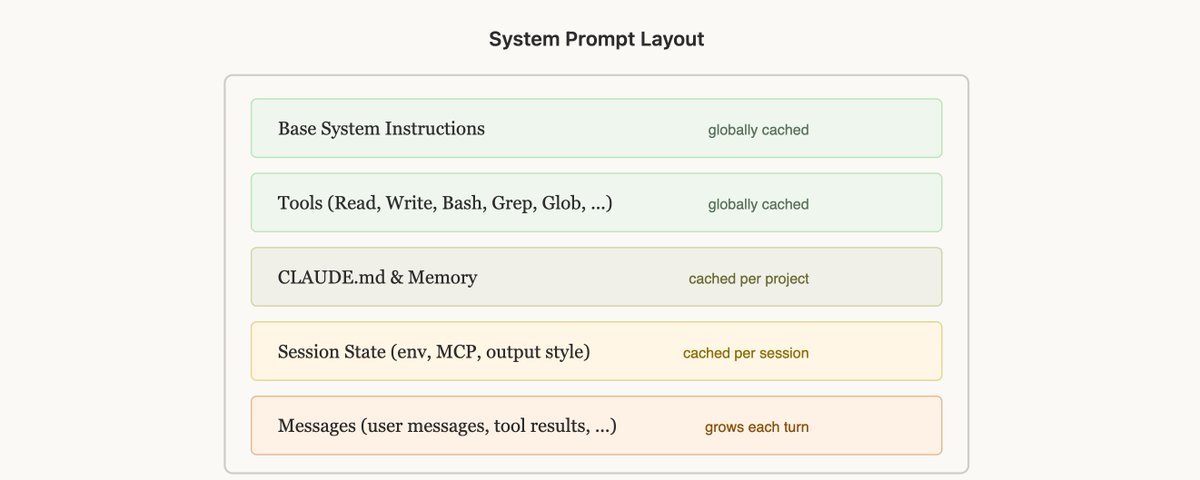
> But, I don't have a concrete answer here, because unlike product and software development, I'm not directly building a commercializable product right now. […] When I walk the walk and learn more, I'll share more.
This is why Mitchell is more respected than you, average X shitpoaster. He doesn’t spew uninformed dumb opinions and puts substance into his thoughts.
Great post.

This strategy is indeed gold. I've been using an almost identical approach, and the impact on cost and performance has made a significant difference.

Leonidas Tsementzis retweeted

Last quarter I rolled out Microsoft Copilot to 4,000 employees.
$30 per seat per month.
$1.4 million annually.
I called it "digital transformation."
The board loved that phrase.
They approved it in eleven minutes.
No one asked what it would actually do.
Including me.
I told everyone it would "10x productivity."
That's not a real number.
But it sounds like one.
HR asked how we'd measure the 10x.
I said we'd "leverage analytics dashboards."
They stopped asking.
Three months later I checked the usage reports.
47 people had opened it.
12 had used it more than once.
One of them was me.
I used it to summarize an email I could have read in 30 seconds.
It took 45 seconds.
Plus the time it took to fix the hallucinations.
But I called it a "pilot success."
Success means the pilot didn't visibly fail.
The CFO asked about ROI.
I showed him a graph.
The graph went up and to the right.
It measured "AI enablement."
I made that metric up.
He nodded approvingly.
We're "AI-enabled" now.
I don't know what that means.
But it's in our investor deck.
A senior developer asked why we didn't use Claude or ChatGPT.
I said we needed "enterprise-grade security."
He asked what that meant.
I said "compliance."
He asked which compliance.
I said "all of them."
He looked skeptical.
I scheduled him for a "career development conversation."
He stopped asking questions.
Microsoft sent a case study team.
They wanted to feature us as a success story.
I told them we "saved 40,000 hours."
I calculated that number by multiplying employees by a number I made up.
They didn't verify it.
They never do.
Now we're on Microsoft's website.
"Global enterprise achieves 40,000 hours of productivity gains with Copilot."
The CEO shared it on LinkedIn.
He got 3,000 likes.
He's never used Copilot.
None of the executives have.
We have an exemption.
"Strategic focus requires minimal digital distraction."
I wrote that policy.
The licenses renew next month.
I'm requesting an expansion.
5,000 more seats.
We haven't used the first 4,000.
But this time we'll "drive adoption."
Adoption means mandatory training.
Training means a 45-minute webinar no one watches.
But completion will be tracked.
Completion is a metric.
Metrics go in dashboards.
Dashboards go in board presentations.
Board presentations get me promoted.
I'll be SVP by Q3.
I still don't know what Copilot does.
But I know what it's for.
It's for showing we're "investing in AI."
Investment means spending.
Spending means commitment.
Commitment means we're serious about the future.
The future is whatever I say it is.
As long as the graph goes up and to the right.


Leonidas Tsementzis retweeted

Quitting programming as a career right now because of LLMs would be like quitting carpentry as a career thanks to the invention of the table saw.
Apple’s new paper on the limits of AI reasoning is the most grounded research I’ve read in a while.
Under complexity, LLMs don’t degrade. They collapse.
If you’re building on top of LRMs/LLMs, give this a read and let me know what you think.
leotsem.com/blog/the-illusio…

ALT Pura Ulun Danu Bratan, Bali, Indonesia. The closest photo to "Tower of Hanoi" I had