

Protect Your Every Transaction. User App: https://teapaw.org/t.co/FHHKZyzH1j 🛡️ Dev Integration: Security Intelligence & SafeToken Protocol 🛡️
On-Chain
Joined May 2021
- Tweets3.9K
- Following1.1K
- Followers414K
- Likes3.3K






Pinned Tweet
📢GoPlus #DeepScan Comprehensive Upgrade: A New Paradigm of AI-Powered Smart Contract Security.
Smart contracts hold funds — and hackers are already using AI to uncover deep-layer vulnerabilities. One-time audits can no longer keep pace with today's attack-defense dynamics. The industry must evolve toward AI-powered, continuous security: higher efficiency, lower cost, full-lifecycle protection.
GoPlus DeepScan delivers three interconnected modules forming a closed-loop, continuous security service for the entire smart contract lifecycle: AI Contract Audit, Continuous Security Monitoring, and Token Security Self-Check.
Features
AI Auditing
AI-powered deep analysis of contract source code, permission management, and business logic. Systematically detects syntax vulnerabilities and business-logic flaws, and delivers a structured audit report — including security scores, key findings, issue details, and remediation recommendations.
Security Monitoring
Post-audit, always-on assurance for live contracts. Tracks newly disclosed vulnerabilities, on-chain attacks, and status changes in external dependencies (oracles, cross-chain bridges) in real time. AI continuously assesses impact, triggers targeted re-reviews, and issues alerts — moving beyond the "audit as finish line" model.
Token Security Checking
A rapid pre-launch self-inspection tool for tokens preparing to launch or list. Identifies common high-risk characteristics in minutes, including: Honeypot detection, Malicious mint detection, Blacklist mechanism detection, Abnormal buy/sell tax detection, Owner privilege & trading restriction risks.
Benchmark
An open-source benchmark built from real-world attack incidents. Extracts vulnerable contract source code from attacked projects to systematically evaluate AI capabilities in vulnerability identification, attack-path understanding, contextual reasoning, and audit stability. Nearly 100 real, representative attack cases from May 2025 to date, continuously updated.
Use Cases
Developers — Cost-effective, high-efficiency security scanning with audit-grade quality, enabling fast, confident innovation.
Project Teams — Pre-launch scanning as a complement to traditional audits; continuous auditing and monitoring during operations to stay ahead of attackers.
Exchanges — Enhanced pre-listing security review efficiency and capability; continuous monitoring as routine risk control to catch new threats early and minimize post-listing incidents.
Get Started
GoPlus DeepScan is live — try it now: **deepscan.gopluslabs.io/**
AI Auditing Benchmark: github.com/GoPlusSecurity/ai…

🛍️ Grab Black Friday deals. Don’t hand scammers your wallet.
Big discounts, free airdrops, limited-time rewards—take a moment to check before you act:
1️⃣ Check the URL.
Type the official site yourself or open the official app. Don't click links from DMs, ads or unknown short links.
2️⃣ "Free airdrop" or "claim your reward"? Pause.
Real rewards are claimed inside the official app.
3️⃣ Support never DMs first.
Nobody legit will ask for your seed phrase, private key or remote access.
4️⃣ Read before you sign.
Watch for Permit or unlimited approval requests. If you don't understand it, don't sign.
5️⃣ Check the token and the site first.
Use GoPlus to flag risky tokens and phishing sites before you connect your wallet.

📢 GoPlus Wallet Theft Detective Update!
In the AI era, widespread social engineering, phishing, and software exploitation are exposing users’ crypto assets to unprecedented threats.
Clipboard hijacking, crypto-stealing malware, malicious wallet extensions, fake support scams, malicious signing requests, supply chain compromises, fake mobile wallets, and iOS exploits continue to drain users’ wallets.
The GoPlus Wallet Theft Detective Skill helps assess theft risks anytime or investigate likely causes after funds are stolen.
🔍 Enhanced Investigation Capabilities
▪️ Broader coverage of common theft scenarios: clipboard hijacking, infostealers, malicious extensions, phishing, malicious approvals, blind signing, address poisoning, fake wallets, and supply chain attacks.
▪️ Enhanced iOS exploit chain investigation: focused on malicious QR codes, spoofed websites, redirects from in-app browsers, redirects to Safari, and zero-click exploits associated with recent iOS-related crypto theft campaigns.
▪️ Uses user activity, device anomalies, and local evidence to help identify likely causes of crypto theft and recommend incident response measures.
🛠️ More Ways to Investigate
▪️ Lightweight Agent Skill: Can be imported and used by agents such as Codex, Claude Code, and OpenClaw. By default, investigations run locally with read-only access and minimal permissions. The Skill does not read seed phrases, private keys, passwords, cookies, tokens, or wallet files.
Install and use the Skill: github.com/GoPlusSecurity/wa…
▪️ Investigation Questionnaire: Users without an agent can complete an investigation questionnaire to document the incident timeline, device setup, wallet activity, and suspicious behavior.
Complete and submit the questionnaire: docs.google.com/forms/d/e/1F…

Fill your plate. Not a scammer’s wallet.
Thankful for a community that looks out for each other.
Enjoy the feast, check those Black Friday links, and don’t take the bait on those “too good to be true” deals.
🦃 Happy Thanksgiving from #GoPlus 🦃
🤖 Made with AI

4
10
2,237
🚨 GoPlus Security Alert: A wave of private key compromises and signing abuse has caused over $17 million in losses across five consecutive days. Project teams and developers should strengthen key management and signing controls to protect their assets.
🛡️ Security Recommendations: Private Key Compromise and Signing Abuse
1. Eliminate privileged single points of failure. Secure deployer, minter, validator, and relayer roles with multisig or MPC. Avoid giving a single EOA direct control over minting, upgrades, or vault withdrawals.
2. Rotate keys in a trusted environment. If a key compromise is suspected, revoke compromised keys and sessions, invalidate pending messages wherever possible, and generate replacement keys in a clean environment. Changing passwords or restarting the existing signing service is not enough.
3. Validate transaction intent before signing. Beyond cryptographic signature verification, validate the source-chain transaction, nonce, chainId, destination contract, recipient, amount, and business request ID. Cross-chain bridges should use multiple independent DVNs and require multiple signatures.
4. Cap the potential loss from a single incident. Apply amount caps, rate limits, timelocks, and independent approval requirements to minting and withdrawals. Automatically trigger circuit breakers on abnormal token supply changes, depegs, or withdrawals approaching the full vault balance.
5. Protect sessions and logs. Never log private keys, seed phrases, session tokens, or other sensitive key material. Remove public access to log query endpoints promptly. Transfers and limit changes must require fresh verification of user authorization.
6. Watch for follow-up phishing. Trust only official channels. Treat unsolicited “refund,” “migration,” or “claim” messages as potential phishing attempts.
7. Guard against iOS exploit campaigns and malvertising. Criminal campaigns exploiting older Apple OS vulnerabilities pose serious risks to user keys and administrative access. Keep iOS and wallet apps updated. Be cautious with unfamiliar ads, shortened links, QR codes, and pages prompting you to open Safari. Keep high-value holdings separate from phones used for everyday browsing, QR scanning, and entertainment; prioritize hardware wallets or multisig. Never screenshot seed phrases or private keys, or store them in photo libraries, notes, chat histories, or cloud backups.
1️⃣ Fusionist (ACE)
Affected project: Fusionist / Endurance @fusionistio—ACE and its BSC–Endurance bridge.
Date: November 23, 2026
Estimated loss: $1.87M–$2M
Root cause: Abuse of privileged cross-chain verification and minting flows led to unauthorized ACE minting and sell-offs on BSC, followed by reserve depletion on Endurance.
Attacker addresses:
0x3f1045210a80a375d6c7cbad57800d5e8f30f34e (privileged minting address)
0x1029aa6abbb46c88c3b1f668757184f64d9e12c5
0xb335cd8771c9f0469d5c3214f24945ef9ab019b5
2️⃣ Cyber (CYBER)
Affected project: Cyber @BuildOnCyber—CYBER’s LayerZero bridge and Ethereum token escrow contract.
Date: November 22, 2026
Estimated loss: 5,213,000 CYBER, worth approximately $1.1M.
Root cause: The attacker exploited a configuration relying on a single DVN and a single signature for verification to forge a Cyber Chain → Solana message and mint 5,213,000 CYBER on Solana. The attacker then burned those tokens and used the legitimate return bridge flow to withdraw an equal amount of real CYBER from the CyberTokenAdapter escrow contract on Ethereum.
Attacker addresses:
Solana:
58ZgoAHMgfFPuzLkA6avW5nCh8vHibt1qDfCSvpPZvSo
Solana helper:
6pnHXHtNXddyRYg15TJJrkW9VjMZnep5oj99CqdmfZxx
Ethereum:
0xaf32a9db0b0ac8eaa860a43a9d32a1c9277277cc
Ethereum:
0x73052e10334096b96deacd7bf6c6ec3b9b6c1b32
ETH consolidation address:
0xe0a6bd0f2d391a3ee99a5a8550baa1b3347fe8b9
3️⃣ Chainflip
Affected project: Chainflip @Chainflip—its Bitcoin and Ethereum vaults.
Date: November 21, 2026
Estimated loss: Approximately $12M, including 122 BTC, 520 ETH, 3,249,631 USDC, and 758,141 USDT.
Root cause: Chainflip’s vaults use a 100-of-150 FROST threshold signing scheme, in which a threshold of validators jointly produces a signature authorizing transactions. The incident involved validator key compromise or signing abuse: the attacker obtained a valid Schnorr signature matching the aggregate public key in use at the time and drained vault assets through transferBatch.
Attacker addresses:
Ethereum attack transaction sender:
0x78fa4ac270db14886033e95b9b9e93f887aa2db0
Ethereum recipient of stolen assets:
0x7d14a719072da80076b4edcec3e3401209d21eaf
BTC recipient:
bc1qm777twlzmelyutungyfw65ykn2l5kn68e6v4g6
4️⃣ Fluidkey
Affected project: Fluidkey @fluidkey—52 user accounts across Ethereum, Base, BNB Chain, Polygon, Optimism, and Arbitrum.
Date: November 20, 2026
Estimated loss: Approximately $1.6M.
Root cause: A session token leak combined with abuse of the signing workflow. The attacker exploited two vulnerabilities in Fluidkey’s self-hosted SigNoz deployment to read internal logs and steal user session tokens. They then created transfer requests on the server, marked them as approved, and raised the spending limits that determined when additional verification was required.
The attacker triggered notifications through small payments. When users opened and unlocked the app, it signed the attacker-prepared transfers through its existing workflow for processing approved transfers.
Attacker-linked addresses:
0x9140837ca5020c42fcbcb29a1af74293d6e5b9dc
0x72873fa107aba9310f220660a1e64e31b4de5cf2
0xeb6ed5a926a653ade23b62e9a582d2262f3f0980
0x9e5143a57ef1b609ef4b96248374e8cfdca940ae
0xdc70810d767b3109d8afa9678561738bdb4a2984
0x5afec19fb1d0e1a2a92ab0f3ccca246c59120021
5️⃣ Peapods Finance (PEAS)
Affected project: Peapods Finance @PeapodsFinance—its L2 PEAS contract, bridge, and associated liquidity.
Date: November 19, 2026
Estimated loss: Approximately 254 ETH, worth $411,300.
Root cause: A suspected deployer key compromise allowed the attacker to configure a malicious minter on L2, mint PEAS, bridge the tokens to Ethereum mainnet, and sell them.
Attacker and associated recipient addresses:
0x9520e286f1a32945f0b9c0e3bb30685afbe387a2
0x6bde15fe1acca9bc20d90abad7e1a943a4d8df22

🚨 GoPlus Security Alert: Suspected #XMR1 Exploit on Hyperliquid—Deployer Address Transfers ~5.2M Tokens
XMR1’s deployer address on Hyperliquid transferred approximately 5.2 million $XMR1 to a newly funded address. The recipient then sold the tokens into the order book, receiving approximately 13.3 million USDC. XMR1’s trading price plunged from around $494 to $1 in roughly 35 minutes.
The proceeds have since been converted into approximately 7,300 ETH, most of which has been bridged to Ethereum:
0x1464dacaceb0d511f9964cdac5eba50ea42220bf
XMR1 is a tokenized representation of Monero bridged to Hyperliquid via Wagyu. It is not native XMR on the Monero network.
🛡 Security Recommendations
1. Hold off on large XMR1 trades or cross-chain transfers until you have checked Wagyu’s official channels for updates on the incident and redemption status.
2. If you hold XMR1, monitor order book liquidity and bridge redemptions. Do not judge the asset’s value solely by its collapsed trading price.
3. Verify the asset and token identity before trading. Do not confuse XMR1 with native XMR, and watch out for fake announcements, compensation scams, and other phishing attempts exploiting the incident.

DeepScan AI Audit identified the smart contract vulnerability behind @k3_capital’s $3.43M loss in just 10 minutes.
Project teams should start using DeepScan AI Audit early and scan their smart contracts continuously to strengthen security and reduce risk.
Full report: deepscan.gopluslabs.io/audit…
Benchmark update: github.com/GoPlusSecurity/ai…


3
6
3,262
1/8
⚠️ Exploit Analysis: K3 Capital
On November 18, @k3_capital’s sBOLD vault on #Ethereum was exploited. The attacker flash-borrowed wstETH and WETH, opened a Liquity V2 borrowing position (trove), and minted 9,010,000 BOLD as working capital.
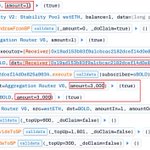
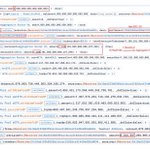
The exploit targeted a validation flaw in the vault’s swap() function: it checked whether the BOLD received met minOut, but never verified that the router had actually spent the specified collateral token and amount.
By donating 4 WETH to inflate the vault’s net asset value, then routing swaps through 1inch using a fake ERC-20, the attacker repeatedly extracted BOLD from the vault. Total vault losses reached approximately 3,428,799.42 BOLD, worth around $3.43 million at the time of the attack.
🔍 Root Cause:
The flaw lay in the swap() execution path. SwapLogic._execute approved the source token for the swapAdapter—configured onchain as the 1inch Aggregation Router V6 at 0x111111125421cA6dc452d289314280a0f8842A65—and executed arbitrary caller-supplied calldata.
However, it only checked whether the vault received enough BOLD to satisfy minOut, calculated from the quoted value and maxSlippage of 50 bps. It did not verify that the router had spent the specified collateral token and amount.
The attacker temporarily transferred WETH worth just under the 7,500 BOLD cap into the vault, increasing its net asset value per share. The attacker then executed a purported swap through 1inch, supplying approximately 7,159.16 BOLD to satisfy minOut while leaving the donated 4 WETH untouched.
The vault counted both the incoming BOLD and the unspent WETH in its share valuation. The attacker redeemed shares at this inflated price to extract other depositors’ BOLD, then used the unspent WETH allowance to recover the temporary donation.

4
24
4,901
2/8
🔗 Attack Sequence:
1️⃣ Deployment and Preparation
The attacker address, 0xDC0e2FDE…, deployed the attack contract at 0x19Ad153B…. The address had previously received 0.138822 ETH for gas.
Attack contract deployment:
etherscan.io/tx/0x373d05db82…

1
1
487
🚨 GoPlus Security Alert: Five nginx2root Vulnerabilities Disclosed—Check HTTP/2-Enabled Deployments First
On November 18, NGINX released security updates addressing five nginx2root vulnerabilities, including CVE-2026-123007. These are independent attack paths affecting different configurations. Successful exploitation allows arbitrary code execution with the privileges of an nginx worker process. The demonstrated attack chain achieves root access on the host by chaining a separate Linux kernel privilege escalation vulnerability.
wiz.io/blog/nginx-http2-rce-…
📌 Exploitation Conditions
All five vulnerabilities can be exploited without authentication when their respective version and configuration requirements are met.
1. CVE-2026-123007 (broadest exposure): An unpatched nginx build includes the HTTP/2 module, with HTTP/2 enabled on a listener reachable by the attacker. The officially affected versions are 1.9.5–1.31.8. Version numbers alone do not establish exposure—check the actual build, active configuration, and whether the distribution has backported a fix.
2. CVE-2026-123634: A resolver is configured, the proxy_pass destination is derived from request data, and mirror is used with mirror_request_body off.
3. CVE-2026-123633: nginx receives requests over HTTP/2 and proxies them to an upstream server while available connection slots in the worker are running low.
4. CVE-2026-121810: HTTP/3 is enabled, and requests are reverse-proxied to an upstream server.
5. CVE-2026-113425: The nginx mail proxy is enabled with both proxy on and auth_http configured.
🛡️ Security Recommendations
1. Prioritize internet-facing nginx instances with HTTP/2 enabled, then check the configuration requirements for the remaining vulnerabilities.
2. Upgrade NGINX Open Source 1.31 deployments to 1.31.9 or later, and 1.30 deployments to 1.30.7 or later. For NGINX Plus or distribution packages, consult the relevant vendor advisories to confirm patched releases and backported fixes.
3. If you cannot upgrade immediately, temporarily disable HTTP/2 on affected listeners. Apply the configuration change and confirm that the old worker processes have exited. This mitigates only the two HTTP/2 attack paths.
After installing the patched binary, restart nginx or perform a supported live binary upgrade. Reloading the configuration alone does not replace the running binary.

3
10
2,651
🚨 OpenJDK “Java4Shell” Vulnerability Alert
On November 17, 2026, Oracle and the OpenJDK project released security updates addressing CVE-2026-114938, a memory corruption vulnerability dubbed Java4Shell. The flaw affects HotSpot’s AVX-512 VBMI-accelerated Base64 decoding intrinsic and can lead to heap data disclosure, JVM crashes, and potentially remote code execution (RCE).
Oracle assigned the vulnerability a CVSS 3.1 score of 8.1 (High). A proof of concept and technical details are publicly available, although application-specific exploit chains remain withheld. Developers should assess their exposure and patch as soon as possible.
📌 Affected Versions and Exploitation Conditions
Affected releases include OpenJDK 17.0.6 and later unpatched builds in the Java 17, 21, 25, and 27 release lines. Distributions incorporating the affected code are also impacted, including Amazon Corretto, Eclipse Temurin, Azul Zulu, Microsoft Build of OpenJDK, and Red Hat OpenJDK.
Exploitation typically requires all of the following:
- An affected, unpatched Java runtime.
- An x86-64 processor supporting AVX-512 VBMI and the associated required CPU features.
- The vulnerable Base64 decoding intrinsic active in the JVM.
- Attacker-controlled data reaching the affected Java Base64 decoder.
ARM64 systems and x86-64 systems without AVX-512 VBMI support are unaffected. Standard OpenJDK 8 and 11 are also unaffected. However, certain Oracle Java SE 8 Enterprise Performance Pack releases are affected.
Researchers at Calif demonstrated pre-authentication RCE in controlled environments against Jira, Confluence, Jenkins, Keycloak, Artifactory, and PingFederate, as well as post-authentication RCE against Kafka, Solr, Elasticsearch, Gerrit, and Spinnaker. Exploitability depends on the application and deployment; there is no universal exploit.
🛡️ Security Recommendations
For Oracle JDK, upgrade to the following patched releases or later vendor-supported security updates:
- Java 17: 17.0.21.1
- Java 21: 21.0.13.1
- Java 25: 25.0.5.1
- Java 27: 27.0.1.1
- Oracle Java SE 8 Enterprise Performance Pack: 8u513-perf
For other OpenJDK distributions, follow the respective vendor’s security advisories and install the appropriate patched builds.
Restart affected JVMs after upgrading. For containerized applications, rebuild and redeploy images containing the patched runtime. Update bundled or embedded JREs using the method supported by the product vendor.

1
8
2,443

🚨 GoPlus Security Alert: Widespread Malicious Code Injection in Optimizely Web Customer Projects
On November 16, attackers injected malicious code into custom JavaScript across multiple Optimizely Web customer projects, causing affected websites to serve malicious content through previously trusted scripts. The incident affected 178 organizations, including websites operated by CNN, Zoom, BBC, GitLab, and Ledger.
The malicious code attempts to swap crypto recipient addresses for attacker-controlled addresses on pages, in input fields, and in the clipboard. It can also skim payment card details entered into affected sites’ forms, steal non-HttpOnly cookies, capture page screenshots, and deliver Coruna / DarkSword exploits targeting certain iOS devices. Card details inside hosted payment iframes, such as those from Stripe and Adyen, were outside the script’s direct reach.
For attacker addresses, which have received approximately $7K, and the list of affected websites, see:
blog.report-uri.com/worlds-l…
GoPlus has blocklisted the attacker addresses. Exercise caution on affected sites and double-check recipient addresses before sending funds.
🛡 Security Recommendations
Website operators: Inspect custom code in your Optimizely projects and experiments. Review accounts, API tokens, and write permissions. Monitor third-party scripts for changes and unexpected outbound connections.
Crypto users: Review recipient addresses you copied or entered on affected websites on November 16, along with any transactions you initiated. Always double-check recipient addresses before sending funds, and watch for unauthorized transactions.
iOS users: Update to the latest iOS or iPadOS version available for your device. Report URI notes that the exploit kit’s own comments identify versions 18.7.3 and later, and 26.3 and later, as patched. Monitor your wallets for unauthorized transactions.

#Lighter Incident Breakdown: Nonce Reuse in Custom Signing Code Enabled API Private Key Recovery
1️⃣ Affected Accounts
An attacker derived the API private keys for two trading accounts on Lighter and used them to move funds out of those accounts. Approximately $15.48M was reportedly affected, with around $5M in USDC recovered and returned to the affected trader by the Lighter Security Council.
Reported affected accounts:
Account 1:
Lighter Account ID: 714710
Associated onchain address:
0x0d1D09312665D31Ed68231b88079a245E0458F6F
Amount affected: ~$10.39M
Account 2:
Lighter Account ID: 714723
Associated onchain address:
0x66Cf2f85115CC20bF439720927C1f93De9672068
Amount affected: ~$5.09M
2️⃣ Root Cause
The affected accounts used insecure, unofficial signing code that reused cryptographic signing nonces across different transactions. This allowed the attacker to derive the API private keys from publicly available signatures.
Lighter said its protocol, smart contracts, and official SDKs were unaffected.
The attacker moved the funds through the following sequence:
Create a public pool using the compromised account → Mint pool shares to an attacker-controlled account → Transfer the victim’s funds into the pool, increasing its net asset value (NAV) without issuing corresponding shares to the victim → Redeem the attacker’s shares and withdraw the funds.
3️⃣ Funds Withdrawn
The attacker withdrew approximately 10.39M USDC from Lighter and swapped the proceeds for ETH. Onchain tracing identified part of the proceeds moving through multiple wallets to buy XMR1 on Hyperliquid.
XMR1 should not be conflated with native Monero ($XMR). The available evidence does not establish that these purchases drove up Monero’s price.
4️⃣ Reported Attacker Account and Address
Lighter Account ID: 769455
Associated onchain address:
0xb3fffca23d4444eE73349825ACD84f7b5020e387
🛡️ Security Recommendations
▪️ Use Lighter’s official Python, Go, or TypeScript SDKs, or its Agent Kit. Avoid implementing your own signing logic.
▪️ Let the official signer handle cryptographic signing nonces. Never reuse a signing nonce or substitute timestamps, counters, weak random values, or cached values. Signing nonces are distinct from transaction nonces.
▪️ If your code may have reused signing nonces, revoke and replace all related API keys immediately. Fixing the code alone isn’t enough.
▪️ Enable IP allowlisting and per-key permissions and limits as they become available. Separate permissions for trading, transfers, pool creation, and redemptions wherever supported.
▪️ Lighter now requires wallet signatures for transfers into public pools and no longer exposes API signatures publicly.


1/7
⚠️ Exploit Analysis:
On November 14, @KAVA_CHAIN’s native lending protocol Kava Lend was exploited. The attacker reduced the net supply of its largely inactive BUSD market to just 2 base units, inflating the market’s supply interest index by approximately 243,000× in about three minutes. The attacker then used inflated BUSD deposit claims to borrow 55,205,050.60 KAVA across 127 transactions—worth approximately $3.76 million at the pre-attack price.
🔍 Root Cause:
Kava Lend uses the supply interest index, supplyInterestFactor, to distribute interest paid by borrowers to depositors. It divides the interest accrued since the previous block, newInterest, by the market’s net supply, totalSupply (cash + borrows − reserves). The public code skips the division and returns a neutral factor when net supply is exactly zero, but does not guard against a positive yet extremely small denominator. When totalSupply approaches zero while remaining positive, the resulting supply interest index can become massively inflated.
github.com/Kava-Labs/kava/bl…
The attacker first repaid all 37 outstanding BUSD loans on behalf of their borrowers, then used a single deposit–borrow–withdraw transaction to reduce net supply to 2 base units (2×10⁻⁸ BUSD). The tiny amount of interest accrued each block was then divided by these 2 base units, causing the index to rise from approximately 2.76 to 671,186.99—roughly 243,000×—in about three minutes. As a result, the main wallet’s previously deposited BUSD was recorded as a claim worth approximately 1.25449 billion BUSD.
The attacker then used a second wallet in a loop: the helper wallet deposited BUSD as collateral; the main wallet withdrew the same BUSD against its inflated deposit claim; and the helper wallet borrowed KAVA at a loan-to-value ratio of approximately 50%. In the next block, the main wallet liquidated the helper wallet. Despite there being almost no BUSD left in the pool to seize—the first liquidation auction had a lot of 0 BUSD—the loan was still closed, freeing up capacity under the KAVA borrowing cap. The configured maximum_limit for ukava was equivalent to 448,358 KAVA.


The public incident report on the November 14 HARD Lend security incident is now available.
The identified exploit has been blocked. Kava Chain’s underlying security was not compromised.
Read the official report:
medium.com/@Kava_Chain/hard-…

2/7
🔗 Attack Sequence:
1️⃣ Repaying all outstanding BUSD loans
The main wallet, kava1uzx5924cqsutcw365ajs8kkc3rr4vtlyzms255, submitted 37 MsgRepay messages in a single transaction, repaying every outstanding loan in the market. This replenished the pool’s available cash and reduced outstanding borrows to zero.
Transaction:
mintscan.io/kava/tx/6C00E9ED…

1
512
⚠️ Cursor has published a security incident report on the earlier supply chain attack. According to the investigation, the attacker used access keys issued by Cursor to Fireworks and subsequently exposed on Fireworks’ side to gain access to some of Cursor’s SaaS services and internal systems. The attacker ultimately tampered with the distribution cache for the Claude Code extension to collect information about users’ machines and install SSH backdoors.
cursor.com/cn/blog/security-…
The compromised versions were Anthropic.claude-code 2.1.312 and 2.1.313 in Cursor’s VS Code extension marketplace distribution cache, affecting macOS and Windows. The exposure window ran from October 29 at 17:27 to October 30 at 04:35 (UTC+8), with up to approximately 5,000 users affected.
Security recommendation: If you installed or updated to either affected version through Cursor’s marketplace during this window, read the official notice as soon as possible and run the remediation script for your platform to check for and remediate any compromise:
cursor.com/cn/blog/claude-co…
Fireworks’ initial announcement and subsequent update:
fireworks.ai/security/bullet…
fireworks.ai/security/bullet…

🚨 GoPlus Security Alert:
Telegram’s recently introduced HTML widgets feature poses a remote code execution risk. Security researchers have demonstrated the issue through bot messages on Android and Desktop. Although Telegram has rolled out some fixes, patch coverage remains incomplete, with potential bypasses still possible, particularly on PC.
🛡️ Security Recommendations:
1. Avoid interacting with unknown bots, and do not click “Start.”
2. Do not open unfamiliar chats or suspicious links.
3. Once a complete fix is confirmed, promptly update to the latest version of Telegram.
4. Trust only officially verified channels.

Here's another RCE that works on the "patched" Windows @telegram client.
Even if individual bugs get patched, allowing (unsandboxed!) QuickJS in messages massively opens up the attack surface.
🎉 OpenFour × GoPlus launch their Ecosystem Incentive Program with up to $500,000 in prizes for next-gen launch mechanisms. GoPlus offers free token security audits for selected mechanisms, helping developers spot common contract risks earlier.

🚨 GoPlus Security Alert:
At approximately 18:45 UTC on November 10, 2026, Across suffered a DNS hijacking attack. The attacker gained control of Across’s domain through a social engineering attack targeting Namecheap and replaced the official Across website with a phishing site.
⚠️ Total user losses are estimated at $350,000, with funds stolen from user wallets on Ethereum, Arbitrum, Base, BNB Chain, Ink, and Plasma. The malicious phishing page lured users into signing one or more of the following types of authorizations or transactions:
1. EIP-2612 permit: The attacker submits users’ off-chain signatures on their behalf, then calls transferFrom to transfer their tokens.
2. Permit2 authorization: A malicious spender transfers users’ assets through the canonical Permit2 contract.
3. Direct approve calls or other transaction-based authorizations.
4. In some cases, users may also be tricked into transferring funds directly.
Malicious spender addresses used by the attacker—check and revoke any associated approvals immediately:
0x46a2a474d4c22bf1ae4f8fa55da7a58673472be2
0xdbd7fbe5b7cd56f99c059dc24052009d2626125c
0x5ff35703c22533398d5c7ce7acd32a04ac8462da
0x2ff67cddd9ff45e0b47957d9d7c19b0732f9c514
0x373c415ef034bb620e8d720afd2ace26bca13529
0xdcd65e3a8f3b73c7e2f40dbab1fb95dbef871d6c
0x3ef438c34ce51a697a24247fe033c4562c94f0fd
0x0c894c253c62eda066197011efd73b632dc96263
Addresses identified by Across as recipients of stolen funds:
0x2846e69d3298e99eddf2fd8116e952844da11fde
0x0c7c656126aa62625fdd8051eb69dc14aee8d37b
0x3ef438c34ce51a697a24247fe033c4562c94f0fd
0xa0e6c7d79b74d1a6d366dd11309b6faafda05ac5
🚑 Recovery Update:
At 01:16:45 UTC on November 11, 2026, Across announced that it had regained control of its domain and restored its systems. It also committed to compensating affected users. A full post-mortem report will follow.
🛡️ Security Recommendations:
1. Stay alert if a website behaves unexpectedly or differs from your previous experience. DNS hijacking can redirect you to a malicious clone of the legitimate site.
2. If you signed a suspicious transaction or noticed an unexpected transfer, investigate the cause immediately and move your remaining assets to a newly created, secure wallet as soon as possible.
3. Use tools such as the GoPlus security extension to check and revoke suspicious approvals as soon as possible.

Across is fully restored, and all systems are operational.
across.to is back under our control, and all Across systems are working normally.
Thank you to the Namecheap founder, @synth for responding on X, helping us secure our account and opening an investigation into how this happened.
All affected users will be made whole. We’ll share a full post-mortem in the coming days.
While the domain was compromised, @SEAL_911 helped us get across.to flagged as phishing. If you still see a warning in your wallet or browser, it should clear soon.
We will only communicate through official Across channels. Don’t trust messages, links or DMs from any other source claiming to be from the team.

⚠️ Keep your phone and computer updated to the latest OS version. More importantly: don’t install sketchy software or click unfamiliar links!

A vulnerability (worse_query) affecting iOS 26.7.1, 27.0.1, and 27.2 allows malicious apps to read local files from other apps, putting seed phrases, private keys, and login credentials at risk across the entire ecosystem. This is an iOS-level issue, not unique to Binance.
Immediate Action Required:
- Delete any apps installed from untrusted sources (such as sideloaded or manually signed IPAs).
- Update iOS and all apps to the latest official versions.
- If you suspect a breach, transfer funds to a new wallet created on a clean device and reset all active login sessions.
Never install unauthorized packages, and keep your software up to date.
Readers added context they thought people might want to know
Binance recommends updating iOS to the latest versions against worse_query, but researchers describe it as an unpatched 0day and Apple's iOS 27.2.1 notes omit any such fix.
github.com/forcequitOS/wo…
support.apple.com/en-us/149715
x.com/0xjohnny/statu…
1/8
⚠️ Exploit Analysis: Ankr Cross-Chain Bridge Attack
On November 9, @ankr’s cross-chain bridge contract on #Ethereum was exploited, resulting in losses of approximately $300,000. The attacker submitted five forged cross-chain withdrawal receipts, all referencing the same legitimate deposit transaction on #Optimism, but with altered recipients, tokens, and withdrawal amounts. All five receipts carried valid signatures from the bridge’s trusted consensus/notary signer. The bridge contract’s withdraw() function approved the withdrawals without independently verifying that the corresponding assets had actually been deposited on the source chain.
🔍 Root Cause:
The Ankr Ethereum bridge delegates verification of source-chain deposits to a trusted notary/consensus signer. On the destination chain, withdraw() releases assets according to the fields in a withdrawal receipt as long as it carries a valid signature, without enforcing a one-to-one, non-reusable binding to the corresponding source-chain event.
As a result, if an attacker obtains—or manages to forge—withdrawal receipts that validate against the trusted signer, they can:
Reuse a historical, legitimate #Optimism deposit transaction hash as a reference for the “source proof.”
Alter the recipient, token, and amount in the receipts to withdraw multiple assets repeatedly against the same source transaction.
Bypass detection because the bridge only validates the signatures and receipt structure, without verifying whether a corresponding deposit exists on the source chain for the specified amount, token, and recipient.
The attacker submitted five forged receipts and drained the bridge contract. All five signed receipts referenced the same Optimism source transaction, but specified altered recipients, tokens, and amounts. The notary signer for all five was 0x4069D8A3dE3A72EcA86CA5e0a4B94619085E7362.
The implementation of withdraw() shows that the contract performs no checks on rawReceipt. How the attacker obtained signatures valid for the notary address, _consensusAddress, remains unknown. A compromised private key or signatures obtained through social engineering are suspected.

2/8
🔗 Attack Flow:
1. Sweeping operational wallets and consolidating funds
Native ETH was swept from multiple Ankr-related operational wallets, including the notary address 0x4069…7362, as well as 0xf337…4add, 0x102a…ea85, 0x8e70…49f4, and 0x9846…bb9a, alongside operational wallets on Arbitrum and Linea. The funds were consolidated into 0x4Ea3da46a7B15b50A519D6f8e79eE02Cd6bFe2D2.
Example transaction: approximately 1.8 ETH transferred from the notary address to the consolidation wallet:
etherscan.io/tx/0xec3bec8779…

1
2
495