Protocol engineer currently hacking on Ethereum. Trencher Veteran shitposter
Onchain
Joined June 2020
- Tweets2.9K
- Following776
- Followers454
- Likes13.7K






tldr:
Anthropic might delay TGE due to market conditions like a crypto company. lol

hearing some chatter that anthropic is now lowering down to $1tn to get this IPO done. let me explain why this doesnt matter and its actually all over-
the entire existence of this company is based on a funding model that inherently has extreme asset liability mismatch. what that means is that just like the hyperscalers are diluting their equity fund capex, there is an expectation that anthropic will also have to do the same. ie it needs strong equity to perpetuate the scheme
but if you IPO at the wrong price (and dont get a pop which increasingly appears they wont be; spacex already below) then youre now in the death spiral that crypto investors should be very familiar with: its called the reflexivity trap of the confidence game. its the "ill bid FTT at $22 all day" or the "steady lads UST is $1" game, with all its lucid horrors. and here is the key insight- the confidence game exists at the service of the creditors. if there is no credit, there is simply no equity. and there is no credit, if there is no collateral
if the credit rating agencies are not going to give IG at $2tn, they are certaintly not going a better HY rating at $1tn. and there is no world in which anthropic can exist without credit because ~$1tn of commit, much of which is noncancellable, is a straight up negative equity pledge
yet there were two scenarios in which i was willing to concede anthropic could IPO: first 1) the improbable but possible was if the hyperscalers/chips oligopoly came to rescue and plug the hole, given their incestuous nature of revenue bookings and paper gains/losses at scale. but it is clear now that the market has spoken this will lead to a mutual death, and should not be attempted. or perversely even better, they are actually better off letting anthropic go to zero so they can acquire the pieces on the cheap which is the best nash equilibrium outcome, not just for the dominant player but for society at large. second 2) the us government can nationalize the company and collude with other sovereigns (like UAE, Saudi, Japan who are basically already the checks) to force its funding as a collective bargain. this gives you trillions, which is actually the most effective backstop to restore market confidence. the first edge case does require an IPO, but the second edge case here for which i believe there is still a good chance that this is the ultimate end game- will require a failed IPO to recapitalize at a normalized price for the consortium (and dont forget that openai front ran this investor group in anticipation of this dynamic to play out as a private co last month)
i believe the market is crapping out today because the market is recognizing it will not IPO. and actually, as ive said before, this is a very good thing. i might even imagine that the market could quickly rebound on the news of its IPO being delayed because it allows #2) to play out, as not only a national, but an international bailout. the US is more likely to tolerate, even relish, the taxes of foreginers to fund our domestic companies. that is the only end game that really matters, and the end game i am going to be excited to see
we'll see if this newly revamped washington can figure it out


Cardo retweeted

If this post gets 50 RT I will run a half marathon in circles around the largest cruise ship in the world in the middle of the ocean.
Let’s see if you guys can make me work. 💪🏼
Trillions


The recent XRP Ledger security fix raised a lot of questions and some misconceptions. Let's clear them up.
1. Was any XRP created?
No. XRP's supply was fixed at 100 billion when the XRP Ledger launched, and no transaction is allowed to create more. This bug was a way around that rule, and 3.4.1 fixed it 2 weeks ago.
You don't need to trust us on this. All ledger data is public, and explorers and data sites read it every day. New XRP would show up in account balances for everyone to see. There is no hidden place for XRP on the XRP Ledger, every balance is public.
We monitor the XRP Ledger 24/7 and have verified the supply throughout the history of the ledger. Others in the community verified this too, and anyone can do the same.
Transaction fees are destroyed, so the supply is deflationary. About 99.986 billion XRP exist today.
2. How did this go unnoticed, and what's next?
No normal payment comes anywhere near triggering it. It took hundreds of deliberately constructed operations.
AI makes bugs like this faster to find, for the bad guys and the good guys.
Together with RippleX and the community, we will ensure the XRP Ledger is protected against such vulnerabilities. This means radically applying Formal Verification and AI adversarial testing, collaborating closely with security researchers, and strengthening the bug bounty program.
You'll hear a lot more about this as we progress.
3. XRP Ledger decentralization at the core of this.
A public fix shows attackers where the bug is, and AI makes that fast. With a normal amendment vote, the fix would have been public for weeks before it took effect, risking network security.
As a reaction to this, the XRPL community came together, and among them the XRP Ledger Foundation, RippleX, core devs and validators formed a social consensus and agreed on a path forward that involves shipping the fix directly. Patching a live network is never trivial, so the plan was also designed to minimize disruption for everyone running on it.
We shared the build with the default UNL validators, using the contact details each one publishes in its xrp-ledger.toml file. Public binaries followed the same day, September 25.
No single party could make that call alone. Every validator and node operator chooses what software to run, and 3.4.1 only became required through a normal amendment vote with more than 80% validator support for two weeks. Protocol changes still go through amendments.
Big thanks to Cayden Liao and Veria AI for finding and reporting this responsibly, to the XRPL core developers for building and testing the fix, and to every node operator who upgraded so quickly, especially the validators.
Full report: xrpl.org/blog/2026/vulnerabi…


Final flush before we go to Valhalla. Fasten your seatbelts and enjoy the ride

Following an investigation into an infrastructure compromise, MetaMask Staking (ex Consensys Staking) has taken precautionary steps to protect client assets related to its operated Ethereum validators.
These steps include exiting its Ethereum (ETH) validators in the Lido protocol, and will likely incur foregone rewards as well as possible downtime penalties should validators be taken offline in the near future to reduce risks related to potential network penalties. Relevant validators have begun the exit process, with the final validators expected to be exited (but not fully withdrawn) by the end of October 7th, 2026.
No action is required from stETH holders. ETH exited from MetaMask Staking-operated validators is expected to return to the protocol gradually as the relevant validators complete the exit, withdrawal, and re-entry cycle, which is estimated to take approximately up to 45 days due to the extended entry queue. As a reminder, staking operations are non-custodial in nature and MetaMask does not manage withdrawal keys for staking on behalf of clients.
As always, the Lido Protocol’s diverse Node Operator set and other security systems including the ad hoc reserve fund (of over 6,750 stETH), are designed to contain and mitigate disruptions to the normal operations of the protocol, in addition to other potential routes.
research.lido.fi/t/security-…
A full investigation is underway, and further updates will be shared as they become available. For further details, please refer to the MetaMask Staking release linked below.

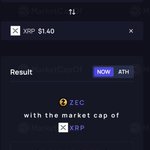
Zcash holders after criminals start using their tech instead of Monero

🚨BREAKING: ZachXBT says alleged DPRK attackers are now shielding stolen Bitget funds through Zcash.
Around 2,700 $ZEC, worth $3.8M, has reportedly started moving into Zcash’s Ironwood.
This means the stolen ZEC is now being pushed into a shielded pool, where transaction details can be hidden and tracing becomes much harder.
Roughly 18,900 ZEC, worth $28.3M, was stolen from Bitget’s wider $388M breach across multiple assets.
Earlier, Bitget CEO Gracy Chen says she is “not very optimistic” about recovering the stolen funds.




Cardo retweeted
the midcurving on SOL comes from a profound cynicism about crypto's future
what's going to happen is that crypto adoption is going to 100x
it will not just be perps, or RWAs, or memes -- it will be all of it
the totality of old finance combined with the weirdness of new finance, at planetary scale
and at that game, Solana is king
to that effect, one framing I've been riffing on: SOL is new money
'new' is a powerful & optimistic word -- it represents possibility and the infinite, rather than marginally optimizing spreadsheet accounting
it is too early in the game to treat novel internet money as it were a derivative of Costco stock. blockchains that scale are barely 2-3 years old
it's 2004, you can opt for JP Morgan or you can go for Apple
neither are wrong, but one is more optimistic
Cardo retweeted

What Is To Be Done?
I propose a simple plan:
Big AI companies should be allowed to build AI as fast and aggressively as they can – but not allowed to achieve regulatory capture, not allowed to establish a government-protect cartel that is insulated from market competition due to incorrect claims of AI risk. This will maximize the technological and societal payoff from the amazing capabilities of these companies, which are jewels of modern capitalism.
Startup AI companies should be allowed to build AI as fast and aggressively as they can. They should neither confront government-granted protection of big companies, nor should they receive government assistance. They should simply be allowed to compete. If and as startups don’t succeed, their presence in the market will also continuously motivate big companies to be their best – our economies and societies win either way.
Open source AI should be allowed to freely proliferate and compete with both big AI companies and startups. There should be no regulatory barriers to open source whatsoever. Even when open source does not beat companies, its widespread availability is a boon to students all over the world who want to learn how to build and use AI to become part of the technological future, and will ensure that AI is available to everyone who can benefit from it no matter who they are or how much money they have.
To offset the risk of bad people doing bad things with AI, governments working in partnership with the private sector should vigorously engage in each area of potential risk to use AI to maximize society’s defensive capabilities. This shouldn’t be limited to AI-enabled risks but also more general problems such as malnutrition, disease, and climate. AI can be an incredibly powerful tool for solving problems, and we should embrace it as such.
To prevent the risk of China achieving global AI dominance, we should use the full power of our private sector, our scientific establishment, and our governments in concert to drive American and Western AI to absolute global dominance, including ultimately inside China itself. We win, they lose.
And that is how we use AI to save the world.
It’s time to build.
Cardo retweeted

Frontier models are plateauing for most use cases, and the new frontier is becoming tool use and routing which makes models interchangeable and lowers prices
So "we must pace the frontier" sounds more like "can we slow down the repricing, please?"

We Must Pace the Frontier: I’ve written a new essay on why the AI industry should slow down, with a three-part plan for doing so.
Anthropic is unilaterally committing to the first of these steps. We’ll provide third-party evaluators with permanent, employee-level access to our systems, so that they can verify adherence to our safety measures, report on incidents, and assess models’ alignment during training.
You can read the full post here: darioamodei.com/post/we-must…