


Hackishi retweeted

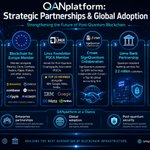
Qatar’s @MCITQatar is exploring quantum-resistant signatures with SignQuantum
powered by @QANplatform
Not a deployment contract yet, but the start of a national quantum-safe trust infrastructure
A government-wide trust layer validates an ecosystem, not just a product #HODL ethereum:0xaaa9214f675316182eaa21c85f0ca99160cc3aaa
$BTC $ETH

The Ministry of Communications and Information Technology of the State of Qatar (MCIT Qatar) signed a collaboration agreement with SignQuantum to strengthen cybersecurity readiness for quantum computing risks.
SignQuantum is a self-hosted post-quantum business trust and continuity solution protecting digital documents, data, and authenticated transactions. It combines post-quantum signatures with mathematically provable, quantum-resistant time-stamping via QANplatform's quantum-safe blockchain to preserve integrity and authenticity over time.
Learn more about the announcement on our blog.
Link in the replies 👇

Hackishi retweeted

The Ministry of Communications and Information Technology of the State of Qatar (MCIT Qatar) signed a collaboration agreement with SignQuantum to strengthen cybersecurity readiness for quantum computing risks.
SignQuantum is a self-hosted post-quantum business trust and continuity solution protecting digital documents, data, and authenticated transactions. It combines post-quantum signatures with mathematically provable, quantum-resistant time-stamping via QANplatform's quantum-safe blockchain to preserve integrity and authenticity over time.
Learn more about the announcement on our blog.
Link in the replies 👇
Hackishi retweeted

The shift from crypto speculation towards blockchain usage appreciation. Keep an eye on $QANX its enterprise usage focussed. See the recent @MCITQatar deal with @signquantum

Why I don't own $ETH so here is the data, not the vibes...
$ETH is $2,020 with a $250 billion market cap.. $SOL is $81 with a $49 billion market cap.. now look at who actually uses the chains...
$SOL does about 95 million transactions a day.. $ETH does 1.9 million.. that's 50x more activity on Solana.. 1.97 million wallets a day on $SOL vs 535,000 on $ETH the users already voted, the price just hasn't caught up yet...
A swap on $SOL costs a fraction of a cent and settles in 0.3 seconds.. I paid with USDC on Solana myself, it settled before I could close my phone.. the same swap on $ETH costs 50x more and takes 12 seconds a block, minutes to be final.. you cannot build on chain finance on a chain where every click costs money and takes forever...
And here is the killer number.. market cap per daily user.. $ETH is $468,000 per user.. $SOL is $25,000 per user.. you are paying 19 times more for every user on Ethereum than on Solana.. for a chain with less activity...
$ETH is built like the old system.. sequential, one transaction at a time, then they bolted on 70 different L2 to fix it and split all the liquidity across them.. $SOL was built different.. parallel, everything runs at once, one chain, one state, everything settles together.. and Alpenglow just went live Oct 21, finality heading from 12.8 seconds toward 150 milliseconds.. that's how code is supposed to work...
And then there is the security.. $ETH is where the hackers go shopping.. the 2nd biggest theft in crypto history was $1.46 BILLION in $ETH, stolen from Bybit in Feb 2025.. not by breaking the chain, by poisoning the Safe wallet screen the signers trusted.. and $ETH lost $1.7 BILLION across 310 incidents in 2025 alone, more than any chain.. why.. because $ETH is a maze of bridges, L2 and unaudited contracts.. every bridge is a new door, Ronin $625M, Poly $611M, and the hackers know it...
And the future threat.. quantum.. a big enough quantum computer breaks the signatures $ETH and $SOL both use today.. the difference is $SOL already shipped the fix.. the Winternitz Vault, live since Jan 2025.. hash based signatures, no elliptic curves for Shor's algorithm to break, works on mainnet today, no protocol change, no waiting.. $ETH has a plan.. a team formed Jan 2026, a roadmap from Vitalik, core infrastructure targeted 2029.. a plan is not a product.. when the quantum day comes, $SOL holders can already lock their coins behind math a quantum computer cannot break, $ETH holders are still waiting on a fork...
$ETH is where the big money parks.. $41 Billion in TVL, $133 billion in stablecoins, it is the deposit ledger.. but finance is not about where money parks, it's about where money MOVES.. and the movement is on Solana.. more DEX volume every week, more fees paid every day, more users every day...
$ETH is legacy.. it had its run, it built the category, respect for that.. but the future of on chain finance needs speed, sub cent fees and one chain that everything runs on.. that's Solana.. that's why I own $SOL and not $ETH!

Hackishi retweeted
Beyond the quantum hype: government-level collaboration
Qatar’s @MCITQatar signed an agreement with @signquantum to strengthen #CyberSecurity readiness for quantum computing risks
The key question now: how does this translate into implementation?
Worth watching $QANX
$ETH $BTC

Congrats Signquantum and $QANX team!
This highlights Johann working as Blockchain Director of MBK and their work with MCIT - an official cabinet-level ministry of the Qatari government.
The work with government and enterprise is reaching new heights. Validates the strategy to work hand in hand with vested partners that have helped in shaping the requirements of mainnet.
Hackishi retweeted

وشملت الشراكات مجالات الذكاء الاصطناعي وحوكمته، وتطوير القدرات القيادية والتنفيذية، والأمن السيبراني، وتعزيز الخصوصية
The partnerships covered AI and its governance, leadership and implementation capabilities, cybersecurity, privacy-enhancing technologies


Hackishi retweeted
No matter how you evaluate the Binance hack, or the quantum risk, one thing is for certain.
If you want to compete on offering Blockchain solutions going forward...
You better learn EXACTLY what is required for Enterprise and Government adoption.
Meeting all those requirements will be a very difficult bar to pass.
QANplatform has invested the time partnering to learn how to pass that bar.
If you just started coming up with plans for quantum migration- you don't pass the bar.
If you haven't looked at how to make it easy to engage- you don't pass the bar.
If you aren't offering utility and innovation they want and need- you don't pass the bar.
Hackishi retweeted

🔥 Bitcoin’s quantum migration to begin before holders are forced to rush.
After reading @Coinbase’s proposal, I’m watching 3 things include migration costs, institutional custody, and the ownership rules for dormant BTC.
[1] Bitcoin needs room to change its cryptography.
Coinbase supports evaluating address designs that can accommodate different signature schemes over time.
P2MR / BIP-360 and P2TRv2 are among the proposals discussed. Neither alone makes Bitcoin quantum-safe.
I favour keeping that flexibility. If an algorithm’s security weakens, Bitcoin needs a practical way to replace it.
[2] Security has to work within Bitcoin’s economics.
The candidates include ML-DSA, SLH-DSA, Falcon, and SHRINCS.
Larger signatures consume more block space. Smaller stateful designs introduce signing-state management risks.
Institutional custodians also need compatibility with multiparty signing.
My financial filter = migration cost, network capacity, and reliable execution across wallets and custodians.
[3] Dormant BTC creates the hardest ownership debate.
Leaving exposed coins spendable could allow future quantum theft. Freezing them could block legitimate owners who failed to migrate.
Coinbase wants this debate to proceed separately from signature upgrades. It has not endorsed a specific freeze, deadline, or recovery policy.
I agree. Protection for active holders should advance while the community works through the ownership questions.
4 projects I’m watching across this category:
1/ base:0x37696cd8f723ce541ac376f79fc109080e505ba3 - @QRLedger: Its live network uses XMSS hash-based signatures. The clearest thematic fit for a blockchain built around post-quantum security.
2/ algorand:native - @Algorand: Native Falcon-1024 accounts are live on mainnet. Meaningful deployment, although its consensus VRF still needs a quantum-resistant replacement.
3/ $STRK - @Starknet: Smart accounts allow individual signature upgrades, with an experimental Falcon account already demonstrated on mainnet. Full protection still requires network upgrades and addressing Ethereum dependencies.
4/ $QANX - @QANplatform: XLINK connects Ethereum-compatible keys with ML-DSA-65 keys for migration.
These are research candidates. Bitcoin adopting quantum-resistant signatures would not automatically create demand for their tokens.
I hope these chains will actually survive and become major in PQ era.

Hackishi retweeted
Last $QANX update being misjudged big time.
First, there is the subtle acknowledgement of time pressure highlighted below (I missed it at first)- which means they are certainly pushing for the finish line.
Second, it outlines an IMPROVED plan to meet the new ask of tackling Lighthouse. The previous plan was not affecting timing, and now they have a better plan. They are on the cusp of delivering the extraordinary chain they envisioned, but until people hear a date, they'll reach the wrong conclusions.
An ideal scenario for buyers who see what's coming. Not so good for those hung up on the past.

Hackishi retweeted
Halloween party setting or science dictionary entries?
superposition
Schrödinger's cat, alive and dead
spooky action at a distance
quantum teleportation
Zitterbewegung
quantum hair
magic state
ghost particle
quantum foam
quantum gate
quantum supremacy
Trick: they are all real physics.
Treat: the one that should actually scare you is the quantum gate. Stack enough of them in the right pattern in a quantum computer, and it can break the cryptography most blockchains are currently built on.
Hackishi retweeted
[Announcement]
On Friday, we shared the current codebase with the auditor to get a cost and time estimate.
We are eager to elaborate on the features related to the audit submission.
Read the full details on our blog.
Link in the replies. 👇

Hackishi retweeted
Really curious to see what @QANplatform has improved! The codebase has now been shared with @hackenclub
Looking forward to Monday’s update! Progress matters more than FOMO

Hackishi retweeted

10 post-quantum crypto projects worth watching before 2027 👇
recently, i've noticed more attention flowing into post-quantum crypto projects, especially smaller caps focused on quantum-resistant security.
after my previous post about 10 alpha picks on @safetrade, i decided to dig deeper into this narrative.
one thing is becoming clear: quantum security is gradually moving from a long-term concept to actual blockchain development.
NIST standardized its first post-quantum cryptographic algorithms in 2024, and several crypto projects have already started implementing them.
i believe this could become an interesting narrative heading into 2027, particularly for projects that already have working technology.
here are 10 projects on my watchlist:
[1] base:0x37696cd8f723ce541ac376f79fc109080e505ba3 | @QRLedger
– one of the earliest quantum-resistant blockchains, using XMSS signatures since its 2018 mainnet launch.
– built around post-quantum security from day one, with a long operating history.
[2] $QTC | @QuantusNetwork
– launched mainnet in sep 2026 with native ML-DSA signatures.
– combines PoW, post-quantum security and ZK-based transaction aggregation.
– a relatively new pure-play project i'd keep watching as its mining ecosystem and liquidity develop.
[3] algorand:native | @Algorand
– Falcon-based State Proofs have been live since 2022.
– native Falcon-1024 accounts became available on mainnet in aug 2026.
– one of the more established L1s making measurable progress on quantum-resistant accounts.
[4] $NEAR | @NEARProtocol
– introduced ML-DSA transaction signing on mainnet in jul 2026.
– users can add post-quantum access keys to existing accounts.
– its broader roadmap also covers wallet support, consensus and cross-chain security.
[5] $STRK | @Starknet
– experimental Falcon-512 account transactions have already been demonstrated on mainnet.
– account abstraction allows wallets to adopt different signature schemes without a network-wide hard fork.
– still early, but i think this flexibility could become increasingly valuable.
[6] $MCM | @mochimocrypto
– has used WOTS+ hash-based signatures since genesis in 2018.
– another early native post-quantum project with a different security architecture.
– worth watching as more attention shifts toward smaller, crypto-native PQC networks.
[7] $CELL | @cellframenet
– a quantum-resistant Layer 0 focused on decentralized services and infrastructure.
– supports post-quantum signatures, including Dilithium, with a flexible cryptographic architecture.
– an interesting infrastructure play if demand for quantum-safe blockchain services expands.
[8] $QANX | @QANplatform
– building a quantum-resistant, EVM-compatible blockchain.
– uses ML-DSA-based technology and supports smart-contract development across multiple programming languages.
– public mainnet delivery and actual ecosystem adoption remain important catalysts to monitor.
[9] $SUI | @SuiNetwork
– developing native ML-DSA-65 accounts and hash-based quantum-safe vaults.
– targeting testnet support by late 2026 and mainnet account authentication in Q1 2027.
– a larger-cap project with a clear post-quantum development roadmap.
[10] tezos:native | @tezos
– launched Quantumnet, an experimental post-quantum testnet, in sep 2026.
– developers are testing quantum-resistant consensus and network architecture.
– still a research-stage initiative, but a project worth tracking for further upgrades.
---------------------------------
i see two potential opportunities in this narrative.
– smaller pure-play projects like base:0x37696cd8f723ce541ac376f79fc109080e505ba3, $QTC, $MCM and $CELL could attract more speculative attention if post-quantum becomes a stronger market theme.
– established ecosystems like algorand:native, $NEAR, $STRK and $SUI could benefit from making quantum-resistant security available to existing users.
personally, i'll be paying closer attention to projects that can demonstrate real onchain implementation, active development and improving liquidity.
ofc, having post-quantum technology doesn't automatically make a token undervalued. adoption, tokenomics and valuations still matter.
i think this narrative is worth watching into 2027.


10 alpha picks on @safetrade exchange 👇
recently, projects listed on @safetrade have been getting more attention, especially those focused on privacy, post-quantum security, PoW and decentralized compute.
some tokens like $PEARL and tensorcash:native have already shown strong momentum.
i've always believed that liquidity follows attention. when a new narrative starts gaining traction, opportunities often emerge in projects that haven't attracted much attention yet.
SafeTrade is becoming an interesting place to look for early-stage projects, as several tokens get listed there before making their way to larger exchanges.
this morning, i spent some time going through the listings and picked out 10 projects i believe have growth potential.
here's my watchlist:
[1] $PEARL | @prlnet – AI compute & research
[2] tensorcash:native | @Tensorcash – verifiable AI inference
[3] $QUANTUS | @QuantusNetwork – post-quantum security
[4] base:0x9b5e262cf9bb04869ab40b19af91d2dc85761722 | @nockchain – ZK-powered PoW blockchain
[5] $QUBIC | @Qubic – decentralized AI compute
[6] $NPT | @NeptuneCash – privacy & post-quantum cryptography
[7] minotari:native | @tari – PoW ecosystem
[8] $GNK | Gonka – decentralized AI compute
[9] $XEL | XELIS – privacy-focused PoW blockchain
[10] $CLORE | @clore_ai – decentralized GPU marketplace
i'll be keeping an eye on these projects, especially those with active development, growing communities and improving liquidity.
ofc, not every token will perform well, and liquidity is still thin across many SafeTrade pairs.
but if this narrative continues to gain traction, i believe more opportunities could emerge from this list.

Hackishi retweeted
Last week, Google shortened the timeline for quantum computers.
They demonstrated that magic state cultivation works in practice on their Willow processor.
Magic states are what quantum computers need to perform operations, and they've always been expensive to produce. By some estimates, they potentially consume up to 95% of a machine's capacity.
The method reduced errors by about 40x compared to without cultivation, meaning that higher-quality magic states can be achieved much more efficiently.
More efficient error correction means smaller machines doing bigger jobs.

Hackishi retweeted
eBay knew by the early-to-mid 2000s that its original architecture had a scaling ceiling.
The rewrite was expensive and unglamorous, and it took years.
But it happened anyway, because traffic and cost pressure forced it.
The signature scheme used by most major blockchains has a ceiling too: a fault-tolerant quantum computer.
The difference between the two isn't whether the old system can keep running. Both do.
It's what the old system is like while it runs: eBay's was slow. A blockchain's is exposed.


Hackishi retweeted

feels like quantum technology is entering a parabolic growth phase

New from our STEM Fellows Program: Designing more efficient quantum circuits with Claude.
Given plain-language instructions, Claude Mythos 5 designed quantum circuits that improve on the best published ones, sometimes by an order of magnitude or more.
More efficient circuits reduce the resources needed by quantum algorithms, which could bring quantum computing applications in chemistry and materials science within reach sooner.
Read more: anthropic.com/research/desig…

Hackishi retweeted

JUST IN: Google $GOOGL announces major advancement in quantum computing.
Hackishi retweeted

Ce matin, j'ai ouvert mon portefeuille, j'ai vu le rouge… et j'ai (presque) souri.
Pas parce que j'aime perdre de l'argent. Parce qu'hier soir, j'ai lu une info qui m'a fait oublier le prix.
37 banques européennes, dont BNP Paribas, ING et BBVA, viennent d'obtenir le feu vert de la banque centrale néerlandaise pour lancer leur stablecoin en euro. Le consortium s'appelle Qivalis. Et la chaîne qu'elles ont choisie pour démarrer, c'est #Ethereum.
Je te mentirais si je te disais que je m'y attendais. Moi qui passe mon temps à taper sur Bruxelles et MiCA, j'étais persuadé que nos banques allaient bricoler leur propre chaîne fermée, dans leur coin. Elles ont choisi celle que j'ai en portefeuille.
J'ai gardé voir renforcer ma position $ETH quand ils sont passés sous les 2 600$. Je les ai gardés quand tout le monde m'expliquait qu'Ethereum était fini, que les L2 le vidaient, que Solana allait le remplacer. Et aujourd'hui, la plus grande banque française prépare l'euro sur Ethereum.
⚡️Aujourd'hui, l'euro, c'est à peine 0,2% des stablecoins, contre plus de 95% pour le dollar. Je ne crois pas que ce chiffre reste longtemps comme ça. Le lancement est attendu dans les prochains mois, peut-être dès novembre.
Alors oui, je vois le rouge. Mais je ne vends rien. Et si ETH vient chercher les 2 000-2 200$, mes stablecoins sont prêts.


Hackishi retweeted
Wait, you need approval to research an idea?
Meanwhile @QANplatform is lining up their clients, building exactly what they need to adopt post quantum Blockchain tech

