
marketing | brand | wine | crypto + AI | hockey
New York, NY
Joined September 2009
- Tweets2.6K
- Following3.5K
- Followers1.6K
- Likes8K






Hanif Perry retweeted

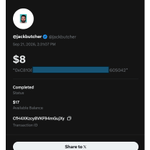
You: Want a PS5 to play GTA 6.
We: Are giving 6 away.
Just repost this, reply with why you want it, we'll pick the best replies to win.
Paid out in upgraded money (USDC). US only.


Model Y L looks sick and available for launch edition in the US: tesla.com/modely#L

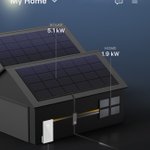
Bring on the New York heat. No need for 78 degree thermostats when you use free energy from the ☀️.
Thanks @tesla

4
91

2026: "I set a cron job on my OpenClaw for reminders to alert me on trash and recycling day"
2030: "My autonomous robot takes out my trash and recycling out on those days automatically"
It will be wild...
1
8
98
This 🔥

Researchers have developed a method of making french fries that results in a healthier bite without sacrificing crispiness. wired.com/story/scientists-h…

1
6
134
Hanif Perry retweeted

🚨 This is exactly how the 4 moonbound astronauts will travel 400,000 km from Earth.
Strap yourself to 4.1 million kilograms of controlled explosion and ride it to the edge of everything humans have ever known.
The Artemis II trajectory reveals something most miss about deep space travel: you don’t pilot to the moon. You become cargo on a ballistic arc calculated with mathematical precision that would make ancient astronomers weep.
Launch from Cape Canaveral begins with two solid rocket boosters generating 3.6 million pounds of thrust each. These aren’t engines you can throttle or shut off. Once lit, they burn until empty. You’re riding pure chemical violence upward at accelerations that compress your organs and blur your vision. Each booster burns through 1.1 million pounds of propellant in 120 seconds, generating more power than the entire electrical grid of most countries.
When the boosters separate two minutes in, you’re already traveling 3,000 miles per hour. The core stage takes over, burning liquid hydrogen and oxygen through four RS-25 engines. These are the same engines that powered the Space Shuttle, but upgraded for deep space. Each engine operates at temperatures that would vaporize most metals, channeling combustion through nozzles engineered to nanometer tolerances.
Six minutes after launch, the core stage drops away. You’re in low Earth orbit, but barely. The trajectory puts you in an elliptical path that skims the upper atmosphere. Solar arrays deploy like mechanical wings. Life support systems activate. Four humans now depend entirely on machines to survive in an environment that kills unprotected life in seconds.
The next 90 minutes are psychological preparation for what comes next. You’re still close enough to Earth that if something fails catastrophically, you might survive reentry. After translunar injection, that safety net disappears completely.
The Interim Cryogenic Propulsion System fires once. A single engine burn lasting minutes accelerates you to escape velocity: 25,000 miles per hour. You are now traveling faster than any human has traveled since 1972. The burn must be perfect. Too little thrust and you fall back to Earth. Too much and you overshoot the moon entirely, drifting into solar orbit with no possibility of rescue.
What follows is four days of coasting through interplanetary space on a trajectory so precisely calculated that it accounts for the gravitational influence of the sun, Earth, moon, and even Jupiter. You’re riding a path through space and time that exists only because teams of mathematicians spent years modeling celestial mechanics down to the microsecond.
The spacecraft carries no radar, no GPS, no external reference points. Navigation depends on star trackers that identify constellations and calculate position by comparing stellar angles to digital star maps. You navigate the same way Polynesian sailors did, except your ocean is vacuum and your destination moves 2,000 miles per hour relative to Earth.
Seventy hours into the mission, you cross the point where lunar gravity becomes stronger than Earth’s pull. The mathematics of your trajectory flip. You’re no longer escaping Earth. You’re falling toward the moon.
But you don’t land. The trajectory aims for the moon’s far side, using lunar gravity like a cosmic slingshot. As you swing around, the moon’s mass redirects your momentum back toward Earth. Ancient orbital mechanics discovered by Johannes Kepler 400 years ago bend spacetime to fling you home.
The far side transit is when psychological isolation peaks. You pass behind the moon, losing radio contact with Earth for the first time since launch. The only humans in the solar system disappear behind 2,000 miles of lunar rock. Mission Control goes silent. You are alone with the machinery in ways no human has experienced since Apollo 17.
During lunar approach, you fly closer to the moon’s surface than the International Space Station orbits Earth. Craters and mountains pass beneath at lunar dawn, shadows stretching across terrain untouched by atmosphere or weather for billions of years. You see geology older than complex life on Earth.
The return trajectory begins automatically. Lunar gravity has already bent your path homeward. You’re riding Newton’s laws back across 400,000 kilometers of emptiness at speeds that compress the return journey into four days.
Reentry begins 400,000 feet above the Pacific Ocean. The heat shield faces temperatures of 5,000 degrees Fahrenheit—hot enough to melt copper, approaching the surface temperature of the sun. Atmospheric friction converts 25,000 miles per hour into thermal energy that would vaporize the spacecraft without the carbon composite barrier between you and physics.
Parachute deployment requires split-second timing. Deploy too early and the chutes shred in the hypersonic airflow. Deploy too late and you impact the ocean at terminal velocity. Main chutes slow you from 300 miles per hour to 20 miles per hour in seconds. The deceleration forces compress your spine and test the limits of human physiology.
Pacific splashdown ends a ten-day journey covering 1.4 million miles. You return as the first humans to travel beyond Earth orbit in over fifty years, carrying radiation exposure from cosmic rays that passed through your body, and psychological changes from seeing Earth as a pale blue dot suspended in infinite dark.
The entire mission depends on technologies working perfectly in an environment that destroys electronics, boils lubricants, and subjects every component to temperature swings of 500 degrees. One software glitch, one seal failure, one navigation error means four humans drift through space until life support expires.
Engineering manages these risks through redundancy, testing, and margins of safety built into every system. But at 400,000 kilometers from Earth, margin for error approaches zero. Success requires mechanical perfection operating in conditions no Earth laboratory can fully simulate.
We call it exploration, but what Artemis II really tests is whether human consciousness can psychologically handle complete separation from everything that created it while trusting life entirely to machines operating at the edge of physical possibility.
The trajectory looks like a simple loop on paper.
In reality, it’s controlled falling through spacetime using mathematics as your only safety net.


Should be an Air B&B model to charge your @Tesla car when you are in a dead zone like this. @TeslaCharging - what can we do about this?
FSD to in-laws 💯 but 🔌 is 🤦🏽♂️

1
80
Used @coinbase AI-to-human support. What a phenomenal experience. How our conversation ended. Give your team a shout out @brian_armstrong!

Exactly how I feel as a Model Y owner with Supervised FSD. Mind bending...

It really is bizarre.
Most of my friends don't have FSD (or a Tesla).
And it is the single biggest lifestyle difference between us.
They drive their cars.
My car drives me.
They don't get how much--even at its current capability-level--the product changes life-feel.
FSD truly is a mass luxury product. That it is still so narrowly enjoyed is mind-bending.
2
89

Hanif Perry retweeted

we're making @blocks smaller today. here's my note to the company.
####
today we're making one of the hardest decisions in the history of our company: we're reducing our organization by nearly half, from over 10,000 people to just under 6,000. that means over 4,000 of you are being asked to leave or entering into consultation. i'll be straight about what's happening, why, and what it means for everyone.
first off, if you're one of the people affected, you'll receive your salary for 20 weeks + 1 week per year of tenure, equity vested through the end of may, 6 months of health care, your corporate devices, and $5,000 to put toward whatever you need to help you in this transition (if you’re outside the U.S. you’ll receive similar support but exact details are going to vary based on local requirements). i want you to know that before anything else. everyone will be notified today, whether you're being asked to leave, entering consultation, or asked to stay.
we're not making this decision because we're in trouble. our business is strong. gross profit continues to grow, we continue to serve more and more customers, and profitability is improving. but something has changed. we're already seeing that the intelligence tools we’re creating and using, paired with smaller and flatter teams, are enabling a new way of working which fundamentally changes what it means to build and run a company. and that's accelerating rapidly.
i had two options: cut gradually over months or years as this shift plays out, or be honest about where we are and act on it now. i chose the latter. repeated rounds of cuts are destructive to morale, to focus, and to the trust that customers and shareholders place in our ability to lead. i'd rather take a hard, clear action now and build from a position we believe in than manage a slow reduction of people toward the same outcome. a smaller company also gives us the space to grow our business the right way, on our own terms, instead of constantly reacting to market pressures.
a decision at this scale carries risk. but so does standing still. we've done a full review to determine the roles and people we require to reliably grow the business from here, and we've pressure-tested those decisions from multiple angles. i accept that we may have gotten some of them wrong, and we've built in flexibility to account for that, and do the right thing for our customers.
we're not going to just disappear people from slack and email and pretend they were never here. communication channels will stay open through thursday evening (pacific) so everyone can say goodbye properly, and share whatever you wish. i'll also be hosting a live video session to thank everyone at 3:35pm pacific. i know doing it this way might feel awkward. i'd rather it feel awkward and human than efficient and cold.
to those of you leaving…i’m grateful for you, and i’m sorry to put you through this. you built what this company is today. that's a fact that i'll honor forever. this decision is not a reflection of what you contributed. you will be a great contributor to any organization going forward.
to those staying…i made this decision, and i'll own it. what i'm asking of you is to build with me. we're going to build this company with intelligence at the core of everything we do. how we work, how we create, how we serve our customers. our customers will feel this shift too, and we're going to help them navigate it: towards a future where they can build their own features directly, composed of our capabilities and served through our interfaces. that's what i'm focused on now. expect a note from me tomorrow.
jack


This…

Money will continue to be important with artificial superintelligence because we will still have private property, and private property necessitates money.
There will continue to be scarce assets like prime real estate, front row concert tickets, even NFTs with good provenance.
More and more people will be paid to play games and do other jobs that we think of as leisure now. Consider chess, one of the first intellectual domains in which AI achieved superhuman performance. People were saying chess was dead after Deep Blue beat Kasparov in 1997. Now, nearly 30 years later the chess industry is 5-10x bigger with over 3x the grandmasters.
2
133

