


Ric retweeted

My friend makes $1.2 million a year as an Anthropic engineer.
I asked him how he learned prompting so well. He sent me a video that was never supposed to get out. Their core team's prompting playbook.
You won’t find anything better about prompting than this 30 minutes video.
I watched it last night. Halfway through, I realized I've been using Claude completely wrong for two years.
Watch it, then read my article below.


Ric retweeted

Microsoft quietly dropped one of the CLEANEST FREE AI agent courses on GitHub
Building AI agents is the skill companies are hiring for right now
18 lessons. Real code. Design patterns. Tool use. Agentic RAG. Multi-agent systems. Memory. Context engineering. Production deployment. Security
It’s the practical path most people are still paying $2,000+ for
01 Intro to AI Agents and use cases
02 Exploring agentic frameworks
03 Agentic design patterns
04 Tool use design pattern
05 Agentic RAG
06 Building trustworthy AI agents
07 Planning design pattern
08 Multi-agent design pattern
09 Metacognition design pattern
10 AI agents in production
11 Agentic protocols (MCP, A2A)
12 Context engineering
13 Agent memory management
14 Multi-agent collaboration
15 Computer-use agents
16 Scaling and deployment
17 Local AI agents
18 Securing AI agents
Each lesson has written content + Python code samples + short video
Microsoft put the full thing on GitHub for free
80k+ stars already
You either start building real agents now, or keep watching random YouTube videos for another year
Save this ↓


Ric retweeted

🚨 عاجل: Claude فيه ميزة اسمها وضع القراءة والتعلّم (Reading & Learning Mode)، تقدر تستخدمها عشان تتعلّم أي شيء بسرعة تفوق 99% من الناس!
إليك 5 أوامر (Prompts) لتفعيل هذه الميزة والاستفادة منها:
Ric retweeted

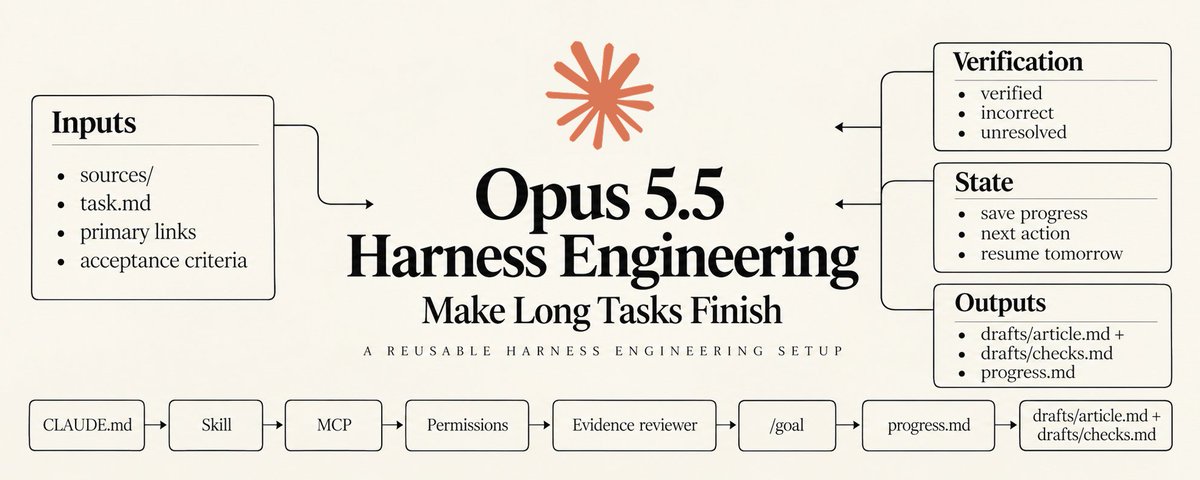
99% 的人觉得自己会做 Agent,其实连 Harness 是什么都不知道。
Google 刚刚放出一套免费的 2 小时实操课,从 0 到 100 手把手教你把 Agent 真正跑稳。
> 10% 先做第一个带工具的 Agent;
> 30% 进入 Harness 和 Loop 工程,让它自己循环、自己纠错;
> 60% 上 Graph 工程,把流程变成可控的图;
> 100% 直接做出能 24/7 跑的多 Agent 系统。
模型本身只会生成代码和回答。
真正让它能干活的,是外面那层 Harness:
上下文和记忆、工具和执行流、沙箱和安全、还有验证(代码检查 + LLM 评判 + 人看一眼)。
没有这层,Agent 只是个好看的 demo,一碰真实任务就崩。
大多数人还在堆 prompt 和框架。
真正拉开差距的,是先把 Harness 建对:
让 Agent 有状态、有边界、有验证、能自己转下去。
这两个小时实操课,完全免费。
比市面上价值700刀的课还要干货。
建议收藏,今晚就观看 。🔖
Ric retweeted

si estás empezando a crear aplicaciones con Claude, te recomiendo entender algunos conceptos básicos sobre cómo se organiza una aplicación.
1) frontend -> es todo lo que ve y utiliza el usuario. pantallas, botones, formularios y navegación.
2) backend -> es donde se ejecuta la lógica del servidor. por ejemplo, procesar un pago, validar permisos o guardar información.
3) API -> permite que distintas partes de tu aplicación se comuniquen. por ejemplo, cuando el frontend necesita consultar información, puede enviar una request a un endpoint del backend.
4) base de datos -> almacena la información que necesitás mantener, como usuarios, productos o pedidos.
5) seguridad -> nunca confíes en los datos que llegan del frontend. validá las entradas, verificá los permisos en el servidor y protegé las claves privadas. si usás Supabase, aprendé cómo funciona RLS.
6) GitHub -> te permite guardar tu código en un repositorio, mantener un historial de cambios y recuperar versiones anteriores si algo falla.
7) deploy -> es publicar tu aplicación para que otros puedan usarla. aprendé a configurar variables de entorno, conectar tu repositorio y revisar los logs cuando algo falla.
para arrancar, podés usar un stack bastante simple:
-> Next.js para frontend y backend.
-> Supabase para base de datos y autenticación.
-> GitHub para guardar y versionar el código.
-> Vercel para publicar tu aplicación.
además, con Claude y los MCPs podés automatizar gran parte del trabajo: configurar Supabase, gestionar tu código en GitHub y hacer el deploy en Vercel.
aunque Claude haga la mayoría del trabajo, te recomiendo ir aprendiendo estos conceptos a medida que construís. cuanto más entiendas cómo funciona todo, mejores aplicaciones vas a poder crear.

Ric retweeted

El mejor artículo que he leído sobre software factories. Cada vez está más claro hacia dónde va nuestra profesión y lo diferente que será nuestro trabajo en unos años.

New blog post out! Learn how I designed and built my software factory. It covers the architecture, design choices, and important learning along the way. Big shout out to @kunchenguid who inspired some design choices (the daemon) along the way!
open.substack.com/pub/thebui…

Ric retweeted

🔴 Alguien filtró el prompt que hace que Claude Code cree sus propias skills
Y trabaje mejor cada día sin que toques nada.
Sin programar.
Solo pegas.
En 2 minutos Claude monta su propia biblioteca de skills a partir de lo que repites.
El prompt está abajo 👇
Ric retweeted

Eres un culero Cravioto

🔴Tras la muerte de su hijo al caer en un socavón, Desiderio Pérez aseguró que presuntos funcionarios del Gobierno de la Ciudad de México se acercaron a la familia con un ofrecimiento de apoyo condicionado a no dar más información periodística sobre el caso.
Pidió que se haga justicia y que se sancione a quienes resulten responsables.
Ric retweeted

🔴 Fable 5.2 es una AUTÉNTICA LOCURA.
Pásale esta imagen a Claude Fable 5.2 y te creará tu primer equipo completo de agentes de IA, con sus prompts, herramientas y flujos de trabajo.
Guárdala, y empieza a automatizar tu trabajo:

Ric retweeted

Envíale esto a Claude Fable 5.2 antes de irte a dormir, te va a cambiar la vida…
Mientras duermes, investiga todo el mercado y te propone ideas de startups que nadie ha descubierto todavía.
Guarda este prompt antes de que todo el mundo empiece a usarlo:


Ric retweeted

این دیگه واقعاً وارد مرحله خطرناکی شده! 🔥
الان میتونی به یک AI Agent قدرتی بدی که معماری یک کدبیس رو بفهمه، مثل یک هکر به نرمافزارت حمله کنه و قبل از انتشار، نقاط ضعفش رو ببنده.
اما جذابتر از خود ابزارها، ترکیب اونهاست.
۴ ترکیب متنباز که ارزش بررسی دارن:
1. Graphify — Understand
github.com/Graphify-Labs/gra…
کل معماری پروژه رو به یک Knowledge Graph تبدیل کن. ارتباط فایلها، توابع و وابستگیها رو ببین؛ حتی مشخصه کدوم ارتباط از کد استخراج شده و کدوم استنباط شده.
2. REA — Attack
github.com/morluto/rea
نرمافزارت رو از نگاه یک مهاجم بررسی کن. مهندسی معکوس، تحلیل ساختار و پیدا کردن اطلاعاتی که نباید در خروجی منتشر بشن.
3. BLA — Harden
github.com/qybaihe/bla
به Agent توانایی سختتر کردن مهندسی معکوس و محافظت از نرمافزار در برابر تحلیل خودکار رو بده.
4. Digital Twins + Agentic OS — Build the Ecosystem
اینجا وارد مرحله بعدی میشیم.
بهجای ساخت یک Agent مستقل، یک اکوسیستم بساز که حافظه، دانش، هویت، مهارت، ابزار و قدرت اجرای مستقل داشته باشه.
ما هم در همین مسیر روی چند زیرساخت متنباز کار میکنیم:
→ Molavi Agentic OS
github.com/tmolavi/molavi-ag…
یک اکوسیستم ماژولار برای Agentها، Skills، Teams و Workflows.
→ TM Second Brain
github.com/tmolavi/tm-second…
زیرساخت حافظه و دانش برای اتصال Agentها، سیستمها و Digital Twins.
→ GEO-Scope
github.com/tmolavi/geo-scope
برای اندازهگیری و تحلیل دیدهشدن برندها در موتورهای جستوجو و هوش مصنوعی.
→ MCP Agent Skills Hub
github.com/tmolavi/mcp-agent…
برای سازماندهی و توسعه اکوسیستم مهارتها و اتصال Agentها به ابزارها.
تصور کن این قابلیتها رو کنار هم قرار بدی:
Understand → Attack → Harden → Verify → Remember → Orchestrate
آینده فقط متعلق به کسی نیست که Agent هوشمندتری داره.
متعلق به کسیه که میتونه Digital Twin بسازه، بهش حافظه بده، چندین Agent متخصص رو هماهنگ کنه و یک اکوسیستم خودتوسعهگر و قابلاعتماد بسازه.
ما هم بهجای اینکه فقط درباره این آینده حرف بزنیم، داریم زیرساختش رو میسازیم.
Don’t just build AI agents. Build the operating system for your digital twins.
تمام پروژهها در GitHub:
github.com/tmolavi
Ric retweeted
Esto es una locura
Anthropic ha compartido un prompt para Fable 5.2 que puede diseñarte un equipo de agentes de IA para automatizar tu trabajo
Tú le dices qué trabajo quieres automatizar
Él define los agentes, escribe sus prompts y organiza cómo trabajan juntos.
Hasta te prepara un plan de 7 días para ponerlo en marcha
Dale esta imagen a tu Claude y pruébalo:


Ric retweeted
ESTE DOCUMENTO DE ANTHROPIC TE VA A CONSEGUIR UN ASCENSO
La forma más rápida de ascender es automatizar el trabajo que haces hoy
Esta guía técnica oficial de Anthropic explica cómo enseñarle a Claude a ejecutar tus tareas del día a día
Crea Skills personalizadas para que la IA se encargue del trabajo pesado:
→ convierte tus procesos habituales en instrucciones reutilizables
→ deja que el agente ejecute tareas en segundo plano
→ conéctalo a tus herramientas locales mediante servidores MCP
Delega las tareas repetitivas y dedica tu tiempo al trabajo que te puede conseguir ese ascenso
Aquí tienes la guía para hacerlo paso a paso👇
Ric retweeted

🚨 Claude ya te enseña inglés a tu nivel y a cualquier hora, como un profesor particular que cobra 21 € la hora.
Abre un chat nuevo y usa estos 7 prompts:
Ric retweeted

我觉得这篇文章最值得关注的,不是作者用了多强的模型,也不是他配置了多少 Agent,而是他对整个软件开发工作流的理解,已经和很多人完全不在一个层面上了。
现在很多人用 Codex、Claude Code,还是传统的 Copilot 思维:给 AI 一个任务,等它写完代码,自己检查一下,发现问题再让它改,然后继续等。看起来是在用 Agent,实际上人依然是整个工作流的瓶颈。
而这篇文章提出的 15 条原则,本质上就是在重新分配人和 AI 的工作。
我觉得其中有几个认知非常值得展开。
第一,Prompt the What, not the How。
告诉 Agent 你最终想要什么,而不是告诉它每一步应该怎么做。
过去我们写 Prompt,恨不得把实现路径、技术栈、文件结构、执行步骤全部规定好。但模型能力越来越强之后,过度干预反而可能限制它探索更优解的空间。
真正应该明确的是目标、约束、验收标准,而不是把自己脑子里那套未必最优的实现方式强加给 Agent。
当然,这不意味着随便扔一句帮我做个商业级系统就能万事大吉。业务边界、性能要求、成本约束、交付标准,依然要定义清楚。
第二,Don't iterate with the agent. Let it build tools to iterate。
这一条我觉得特别牛逼。
大部分人现在还是在和 Agent 一轮轮试错。一个网页不好看,让它修改;修改完还是不好看,再修改。一个接口性能不好,先让它优化 A,发现没效果,再试 B。
为什么一定要这样?
为什么不能直接让 Agent 生成 20 种设计方案,建立一个可视化对比页面,让人一次性选择?
为什么不能让它针对性能问题提出 4 种假设,分别设计实验,跑出数据,再决定采用哪种方案?
真正的提升不是让 AI 更快地帮你试错,而是让它建立一套可以自动试错、自动评估、自动筛选的系统。
第三,Ask for irrefutable proof。
这一条可能是目前 Agent Coding 最容易被忽略的东西。
我自己给企业做过 GEO、RAG、AI Workflow、数字人自动化项目,对这个问题感受特别深。
Agent 经常会告诉你:“已经修复完成”“系统可以正常运行”“功能已全部实现”。
但它说完成了和真正完成了,完全是两回事。
接口能不能真正调用?视频有没有生成出来?字幕有没有正确合成?换一个客户上传素材还能不能正常跑?出现异常能不能恢复?有没有真实的测试日志和可复现结果?
这些才是证据。
以后判断 Agent 有没有把任务做好,不应该看它写了多少代码、输出了多漂亮的总结,而应该看它拿出了什么能够独立验证的东西。
第四,Make the whole SDLC legible to the agent。
不要只让 Agent 能看代码,还要让它能运行项目、执行测试、读取日志、检查部署、观察真实运行结果。
一个只能读写代码的 Agent,和一个能够接触完整软件开发生命周期的 Agent,执行能力根本不是一个层级。
模型之所以经常一本正经地胡说,很大程度上是因为它没有办法验证自己的判断。
你不给它日志,不给它测试环境,不让它运行真实程序,它很多时候只能猜。
但这也不代表给 Agent 无限权限。生产环境、客户数据、正式发布这些高风险操作,依然需要权限控制和必要审批。
第五,Don't wait for your agents. Let them wait on you。
我觉得这是未来个人工作流最值得改变的地方。
现在大量人使用 AI,依然是同步聊天模式:提出问题、等待回答、检查结果、继续追问。
但如果每一个任务都需要人盯着,Agent 再强,你一天也只有 24 个小时。
真正应该做的是把任务完整地交出去,让 Agent 在隔离环境里自主执行、测试、重试、记录过程,完成之后提供证据,需要决策的时候再来找你。
定时任务、Heartbeat、异步执行、主动通知,这些东西可能比再增加十几个 Skill 更有价值。
第六,Eval agentic knowledge。
这一条也是很多人完全没意识到的问题。
现在大家都在疯狂积累 AGENTS.md、Skills、MCP、各种规则和工作流,但很少有人真正测试过:这些东西到底有没有提升任务成功率?
你给 Agent 塞了 30 个 Skill,它真的用了吗?
用了之后,正确率提高了多少?执行速度快了多少?成本降低了多少?
如果没有对照实验,没有客观指标,那所谓的工作流优化,很可能只是在不断增加复杂度。
AI 时代真正稀缺的不是会使用多少工具,而是能够设计系统、定义目标、建立反馈闭环的人。
以前我们把 AI 当工具,人负责执行,AI 帮忙提高效率。
现在正在逐渐变成:人负责提出问题、定义结果、判断取舍,Agent 负责探索方案、调用工具、执行任务、验证结果。
这里还有一个非常重要的变化,就是代码本身正在从最终的工作对象,逐渐变成实现业务目标的一种中间产物。
企业不会因为你写了十万行代码就付钱,也不会因为你接入了几十个 MCP 就觉得你的系统有价值。
它只关心你能不能解决真实问题,能不能稳定交付,能不能持续维护,能不能降低成本。
未来工程师之间拉开差距的未必是谁写代码最快,而是谁最擅长把一个复杂目标,拆成一套可以被 Agent 自主执行、验证、迭代和交付的系统。
以前是人围着代码转,现在是 Agent 围着目标执行,而人负责判断什么才是真正正确的结果。
这可能才是 Agent Coding 真正开始改变软件工程的地方。

Finally summarized what I've been sending to friends in DMs View article

Ric retweeted

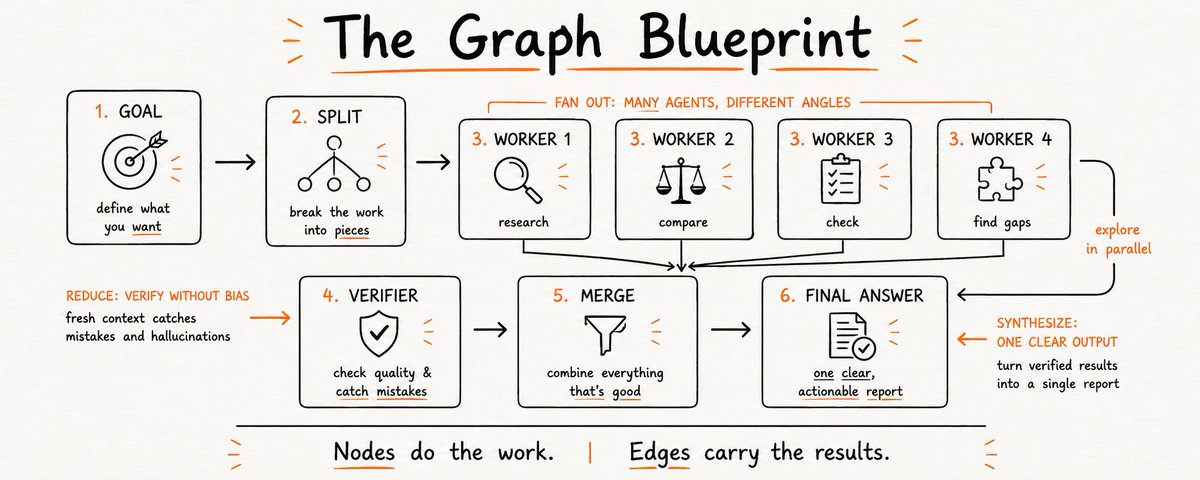
This is f*cking insane. Google just released a free 2-hour course on full Harness engineering, from 0% to 100%:
0:29 - Harness engineering from zero
11:08 - your first agent, built properly
28:08 - Eval engineering with a Chief of Staff agent
1:00:13 - Loop engineering
1:23:19 - a self-improving graph system that never stops
I've seen $500 courses that don't cover what it shows in the first 15 minutes.
Watch it, then go further with the guide below on building a system that improves itself.

Ric retweeted

Esto es auténticamente loco.
Ingeniero de Anthropic:
"No se supone que debas promptar a Opus 5.5.
Se supone que debes construir un sistema que se autoprompta. En Anthropic, el 90% de nuestros ingenieros ya han construido estos sistemas."
En solo 30 minutos, ella explica cómo Anthropic construye agentes de IA que recuerdan el contexto, aprenden de los errores, corrigen sus propios fallos y mejoran con cada ejecución.
Este es el cambio de simplemente usar IA a diseñar sistemas que funcionan de manera autónoma.
Honestamente, es mejor que la mayoría de los cursos de agentes de $1,000–$2,000 que he visto.

My passerby pulls my product out of its billboard image, and the lighting jumps to a completely different afternoon. I would prefer one time zone per ad.
I'm making this billboard reveal in CapCut PC, ending with the person using the product.
But the wide shot and close-up have noticeably different exposure.
I use the color adjustment controls to bring brightness and temperature closer, comparing both shots with my product reference.
Then I play the reach, reveal, and use in sequence, checking the product and skin tones.
Give this a try in CapCut PC when your shots look like different scenes.
tinyurl.com/2v23rn22
#capcutpc #capcutmarketing #capcutblackfriday #CapCutDidThat
Ric retweeted
Andrej Karpathy, miembro fundador de OpenAI, acaba de compartir un prompt para que Opus 5.5 termine cualquier tarea
Y es una auténtica locura
Envíaselo a Opus 5.5, ya me lo agradecerás:

Ric retweeted

THIS IS AN ACTUAL F*CKING GOLDMINE
Anthropic just shared one of the best tricks for Claude Code.
The idea: run Opus 5.5 and three Sonnet 5.5 subagents, each one keeping its own memory for the job it's best at.
Less repeated explaining, because every task lands on an agent that can reuse what it learned about your repo.
You just launch Claude Code like this:
claude --model opus
here's my split:
→ Opus 5.5 runs the session, plans the work and applies the final fixes
→ Sonnet 5.5 handles implementation, debugging and diff reviews in separate contexts
→ memory: project gives each subagent persistent notes that survive between sessions
→ you stop burning Opus 5.5 context on explaining the same repo conventions again
Opus 5.5 only steps in for the big calls at three moments:
→ before a plan locks
→ when the same error shows up twice
→ before calling it done
Sonnet 5.5 builds. Memory carries forward. Opus 5.5 reviews.
persistent memory takes the same idea one layer down: the findings you keep rediscovering (which module, which test, which fix actually worked) go into each agent's memory, and its next run starts with its saved memory index
the full tree
> Opus 5.5 runs the main session and coordinates the work
> builder implements features on Sonnet 5.5 and remembers repo conventions
> debugger fixes failures on Sonnet 5.5 and remembers verified root causes
> reviewer checks the diff on Sonnet 5.5 and remembers recurring review patterns
> Opus 5.5 reviews the synthesized diff before sign-off
> each worker keeps project-scoped memory and checks old notes against current code
paste the tree and this prompt into Claude Code ↓
"Reconfigure my Claude Code setup around this tree:
1. Run the main session on Opus 5.5. Verify both model aliases resolve to 5.5 on my provider.
2. Create three Sonnet 5.5 subagents in .claude/agents: builder (implements features), debugger (fixes failures), reviewer (checks the diff). Flag a restart if this agents directory is new.
3. Set memory: project on all three. Check that auto memory is enabled; ask before changing that setting.
4. Add one rule to CLAUDE.md: delegate implementation, debugging and diff reviews to these subagents to keep the main context small. Sequence dependent work.
5. Tell each agent to consult its memory before working and save only verified, reusable findings afterward. Keep MEMORY.md concise, link detailed notes, and recheck stale assumptions against the code.
Show me every change as a diff first. No edits until I say go."
↳ code.claude.com/docs/en/sub-…
save it, it'll come in handy.