

Everyday Hacks to Elite Attacks — Cyber Warfare. Ghost Ops. Red Team Tactics. HaxrByte. ▶ Full videos on YouTube ↓
Joined July 2009
- Tweets281
- Following420
- Followers130
- Likes133




An unpatched vCenter hands an [email protected] session to anyone who can reach TCP 2012. No password. On an internal, I'd check which VLANs can reach that port. Ever reached it from a user VLAN? 📡 GhostWire

[LIVE] Use CTFs to Think Like a Hacker — Pentester Tradecraft (19 Nov 2026) teapaw.org/i/broadcasts/2QnekAvNX…


Attacker AI agents hunted exposed AI gateways for the provider keys inside, then used the stolen keys to pay for the next search. On an internal, I'd check every LiteLLM or Dify box for default admin creds. Found one yet? 📡 GhostWire

1
2
73
You can attack an AD user's password without knowing it, logging in, or touching their machine.
If an account has "Do not require Kerberos preauthentication" set, anyone on the domain can request an AS-REP and crack it offline.
Check with PowerShell: Get-ADUser -Filter {DoesNotRequirePreAuth -eq $true}
Full walkthrough on why this works and what the hash actually tells you: youtube.com/watch?v=DcOfINGu…
Vates says nothing in the app logs records the bypass. So I'd check the proxy or web logs for an authenticationToken cookie of j:{} or j:%7B%7D. Then confirm the version is past the fix with one read-only call, and stop there.

1
1
63

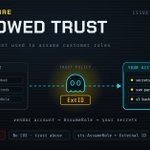
📡 GhostWire — Borrowed Trust
An attacker used a Qubole-linked AWS account to assume unused integration roles in customer accounts. On a cloud test, I'd check every role trusting an external account for a source IP condition. #CloudSecurity

1
2
77


AS-REP Roasting Attack in under 60 seconds.
Full walkthrough on youtu.be/LcbilopCKdI
Search: "Unfortunately, the AS-REP Roasting Attack is this simple"
A simple Kerberos misconfiguration can let attackers crack domain passwords offline without ever touching the victim machine.
This is a specific Active Directory weakness that bypasses traditional login requirements. This is a critical issue for any environment relying on standard domain controller configurations.
When a domain controller is misconfigured, it inadvertently provides the data needed for offline password cracking. We break down the technical logic behind this attack, showing how red team tactics can exploit these settings to gain access without triggering alarms. If you focus on penetration testing or hardening internal networks, understanding this vector is essential to your defense.
[LIVE] After Hours in the GhostShell — Will AI Replace Pentesters (13 Sep 2026) teapaw.org/i/broadcasts/1lJQRWAWb…


[LIVE] After Hours in the GhostShell — CTFs vs Real Pentesting (6 Sep 2026) teapaw.org/i/broadcasts/1RKjpbAbN…


I just solved BackAisle (easy) on @WebVerseLabs!
+50 XP | 28m 33s | Rank: Script Kiddie
webverselabs-pro.com/achieve…

I just solved Gatekeeper (easy) on @WebVerseLabs!
+50 XP | 25m 25s | Rank: Script Kiddie
webverselabs-pro.com/achieve…

3
39

