

Heidi Klessig MD is a retired anesthesiologist who writes/speaks on the ethics of organ donation and transplant. Her new book is "The Brain Death Fallacy."
Northwestern Wisconsin
Joined October 2023
- Tweets4.2K
- Following773
- Followers10.9K
- Likes9.1K




Pinned Tweet
Since some new followers have joined us recently, I thought I’d share my personal experience with organ procurement.
Back in the late 1980s, during residency training, I came in for night call and was told to go up to ICU and prepare a young man for organ harvesting. I believed my authorities when they told me that the brain dead young man I was to anesthetize for organ procurement was dead. Even though he had a normal blood pressure, heart rate, great oxygen saturation, was warm and with good color, and was making urine. In fact, he was more stable than most other ICU patients I had anesthetized. I was so brainwashed that I wasn’t even going to give him actual anesthesia, just a paralyzing drug and meds to keep his blood pressure and heart rate controlled so as not to damage the organs. But when I presented my anesthetic plan of care to my supervisor, he said I should give a consciousness blocking drug “just in case.” I did as I was told, and the young man responded to surgery just like anyone else, requiring the same types and amounts of anesthesia. When I told this story to a pathologist friend, she said that when she removes organs during an autopsy, she doesn’t need to give any of these drugs.
This bothered me enough that eventually I did my own research. I discovered that there have never been any facts, studies, or evidence that these people are dead. Doctors, lawyers, philosophers, and scholars have been debating the veracity of brain death for nearly sixty years in the medical literature, but the public is never told that there is any controversy. I wrote a book, “The Brain Death Fallacy,” and maintain a website Respect for Human Life, to provide fully informed consent for the general public on these issues.
The new American Academy of Neurology brain death guideline now explicitly states that brain death can be declared in the presence of ongoing brain function. It has long been known that 20% of people declared BD still have electrical activity on EEG, and over 50% have ongoing function of a part of the brain called the hypothalamus. BUT the Uniform Determination of Death Act stipulates that there be an irreversible cessation of ALL functions of the entire brain for a legal diagnosis of brain death.
It is troubling that not only is the brain death concept unproven, but also the way doctors are diagnosing it does not comply with the law. That’s why I do what I can to give the public a place at the table in this debate.

Part 2 of my recent discussion with Dr. Robert Jackson deals with some rapidly rising and more controversial organ harvesting techniques:
“A man is declared dead on an operating table, sent to the morgue, and then wakes up 40 minutes later with his abdomen still open. That story isn’t shared for shock value, it sets up the central question we wrestle with: when medicine says “dead,” does it always mean what you think it means, especially when organ donation is on the table?
We’re joined again by Dr. Heidi Klessig to dig into Donation After Circulatory Death (DCD), a fast-growing organ procurement pathway used when a patient is not brain dead but has a poor prognosis and a DNR is in place. We walk through the step-by-step protocol, the two-to-five-minute waiting periods used in different states, and why critics argue those windows can’t prove “irreversible” loss of circulation as required by the Uniform Determination of Death Act. From there, we discuss reported cases like Misty Hawkins and Larry Black Jr., where the line between dying, dead, and recoverable becomes painfully blurry, and families are left with too little clear information.
Then we go deeper into Normal Thermic Regional Perfusion (NRP), a technique that can restart a heart after death is declared, and the ethical alarms that raises about the dead donor rule, informed consent, and patient awareness. We also talk about the profit incentives inside transplant medicine and the public push by some voices to redefine death again to expand the donor pool.
If you care about end-of-life ethics, organ donation, brain death, DCD, NRP, and protecting vulnerable ICU patients, listen closely, share this with someone you love, and subscribe so you don’t miss what comes next.”


Do you prefer to base your end-of-life decisions on fact or fiction?
The off-Broadway play “The Heart“ uses a heart-wrenching story and a pulsing score to drive people into making an emotional decision about organ donation.
This is another example of the complete a LACK of informed consent given to people who are registering in good faith to become organ donors.
Here are the facts about brain death, donation after circulatory death, and normothermic regional perfusion organ donation:
1. Whereas the Uniform Determination of Death Act (UDDA) law requires that there be an irreversible cessation of ALL functions of the entire brain, including the brain stem, for a diagnosis of brain death, the American Academy of Neurology brain death guideline explicitly allows brain death to be declared in the presence of ONGOING brain function.
👉People should be made aware that the way doctors diagnose brain death does not comply with the law under the UDDA.
2. Donation after Circulatory Death (DCD) organ procurement begins after just 2-5 minutes of pulselessness. But everybody knows that people are routinely resuscitated within this short timeframe.
Dr. Ari Joffe published a list of patients who auto-resuscitated up to 10 minutes after cardiac arrest, with some making a full recovery.
A case report from Illinois of a young DCD donor whose heart began beating again and who began gasping for breath DURING the removal of her kidneys also shows that people cannot be known to be dead within this short timeframe. (The county coroner determined her death to be a HOMICIDE.)
👉DCD donors are not known to be dead at the time that their organs are removed, and the public deserves to be informed of this.
3. Normothermic Regional Perfusion (NRP) organ retrieval begins by declaring death according to the UDDA’s circulatory-respiratory standard: the irreversible cessation of circulatory and respiratory functions.
But then surgery begins with CLAMPING OFF the circulation to the brain, following which a full resuscitation of the remaining organs takes place, such that the heart starts beating again in the patient’s own chest.
Of course, this shows that the UDDA’s legal definition of death under the circulatory-respiratory standard WAS NEVER MET because the patient’s circulatory-respiratory function had obviously not irreversibly ceased.
But, because doctors are planning to restart the patient’s heart, they take steps to make the patient BRAIN DEAD ON PURPOSE so that now the patient’s death becomes defined by the UDDA’s brain death clause.
This technique plays fast and loose with the legal definitions of death under the UDDA as well as with the dead donor rule. The American College of Physicians (ACP) called for a pause in the practice of NRP in 2021, as "the burden of proof regarding the ethical and legal propriety of this practice has not been met," but this concern has been ignored.
👉People should be informed about the particulars of the NRP donation process, and that the largest medical specialty organization in the world (ACP) has called for a pause in NRP because of concerns regarding its ethical and legal propriety.
In Summary
Each of these points listed above is of sufficient magnitude to deserve immediate remedial action, and in aggregate constitute a severe breach of public trust by the current organ transplantation system.
The public has a right to know in what ways their deaths are being determined prior to registering as an organ donor.

Dr. Heidi Klessig retweeted

🚨BREAKING: NIH-FUNDED MAD SCIENTISTS HAVE CREATED A HUMANOID ROBOT CONTROLLED BY LIVING HUMAN BRAIN TISSUE
They call the monstrosity "BRAINOBOT."
Mad scientists grew HUMAN BRAIN ORGANOIDS from embryonic stem cells and connected them to a humanoid robot, allowing living neurons to process information and guide its movements.
The human brain cells helped the robot CHASE LASERS, GRASP OBJECTS, and LEARN from repeated tasks.
The living neural networks adapted and reorganized their activity during training, with task accuracy increasing from 72% to 94%.
When they chemically inhibited the neurons, the robot's decision-making performance COLLAPSED.
It’s not just data centers running on human brain cells anymore. It’s now humanoid robots, too.
This is EXTREMELY DISTURBING.
Dr. Heidi Klessig retweeted

We are ramping up to announce our next conference soon. Keep an eye out!
In the meantime, enjoy again this talk from our last conference, "The Defensibility of Brain Death" with Beckett Gremmels, @heidiklessigmd, AND @xaviersymons .
youtube.com/watch?v=ZPQP1QCh…

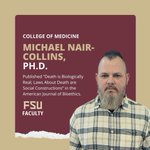
“Death is Biologically Real; Laws About Death are Social Constructions”
Advocates of the higher-mind theory of death have long acknowledged an obvious fact: in brain death, the body or organism remains alive.
So they say that when the capacity for consciousness is lost, the individual dies in some other, non-biological sense — making death a social construction.
Dr. Michael Nair-Collins points out the problem with this reasoning:
“If death is a social construction, then death did not exist prior to humans who socially constructed it.”
Nair-Collins advocates for transparency about these facts and respect for differing perspectives:
“What is needed are laws and policies that are just and respectful of different cultural and religious traditions as they apply to unconscious living bodies, which is precisely what ‘brain dead’ bodies are.”
“In brain death, we have a living unconscious body. Only when we start with that premise can we coherently discuss ethical and policy questions about death determination, organ transplantation, and disputes about treatment after brain death.”

I spent an absolutely awesome day today with my son at the Minnesota Zoo! If you’ve never been there, you otter go!

In October 2024, two-year-old Arthur Tétrault from Montreal, Canada, nearly drowned. Doctors at Montreal Children’s Hospital informed his parents that Arthur had suffered brain damage. They planned to remove him from life support and suggested organ donation.
Doctors were “constantly talking about” harvesting Arthur’s organs, according to Tétrault.
“They were killing him with all these drugs, and they were justifying the fact that they were promoting to harvest the organs and give them away,” he said. “They were talking about it all the time.”
“They don’t force you, but the way it’s done, it’s kind of a strong marketing from the head of the pediatric unit,” he said. “Everybody talks about it over there.”
“My wife and I, they brought us in a death squad meeting and they told us basically, Arthur would be unplugged on Nov. 29,” Tétrault said.
Instead, the Tétraults transferred Arthur to Ochsner Medical Center in New Orleans, USA. Under the care of Dr. Paul Harch, a specialist in brain injury treatment, Arthur was weaned off the ventilator and began to improve with hyperbaric oxygen therapy and intensive physical therapy.
Arthur continues to improve and is now receiving further treatment in Mexico. ❤️

Arthur Tetrault before going to bed last night! ❤️
His life support was scheduled to be unilaterally withdrawn on November 29, 2024, without his parents’ consent.
We sold EVERYTHING to save his life.
The #USA 🇺🇸 saved his life in Louisiana, in the city of #NewOrleans.
#HyperbaricOxygenTherapy has helped him tremendously.
He now lives in #Mexico 🇲🇽, where he receives the most advanced rehabilitation care in the world. 🌍
With the help of our Good #God, #Jesus, and our extraordinary international multidisciplinary medical team, Arthur Tetrault is showing many people that so-called brain death is often ABSOLUTELY FALSE and is incorrectly taught to medical students in our hospitals.
We must collectively and urgently improve medical care throughout #Quebec and across #Canada 🇨🇦.
#Amen #ArthurTetrault
#polqc #Quebec #Montreal #Pediatrics #Neurology #Drowning #CerebralPalsy
📸 Photo taken October 21, 2026.


Back in 1998, I was working at Sacred Heart Hospital in Eau Claire, Wisconsin when a young construction worker, Travis Bogumill, walked in with a nail in his head.
A co-worker at a construction site had accidentally bumped Bogumill’s head with a nail gun, which fired in a 3-inch nail so deep that the only thing visible was a small hole in his scalp.
Bogumill remained conscious, turned to his co-worker and said, "You just nailed me in the head.”
An X-ray showed the nail had lodged in the right side of Bogumill's brain, halfway between his ear and the top of his head. He said it "felt like somebody was smacking my head repeatedly with a hammer."
Doctors told Bogumill that he shouldn't have been able to walk or talk after the accident and that they were baffled why he wasn't knocked unconscious.
After the neurosurgeon removed the nail, Bogumill did well, walking out of the hospital six days later.
The only difference he could see was that he wasn’t quite the math whiz he used to be:
“You could give me two two-digit numbers and I could multiply them within seconds in my head. But now you give me a piece of paper and multiplying 56 by 23 is still difficult," he said.

Zolpidem (Ambien) is a common sleeping pill. But sometimes it has the opposite effect — actually waking people up after a brain injury.
George Melendez suffered a combination traumatic/anoxic brain injury in 1998 after crashing his car into a pond. He was left in a minimally conscious state: awake and sporadically aware of his surroundings but but unable to communicate.
His mother and stepfather cared for him at home, tube feeding him and handling his bathing and toileting with the help of a part-time aide. The doctors told them not to expect much, but the parents never lost hope.
In 2002, a doctor prescribed zolpidem to treat George’s thrashing and moaning at night. And George opened both eyes and started looking around the room.
“When I said, ‘George,’” his mother recalls, “he said, ‘What?’ And I about fell off the bed!” George’s parents stayed up talking to their previously silent son, who, as it turned out, remembered everything about his life except the accident.
The next morning, after getting another dose of Ambien, the young man who had been tube-fed for four years ate pancakes for breakfast, using his own fork and wiping his own chin with a napkin.
Since then, trials of zolpidem in disorders of consciousness have met with mixed results. Some patients improve, others don’t.
But a recent study reported in the medical journal “Neurology” found that 50/75 patients with prolonged disorders of consciousness due to an acquired brain injury showed improvement after taking 30mg of zolpidem daily in divided doses.
The investigators concluded that the use of 30 mg/day of zolpidem may lead to significant improvements in quality of life in a subset of patients with prolonged disorders of consciousness.

More about George Melendez:
time.com/archive/7135105/bri…
youtu.be/Zrah9cev9SU

Dr. Heidi Klessig retweeted

23yrs after my severe TBI, I still have providers sharing that the brain can not heal after 18 months.
I continue to prove them wrong.
The key is supportive family & finding the rare provider's who actively listen. That is when my gradual consistent gains get supercharged.

In 2013, Juan Torres suffered a low-oxygen brain injury which left him profoundly brain damaged.
Doctors told his parents that he was in a permanent vegetative state: unable to speak, control his movements, or follow basic commands, appearing awake but without a glimmer of consciousness.
The old dogma that a persistent vegetative state eventually became permanent was based on a 1994 New England Journal of Medicine task force report, which said that an anoxic brain injury became permanent after 3 months and a traumatic brain injury became permanent after 12 months. But we now know that even adults diagnosed as being permanently vegetative can improve.
Thankfully, despite his poor prognosis, Torres’ parents did not give up on him, taking him to a private hyperbaric oxygen clinic and working with him constantly:
“Torres’s parents assembled a collection of items they’d use to stimulate him daily: flashcards with ‘colours, words, pictures of the dogs, pictures of family members,’ Perez says. She’d rub sandpaper and feathers along his toes. She’d bring in coffee beans to waft under his nose. ‘I remember that,’ Torres says, as his mother tells the story, ‘the smells, like lemon, mint and hot sauce.’ (They used Tabasco.) Once in a while, family members were sure they saw him respond. “The doctors would say, ‘Yes, but it’s just a reflex,’ ” Perez recalls. “It was difficult to keep hope, because there were so many days when you don’t see any signs.”
Torres’ parents even had him evaluated by the famous consciousness researcher, Dr. Adrian Owen. But his tests, including functional MRI scanning, were disappointing:
“He came out completely vegetative,” one of the researchers said. “There were no signs of awareness, beyond some reflexive behaviour. It was actually pretty low,” she adds, “even for our vegetative-state patients.”
But when the technician called Torres’ family to tell them their son was clinically vegetative, his mom said, “Well, he just started talking.”
Because of this stunning news, Torres was brought back to Dr. Owen’s lab for reevaluation. There, he remembered the people who had previously evaluated him, correctly identifying the faces and voices of the people who had thought he was “vegetative.”
Torres continued to improve, eventually going to college and back to sports — including wheelchair rugby — and to composing music on his laptop.
If he could have expressed one thought while in hospital, he says it would be this: “Don’t count me out of the fight just because I’m in bed.”
@BobbySSchindler @BillAckman @denverhaslam

Dr. JJ Fins sees the treatment of brain injuries as the next civil rights frontier.
He has written an excellent book about improving the care of neurologically injured people:
a.co/d/0d2r60AA
