

An online journal that publishes articles on medical humanities, history, art, ethics, and education.
Chicago, IL, US
Joined January 2011
- Tweets22.8K
- Following4K
- Followers14.1K
- Likes19K





Helen of Troy can be reframed not merely as a mythological symbol of beauty and conflict, but as a vessel of ancient female medical knowledge. The Odyssey connects Helen to pharmaka, suggesting magical ability and medicinal expertise. bit.ly/4AsnlPr

In his 1632 painting The Anatomy Lesson of Dr. Tulp, Rembrandt focused on the hand. The hand was admired for its mechanical ingenuity and as evidence of humanity’s God‑given superiority over animals, as the physical counterpart of the mind, as both were instruments for using other instruments—the joint application of reason and the hand was held to be responsible for creating human civilization. bit.ly/3UrK2nM

South African physician C. Louis Leipoldt (1880-1947) was a man a century ahead of his time with his views on the dietary causes of educational impairment, the evils of racism, and the abominations of misogyny. He was also an incisive journalist, skilled botanist, brilliant poet, and astounding novelist. bit.ly/4BJ9eqE

In an era when disease and premature death were common, Jane Austen's writing often implied that a good life required resisting excessive preoccupation with one’s health. To this day, the cause of her death remains a mystery; speculations include Addison’s disease, Hodgkin’s disease, lupus, typhus, tuberculosis, and gynecological complications. bit.ly/4zifdRz

Hektoen International retweeted

The COVID-19 Monument of Honor Remembrance, & Resilience has taken root and shines 25 feet high in Chicago. Watch the ribbon cutting ceremony clip: :bit.ly/4iKl3Fl and plant a dandelion for a lost loved one or honor frontline and essential workers in our virtual memory garden: covidmemorialmonument.org

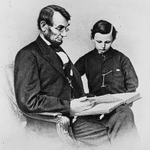
Lincoln seems to have had a full-blown case of variola major—classical smallpox—which had a mortality rate of up to 30%. This thinking is based on the presence of a rash, an illness of three weeks' duration, and the diagnosis of smallpox by the consultant physician. bit.ly/4sIqDvzI

1
159
When George Washington developed laryngitis and shortness of breath in 1799, his doctors used poultices, enemas, and opened his veins to remove almost half of his blood in 12 hours. He is shown on his deathbed in a painting recently dubbed Death by Malpractice. bit.ly/47AEKt1

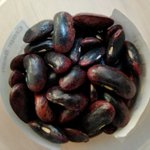
No “low flatulence” bean has ever been produced, nor does soaking beans in water help. Benjamin Franklin wished one would discover a drug that shall render our natural wind discharges agreeable as perfumes. But an Italian courtesan solved the problem by surreptitiously crushing a vial of perfume in front of her paramours and making an audible sound. bit.ly/4jHAkrt

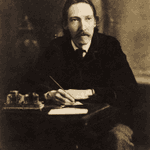
Thanks to the research by two genetic scientists, Alan E. Guttmacher and J.R. Callahan, it is now believed that Robert Louis Stevenson may have suffered from hereditary hemorrhagic telangiectasia (also known as Osler-Weber-Rendu Syndrome), which he may have inherited from his mother Margaret, who also suffered from pulmonary ailments. But scientists did not identify the syndrome until around 1890, and Stevenson died in 1894. bit.ly/4BpIXxj

In 1964, Hastings Banda became president of Malawi. Very soon he declared Malawi a one-party state and proclaimed himself president for life. Opponents were arrested, exiled, imprisoned, tortured, or killed. As many as 18,000 people were killed during his rule. He required all adult citizens to join the ruling political party, and he recruited young men to intimidate the public.bit.ly/4kgNqMw


Examination of Vincent van Gogh's The Potato Eaters may illustrate symptoms of leprosy among the peasants gathered for a family meal. In the 1700s, herbalists described potatoes as “weird products of dirt and darkness,” as tubers resembled a leper’s deformed limbs; myths arose that tubers caused leprosy. bit.ly/4iiFNTp.

2
18,448
In defiance of a Congressional ban against inoculation, General George Washington issued an order on February 5, 1777 to inoculate the entire Continental Army against smallpox. The first mass inoculation in military history, Washington’s order saved the army from destruction and the Revolution from collapse, but also thousands of civilian deaths. bit.ly/3UuX181

The story of curing Tobit’s blindness with fish bile may be less miraculous and more consistent with contemporary medical practice. Some attribute Tobit’s infection and blindness to a form of conjunctivitis, Chlamydia trachomatis, prevalent in the Middle East in both ancient and recent times. Despite the irritating factors of bile (or perhaps because of it, in homeopathic terms), it remained a treatment for bacterial trachoma in the eye for over two thousand years. bit.ly/3VE6U3z

George Washington, at age 51, found his vision failing. He called on David Rittenhouse: “I have sent Mr. Rittenhouse the Glass of such Spectacles as Suit my Eyes, that he may know how to grind his Christals.” Rittenhouse (1732-1796), who built the first telescope in America and was the first director of the US Mint, sent Washington 2 pairs of spectacles, for which Washington thanked him: “The Spectacles suit my eyes extremely well.” bit.ly/4zuMNnc. #GeorgeWashington.

Dr. Jules Bernard Luys (1828–1897), a prominent neurologist and proponent of hypnosis, argued that hysterical symptoms reflected disturbances in cerebral and subcortical centers, subject to identifiable biological laws. Hypnosis, in his view, provided an experimental tool through which hysterical symptoms could be induced, modified, or intensified, offering insight into their underlying mechanisms. bit.ly/3TDNf37.

Gaetano Donizetti caught the Great Pox as student in Bologna. The first symptoms of his venereal disease appeared in 1828 at age 31.He died in 1846 and an autopsy confirmed cerebrospinal syphilis. bit.ly/4rNmVAa

An unconfirmed account indicates that in 1893, a nobleman complained to the Tsar that Tchaikovsky was paying improper attention to a law student. This led eight former schoolmates to set up a “court of honor” to discuss the charges. The meeting lasted five hours, after which Tchaikovsky, looking frightened, ran out of the room and committed suicide by taking arsenic. bit.ly/3VdlkHP

3
295
In the medieval period, snails were a common food source for peasants, as they were abundant and easily gathered from gardens and fields. It was not until the Renaissance that snails regained high status as a gourmet food, especially in French cuisine, where chefs developed techniques to elevate the snail’s flavor and texture. This marked the beginning of escargot as a luxury dish, often served in aristocratic households and fine dining establishments.bit.ly/3VsXSp…

A recent review of 13 studies involving 3,951 patients has cast doubt on the diagnostic accuracy of earlobe creases for detecting active coronary disease. More likely, an earlobe crease is simply another independent marker for identifying individuals at elevated cardiovascular risk, alongside features such as age and gender.bit.ly/46WnDl6
